What Makes the OG Kush Strain Different to Grow
The OG Kush strain has been a benchmark in cannabis cultivation for decades — and for good reason. It finishes fast, hits hard, and produces resin-coated buds that smell like fuel, earth, and citrus all at once. But it earns its reputation as a "grower's strain" because it punishes complacency. Dense bud structure, moderate nutrient sensitivity, and a genuine susceptibility to powdery mildew mean you need to be dialed in from day one.
This guide covers everything you need to run a successful OG Kush grow: environment targets, training strategy, feeding schedule, and a harvest-to-cure process that preserves the terpene profile this strain is known for. Whether you're growing in soil under a 600W HPS or running coco under LED, the principles are the same.
OG Kush Genetics and Plant Structure
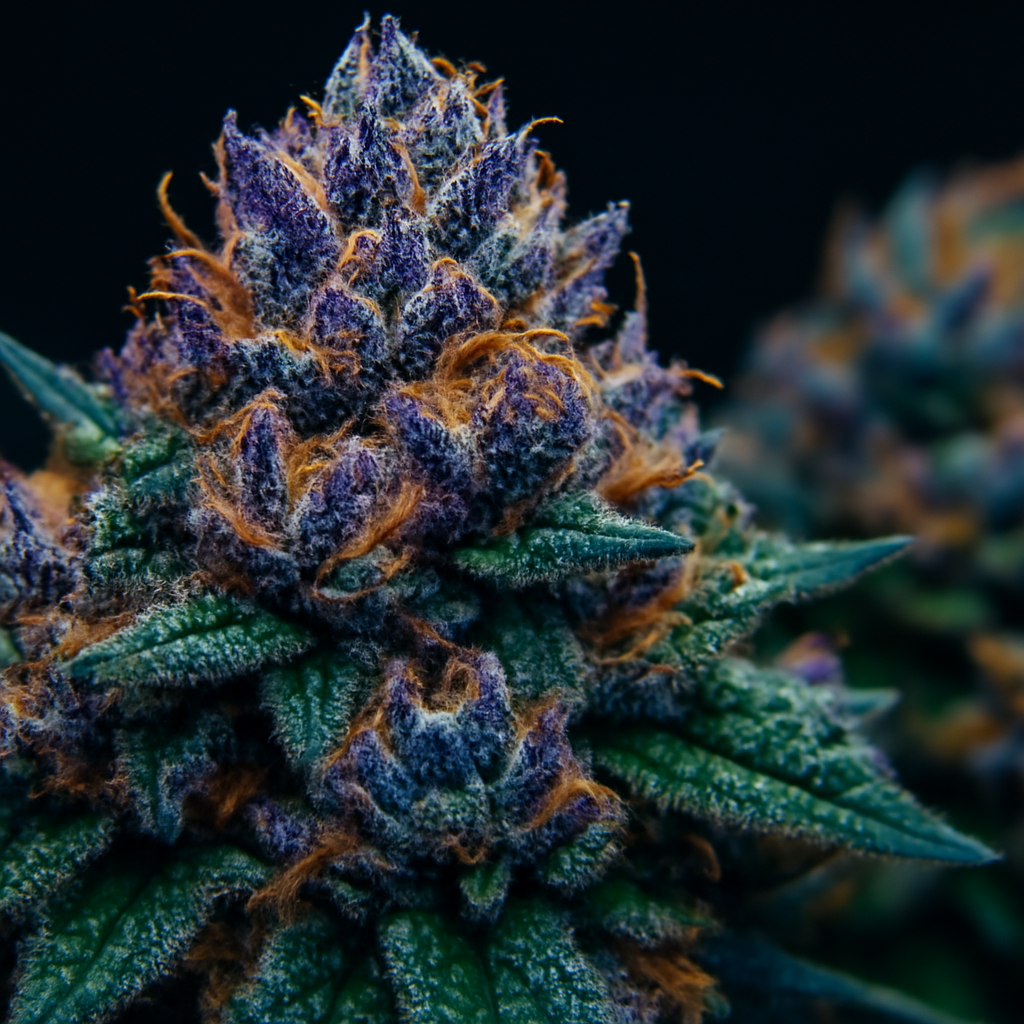
OG Kush is approximately 75% indica and 25% sativa, with a growth structure that reflects that balance. Indoors, expect plants to hit 3–5 feet. Left to run outdoors in full sun, they can push 6–7 feet with lateral branching that supports serious bud mass. Nodes are tight, internodal spacing is short, and the canopy will fill in quickly once you flip to flower — which makes early training critical.
THC content typically lands in the 19–26% range depending on phenotype and environment. The terpene signature is dominated by myrcene, limonene, and caryophyllene — that classic fuel-and-citrus combination. To understand exactly how those terpenes interact with effects, check out our Terpene Explorer.
Environment Targets for OG Kush
Get these numbers wrong and OG Kush will tell you immediately. It's not a forgiving strain for humidity creep or temperature swings.
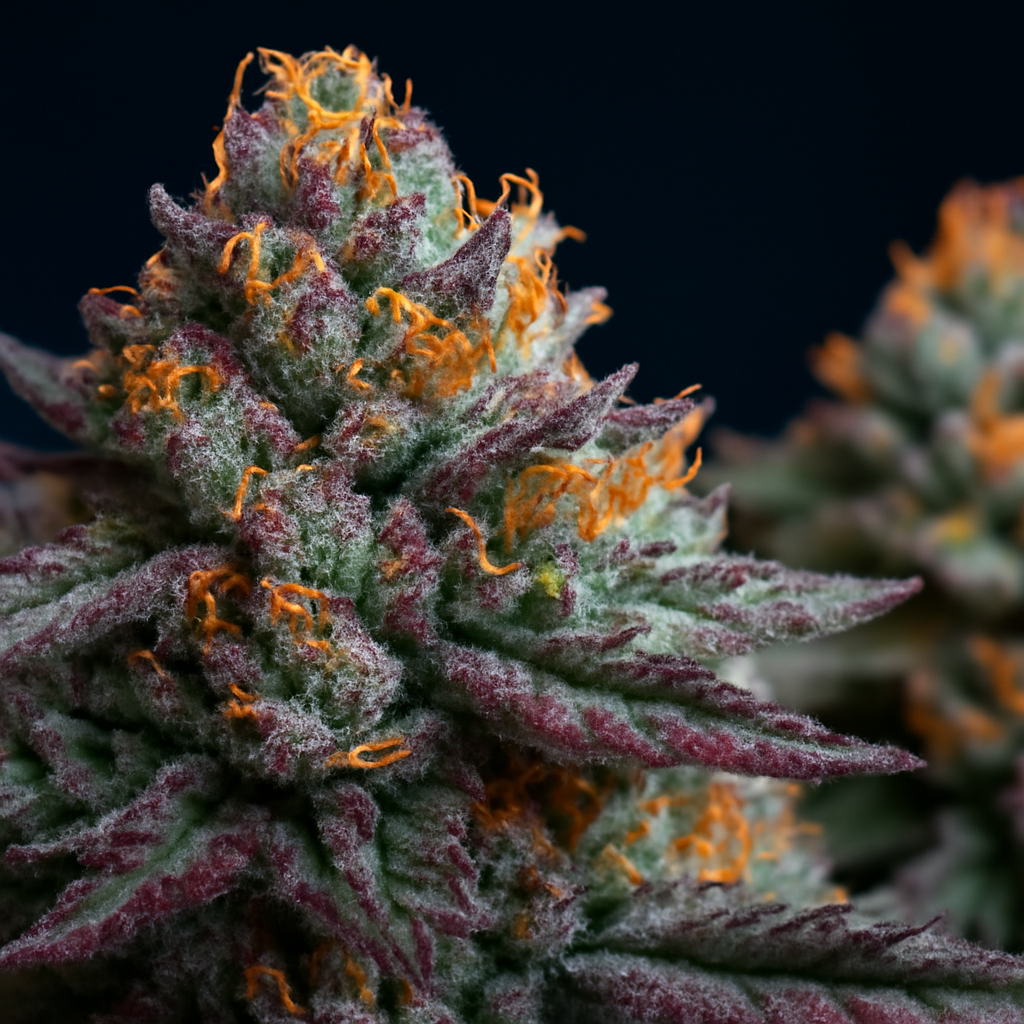
- Daytime temperature: 70–80°F (21–27°C) during lights-on. Drop 5–8°F overnight in late flower to encourage resin production and purple hues in some phenotypes.
- Humidity — vegetative: 50–60% RH. VPD target around 0.8–1.0 kPa.
- Humidity — flowering: Bring it down to 40–50% in early flower, and push to 35–45% in the final 2 weeks. With buds this dense, anything above 50% in week 5+ is a mold invite.
- CO₂: Ambient (400–500 ppm) is fine for most grows. Supplementing to 1000–1200 ppm with strong light will push yields noticeably.
- Airflow: Run oscillating fans directly around the canopy, not just above it. OG Kush's bud density traps moisture — you need air moving through the canopy, not just over it.
Lighting for OG Kush Indoors
OG Kush is a heavy feeder for light. Target 600–900 PPFD during veg (18/6 photoperiod) and push to 900–1100 PPFD during flower at the 12/12 switch. If you're unsure what fixture covers your canopy at those intensities, run your setup through our Grow Light Calculator before you start.
LEDs running full spectrum work well for this strain — the deep red and far-red spectrum during late flower appears to support the heavy resin development OG Kush is capable of. Don't cheap out on the light; this strain will reward quality photons.
Training OG Kush for Maximum Canopy Coverage
OG Kush responds well to training but needs it done early. The tight node spacing means it bushes out fast — if you let it run without intervention, you'll get a Christmas tree structure with one dominant cola and underdeveloped lower sites.
LST and SCROG for the OG Kush Strain
Low-Stress Training (LST): Start bending main stems outward at 2–3 weeks of veg. Use soft plant ties or pipe cleaners and anchor to the pot rim. This opens the canopy without the recovery time of cutting. Revisit and adjust every 3–4 days as the plant grows toward the light.
Screen of Green (SCROG): Install a net at 12–16 inches above the pot and tuck new growth through the screen as it rises. By the time you flip to 12/12, you want 80–90% of the screen filled. OG Kush's lateral branching makes it a natural SCROG candidate — each shoot becomes an individual cola site.
Topping: Top once at node 4–5 to split the main stem into two dominant colas. Some growers top twice before SCROG. If you want to compare outcomes between topping and FIM, our guide on fimming vs topping cannabis breaks it down with recovery timelines.
Defoliation: In week 3–4 of flower, remove large fan leaves blocking bud sites. Don't strip the plant — remove 20–30% of large leaves max. A second light defoliation in week 5–6 can improve airflow in the lower canopy, which is critical for OG Kush's susceptibility to mold.
For branch support in late flower, use bamboo stakes or a trellis grid above the SCROG — OG Kush buds get genuinely heavy and branches will bow or snap without support in the last 2 weeks.
Nutrients and Feeding the OG Kush Strain
OG Kush is a moderately heavy feeder but reacts quickly to overfeeding. Start conservative and increase based on what the plant shows you. Growers running soil across our platform make up 63.2% of tracked grows — if that's your medium, OG Kush works beautifully in a quality amended soil with light top-feeding.
For coco or hydro, you have more control but less margin for error on pH. Keep pH at 5.8–6.2 in coco, 6.0–7.0 in soil.
- Vegetative EC: 1.2–1.8 mS/cm. Use a veg-specific formula with N-P-K weighted toward nitrogen (e.g., 3-1-2 ratio).
- Early flower EC: 1.6–2.0 mS/cm. Shift to a bloom formula, increasing phosphorus and potassium. Reduce nitrogen significantly.
- Mid–late flower EC: 1.8–2.2 mS/cm. Push P and K hard in weeks 4–6, then begin tapering in week 7.
- Flush (if desired): Run plain pH-adjusted water for the final 7–10 days before harvest to clear residual salts.
Cal-Mag: Non-Negotiable for OG Kush
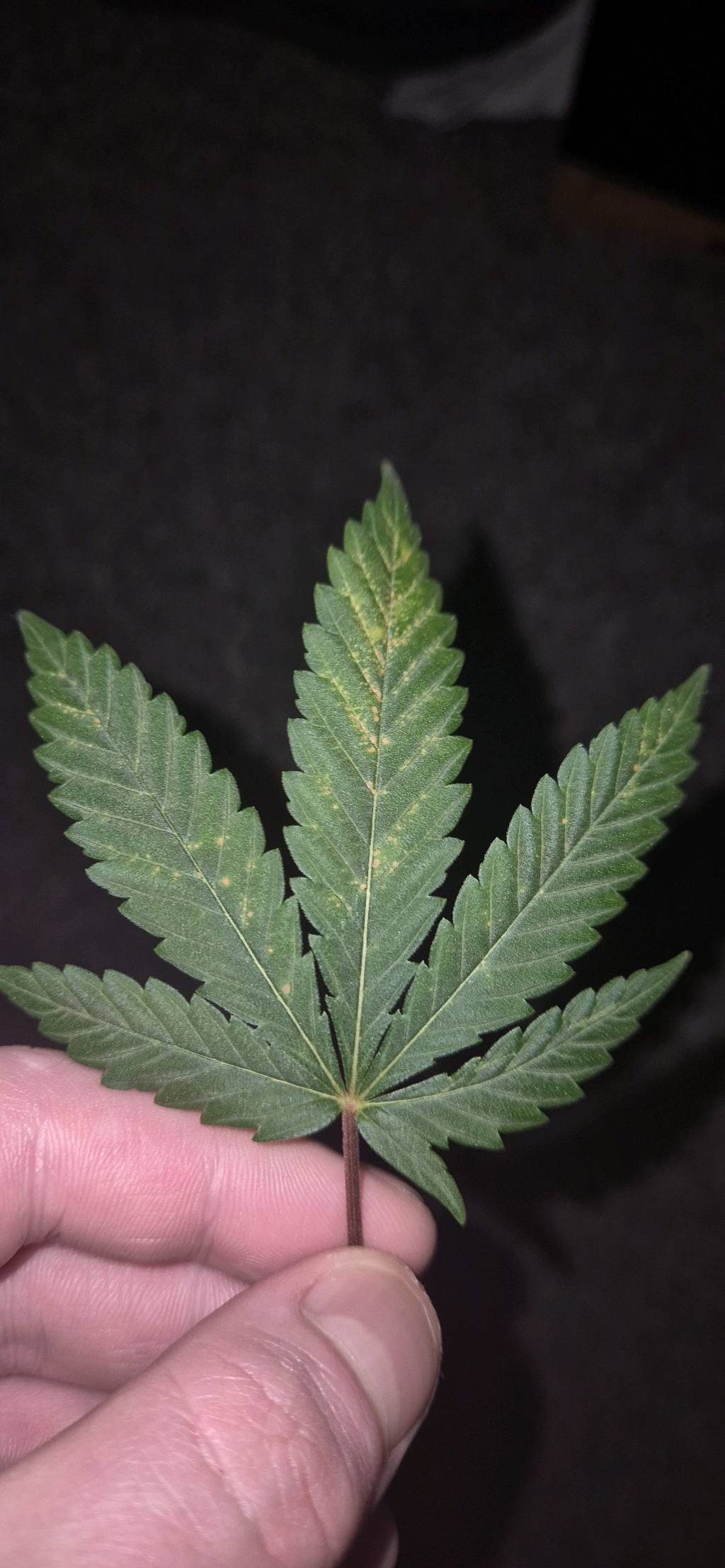
OG Kush has notably elevated calcium and magnesium requirements compared to many other strains. Under LED lighting, this demand increases further because LEDs drive more photosynthesis with less radiant heat, accelerating uptake rates. Supplement Cal-Mag at 2–5 mL/L throughout the entire grow — don't wait for deficiency symptoms to appear. Interveinal chlorosis (yellowing between leaf veins) with green veins is the classic early magnesium deficiency sign. If you see it, run your leaf through the Nutrient Deficiency Identifier to confirm and get a correction plan.
For seedling nutrition specifics, see our guide on best nutrients for cannabis seedlings. For a full organic approach to feeding this strain, our best organic nutrients for cannabis article covers compatible product lines.
Want to map out your feeding schedule week-by-week before you start? Use the Grow Schedule Planner to build a full-cycle feeding and environment plan for your OG Kush run.
Harvesting OG Kush: Reading Trichomes Correctly
OG Kush's 8–9 week flower time is a guideline, not a guarantee. Phenotypes vary. Trichome inspection is the only reliable harvest trigger — don't trust the calendar alone.
Use a 60–100x jeweler's loupe or a digital microscope. Focus on the trichomes on the buds themselves, not the sugar leaves (which mature faster).
- All clear trichomes: Too early. THC is still building. Harvest here and you'll get an anxious, racy effect and low potency.
- Mostly cloudy (milky white), few amber: Peak THC. Expect cerebral, energetic effects with strong body relaxation — classic OG Kush. This is the sweet spot for most growers.
- 30–40% amber: THC degrading to CBN. More sedative, couchlock profile. Some growers prefer this for nighttime use.
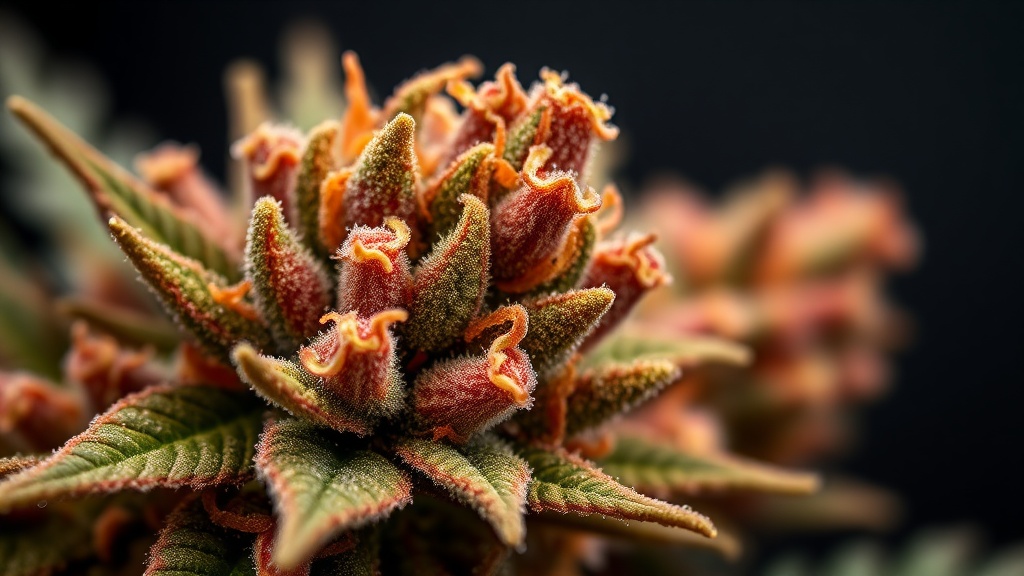
Beyond trichomes, watch for pistil color change (60–70% of white hairs turning orange/red) and calyx swelling as secondary indicators that harvest is approaching.
Drying and Curing OG Kush
The terpene profile that makes OG Kush iconic — that diesel-citrus-pine combination — is almost entirely preserved or destroyed in the dry and cure. Don't rush this.
Drying
Hang whole branches upside down in a dark room. Darkness preserves chlorophyll breakdown and protects terpenes from UV degradation. Target 65–70°F with 50–60% RH. At these conditions, drying takes 7–14 days. Faster drying (under 7 days) produces harsh, green-tasting cannabis. Slower is almost always better.
Buds are dry enough to jar when small stems snap cleanly rather than bending. If the outside feels dry but the stem bends, give it more time.
Curing
Pack trimmed buds loosely into wide-mouth glass mason jars — aim for 60–65% fill. For the first 5–7 days, "burp" the jars twice daily for 15–20 minutes, opening the lid to exchange air. This releases trapped moisture and CO₂ while allowing any remaining moisture to equalize. After week one, burp once daily for another week, then drop to every few days through weeks 3–4.
At 4 weeks, OG Kush's terpene profile opens up significantly. At 6–8 weeks, you'll notice the fuel notes deepen and the citrus becomes more pronounced. Don't rush it. Use a Dry & Cure Timer to track your burping schedule and milestones so nothing gets forgotten.
Troubleshooting Common OG Kush Problems
Powdery Mildew
This is the number one threat to OG Kush grows. The dense bud structure and high resin production create perfect conditions for PM if humidity and airflow aren't right. Prevention is everything: keep RH below 50% in flower, run oscillating fans through the canopy, and don't let foliage stay wet after foliar applications. If you catch white powdery spots early, a diluted potassium bicarbonate solution (1 tsp/liter) applied during lights-on period can arrest spread. Don't foliar spray in flower past week 3 if you can avoid it.
Nutrient Burn and Lockout
OG Kush reacts visibly and quickly to overfeeding. Leaf tip burn (the tips going brown and crispy) is the first sign of too-high EC. If you see it, flush with plain water and drop EC by 0.2–0.3 mS/cm on your next feed. Check pH every feed — a pH drift above 7.0 in soil will lock out magnesium and iron simultaneously, causing symptoms that look like deficiencies even when nutrients are present.
Bud Rot (Botrytis)
Late-stage bud rot is a risk in any high-humidity environment with OG Kush's bud density. Check inside large colas from week 5 onwards by gently squeezing — any soft spots or grey fuzz inside require immediate removal of affected tissue with clean scissors. Remove the infected section entirely and dispose of it outside your grow space. Drop RH immediately and increase airflow.
Yield Expectations and Planning Your Grow
Indoor growers running a proper SCROG setup with dialed-in environment can realistically achieve 1.3–1.5 oz/ft² (390–450 g/m²). Yield comes down to canopy coverage, light quality, and how cleanly you manage the environment in weeks 5–8 of flower. Before you start, use the Yield Calculator to project your harvest based on your grow space dimensions and setup. For a full indoor grow walkthrough, see our guide on how to grow one cannabis plant indoors.
If you want to understand the full time investment before starting, our article on how long to grow cannabis indoors breaks down total cycle times including drying and curing. And keeping a grow journal through your OG Kush run pays dividends on every future grow — our guide on how to keep a cannabis grow diary shows you exactly what to track.
Frequently Asked Questions
How long does OG Kush take to flower?
OG Kush has a flowering period of 8–9 weeks from the flip to 12/12. Some phenotypes finish closer to 8 weeks; others push toward 9–10. Always confirm harvest readiness by checking trichomes rather than relying on the calendar alone.
What yield can I expect from OG Kush indoors?
Under optimized conditions with a SCROG setup and quality LED lighting, indoor yields typically range from 1.3–1.5 oz/ft² (around 390–450 g/m²). Outdoor plants in full sun can produce up to 18 oz (500g) per plant. Use the Yield Calculator to project your specific setup.
Why does OG Kush get powdery mildew so easily?
OG Kush's dense, resin-heavy bud structure restricts airflow within the canopy and traps moisture, creating ideal conditions for Botrytis and PM if humidity climbs above 50% in flower. Prevention through airflow management and maintaining 40–50% RH during flowering is more effective than any treatment after the fact.
Does OG Kush need extra Cal-Mag?
Yes — OG Kush has higher calcium and magnesium requirements than many other strains. Supplement Cal-Mag at 2–5 mL/L throughout the entire grow cycle, not just when deficiency symptoms appear. This need increases further when growing under LED lighting due to higher photosynthetic rates.
What's the best medium for growing OG Kush?
OG Kush performs well in quality amended soil, coco coir, and hydro setups. Soil is the most forgiving and helps buffer against the strain's sensitivity to nutrient swings. Coco coir gives you more control and faster growth but requires more attentive feeding and pH management. Across grows tracked on Grow Guide, 63.2% of growers use soil as their primary medium.
References
- Leafly Editorial Team (2023). "How to Grow OG Kush Marijuana." Covers training, pruning, and environmental management specific to OG Kush cultivation. leafly.com
- Hypno Seeds (2026). "How to Grow OG Kush Seeds — 2026 Grow Diary." Documents flowering period of 8–9 weeks and indoor yield range of 1.3–1.5 oz/ft² across multiple phenotypes. hypnoseeds.com
- Cheef Botanicals (2026). "OG Kush Strain Guide." Reports on plant height (3–5 ft indoors, 6–7 ft outdoors), bud density risks, and humidity management requirements for mold prevention. cheefbotanicals.com
- Agriculture Novel (2026). "OG Kush Cultivation Mastery: The Complete Grower's Guide to Cannabis Royalty." Covers trichome-based harvest timing and optimal dry/cure parameters (65–70°F, 50–60% RH for 7–14 days). agriculturenovel.co
- STRNG Seeds (2026). "OG Kush Strain — Complete Guide to Effects, Yield and Cultivation." Documents environmental targets including temperature range 70–80°F, humidity thresholds, and lighting schedules for optimal yield. strngseeds.com