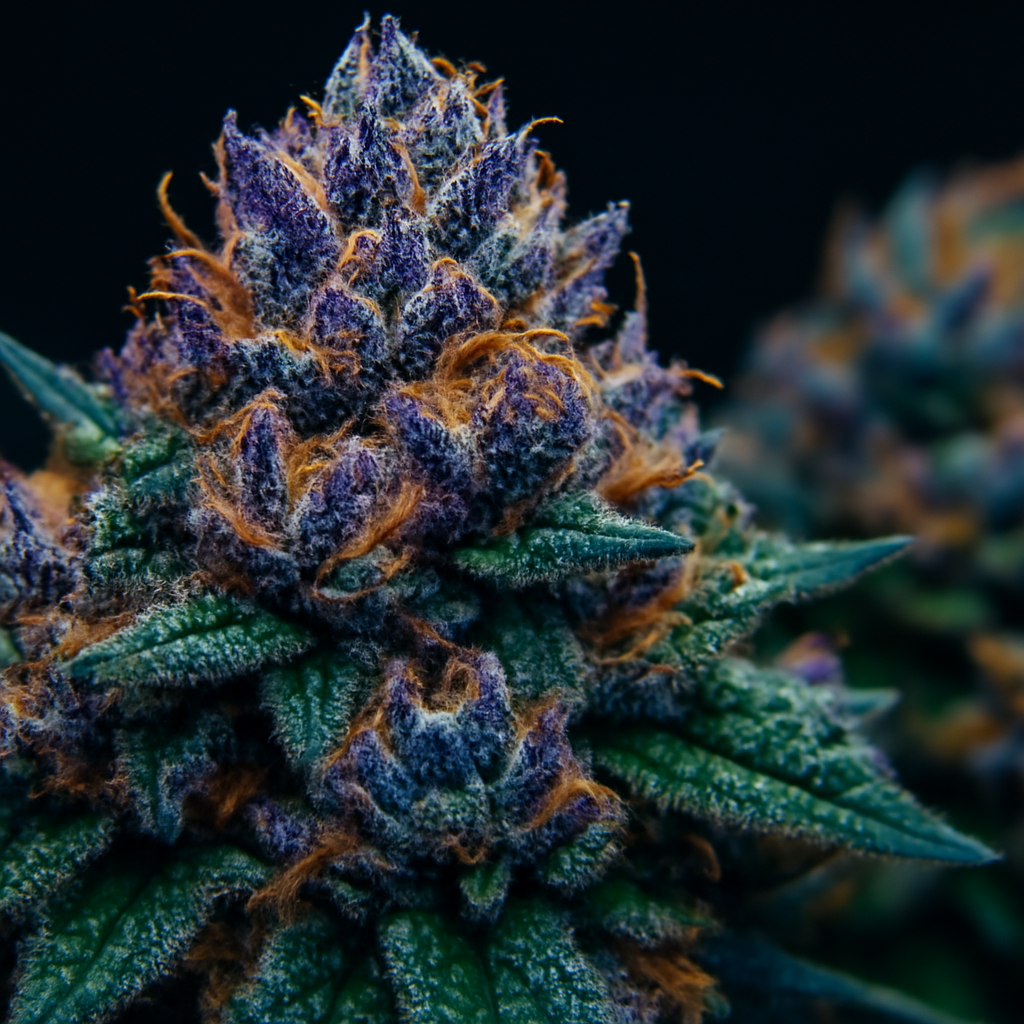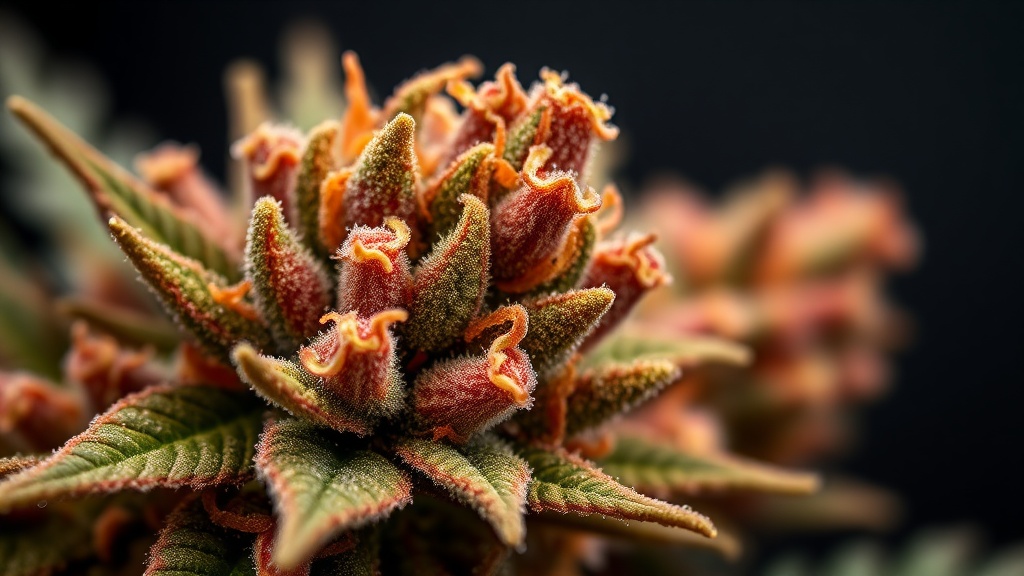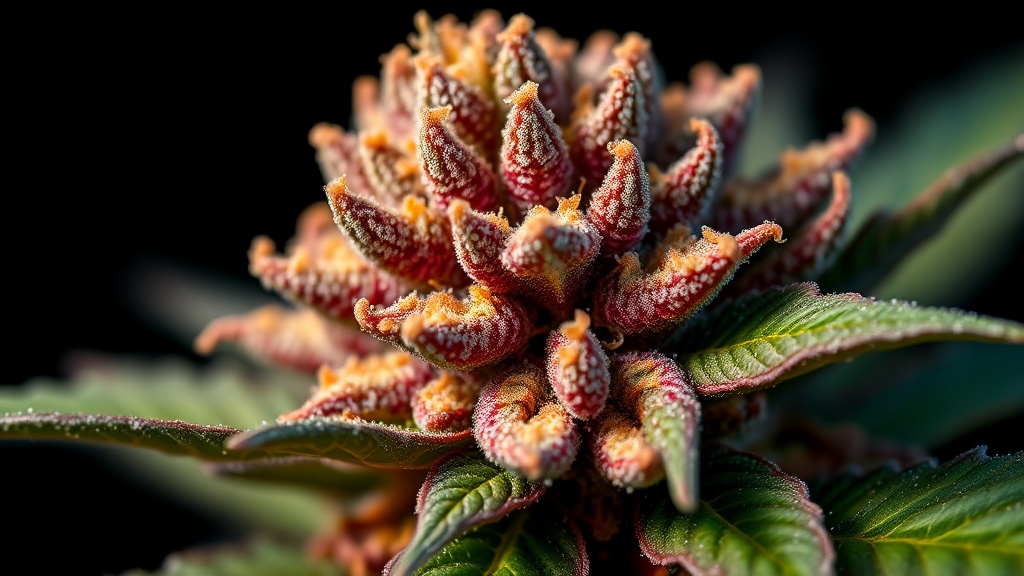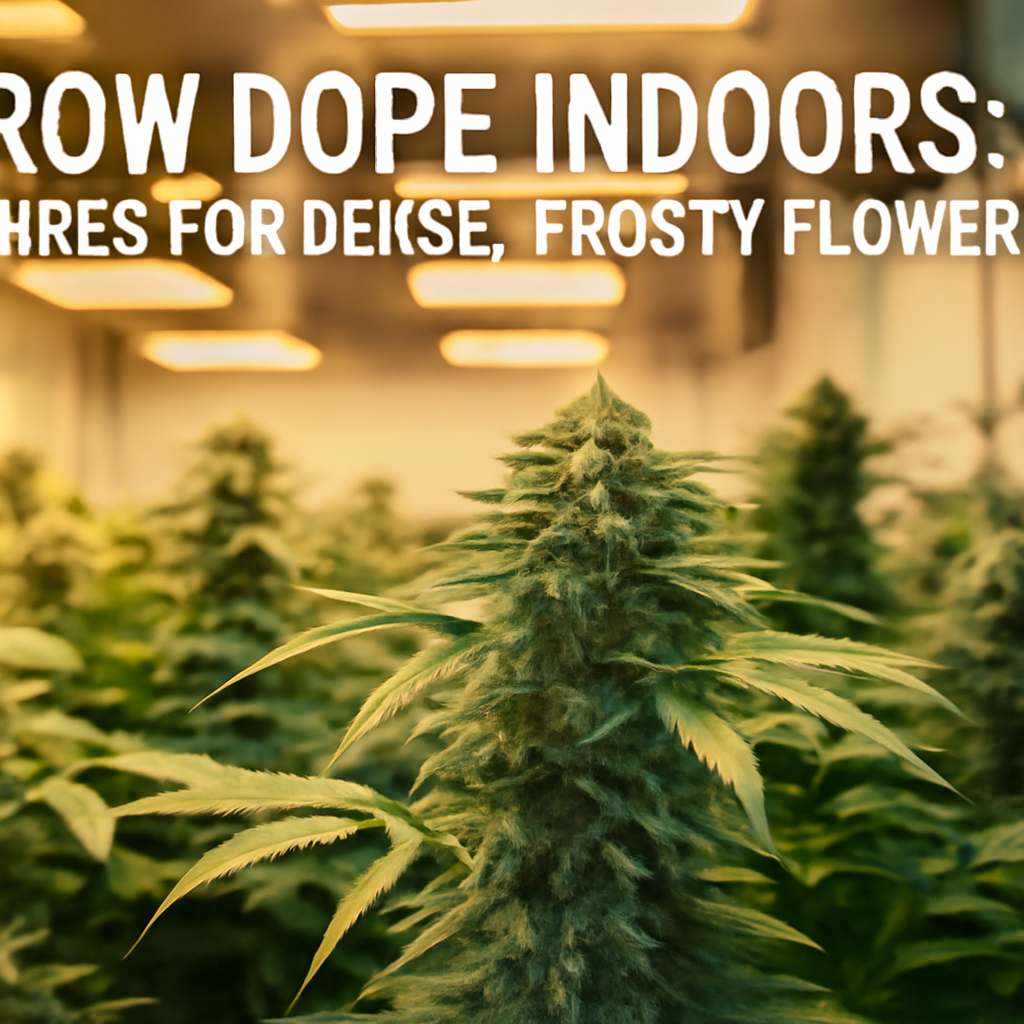
If you're trying to grow dope-quality cannabis, stop looking for a miracle additive. Dense, frosty flowers usually come from four boring things done well: enough light, a stable room, correct root-zone pH, and a slow finish after harvest. Across 1,000 tracked journals on GrowGuide, 733 were indoor, 632 used soil, and 548 used manual feeding, so this guide is built around the setup most home growers actually run.
What it takes to grow dope-quality cannabis
High-end cannabis is mostly a consistency game. If your light is weak, your canopy uneven, your pH drifting, or your dry room too warm, the plant can still look “fine” while producing average flowers. Before you think about premium genetics or bloom boosters, lock in these five basics:
- Light: 700–1,000 PPFD in flower for dense buds under a quality LED.
- Climate: VPD roughly 0.8–1.5 kPa from seedling to late flower.
- Root zone: Soil pH 6.0–7.0 or coco/hydro 5.5–6.5.
- Canopy: Flat, open, and filled before the flip.
- Finish: Harvest at the right trichome stage, then dry slowly.
If you only have one plant in a small tent, read How to Grow One Cannabis Plant Indoors alongside this article. The same principles apply, just with less room for mistakes.
How to grow dope indoors: set the room before the nutrients
The easiest way to waste money is buying more bottles before your room can hold temperature, humidity, and light intensity. Start by building a stable environment, then feed to match it. Use the Grow Schedule Planner to map your dates before you germinate anything.
| Stage | Light target | Temp | RH | VPD | Root-zone target |
|---|---|---|---|---|---|
| Seedling | 200–300 PPFD, 18/6 | 24–26°C | 65–70% | 0.8–0.9 kPa | Soil pH 6.3–6.6, coco 5.8–6.0, EC 0.4–0.8 |
| Veg | 400–650 PPFD, 18/6 | 24–29°C | 55–65% | 0.9–1.2 kPa | Soil pH 6.3–6.8, coco 5.8–6.2, EC 0.8–1.4 |
| Early flower | 700–900 PPFD, 12/12 | 24–27°C | 50–55% | 1.2–1.4 kPa | Same pH range, EC 1.2–1.8 |
| Late flower | 800–1,000 PPFD, 12/12 | 22–26°C | 45–50% | 1.3–1.5 kPa | Keep pH stable, avoid salt buildup |
| Dry | Darkness | 15–21°C | 45–55% | Gentle airflow only | No direct fan on flowers |
1. Give flowering plants enough light
Yield and density climb hard when you move from weak light to proper light. For most home growers without added CO2, the sweet spot is 800–1,000 PPFD in flower. Seedlings want far less, and veg plants do well at 400–650 PPFD. Don’t set intensity by guessing fixture height alone; use the Grow Light Calculator and check canopy coverage.
Signs your light is too low: wide node spacing, airy tops, weak lower flowers. Signs it’s too high: bleached tops, tacoing leaves, stalled upper growth. If that happens, dim 10–15% or raise the fixture.
2. Hold VPD in range and keep air moving
VPD is the bridge between temperature and humidity. Too humid and the plant barely transpires; too dry and it drinks too fast, often dragging nutrients with it. A practical working range is 0.8–1.5 kPa depending on stage. You do not need perfection every hour, but you do need a room that doesn’t swing wildly between lights on and lights off.
Use an exhaust fan for fresh air exchange and oscillating fans for gentle leaf movement. Leaves should flutter, not fold over from wind. A direct fan blasting buds in late flower can dry leaf edges and create misleading deficiency symptoms.
3. Match your irrigation to the medium
Soil and coco are not watered the same way. Soil is forgiving and still dominates GrowGuide’s tracked journals, with 632 soil grows logged. In soil, water thoroughly, then wait until the top inch is dry and the pot feels noticeably lighter before watering again. In coco, once roots are established, smaller and more frequent irrigations work better, often with 10–20% runoff to prevent salt accumulation.
Because 548 tracked grows on GrowGuide use manual feeding, the best upgrade for many growers is simple: stop watering by calendar. Water by pot weight, leaf posture, and runoff behavior.
Nutrients that help you grow dope, not leafy plants
Most nutrient problems come from feeding too much, too early, or at the wrong pH. Start seedlings around 25% of the label rate, especially if your base medium is already amended. If you need product ideas, see Best Nutrients for Cannabis Seedlings 2026 or Best Organic Nutes for Cannabis (2026).
- Seedlings: Low EC, light feed, don’t chase dark green.
- Veg: Increase nitrogen gradually; keep calcium and magnesium steady if using RO water or coco.
- Early flower: Maintain enough nitrogen to power stretch, but don’t keep pushing veg-heavy feed after week 3.
- Late flower: Stable feed beats aggressive PK loading. More bottles rarely equal denser flowers.
If you see burnt tips, clawing, or very dark leaves, reduce feed strength before adding supplements. If you see interveinal yellowing, rust spots, or twisted new growth, check pH first, then use the Nutrient Deficiency Identifier before guessing.
How to grow dope with canopy control, not crowding
Dense top flowers come from even light distribution. If one cola is 20 cm above the rest, that top gets overlit while the rest of the canopy underperforms. Your job is to flatten the canopy early.
- Top or fim above the 5th or 6th node once the plant is growing fast.
- Use low-stress training to spread branches horizontally.
- Install a trellis before or right after the flip.
- Flip to flower when the canopy is about 60–70% of the space you want to fill.
- Lollipop the lower 20–30% of the plant before day 21 of flower.
If you want a deeper breakdown, read Fimming vs Topping Cannabis: 2026 Guide. And if you want to compare plant structure before choosing a cultivar, browsing Northern Lights grow journals is a good place to start because it’s usually a forgiving indoor plant.
Once your canopy is even, use the Yield Calculator to set a realistic target. Good indoor grows commonly miss their yield ceiling because half the canopy never reached proper light intensity.
Troubleshooting average flowers before harvest
| Symptom | Likely cause | Fastest fix |
|---|---|---|
| Droopy plant, wet medium | Overwatering / low root oxygen | Let the container dry back more; improve drainage and airflow |
| Burnt tips, clawed dark leaves | Excess EC or too much nitrogen | Reduce feed, confirm pH, avoid stacking additives |
| Top bleaching or tacoing | Too much light or heat | Dim or raise fixture; recheck canopy PPFD |
| Rust spots in coco | Calcium issue or pH drift | Correct pH first, then adjust Ca/Mg if needed |
| Airy buds, weak aroma | Low PPFD, high late-flower RH, early harvest | Increase light, lower RH, wait for mature trichomes |
Also watch for fungus gnats and spider mites. Gnats usually point to overly wet media; dry the top layer more between waterings in soil. Spider mites spread fast in hot, stagnant rooms, so airflow and regular leaf checks matter more than many growers think.
Harvest, dry, and cure: where good cannabis becomes great cannabis
You can do 90% of the grow right and still ruin the result in the last 10 days. Harvest timing, drying speed, and cure discipline have a massive effect on aroma, smoothness, and perceived potency.
Check trichomes on the calyxes, not the sugar leaves. As a working rule:
- Clear: too early
- Mostly milky/cloudy: peak THC window
- 5–15% amber: balanced effect and strong bag appeal
- 15–25% amber: heavier, more sedating profile
Pistils are a backup signal, not the main one. When 70–90% have darkened and curled in, the plant is often close, but trichomes tell the real story.
Drying targets that preserve aroma
Dry in darkness at 60–70°F and 45–55% RH for 7–14 days. Keep air moving in the room, but never point a fan directly at hanging flowers. If your crop feels crispy in 4 days, it dried too fast, and that “hay” smell is much more likely.
Whole-plant drying usually slows the process and helps preserve aroma better than trimming tiny branches into a hot room. Track the process with the Dry & Cure Timer.
Curing targets that improve smoothness
Once the outside feels dry and small stems start to crack instead of fold, jar the flowers at about 75% full. Add mini hygrometers if you can. During the first two weeks, burp once daily for 10–15 minutes, or longer if jar humidity is still above 65%.
Aim to settle the jars around 58–62% RH. Cure for at least 2–4 weeks, and 4–8 weeks is usually better for flavor. This is where harsh smoke becomes smooth smoke.
Track every run so the next one is better
The fastest way to improve isn’t more equipment. It’s records. Keep notes on PPFD, temp, RH, pH, EC, runoff, irrigation volume, flip date, and harvest date. If you don’t track inputs, you can’t repeat your best run. Start with How to Keep a Cannabis Grow Diary, then compare your final output with the Cost Per Gram Calculator.
If you’re still wondering how long a full cycle should take, the short answer is usually 3–5 months from seed to smoke once drying and curing are included. For a detailed breakdown, see How Long to Grow Cannabis Indoors (2026).
Frequently Asked Questions
What PPFD should I target to grow dense indoor cannabis?
For most home growers, 700–1,000 PPFD during flower is the productive range. Seedlings want 200–300 PPFD, and veg plants usually do best around 400–650 PPFD.
Is soil or coco better if I want to grow dope-quality cannabis?
Soil is easier to manage and more forgiving, especially for hand-watered grows. Coco usually grows faster and responds well to frequent feeding, but it demands tighter control over pH, EC, and irrigation timing.
How do I know when to harvest cannabis for peak potency?
Look at calyx trichomes with a loupe or macro lens. Mostly milky trichomes signal peak THC, while 5–15% amber usually gives a balanced harvest window with strong overall quality.
Why does my cannabis smell like hay after drying?
The usual cause is drying too warm or too fast. Keep the dry room dark, hold 60–70°F and 45–55% RH, and give the flowers 7–14 days before jarring.
References
- GrowGuide platform data, 2026 — Analysis of 1,000 tracked grow journals found 733 indoor grows, 632 soil grows, and 548 manual-feed grows, indicating the most common home-grow conditions on the platform.
- Azarius, 2026 — Indoor cannabis yield scales with PPFD up to roughly 1,000 µmol/m²/s, and maintaining VPD around 0.8–1.5 kPa supports healthy transpiration and nutrient uptake. Source
- Herb, 2026 — Recommends soil pH 6.0–7.0, hydro/coco pH 5.5–6.5, starting nutrients at 25% strength, and drying cannabis in darkness at 60–70°F and 45–55% RH for 7–14 days before curing. Source
- Chandra, S., Lata, H., Khan, I. A., & ElSohly, M. A., 2008 — Controlled-environment research showed cannabis photosynthesis rises with increasing light intensity, supporting high-light indoor cultivation when heat and CO2 are managed. Source