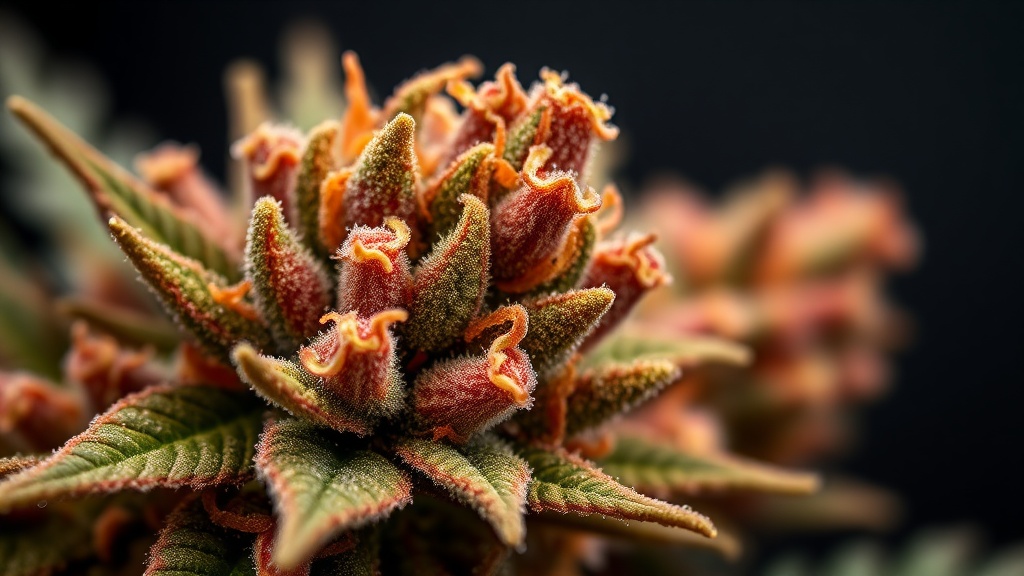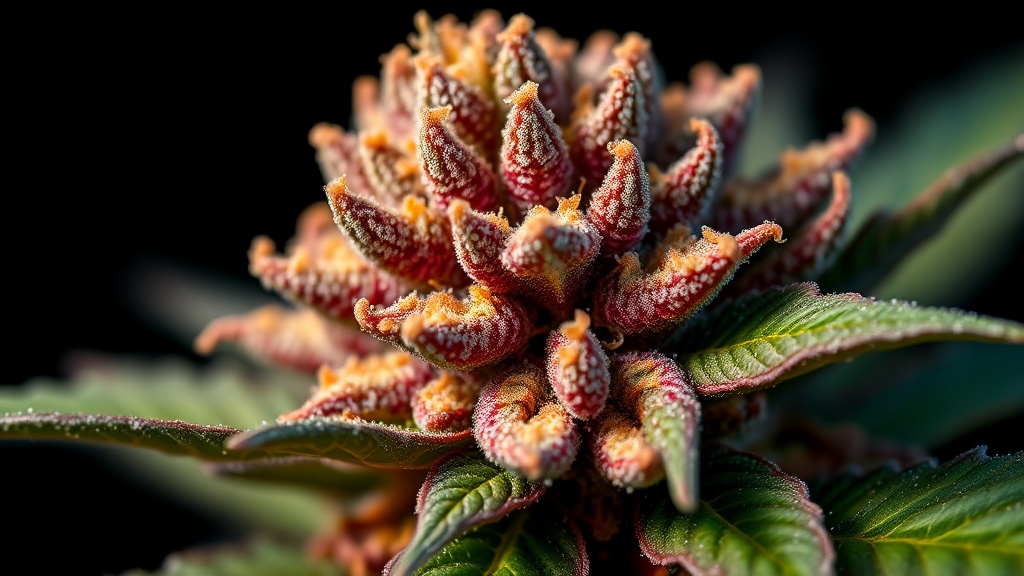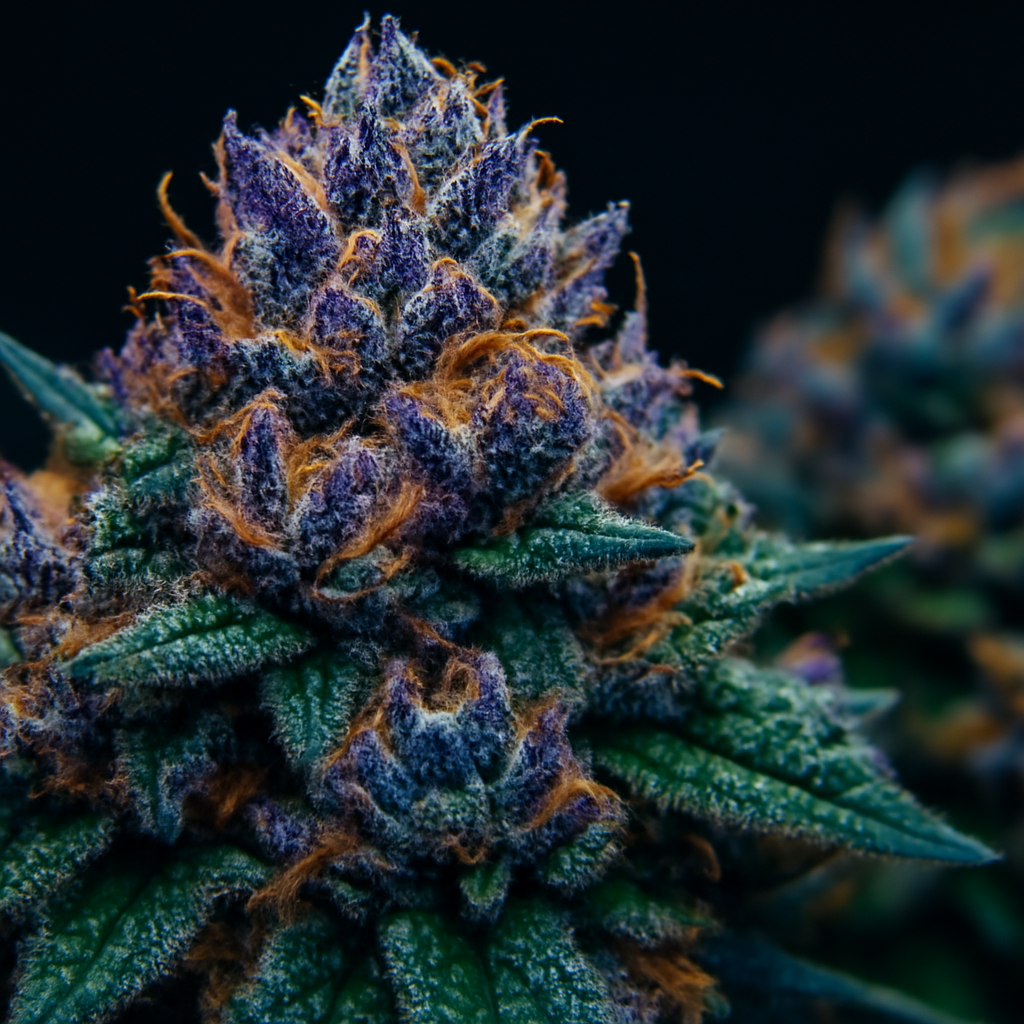
If you searched kush khalifa, you’re looking for Khalifa Kush or KK: an indica-dominant hybrid built from a proprietary OG Kush phenotype and known for dense, resin-heavy flowers with a lemon-pine-fuel nose. It can test in the 24-29% THC range, but the grower challenge is not potency. It’s height control, airflow, and finishing dense buds clean without mold or a harsh dry.
The basic playbook is simple: keep veg short, top once, spread the plant horizontally, flip before the tent feels full, and drop humidity hard in late flower. That approach also lines up with how growers actually run rooms on GrowGuide. Across 1,000 tracked journals, 733 are indoor, 632 use soil, and 548 are manually fed—a good fit for KK, because this cultivar rewards hands-on irrigation and daily canopy work more than “set it and forget it” growing.
Kush Khalifa at a glance
| Trait | What to expect |
|---|---|
| Genetics | Indica-dominant hybrid from a proprietary OG Kush phenotype |
| THC potential | Typically 24-29% |
| Flowering time | Usually 8-9 weeks indoors |
| Stretch | Can reach 200% in early flower if unmanaged |
| Bud structure | Dense, resinous, mold-prone if humidity stays high |
| Aroma | Lemon, pine, fuel; compare profiles in the Terpene Explorer |
| Best fit | Indoor tents/rooms with SCROG, strong extraction, and a dehumidifier |
Kush Khalifa setup: control height before it controls you
KK is not the strain to casually over-veg in a short tent. If your ceiling is limited, build the room around horizontal growth from day one.
- Tent size: A 3×3 works for 1-2 trained plants. A 4×4 is more comfortable for 3-4 plants under a net.
- Containers: 3-5 gallon pots in soil are forgiving. In coco, 2-3 gallon pots are enough if you irrigate frequently.
- Lighting: Start seedlings around 200-300 PPFD, run veg at 400-600 PPFD, and flower at 800-1,000 PPFD. Use the Grow Light Calculator to set fixture height instead of guessing.
- Air exchange: Size extraction so the room stays in negative pressure and heat leaves quickly after lights-on.
- Humidity control: A dehumidifier matters more here than with airy cultivars. Dense KK flowers can trap moisture deep in the cola.
- Air movement: Use one fan above the canopy and one below it. Do not blast flowers directly.
If you’re deciding between soil and coco, soil is the easier lane for most home growers. That matches GrowGuide journal behavior too: soil is by far the most logged medium. Coco can grow KK faster and hit heavier uptake during stretch, but only if you’re comfortable checking runoff EC and feeding more than once per day once the root zone is established.
Kush Khalifa training plan: top early, SCROG hard
The best way to grow kush khalifa indoors is to flatten it. Left alone, it behaves like a lanky OG line with long internodes and a strong post-flip surge.
- Top at the 4th or 5th node. This slows the main spear and gives you two dominant arms to work with. If you want a refresher on cut timing, see Fimming vs Topping Cannabis.
- Wait 5-7 days for recovery. Don’t stack heavy pruning and topping on the same day.
- Start LST immediately after recovery. Pull the mains outward and tie side branches into empty space.
- Install the trellis before flip. Flip when the screen is only 70-80% full, because stretch can still double the height and width.
- Tuck daily for the first 14-21 days of flower. That’s when KK does most of its vertical damage.
- Lollipop the lower third. Remove weak lower growth that won’t reach light; it only steals energy and blocks airflow.
From clone, I’d usually veg KK only 14-21 days after rooting if space is tight. From seed, 21-35 days is more typical. Need a quick calendar? Use the Grow Schedule Planner to map topping, trellis install, flip, and harvest windows.
Kush Khalifa nutrients and irrigation
KK is a fairly hungry plant once stretch begins, especially for calcium and magnesium. Most feeding mistakes happen in the first three weeks after flip, when growers either underfeed during explosive growth or keep nitrogen too high for too long.
| Stage | EC target | pH target | Notes |
|---|---|---|---|
| Seedling | 0.4-0.8 | 6.0-6.5 soil / 5.8-6.2 coco | Very light feed; avoid soaking small pots |
| Early veg | 1.0-1.2 | 6.0-6.5 soil / 5.8-6.2 coco | Build roots and side branching |
| Late veg | 1.3-1.6 | 6.0-6.5 soil / 5.8-6.2 coco | Healthy green growth, not dark clawing |
| Early flower | 1.6-1.8 | 6.0-6.5 soil / 5.8-6.2 coco | Watch Ca/Mg closely during stretch |
| Peak flower | 1.8-2.2 | 6.0-6.5 soil / 5.8-6.2 coco | Highest demand; avoid drought stress |
| Final 2 weeks | 1.4-1.6 | 6.0-6.5 soil / 5.8-6.2 coco | Taper feed for cleaner finish |
In soil: water only when the pot gets noticeably lighter. KK doesn’t like constantly soggy root zones.
In coco: once roots are established, feed daily or multiple times daily with 10-20% runoff. Keep runoff EC from creeping too far above input.
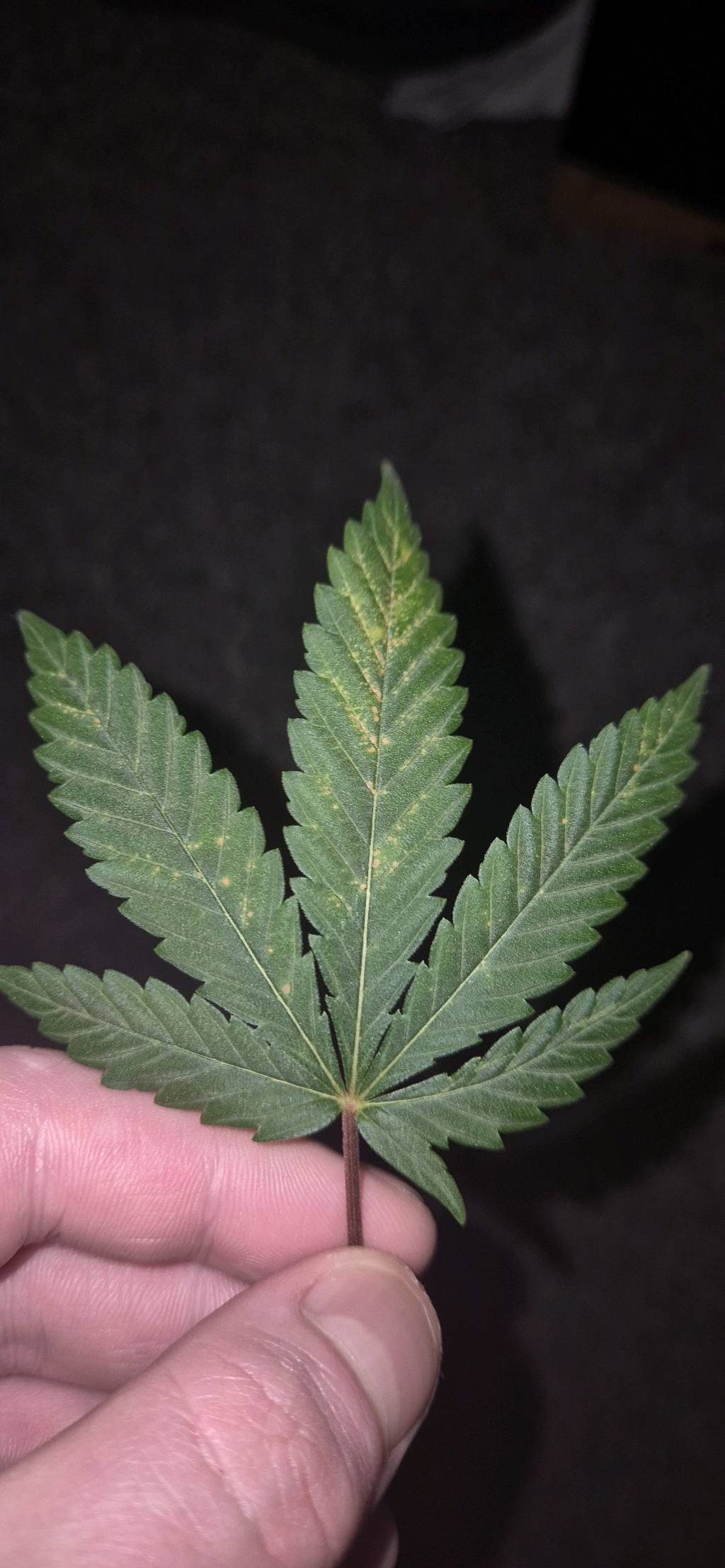
Classic KK deficiency signs include rust spotting, interveinal paling, and stalled top growth during the transition to bloom. If that shows up, check pH first, then confirm whether you’ve simply outpaced your cal-mag supply. The Nutrient Deficiency Identifier is useful here because calcium problems, magnesium problems, and light stress can look similar at first glance.
One more tip: don’t chase dark green leaves in flower. After week 3, excessive nitrogen usually gives you clawed fans, softer flowers, and slower ripening. With kush khalifa, that’s exactly the wrong direction.
Kush Khalifa flower room targets and common problems
Dense flowers are the whole point of this cultivar, but they’re also the biggest risk. Your climate should get drier as buds stack.
- Seedling: 75-80°F and 65-70% RH
- Vegetative stage: 72-78°F and 55-65% RH
- Early flower: 70-77°F and 45-55% RH
- Late flower: 68-75°F and 38-45% RH
If you like working with VPD, these conditions roughly translate to about 0.8-1.0 kPa in seedling, 1.0-1.2 in veg, 1.2-1.4 in early flower, and 1.4-1.6 in late flower. That’s the zone where KK usually drinks, stretches, and finishes without either stalling or sweating.
Problem: explosive stretch after flip
Cause: too much veg time, no trellis, or light intensity too low before flower. Fix it by increasing veg PPFD into the 400-600 range, topping earlier next run, and flipping when the canopy is only 70-80% full.
Problem: bleached tops or taco leaves
Cause: too much light or canopy heat. In flower, 800-1,000 PPFD is plenty for most rooms unless you’re also running added CO₂. Recheck fixture distance with the Grow Light Calculator.
Problem: bud rot risk in late flower
Cause: stacked interior growth, overwatering, weak airflow, or RH sitting above 50% too long. Strip dead interior leaves, keep the lower third clean, and don’t let the room spike in humidity right before lights-on.
Problem: weak lowers and airy popcorn
Cause: no lollipopping and poor light penetration. KK does better with fewer, better tops than with a crowded bush.
Outdoor growers can absolutely finish KK, but only in a reliably dry late season. Indoors is the safer play, which is exactly why GrowGuide journals skew so heavily in that direction.
Harvest Kush Khalifa at the right trichome window
Don’t harvest KK by pistil color alone. Watch trichomes on the calyxes, not just the sugar leaves.
- Mostly milky, 0-10% amber: brighter, more energetic effect
- Mostly milky, 10-15% amber: heavier body relaxation and fuller OG weight
You’ll also notice swollen calyxes, fewer fresh white pistils, and a stronger fuel note near the finish. Large colas should feel firm but not wet or spongy inside. If you see internal gray or brown when inspecting a cola, that’s botrytis, not “late fade.”
For scheduling, assume about 56-63 days of flower in most indoor setups, then verify by trichomes. If you want to keep the whole run organized from flip to jar, log it in a diary. GrowGuide’s article on how to keep a cannabis grow diary is worth using for strains like this because small environment mistakes compound fast.
Kush Khalifa dry and cure: protect the aroma
KK’s lemon-pine-fuel profile gets flat fast if you overdry it. After harvest, remove large fan leaves, hang whole branches, and keep the room around 60-70°F with roughly 50% RH and steady indirect airflow. Aim for a 10-14 day dry, not a 4-day rush.
Jar when the outside feels dry but the center still has a little life, and small stems snap instead of folding. A mini hygrometer in each jar helps. You want the jar to settle in the 58-62% RH range. If it jumps past 65%, spread the buds out for a few hours before resealing.
For curing, burp daily during the first week, then every 2-3 days during week two. Two weeks is usable; four weeks is better. The Dry & Cure Timer makes this easier, especially if you’re trimming multiple plants on different days.
Once you have your dry weight, the Yield Calculator and Cost Per Gram Calculator are useful for comparing whether your next run should stay in soil or move to coco.
Frequently Asked Questions
Is kush khalifa the same as Khalifa Kush?
Yes. “Kush Khalifa” is a common search variation for Khalifa Kush, often shortened to KK. The cultivar is associated with a proprietary OG Kush phenotype.
How long does kush khalifa take from seed to harvest indoors?
Most indoor runs take about 10-14 weeks from seed to chop, depending on veg length, plus 2-4 more weeks for drying and curing. Flowering itself usually lands around 8-9 weeks.
Why does kush khalifa stretch so much after the flip?
It has OG-style vigor and can gain up to 200% in early flower. Flip earlier, top at node 4-5, and run a trellis before the canopy is full.
Is kush khalifa better in soil or coco?
Soil is easier and more forgiving for most home growers. Coco can be faster and more productive, but only if you keep irrigation, runoff, and pH tightly managed.
When should I harvest kush khalifa for the best balance of potency and body effect?
Harvest when trichomes are mostly milky with a small percentage amber on the calyxes. Around 10-15% amber usually gives a strong but still clean KK finish.
References
- GrowGuide platform data, 2026. Analysis of 1,000 tracked journals shows 733 indoor grows, 632 soil grows, and 548 manual-feed grows, supporting the article’s indoor, hands-on management recommendations.
- GrowGuide, 2026. Khalifa Kush: Strains, Genetics, Yields & Grow Techniques — reports stage-specific temperature and RH targets, veg PPFD of 400-600, flower PPFD of 800-1,000, and pH targets of 6.0-6.5 in soil and 5.8-6.2 in coco. Source
- GrowGuide, 2026. Kalifa Kush Grow Guide: Yields, Environment & Harvest Timing — notes 24-29% THC potential, elevated calcium and magnesium demand during bloom transition, and peak flower EC around 1.8-2.2 with a late taper to 1.4-1.6. Source
- Strainpedia, 2026. Khalifa Kush — describes KK as a vine-like, stretch-heavy cultivar that can expand up to 200% in early flower and recommends harvesting at mostly milky trichomes with some amber. Source
- StrainGuide, 2026. Khalifa Kush: The Complete Strain Guide — recommends topping at the 4th or 5th node and using LST plus SCROG to manage vertical growth and improve canopy efficiency. Source