Why OG Kush Demands Your Full Attention
OG Kush is one of the most cultivated strains in the world for good reason — the resin production, the fuel-and-citrus terpene profile, and the heavy, sedative effect ceiling are all genuinely exceptional. But this strain does not reward lazy growing. OG Kush is notoriously susceptible to powdery mildew, botrytis, and magnesium deficiency, and it will make you pay for humidity spikes or sloppy pH management faster than most cultivars. The flip side: dial in the environment and your nutrient line, and it absolutely delivers. Of the 1,000 grow journals tracked on Grow Guide, 734 are indoor grows — and OG Kush is a repeat performer in that environment because controlled conditions let you manage its sensitivities precisely.
This guide runs you through the full grow cycle with specific numbers: PPFD targets, VPD ranges, EC windows, feeding transitions, and harvest signals. Whether you're running soil or coco, this is written for growers with plants already in front of them.
OG Kush Grow Cycle: Stage-by-Stage Timeline
OG Kush is a photoperiod strain. It will not flower until you flip to a 12/12 light schedule. Veg time is your call — most indoor growers run 4–6 weeks in veg to hit a manageable canopy height before the stretch that comes in weeks 1–3 of flower. Plan your full timeline using the Grow Schedule Planner.
Setting Up Your OG Kush Indoor Grow
Grow Space and Lighting
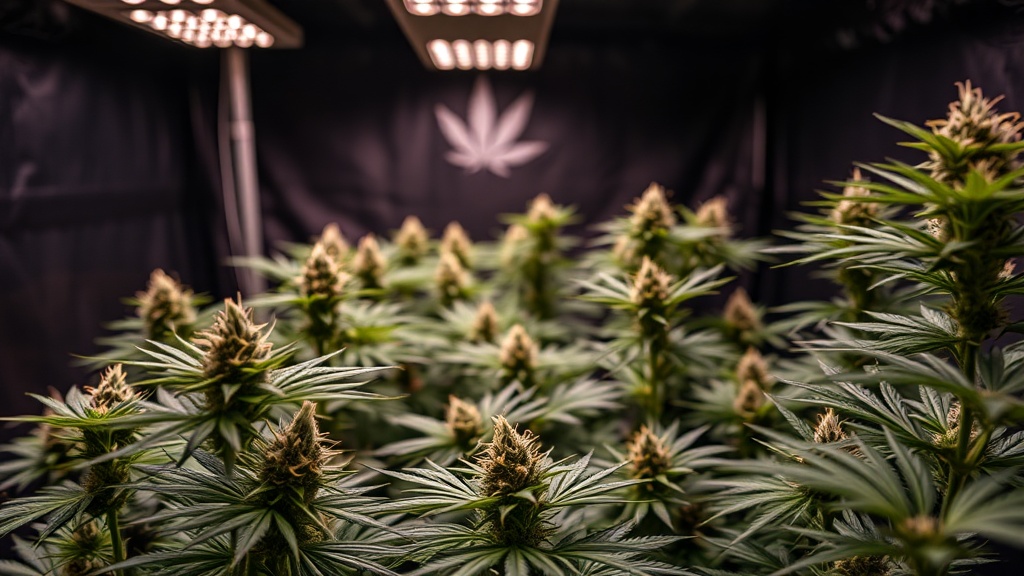
OG Kush stays at medium height — typically 90–120 cm indoors with LST or topping, taller without training. A 2×4 ft tent handles two plants comfortably; a 4×4 handles four. For lighting, target 600–900 PPFD during veg and push to 900–1,100 PPFD in flower. A quality full-spectrum LED in the 300–600W range (actual draw) will cover a 4×4 efficiently. Check your light positioning and coverage with the Grow Light Calculator before you commit to a hanging height.
Run an 18/6 light schedule through veg and flip to 12/12 to trigger flowering. CO₂ enrichment (1,000–1,200 ppm) can push yields in sealed rooms, but only makes a difference if your other parameters — light, VPD, EC — are already dialed in.
OG Kush Growing Medium
Of the grows tracked on Grow Guide, 63% use soil and 15% run coco coir. Both work well for OG Kush — the choice changes your watering frequency and nutrient approach more than your end result.
- Soil: Use a well-amended mix with 20–30% perlite. Water when the top 1–2 inches are dry. Organic inputs work beautifully here — see Best Organic Nutes for Cannabis (2026) for compatible product options.
- Coco coir: Irrigate to 10–15% runoff once or twice daily in peak flower. Coco is pH 5.8–6.2 territory. Buffered coco with added perlite (30%) gives excellent oxygen to roots and fast response to nutrient adjustments.
Fabric pots (3–5 gallon for one plant, 5–7 gallon for extended veg) promote air pruning and prevent root-bound issues. OG Kush does not appreciate sitting in waterlogged medium — drainage matters more for this strain than most.
OG Kush Environmental Targets by Stage
OG Kush has dense, compact buds that trap moisture — botrytis can destroy a harvest in 48 hours if late-flower humidity climbs above 50%. A reliable hygrometer at canopy level is not optional. If you're seeing leaves tacoing or tips curling down, check VPD before adjusting nutrients; the problem is often environmental, not nutritional.
OG Kush Nutrient Schedule
Feeding by Stage
OG Kush is a moderate-to-heavy feeder that is sensitive to nitrogen toxicity — especially in mid-to-late flower. Start conservatively and increase EC based on plant response, not the bottle label.
- Seedling (days 1–14): EC 0.4–0.8. Plain water or a very diluted seedling formula. See Best Nutrients for Cannabis Seedlings 2026 for specific product guidance.
- Vegetative: EC 1.2–1.8. Higher N, moderate P and K. CalMag at 3–5 ml/gal is non-negotiable — OG Kush shows calcium and magnesium deficiency earlier than most strains, especially in coco.
- Early flower (weeks 1–4): EC 1.6–2.2. Transition to a bloom base — reduce N, increase P and K. PK boosters can be introduced at week 3.
- Late flower (weeks 5–8): EC 1.4–1.8. Back off nitrogen hard. Continue CalMag. Consider a ripening formula or molasses (1 tsp/gal) in soil grows.
- Flush (final 7–10 days): Plain pH-adjusted water at EC 0.0–0.4 to clear residual salts and improve smoke quality.
pH Windows
- Soil: pH 6.2–6.6 at the root zone
- Coco / hydro: pH 5.8–6.2
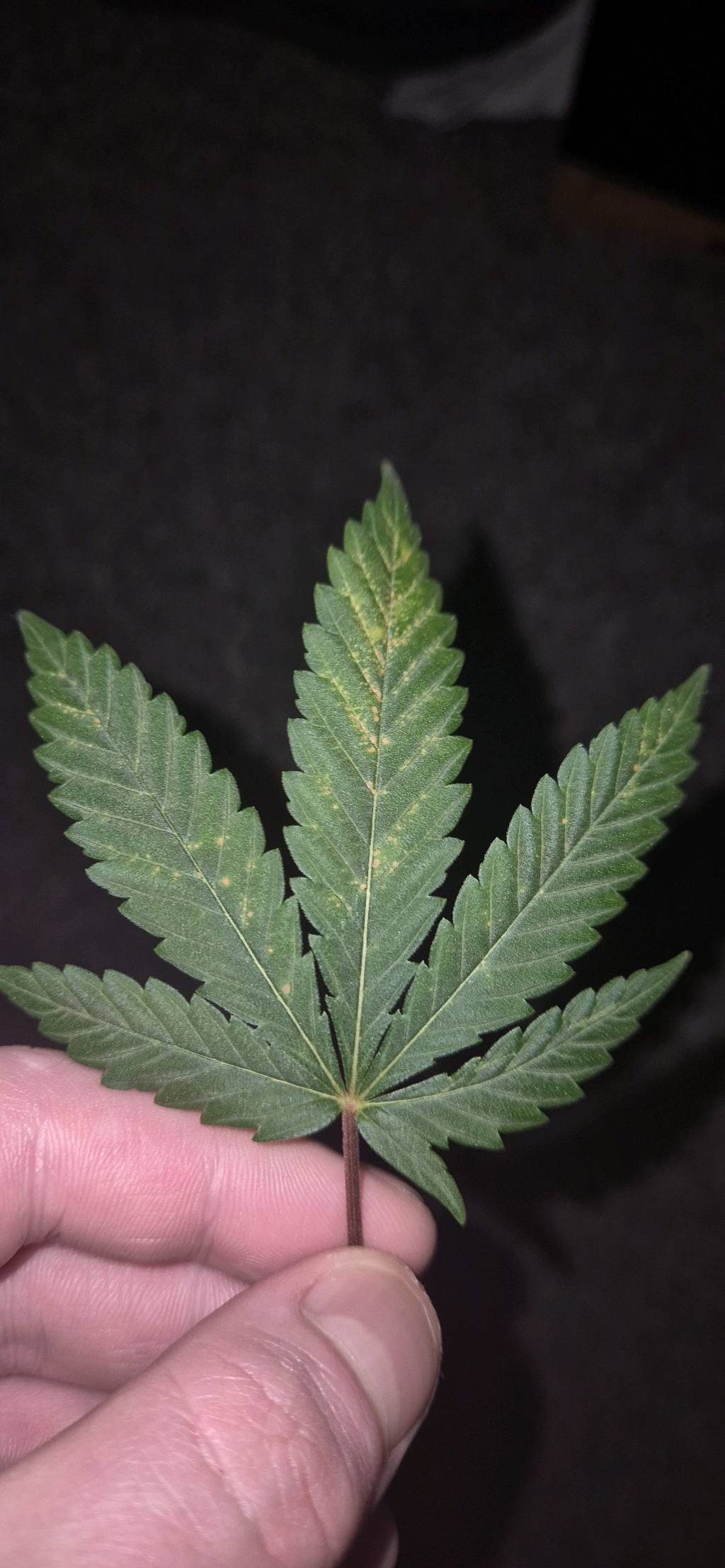
pH drift is the most common cause of nutrient lockout in OG Kush grows. If you're seeing brown spots on lower leaves or interveinal chlorosis mid-veg, check pH before reaching for more feed. Use the Nutrient Deficiency Identifier to cross-reference your symptoms before adjusting.
Training OG Kush for Maximum Canopy Coverage
OG Kush has a tendency to grow a dominant central cola with lower branches that don't reach the canopy. Without training, you're leaving yield on the table. Low-stress training (LST) — bending and tying branches outward from week 2 of veg — is the simplest approach and works well for single-plant growers.
For multiple plants, topping at node 4–5 in early veg, then applying a scrog net at 12–15 inches, gives a flat, even canopy that receives uniform light. If you're deciding between topping and FIM, the Fimming vs Topping Cannabis: 2026 Guide breaks down the tradeoffs. OG Kush generally responds well to a single top — aggressive defoliation or multiple FIMs can stress it into slower recovery than you'd see with more forgiving cultivars.
Stop all training by the end of week 2 of flower. Stress during bud set noticeably affects OG Kush's final terpene expression.
Recognizing and Fixing Common OG Kush Problems
Powdery Mildew
White powdery patches on upper leaf surfaces, typically starting mid-canopy. Prevent by keeping RH below 50% in flower and maintaining airflow through the canopy. If you catch it early, a potassium bicarbonate spray (1 tbsp per liter) applied during lights-off works well. Remove affected fan leaves immediately.
Overwatering
The number one OG Kush killer. Symptoms: downward-curling leaves (the "claw"), slow growth, yellowing lower leaves. Lift your pot — water only when it feels noticeably light. In soil, the finger-test works: push 2 inches in, water only when dry at that depth. In coco, daily irrigation with proper runoff prevents salt buildup without waterlogging.
Calcium and Magnesium Deficiency
Brown spots with yellow halos on mid-canopy leaves (cal deficiency) or interveinal yellowing (mag deficiency) are OG Kush classics. Add CalMag at 3–5 ml/gal as a preventive measure throughout the grow rather than waiting for symptoms. Check your pH first — both nutrients lock out below pH 6.0 in soil.
For any symptom you're unsure about, run it through the Nutrient Deficiency Identifier before changing your feed line.
Harvesting OG Kush: When and How
OG Kush typically finishes at 8–9 weeks of flower indoors. Don't rely on the calendar alone — trichome state is the definitive signal.
- Get a 60x loupe or digital microscope. Anything less and you're guessing.
- Cloudy trichomes = peak THC, more energetic and cerebral effect
- Cloudy + 10–20% amber = the OG Kush sweet spot — heavy, sedative, full-spectrum effect
- 30%+ amber = degraded THC, heavier body effect, more CBN
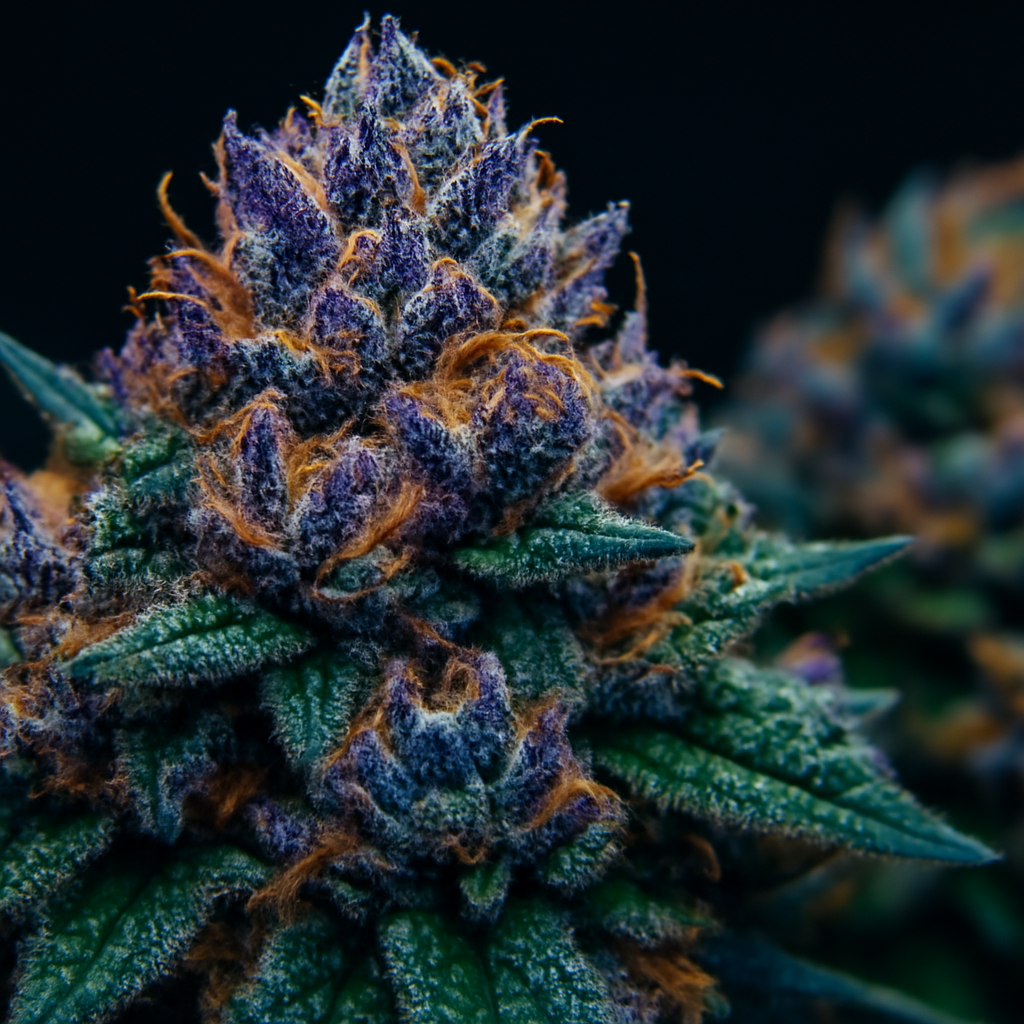
Visual indicators to confirm readiness: calyxes are swollen and stacked, pistils have turned 70–90% orange/brown, and the plant has stopped producing new white pistils. Resin is visibly dripping on trichome stalks under magnification.
Harvest in the final two hours of the dark cycle to maximize terpene content. Cut branches individually, remove large fan leaves, and hang whole branches if your drying space allows — it slows the process and improves quality.
Before you harvest, run your data through the Yield Calculator to benchmark against similar OG Kush grows.
OG Kush Drying and Curing
Drying
Hang whole branches in a dark room at 60–70°F with 50–55% RH and good airflow (not blowing directly on buds). This takes 7–10 days. The drying is done when small stems snap cleanly rather than bending. Rushing this step — with a dehumidifier cranked or temps above 75°F — destroys terpenes. OG Kush's fuel and lemon terpenes (myrcene, limonene, caryophyllene) are volatile; protect them with a slow dry.
Curing
Trim to your preference, then fill glass mason jars to about 75% capacity. Drop a 62% Boveda or Integra Boost pack in each jar. Burp daily for 10–15 minutes in week 1, every other day in week 2, twice a week in weeks 3–4. After 4 weeks, OG Kush is smokeable. After 6–8 weeks, the full terpene profile locks in and the harsh edge disappears. Track your cure precisely with the Dry & Cure Timer.
If you open a jar and get an ammonia smell, moisture is still escaping from the bud — leave the jar open for 2–4 hours before resealing. This is normal in the first week and not a sign of mold if caught early. Check for actual mold (white fuzzy patches, not crystal trichomes) every time you burp.
Tracking Your OG Kush Grow
The growers who consistently pull better harvests from OG Kush are the ones keeping journals. Logging your EC, pH, temps, and RH at each watering gives you a reference to diagnose problems fast — and compare against your next run. See How to Keep a Cannabis Grow Diary for the framework, or use Grow Guide's built-in journal to track your OG Kush grow from day one.
After harvest, run your numbers through the Cost Per Gram Calculator to understand your actual production cost and see where efficiency gains are possible on your next run.
Frequently Asked Questions
How long does OG Kush take to flower indoors?
OG Kush typically flowers in 8–9 weeks under a 12/12 light schedule indoors. Some phenotypes finish closer to 8 weeks; others push to 10. Use trichome state — not the calendar — as your primary harvest signal.
What is the ideal pH for growing OG Kush?
In soil, maintain pH 6.2–6.6 at the root zone. In coco coir or hydro, target 5.8–6.2. pH outside these ranges causes nutrient lockout, which OG Kush shows quickly through yellowing and brown spotting.
Why does OG Kush get powdery mildew so easily?
OG Kush produces dense, tightly packed buds that restrict airflow and retain moisture at the bud surface. Keep relative humidity below 50% during flowering, maintain canopy airflow with oscillating fans, and avoid wetting foliage during lights-on periods.
How much can I expect to yield from one OG Kush plant indoors?
A single OG Kush plant under a 400–600W LED with 6 weeks of veg and LST or topping typically yields 60–120g dried. Optimized setups with a scrog and full environmental control can push 150g+ per plant. Use the Yield Calculator to estimate your specific setup.
How long should I cure OG Kush for the best flavor?
Minimum 4 weeks of jar curing for decent smoke. The full terpene profile — myrcene, limonene, and caryophyllene — develops noticeably between 6–8 weeks of cure. Store at 58–62% RH and 60–65°F in a dark location.
References
- Hypno Seeds (2026). How to Grow OG Kush Seeds: Grow Diary. Documents indoor setup requirements including fabric pots, LED lighting 300–600W actual draw, and pH management at 6.2–6.6. hypnoseeds.com
- Premium Seed Bank / STRNG Seeds (2026). OG Kush Strain: Complete Guide to Effects, Yield and Cultivation. Documents temperature and humidity targets for vegetative (70–80°F, 50–60% RH) and flowering (40–50% RH) stages. strngseeds.com
- Agriculture Novel (2026). OG Kush Cultivation Mastery: The Complete Grower's Guide. Covers trichome-based harvest timing and full dry-and-cure protocol including jar burping schedule and 2–6 month cure window for terpene development. agriculturenovel.co
- MMJ.com (2026). Drying and Curing Cannabis: A Complete Guide. Details optimal drying environment of 60–70°F, 50–60% RH over 7–10 days and airtight jar curing methodology. mmj.com
- The Seed Connect (2026). Common Cannabis Cultivation Mistakes. Documents overwatering diagnosis and correction methods including soil moisture testing and drainage optimization. theseedconnect.com