What Is the Kosher Dawg Strain?
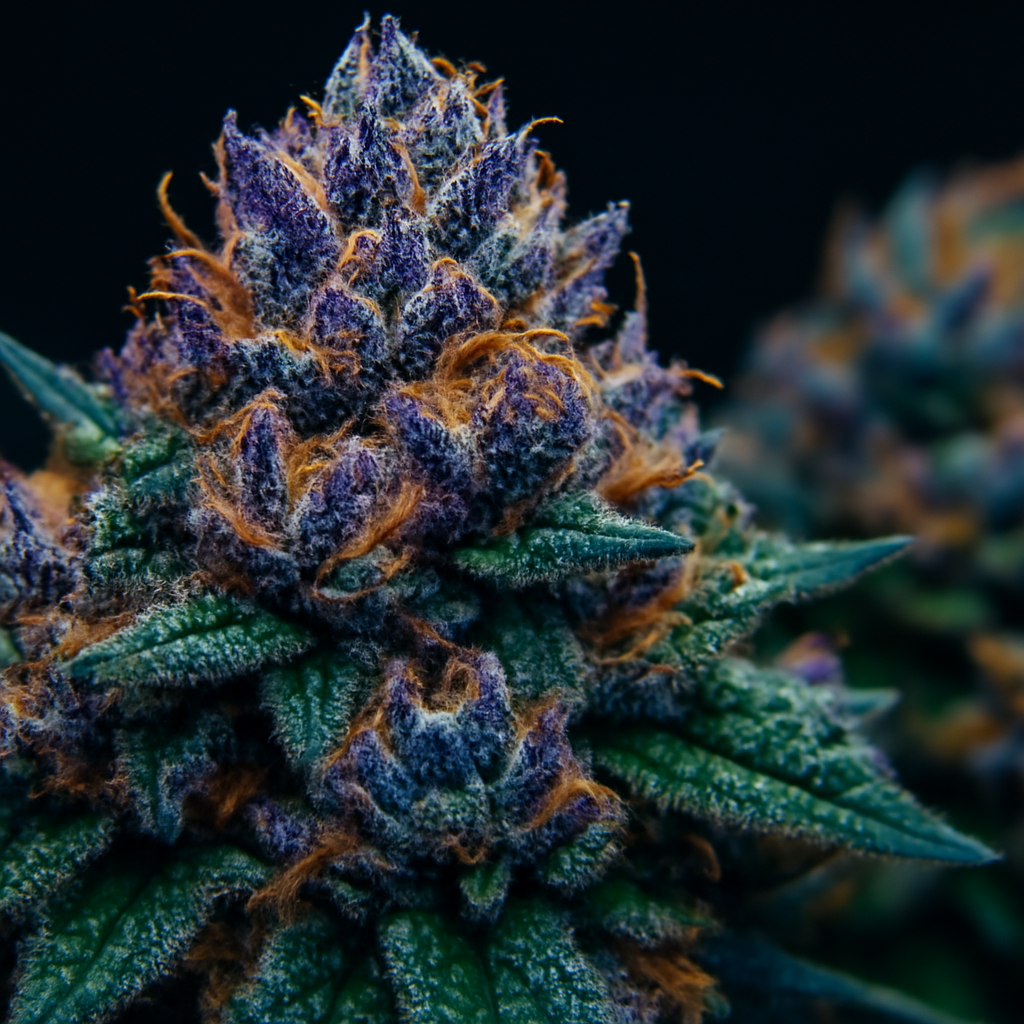
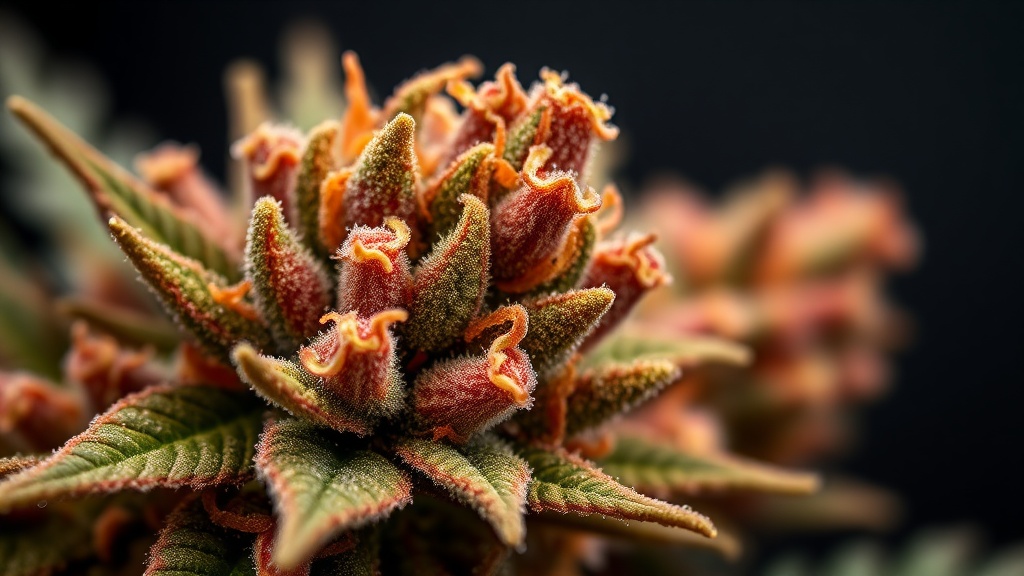
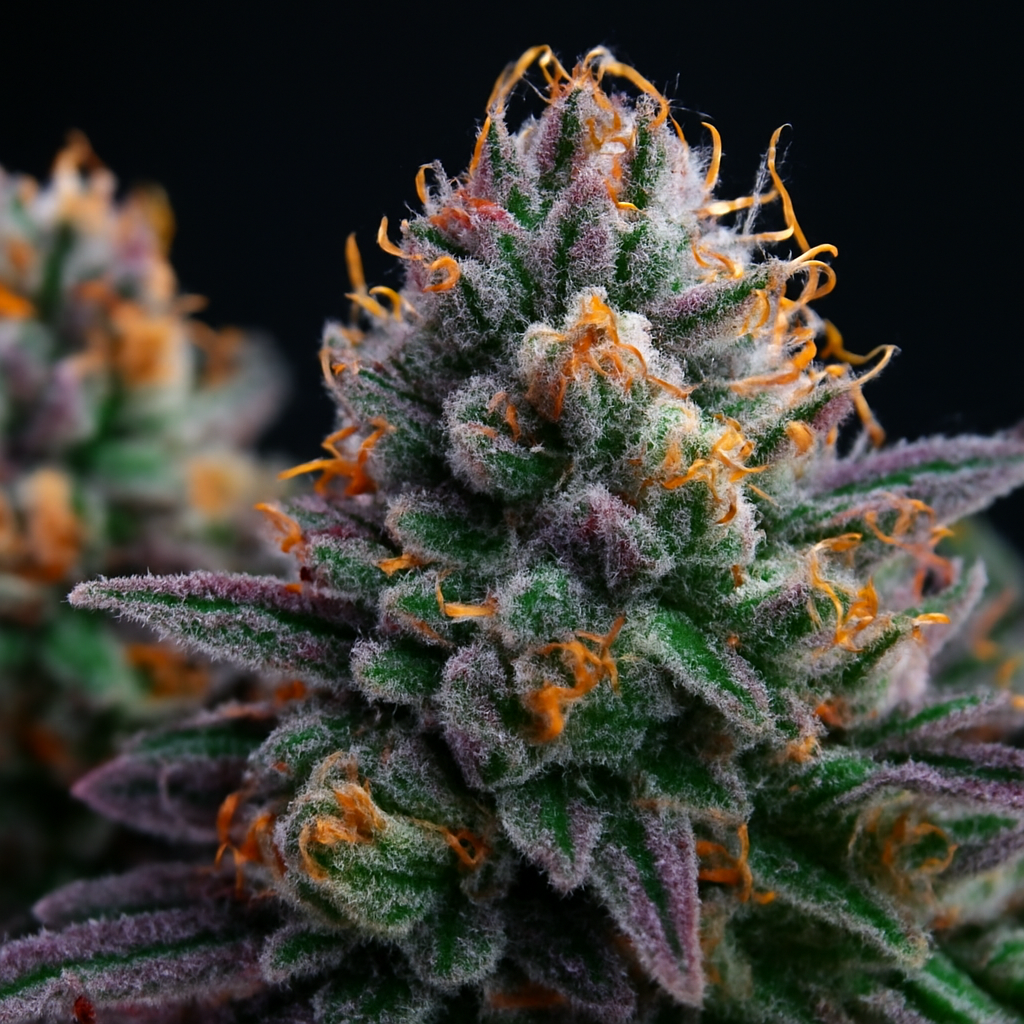
The Kosher Dawg strain — also called Hebrew National in some circles — is an indica-dominant hybrid bred by DNA Genetics, crossing Kosher Kush with Stardawg. The result is a dense, resinous plant that punches well above its weight class: typical lab-tested THC sits between 18–25%, with elite phenotypes hitting 28%. CBD rarely clears 0.2%, so this is firmly a high-THC cultivar.
The terpene stack is what makes it stand out on the shelf. Beta-caryophyllene dominates (0.3–0.9%), layered with limonene (0.2–0.8%) and myrcene (0.2–0.6%). In practice that reads as fuel, dark citrus, and a subtle earthy undertone — distinctly Dawg with a Kush backbone. If you've run either parent before, you'll recognise the lineage immediately at chop.
From a cultivation standpoint, Kosher Dawg rewards growers who stay on top of structure management and environmental precision. Let it get lazy in a hot, humid room and you'll fight bud rot on its fat colas. Dial it in, and you're looking at one of the more generous indica-dominant yields in this THC bracket. Use our Grow Schedule Planner to map the full run before you drop the seed.
Setting Up the Environment for Kosher Dawg
Kosher Dawg is an indoor-first strain — its density and resin load make outdoor humidity a genuine risk if you're in a maritime climate. Of the 1,000 grow journals tracked on Grow Guide, 736 (73.6%) are indoor runs, which lines up with how most serious cultivators approach heavy indica-dominant hybrids like this one.
Temperature and Humidity Targets
- Vegetative: 72–80°F (22–27°C), RH 55–65%
- Early flower (weeks 1–4): 70–78°F (21–26°C), RH 45–55%
- Late flower (weeks 5–harvest): 68–75°F (20–24°C), RH 40–45%
- VPD target: 0.8–1.0 kPa in veg, 1.2–1.5 kPa in late flower
The late-flower humidity drop is non-negotiable with Kosher Dawg. Its colas pack so tightly that moisture trapped inside leads to grey mould within 48 hours. An oscillating fan pointed at (not directly into) the canopy and a quality dehumidifier covering your space will handle this. Do not let RH drift above 50% after week 4 of flower.
Lighting
Full-spectrum LED is the right call here. Target 600–800 µmol/m²/s PPFD in vegetative and step up to 900–1,000 µmol/m²/s in flower. Kosher Dawg responds well to a modest DLI of 35–45 mol/m²/day during peak flower, which is where you get the resin density the strain is known for. Use our Grow Light Calculator to confirm your fixture is actually hitting those numbers at canopy level — manufacturer specs are almost always measured at close range under ideal conditions.
On the 12/12 flip, keep the dark period genuinely dark. Light leaks trigger stress responses and hermaphrodite tendencies in Dawg-lineage plants. Tape every LED indicator, cover every gap.
Training the Kosher Dawg Strain for Maximum Canopy
Left unpruned, Kosher Dawg grows like a typical indica: short, wide internodes, a tendency to stack up rather than spread out. That structure is great for resin production but terrible for light penetration into the lower canopy. Train it early.
Topping and LST
Top at node 4 or 5, once the plant has established a solid root mass (usually 3–4 weeks from germination). This forces two main colas instead of one apical dominance spike. Follow up with LST — use soft ties or silicone-coated wire to bend the branches outward and down, creating an even, flat canopy. If you're running a screen (SCROG), fill it to about 70% before flipping to 12/12; Kosher Dawg will stretch another 30–50% in the first three weeks of flower. See our full breakdown on fimming vs topping if you want to compare approaches.
Avoid heavy defoliation after week 3 of flower. The plant needs its fan leaves for energy production at this stage, and the Kush genetics mean it doesn't bounce back quickly from late-flower stress.
Nutrients for the Kosher Dawg Strain
Kosher Dawg follows a fairly classic heavy-indica nutrient curve. It's not the most demanding strain on nitrogen in veg, but it absolutely drinks phosphorus and potassium once flower sets. Here's a simplified framework:
| Stage | N–P–K Focus | EC Target (coco/hydro) | pH Range |
|---|---|---|---|
| Seedling (week 1–2) | Low, balanced | 0.4–0.6 mS/cm | 6.0–6.5 |
| Vegetative (week 3–7) | High N, moderate P/K | 1.2–1.8 mS/cm | 6.0–6.5 |
| Early flower (week 1–4) | Reduce N, increase P/K | 1.6–2.2 mS/cm | 6.0–6.5 |
| Late flower (week 5–harvest) | Low N, high P/K, Ca/Mg support | 1.8–2.4 mS/cm | 6.0–6.5 |
| Flush (final 7–10 days) | Plain water or flush solution | <0.5 mS/cm | 6.0–6.5 |
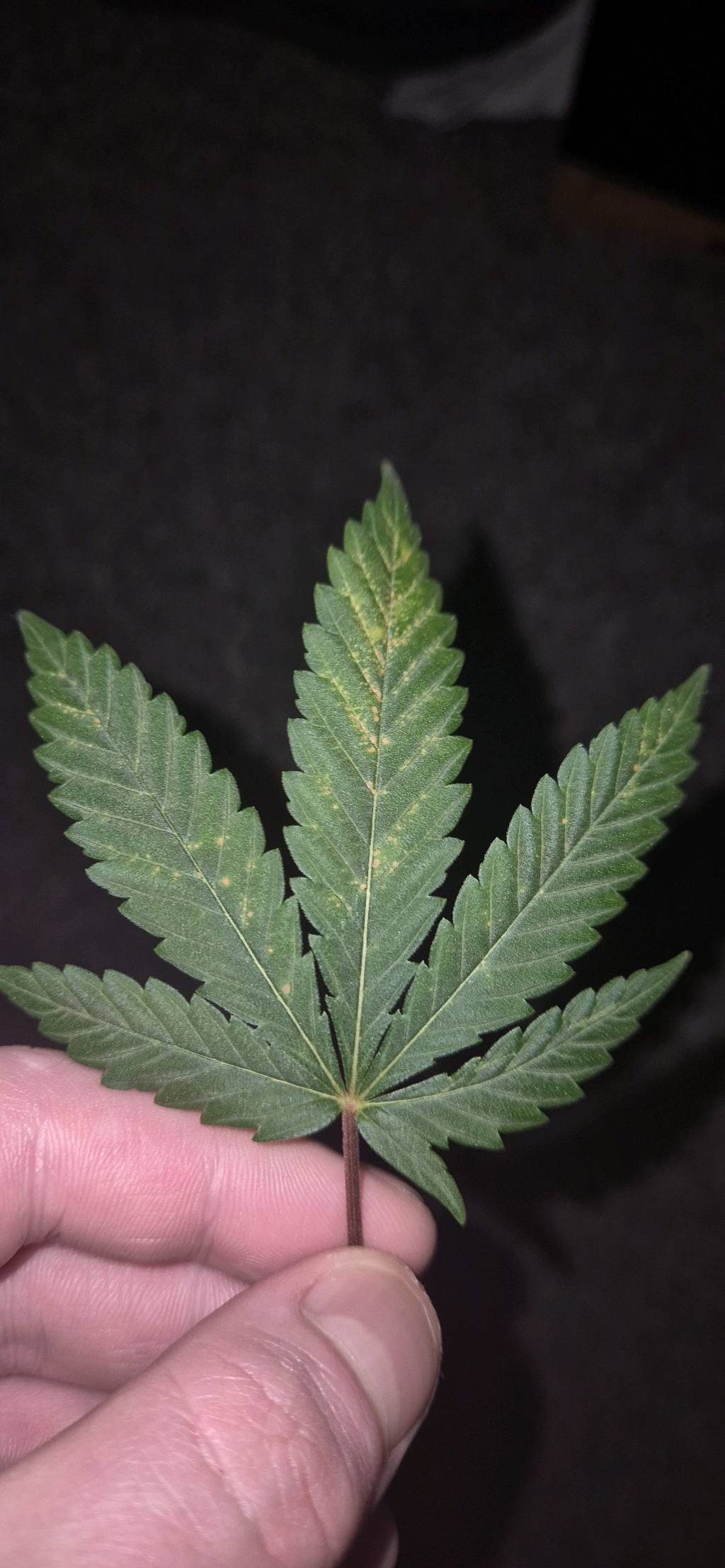
Of the growers on Grow Guide, 63.2% run soil and 15% run coco coir — Kosher Dawg performs well in both. Soil buffers pH naturally and tends to produce smoother terpene expression; coco gives you tighter control over EC and faster veg growth. If you spot yellowing, twisting, or blotching between waterings, run it through the Nutrient Deficiency Identifier before changing anything — chasing phantom deficiencies is one of the fastest ways to stress a late-flower Dawg plant.
Calcium and magnesium are worth supplementing at 100–150 ppm Ca and 50–75 ppm Mg, especially under LED. High-PPFD LED environments increase transpiration and Ca demand significantly. Deficiency in this strain shows first as interveinal chlorosis on mid-canopy leaves. For a deep dive on early-stage feeding, see our guide on best nutrients for cannabis seedlings.
Flowering, Harvest Timing, and Trichome Reading
Flip to 12/12 when your plants have reached roughly half of your target final height — Kosher Dawg will stretch 30–50% in the first three weeks of flower, and you don't want colas pushing into your light. Expect a 9–10 week flower period from flip to harvest-ready trichomes.
Reading Trichomes on Kosher Dawg
Use a 30–60x loupe or digital microscope — phone cameras won't give you the resolution you need. Check the calyx trichomes on mid-canopy buds, not sugar leaves (leaves mature faster and will mislead you). Your harvest window looks like this:
- All clear trichomes: Too early — THC not fully developed, harvest now and you lose potency and yield.
- Mostly cloudy/milky, few amber: Peak THC, energetic effect profile. For this strain, most growers target 5–10% amber.
- 30%+ amber: THC degrading to CBN — sedative shift. Some patients target this intentionally.
With Kosher Dawg's Kush backbone, the sweet spot for most growers is 5–15% amber alongside fully cloudy heads. This preserves the caryophyllene-driven body effect while keeping the limonene brightness intact. Harvest too early and you lose the depth that makes this strain worth growing.
Drying and Curing Kosher Dawg
Dense indica buds hold moisture longer than airy sativa structures, and Kosher Dawg's colas are dense. A slow dry protects terpenes — fast drying above 70°F or below 50% RH will volatilise your limonene before it ever reaches the jar.
Drying Protocol
- Hang whole trimmed branches upside down. Don't wet trim unless you have to — intact sugar leaves slow moisture release naturally.
- Room conditions: 60–65°F (15–18°C), 55–60% RH, dark, gentle airflow (not direct fan blast).
- Target dry time: 7–10 days. Check smaller stems daily from day 7 — when they snap cleanly rather than bend, you're ready to jar.
Curing Protocol
- Jar buds to 60–70% jar capacity in wide-mouth glass mason jars. Tighter pack = slower gas release and uneven cure.
- Burp jars 2–3 times daily for the first 7 days, 10–15 minutes each session.
- After week 1: burp once daily for weeks 2–4.
- Target in-jar RH: 58–62%. Use Boveda 62% or equivalent integra packs to hold this range after the first two weeks.
- Minimum cure: 2 weeks. The complex terpene profile of Kosher Dawg doesn't fully develop until week 4+. If you can wait 6–8 weeks, the fuel-and-citrus note sharpens dramatically.
Innovative methods like freeze-drying (Cryo Cure's system processes in 11–14 hours) and vapour-pressure cool curing (Cannatrol) are worth knowing about for commercial applications, but home growers get exceptional results with the traditional slow approach — and it's free. Use our Dry & Cure Timer to track your burp schedule and get reminders through the process.
Estimating Your Kosher Dawg Yield
Indoor yields for Kosher Dawg in a dialled environment typically land between 400–550g/m² under 600–1,000W equivalent LED. Outdoor plants can produce significantly more — 600g+ per plant in ideal conditions — but the humidity risk makes outdoor runs a calculated bet depending on your climate. Run your numbers through the Yield Calculator to set realistic targets based on your light, space, and training approach, then cross-check grow costs with the Cost Per Gram Calculator.
For a complete walkthrough of an indoor run from germination to harvest, our guide on how to grow one cannabis plant indoors covers every stage in detail, and you can explore Kosher Dawg's terpene profile in more depth with the Terpene Explorer.
Frequently Asked Questions
How long does Kosher Dawg take to flower?
Kosher Dawg has a flowering period of 9–10 weeks from the 12/12 flip. Most growers report trichomes reaching the cloudy-with-early-amber stage right around day 63–70. Don't pull early — Kosher Dawg builds a significant portion of its resin in the final two weeks.
What's the best grow medium for Kosher Dawg?
Both soil and coco coir produce excellent results. Soil (particularly a well-amended organic mix) tends to bring out the terpene complexity of the Kush genetics, while coco gives you faster veg growth and tighter nutrient control. If you're growing for flavour and a slower pace, go soil at pH 6.0–6.5. For yield and speed, coco at pH 5.8–6.2.
Is Kosher Dawg difficult to grow?
It's intermediate difficulty. The main challenges are humidity management in late flower (dense colas are mould-prone above 50% RH after week 4) and structure management without training. With LST and a proper environment, it's a very rewarding grow — generous resin, strong structure, and a clear harvest window.
What terpenes does Kosher Dawg have?
The dominant terpenes are beta-caryophyllene (0.3–0.9%), limonene (0.2–0.8%), and myrcene (0.2–0.6%). This combination produces the characteristic diesel-fuel and dark citrus aroma with an earthy base. Caryophyllene also interacts with CB2 receptors, contributing to the strain's body-focused effect profile.
When should I harvest Kosher Dawg for maximum THC?
Harvest when trichomes on mid-canopy calyxes are predominantly cloudy/milky with 5–15% amber heads. At this stage — typically day 63–70 of flower — THC is at peak development and the limonene-caryophyllene balance is fully expressed. Any more amber than 20% and you're converting THC to CBN, shifting the effect toward heavy sedation.
References
- Joint Commerce (2026). Kosher Dawg Strain: A Comprehensive Strain Guide — covers cannabinoid profile (18–25% THC), terpene percentages, and cultivation environment recommendations. app.jointcommerce.com
- Leafly (2023). How to Grow Kosher Kush — trichome reading methodology and harvest-timing guidance applicable to Kosher Kush-derived cultivars including Kosher Dawg. leafly.com
- MMJ.com (2026). Drying and Curing Cannabis: A Complete Guide — detailed protocols for hang-drying temperature/humidity targets, jar-curing burp schedules, and target in-jar RH ranges. mmj.com
- Grow Magazine (2026). New Drying and Curing Techniques — covers Cryo Cure freeze-drying (11–14 hour processing) and Cannatrol vapour-pressure cool curing as emerging commercial alternatives to traditional slow-dry methods. growmag.com
- Grow Guide Platform Data (2026). Internal grow journal analytics — 1,000 tracked grows: 73.6% indoor, 63.2% soil medium, reflecting the dominant cultivation approaches used by the Grow Guide community.