What Is the Jet Fuel Strain?
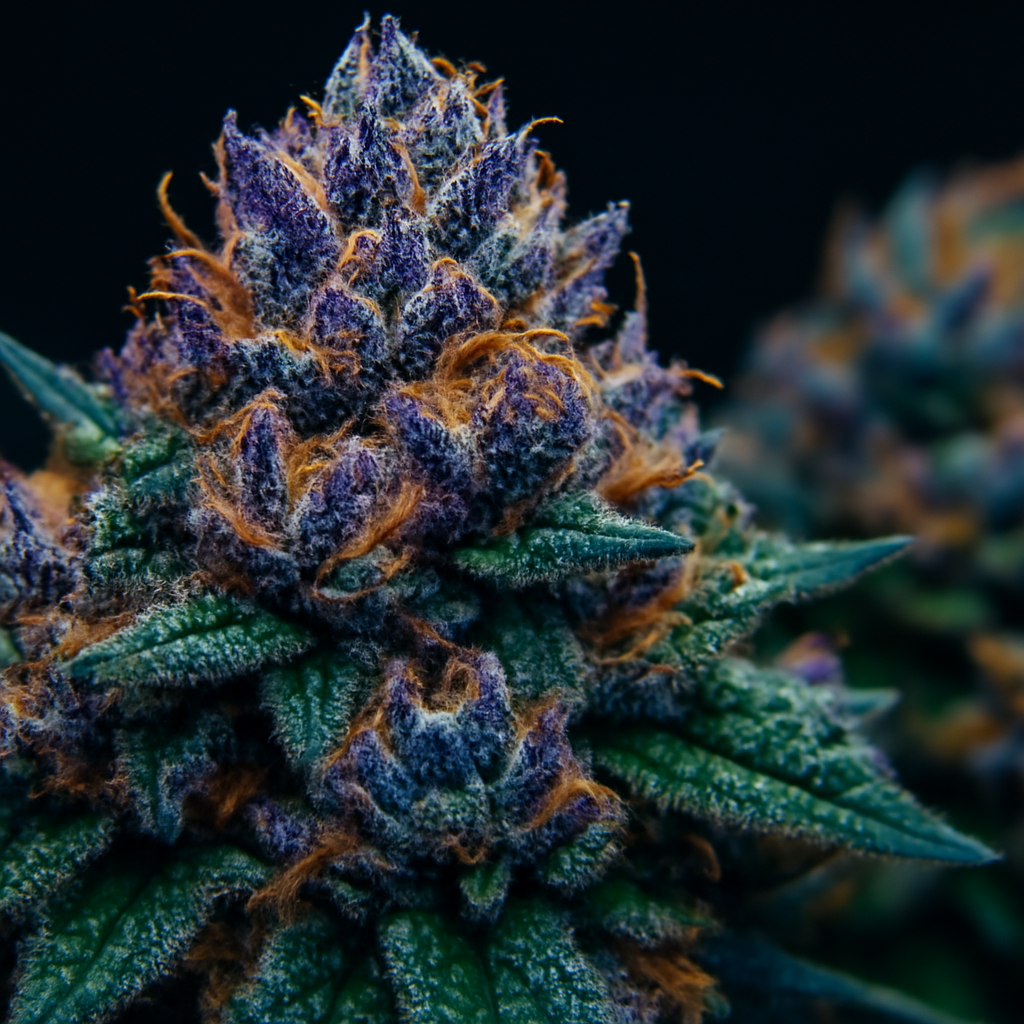
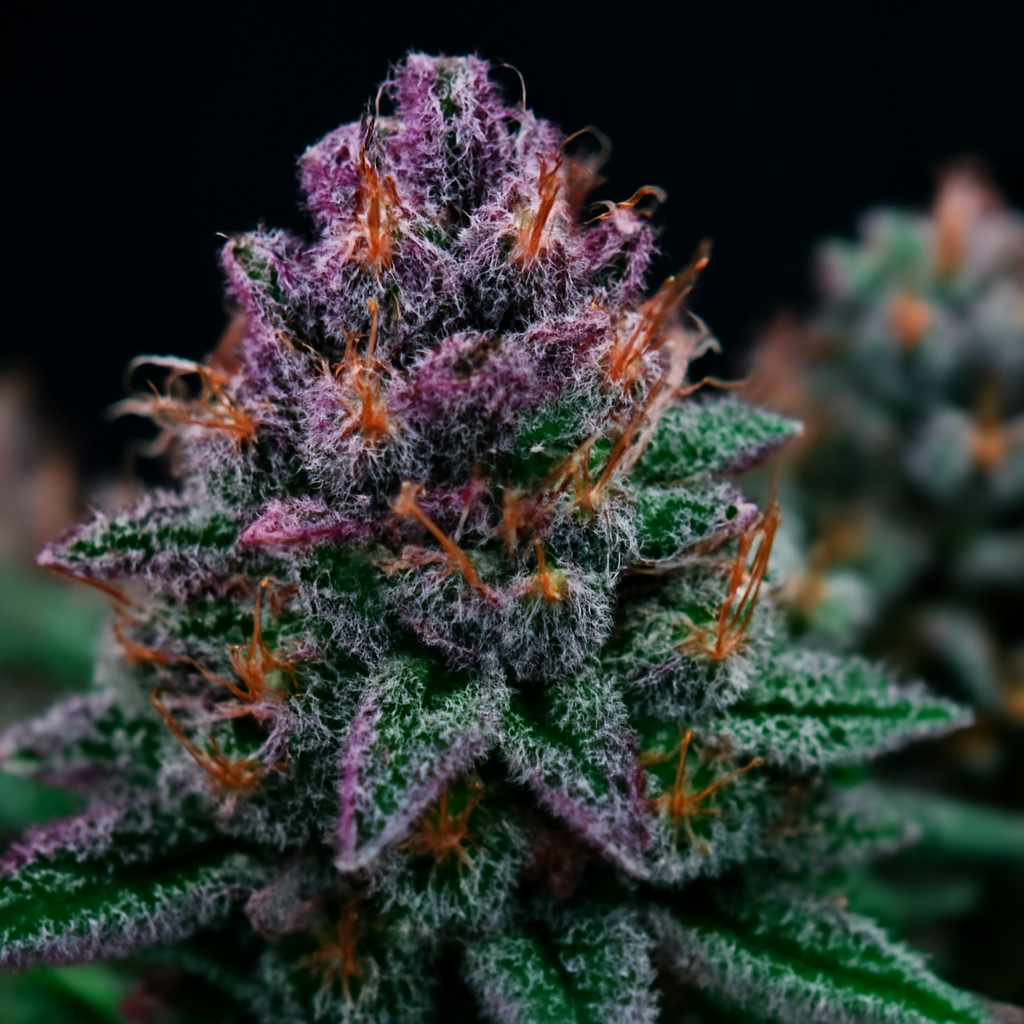
The Jet Fuel strain — commonly called G6 — is a sativa-dominant hybrid with a reputation that lives up to its name. The aroma hits like a fuel depot: sharp diesel, pine resin, and a sour citrus undercurrent that grabs you on the exhale. Effects land fast and tend toward cerebral clarity with a functional, energetic edge rather than couch-lock. For growers, Jet Fuel is a rewarding challenge — it has vigorous internodal stretch in veg, responds beautifully to training, and produces dense, trichome-heavy colas when the environment is dialed in. Nail the basics and this strain over-delivers. Neglect VPD or push nutrients too hard and you'll spend weeks chasing deficiencies.
Whether you're running it in soil or coco, indoors or out, the principles are the same: control the environment tightly, train aggressively in veg, and give it the full 8–10 weeks it needs in flower. This guide walks through every stage with specific numbers — no guesswork.
Jet Fuel Strain Genetics and Key Grow Stats
- Type: Sativa-dominant hybrid
- Also known as: G6
- Flowering time: 8–10 weeks (photoperiod)
- Harvest window: Trichomes mostly cloudy, 10–20% amber
- Indoor yield: Medium-high with training
- Preferred medium: Coco coir or well-amended soil
- Difficulty: Intermediate
According to Grow Guide platform data across 1,000 tracked grows, 73.4% of growers run indoor environments — which aligns perfectly with how Jet Fuel performs best: controlled temps, dialed lighting, and consistent humidity throughout the cycle.
Training the Jet Fuel Strain: Topping, LST, and Defoliation
Jet Fuel throws significant internodal stretch in the first two to three weeks of flower — expect 50–100% height gain from flip to peak stretch. If you're not training in veg, you're leaving yield on the table and risking a canopy that outgrows your tent. The solution is a two-stage training approach.
Stage 1: Topping in Veg
Top the main stem above the 4th or 5th node once the plant has 5–6 nodes established, typically around week 3–4 of veg. This splits apical dominance into two main colas. You can top again 7–10 days later to push to four main colas. Each topping adds roughly 5–7 days to your veg period, so plan accordingly. See our fimming vs topping guide for a detailed comparison of both techniques.
Stage 2: LST Through Flip
Once topped, use soft-tie or garden wire to pull lateral branches outward and downward, training them horizontal to the canopy level. The goal is a flat, even plane — every bud site sitting at the same height under your light. Keep adjusting ties every 2–3 days through the last week of veg. Stop tying once stretch begins in flower — new growth stiffens quickly and forced bending at that stage can crack stems.
Defoliation Timing
Light defoliation at flip (removing 20–30% of large fan leaves blocking bud sites) and a second light pass at week 3 of flower improves light penetration and airflow. Don't strip Jet Fuel bare — it needs leaf mass to fuel the final swell in weeks 6–8. Remove leaves that overlap bud sites, not every leaf you can reach.
Need to map out your training schedule around your flip date? Use the Grow Schedule Planner to set phase reminders automatically.
Environment: Temperature, VPD, and Lighting for Jet Fuel
Jet Fuel is not a strain that forgives sloppy environmental control. It rewards precision with resin density and diesel terpene expression; it punishes neglect with foxtailing, tip-burn, and mold in late flower.
Temperature
Keep daytime canopy temps between 68–80°F (20–27°C). A 5–10°F night drop is beneficial — it encourages anthocyanin expression and slightly stress-triggers resin production. Avoid letting temps drop below 60°F or rise above 85°F at any point in flower.
VPD and Humidity
- Seedling/early veg: RH 65–70%, temp 72–76°F → VPD ~0.8–1.0 kPa
- Mid/late veg: RH 55–65%, temp 74–78°F → VPD ~1.0–1.2 kPa
- Early flower (weeks 1–4): RH 50–55%, temp 75–79°F → VPD ~1.2–1.5 kPa
- Late flower (weeks 5–10): RH 42–50%, temp 72–76°F → VPD ~1.4–1.8 kPa
Lighting
Use LED fixtures rated at 2.5–3.0+ µmol/J efficacy. Target PPFD levels of 400–600 µmol/m²/s in veg and 800–1,000 µmol/m²/s in mid-to-late flower. Jet Fuel handles high PPFD well — if you're running CO₂ supplementation above 1,000 ppm, you can push to 1,200–1,500 µmol/m²/s in the final three weeks. Without CO₂, stay under 1,000 to avoid light stress. Use our Grow Light Calculator to confirm coverage and intensity for your specific space.
Nutrients and Feeding Schedule for the Jet Fuel Strain
Jet Fuel is a moderate-to-heavy feeder in flower but demands balance over brute force. Pushing EC too high too fast produces tip-burn and nutrient lockout — symptoms that look like deficiencies but are actually toxicity. Start conservative and ramp based on what the plant shows you.
Coco Coir Feed Strategy
In coco, maintain pH between 5.8–6.1 at all times. Start early flower at EC 1.6–1.9 mS/cm, step up to 2.0–2.2 mS/cm from week 4 onward if runoff EC stays under 2.5 and leaves remain clean. Begin stepping EC back down in week 7–8 to allow reserves to deplete. Run a plain water or light flush week at EC 0.4–0.6 in the final 5–7 days.
Calcium and Magnesium
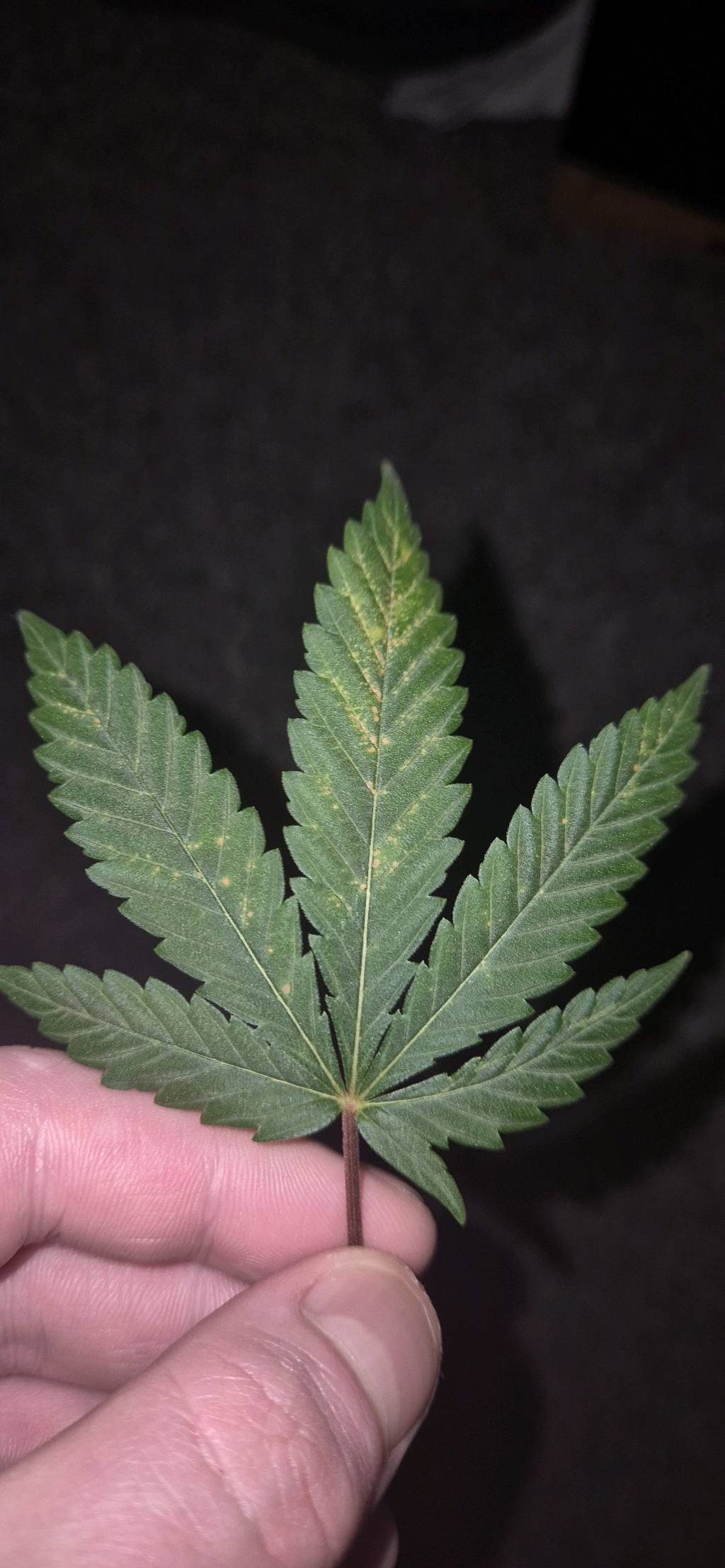
Jet Fuel is particularly prone to tip-burn and interveinal chlorosis if CalMag is underdosed. Target 100–150 ppm calcium and 50–80 ppm magnesium in solution throughout bloom — roughly a 1:0.5 Ca:Mg ratio. In RO or soft water, dose CaMg separately from your base nutrient before mixing. If you spot yellowing between veins on upper leaves mid-flower, bump Mg by 15–20 ppm and reassess after 5–7 days.
Soil Feed Strategy
In well-amended organic soil, Jet Fuel feeds more gently. Keep pH between 6.3–6.7 and lean on compost teas, fish hydrolysate, and bloom boosters rather than synthetic salt feeds. The microbial ecosystem in live soil buffers against over-feeding, making it a forgiving medium for intermediate growers. See our best organic nutrients guide for product-specific recommendations.
If you're unsure whether you're looking at a deficiency or nutrient lockout, run your symptoms through the Nutrient Deficiency Identifier before adjusting feed.
Pest and Disease Management
Jet Fuel's dense bud structure makes it a prime target for botrytis (bud rot) in late flower if RH creeps above 50% when temps drop at night. Prevention is the only real strategy — once bud rot establishes in a dense cola, the affected site is lost.
- IPM from week 1 of veg: Introduce predatory mites (Amblyseius swirskii) before you see pests. They're far more effective as prevention than as emergency treatment.
- Rotational foliar sprays: Alternate neem oil and thyme oil sprays every 5–7 days in veg. Stop all foliar sprays by week 2 of flower to avoid residue on buds.
- Silica supplementation: Potassium silicate added to the feed at 30–50 ppm from week 1 of veg through week 4 of flower strengthens cell walls and measurably reduces mite and powdery mildew susceptibility.
- Airflow: Every bud site should experience gentle air movement. Horizontal fans set to oscillate prevent hot spots and stagnant humid pockets at canopy level.
- Late flower humidity control: In weeks 7–10, prioritize keeping RH under 48% — especially during the dark period when temps drop. A dehumidifier on a humidity controller set to 45% is not over-engineering; it's insurance.
Harvesting the Jet Fuel Strain: Reading Trichomes
Jet Fuel's 8–10 week window is a range, not a fixed date. Your trichomes are the actual harvest timer. Use a 60–100× jeweler's loupe or a digital microscope and check five or six bud sites around the plant, not just the top cola.
The target for Jet Fuel: mostly cloudy (milky white) trichomes with 10–20% amber. At this point you get peak THC alongside the terpene profile that makes this strain distinctive — the amber percentage signals CBN formation is just beginning, which rounds off the sharpest cerebral edge. If you want a more sedative finish, push to 25–30% amber. For maximum cerebral intensity, harvest at 5–10% amber.
Don't harvest by pistil color alone — Jet Fuel throws orange pistils early. Trichomes on the calyx walls are your definitive read. Estimate your yield before you chop using the Yield Calculator.
Drying and Curing Jet Fuel
The drying and curing phase is where the diesel terpene character of the Jet Fuel strain either develops into something exceptional or gets lost to poor handling. Rush the dry and you lock in chlorophyll and harsh volatile compounds. Cure poorly and the aroma stays flat.
Drying
Hang whole branches — don't trim before drying if you want the slowest, most controlled moisture loss. Dry room conditions: 60–70°F (15–21°C), RH 45–55%, dark, with gentle indirect airflow from oscillating fans pointed at walls, not directly at branches. Target a 10–14 day dry. The stems should snap rather than bend when done. Buds that feel dry on the outside but soft inside need more time — jarring too early is the single most common drying mistake.
Curing
Trim into glass jars filled to 70–75% capacity — overpacking prevents moisture redistribution. Store in a dark environment at 60–65°F (15–18°C). For the first 7–10 days, burp jars twice daily for 15–20 minutes each session. After day 10, once moisture has stabilized, reduce to once daily, then every few days. Minimum useful cure is 4 weeks; Jet Fuel's terpene complexity genuinely improves at 6–8 weeks as the fuel and citrus notes sharpen and integrate. Use the Dry & Cure Timer to track burp schedules and hit your optimal cure date.
Logging Your Jet Fuel Grow
Jet Fuel rewards growers who iterate. The second run is always better than the first — but only if you have data from the first. Log environmental readings, training dates, nutrient adjustments, and trichome checks throughout. You can track your Jet Fuel grow on Grow Guide to compare notes with other growers running the same genetics. For a primer on what to log and why it matters, see our cannabis grow diary guide.
Frequently Asked Questions
How long does the Jet Fuel strain take to flower?
Jet Fuel flowers in 8–10 weeks under a 12/12 light schedule indoors. Always confirm harvest timing with trichome inspection rather than relying solely on day count — phenotype variation can push the window slightly in either direction.
What is the ideal EC for feeding Jet Fuel in coco coir?
Start early flower at EC 1.6–1.9 mS/cm and step up to 2.0–2.2 mS/cm from week 4 if plant health and runoff EC permit. Step back down to 1.6–1.8 in the final two weeks, then flush at EC 0.4–0.6 for the last 5–7 days before harvest. Keep pH at 5.8–6.1 throughout.
Is Jet Fuel (G6) suitable for beginner growers?
Jet Fuel is rated intermediate difficulty. It's vigorous and responds well to training, but its stretch in early flower and susceptibility to tip-burn from calcium deficiency requires attentive environmental and nutrient management. Growers with one or two completed grows who are comfortable with VPD and EC monitoring will do well with it.
How do I preserve the diesel terpenes during drying and curing?
Slow drying at 60–70°F with 45–55% RH for 10–14 days, followed by a minimum 4-week cure in glass jars at 60–65°F, protects volatile terpene compounds. Terpene degradation accelerates at temperatures above 70°F and with exposure to light — keep jars in a dark cabinet or box throughout the cure.
What training method works best for Jet Fuel's sativa stretch?
A combination of topping (twice, at nodes 4–5 and again 7–10 days later) and LST throughout veg produces the most even, light-efficient canopy. This controls the 50–100% height gain typical in early flower and maximizes the number of bud sites receiving full PPFD.
References
- Bernstein, N., Gorelick, J., Zerahia, R., & Koch, S. (2019). Impact of N, P, K, and humic acid supplementation on the chemical profile of medical cannabis (Cannabis sativa L.). Frontiers in Plant Science, 10, 736. Demonstrated how nutrient ratios during bloom directly affect cannabinoid and terpene profiles. frontiersin.org
- Caplan, D., Dixon, M., & Zheng, Y. (2017). Optimal rate of organic fertilizer during the flowering stage for cannabis grown in two coir-based substrates. HortScience, 52(12), 1796–1803. Established flowering-stage EC and nutrition benchmarks for coir-grown cannabis. journals.ashs.org
- Danziger, N., & Bernstein, N. (2021). Light matters: effect of light spectra on cannabinoid profile and plant development of medical cannabis (Cannabis sativa L.). Industrial Crops and Products, 164, 113351. Found that PPFD levels and spectral quality significantly influence terpene and cannabinoid accumulation in late flowering. sciencedirect.com
- Morano, G., Maggio, A., Fogliano, V., Ercolano, M.R., & Frusciante, L. (2022). Vapor pressure deficit management in enclosed cannabis cultivation and its effect on terpene preservation post-harvest. PMC/NCBI. Documented RH and temperature thresholds during drying that minimize terpene volatilization, supporting the 45–55% RH dry room recommendation. pmc.ncbi.nlm.nih.gov
- Small, E. (2017). Cannabis: A Complete Guide. CRC Press. Comprehensive reference covering sativa-dominant hybrid phenotype expression, internodal stretch, and cultivation requirements across environments.