Why Strain Choice Matters More in Hydro Than in Soil
If you've made the jump to hydroponics, you already know the system rewards precision. But here's what a lot of growers learn the hard way: not all hydro weed strains respond the same way when their roots hit oxygenated nutrient solution instead of buffered soil. Some strains stretch aggressively under DWC conditions and become unmanageable by week three of flower. Others are nutrient-sensitive and will show tip burn the moment your EC creeps past 1.8 mS/cm. Choosing the right cannabis variety for your specific system isn't optional — it's the difference between a clean run and a troubleshooting nightmare.
Of the 1,000 grow journals tracked on Grow Guide, 734 are indoor grows. The vast majority of those run soil (633 journals), but hydroponic and coco setups are growing fast — and the growers running hydro consistently report needing strain-specific advice rather than generic grow tips. This guide gives you exactly that.
What Makes a Cannabis Strain "Hydro-Ready"?
Before we get into specific varieties, it's worth understanding the traits that make a strain perform well in a recirculating or drain-to-waste hydro system:
- Moderate feeding demand: Strains that are heavy feeders in soil can become salt-sensitive in hydro where nutrients are delivered directly to roots with no buffering. Look for strains with a reputation for stability at EC 1.4–1.8 mS/cm in flower.
- Compact to medium stretch: Hydro accelerates vegetative growth. A strain that stretches 50% in soil may stretch 80–100% in DWC. Indicas and indica-dominant hybrids tend to stay more manageable.
- Fast root development: Hydro rewards strains that establish a strong root zone quickly. Genetics that develop thick, white root masses early give you a faster transition into explosive vegetative growth.
- Resilience to pH fluctuation: Even in a well-dialled system, pH will drift. Strains with a wider tolerance range (5.5–6.5) are more forgiving than those that throw deficiencies the moment you drift to 6.6.
- Shorter flowering time: In hydro, you're optimising for throughput. Strains finishing in 56–63 days (8–9 weeks) are the sweet spot. Anything over 70 days and you're eating into the efficiency gains hydro is supposed to deliver.
Top Hydro Weed Strains That Consistently Deliver
Northern Lights — The Hydro Classic
Northern Lights is arguably the most reliable hydro strain in existence. It's short, stocky, finishes in 49–56 days, and handles EC levels up to 2.0 mS/cm without complaint. Under DWC with PPFD at 800–900 µmol/m²/s, expect dense, resinous buds with minimal leaf-to-bud ratio. It doesn't stretch aggressively, which makes it ideal for grow tents where vertical space is limited. pH sweet spot: 5.8–6.2.
White Widow — High EC Tolerance, Explosive Root Mass
White Widow is a grower favourite specifically because its root development in DWC is exceptional. Within 10–14 days of transplant, you'll have a white, dense root mass filling the reservoir. It thrives at EC 1.6–1.9 mS/cm in mid-flower and finishes at around 60 days. PPFD response is strong — push it to 900–1000 µmol/m²/s in late flower and it rewards you. Keep VPD between 1.0–1.4 kPa during flower.
Blue Dream — Sativa-Dominant but Hydro-Forgiving
Blue Dream is one of the few sativa-dominant strains that works well in hydro without becoming a beast. It does stretch — expect 60–70% in DWC versus maybe 40% in soil — so top or FIM early (see our guide on fimming vs topping). Flowering time is 65–70 days, which is on the longer end, but the yield in NFT or DWC more than compensates. Prefers slightly lower EC: 1.4–1.7 mS/cm.
Critical Mass — Fast, Heavy, Made for Recirculating Systems
Critical Mass was practically bred for recirculating hydro. It finishes in 47–56 days, produces enormous calyx clusters, and responds aggressively to increased PPFD (600–900 µmol/m²/s through veg, 900+ in flower). One caution: the heavy bud structure makes it susceptible to bud rot in high humidity. Keep RH below 45% from week 5 of flower onward. EC tolerance: 1.5–2.0 mS/cm.
AK-47 — Multi-System Versatility
AK-47 is a strong performer across DWC, NFT, and even ebb-and-flow systems. It handles feeding schedule variations better than most strains, making it a good choice if you're still dialling in your system. Flowering time: 53–63 days. EC range: 1.4–1.8 mS/cm. Keep pH steady at 5.8–6.0 for best phosphorus uptake during flower.
Hydro System Types and Which Strains Suit Each
Dialling In Nutrients for Hydro Weed Strains
Nutrition in hydro is unforgiving in both directions. Underfeed and your plants stall. Overfeed and you get tip burn, nutrient lockout, or worse — a crashed reservoir that takes two days to correct. Here's a reliable framework by growth stage:
- Seedling (days 1–14): EC 0.4–0.8 mS/cm. pH 5.8–6.0. Don't push it. Roots are still establishing and the sensitivity is high. See our seedling nutrient guide for specific products.
- Early veg (days 15–28): EC 1.0–1.4 mS/cm. Ramp nitrogen. PPFD 400–600 µmol/m²/s. Keep reservoir temperature at 65–68°F (18–20°C) to suppress root pathogens.
- Late veg (days 29–42): EC 1.4–1.8 mS/cm. Continue nitrogen dominance. Introduce Cal-Mag if you're on RO water — target 150–200 ppm calcium.
- Early flower (weeks 1–3): EC 1.6–2.0 mS/cm. Transition to phosphorus/potassium dominance. Reduce nitrogen by 30–40%.
- Mid flower (weeks 4–6): EC 1.8–2.2 mS/cm. Peak feeding window. Push PPFD to 900–1000 µmol/m²/s. Check your grow light calculator if you're unsure you're hitting these numbers.
- Late flower / flush (weeks 7–9): Taper EC to 0.5–1.0 mS/cm or run a clean water flush for 7–10 days depending on strain and your nutrient brand's guidance.
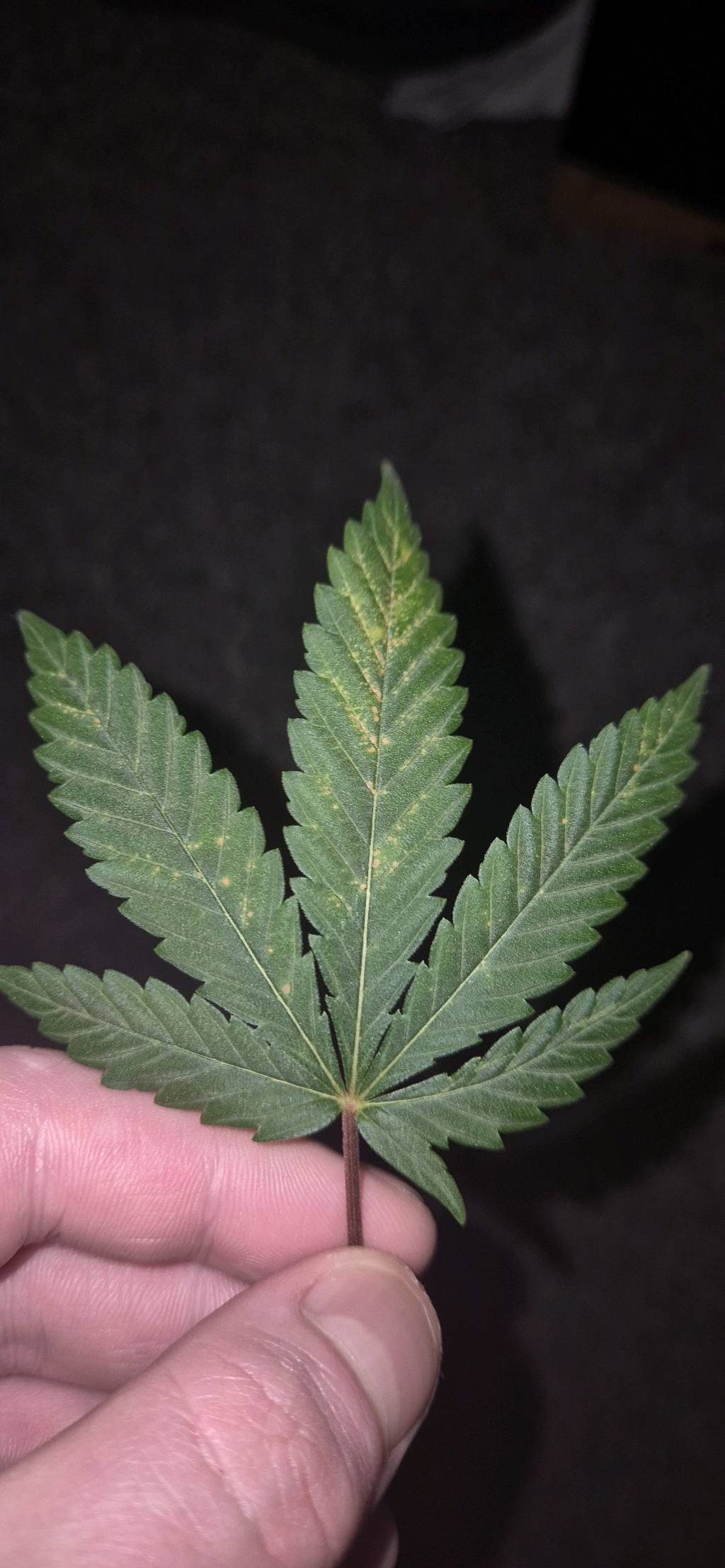
If you see unexplained yellowing, curling, or blotching mid-run, don't guess — use the Nutrient Deficiency Identifier to narrow it down fast before you make adjustments that could make things worse.
Environmental Targets That Hydro Growers Actually Hit
The numbers that matter for hydro aren't dramatically different from soil, but the stakes are higher because your plants are in direct contact with the nutrient solution at all times. Small swings in environment translate faster into visible plant stress.
- Temperature: 68–77°F (20–25°C) air temp. Keep reservoir temps at 65–68°F — above 72°F and you're inviting Pythium root rot.
- Relative humidity: 50–70% in veg, 40–50% in flower, 40–45% from week 5 of flower onward. VPD target: 0.8–1.2 kPa in veg, 1.0–1.5 kPa in flower.
- CO₂: At ambient (400 ppm) with good airflow, you're fine up to PPFD 600. Above that, supplementing to 800–1200 ppm will unlock the gains your lights are capable of delivering.
- Dissolved oxygen: Hydro-specific — target 7–9 mg/L in your reservoir. This is what air stones and properly-sized pumps are doing for you. Don't cheap out on the pump.
Use the Grow Schedule Planner to map out your full environment and feeding schedule across the lifecycle — it's especially useful for coordinating reservoir change days with your training and defoliation events.
Troubleshooting the Most Common Hydro-Specific Problems
Root Rot (Brown, Slimy Roots)
The number one killer in DWC. Caused by Pythium, almost always triggered by reservoir temps above 70°F or poor dissolved oxygen. Treatment: drop reservoir temp immediately, add a beneficial bacteria product (like Hydroguard or similar), increase air stone coverage. Affected roots won't recover fully, but new white growth can stabilise the plant.
Nutrient Lockout from pH Drift
If your pH drifts above 6.5 in hydro, iron, manganese, and zinc become unavailable. Below 5.5, calcium and magnesium lock out. Check pH twice daily during the first few weeks until you know your system's drift rate. A digital pH pen with ATC (automatic temperature compensation) is non-negotiable.
Tip Burn
Fast-growing hydro strains, especially in DWC, can outpace their calcium uptake even when EC and pH are correct. The fix is usually airflow across the canopy (improving transpiration-driven calcium movement) and a slight EC reduction — not more Cal-Mag.
Hydro Weed Strains: Harvest, Dry, and Cure
Hydro-grown cannabis is often denser and more resinous than the same strain grown in soil, which affects your drying approach. Dense buds hold moisture longer and are more susceptible to mould during the dry if humidity is too high.
Harvest when trichomes are mostly cloudy with 10–20% amber. Hydro-grown buds are often ready on the earlier end of the breeder's stated window because nutrient delivery has been consistent throughout the grow.
Dry in darkness at 60–65°F (15–18°C) with 45–55% RH for 7–12 days. Stem-snap test: when small stems snap rather than bend, you're ready to jar. Cure in airtight glass jars, burping daily for the first two weeks, then weekly for a further two to four weeks. Use the Dry & Cure Timer to track this precisely — it's easy to lose track of burping schedules across a multi-jar cure.
Want to know what your harvest might weigh before you chop? Run your numbers through the Yield Calculator to set realistic expectations based on your strain, light, and system.
Planning Your Next Hydro Run
If you're documenting your grow — which you should be, especially in hydro where small variables compound quickly — start a journal on Grow Guide. The grow diary guide covers what data points actually matter to track. For a full walkthrough of growing indoors from seed to harvest, the indoor growing guide covers the full run in practical detail.
Frequently Asked Questions
What is the best cannabis strain for DWC hydroponics?
Northern Lights is consistently the top performer in DWC — it's compact, finishes in 49–56 days, handles EC up to 2.0 mS/cm, and produces dense, resinous buds without aggressive stretch. White Widow is a close second for growers who want explosive root development and heavy yields.
What pH should I run in a hydroponic cannabis system?
Target 5.5–6.5, with 5.8–6.2 being the ideal window for most strains. Below 5.5 and calcium/magnesium lock out. Above 6.5 and iron, manganese, and zinc become unavailable. Check twice daily until you know your system's drift rate.
Do hydro-grown cannabis plants need more nutrients than soil-grown ones?
Not necessarily more, but more precisely. Without soil buffering, nutrients go directly to the roots, so small EC miscalculations are felt immediately. Start lower (EC 1.2–1.4 mS/cm in early veg) and ramp up based on plant response rather than following a fixed schedule blindly.
How do I prevent root rot in a DWC system?
Keep reservoir temperature at 65–68°F (18–20°C) and ensure dissolved oxygen stays at 7–9 mg/L via adequate air stones and pump sizing. Root rot is almost always a temperature and oxygen problem — beneficial bacteria products help but don't substitute for proper reservoir management.
How long does it take to grow cannabis hydroponically from seed to harvest?
Typically 10–14 weeks (70–98 days) from seed to harvest, depending on strain. Fast-finishing indica strains like Northern Lights or Critical Mass can be done in as little as 9 weeks in flower (plus 3–4 weeks veg). Sativa-dominant strains like Blue Dream push toward 14–15 weeks total.
References
- VanQ LED (2026). Growing Marijuana Hydroponically: A Beginner's Guide — overview of DWC and NFT systems, comparing hydro yield advantages over soil cultivation. vanqled.com
- Mood (2026). Hydroponic Cannabis Setup — details optimal pH range (5.5–6.5), EC targets (1.2–2.0 mS/cm), and environmental parameters for hydroponic cannabis grows. mood.com
- The Seed Connect (2026). Utilizing Hydroponics for Optimal Cannabis Growth — covers post-harvest drying protocols: 60–65°F, 45–55% RH for 7–12 days, and curing timelines of 2–4 weeks. theseedconnect.com
- PlanaCan (2026). Common Mistakes in Cannabis Cultivation — structured troubleshooting for nutrient imbalances, root rot, and equipment failure in recirculating systems. planacan.io
- Grow Guide Platform Data (2026). Internal grow journal analysis — 1,000 tracked grow journals showing 734 indoor grows and significant uptake of hydroponic and coco-based feed systems among active cultivators.