Short version: Build one habit — flip a few leaves over every time you check your plants. Nearly every serious pest (spider mites, thrips, aphids) lives and lays eggs on the underside of leaves, and by the time damage is obvious on top, the infestation is well underway. Early detection is the whole game.
Pests rarely announce themselves. They show up as a few odd specks, get dismissed, and two weeks later there's webbing across your best cola. The good news: a 30-second inspection habit catches almost all of them while they're still easy to beat.
The habit: check the underside
Tops of leaves show damage; undersides show the cause. Every couple of days, turn over a handful of leaves — especially lower and inner ones — and look closely, ideally with a cheap jeweler's loupe. You're looking for tiny moving dots, eggs, webbing, or clusters of insects.
Know the usual suspects
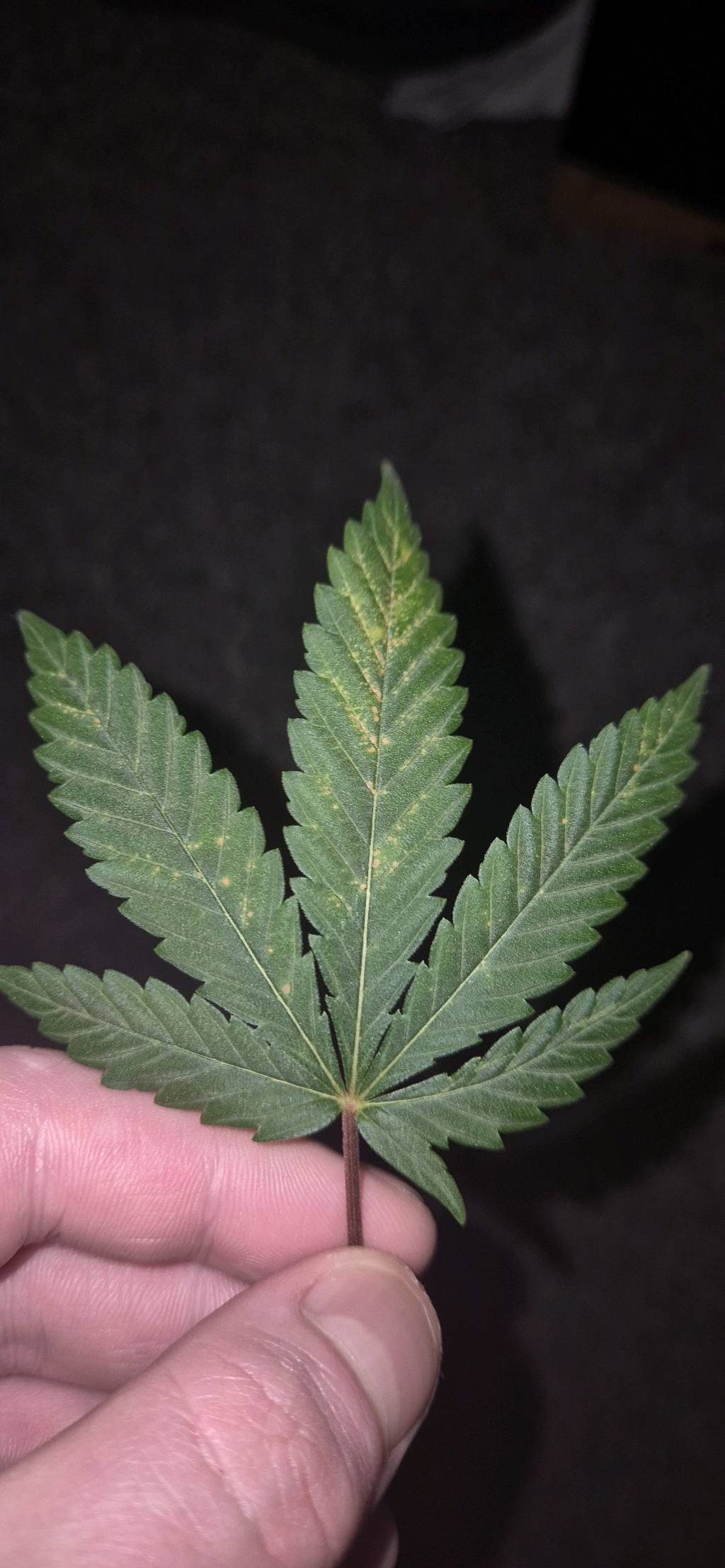
- Spider mites: tiny white/yellow speckling (stippling) on top surfaces, fine webbing between leaves, and minuscule dots on the underside. They love hot, dry rooms.
- Thrips: silvery or bronze squiggly trails on leaves and tiny black specks (their droppings).
- Fungus gnats: little black flies around the soil; larvae live in constantly-wet topsoil — a direct sign you're overwatering.
- Aphids: visible clusters on stems and leaf undersides, plus sticky "honeydew."
- Powdery mildew (not a bug, but caught the same way): white powdery patches, driven by high humidity and poor airflow.
What to do when you find something
- Isolate the plant if you can, so it doesn't spread.
- Identify it (flip the leaf, use the loupe) before you treat — the fix differs by pest.
- Remove the worst-affected leaves.
- Treat. In veg, neem oil or insecticidal soap on the undersides works for most soft-bodied pests. Avoid spraying buds in late flower — spot-treat and lean on the next step.
- Fix the conditions. Mites thrive in hot/dry air, so raise humidity and airflow; gnats thrive in wet soil, so let it dry. Our natural pest control guide covers organic options in depth.
Prevention beats treatment
Most infestations are preventable: keep air moving with an oscillating fan, don't overwater, inspect any new plant before it joins the others, and hang yellow sticky traps to catch fliers early. Dialing in your temperature and humidity removes the conditions pests and mildew need in the first place.
Frequently asked questions
How do I know if my cannabis has spider mites?
Look for tiny white or yellow speckling on the tops of leaves and fine webbing between leaves and stems; on the underside you'll see minuscule moving dots. They multiply fastest in hot, dry conditions, so raising humidity and airflow is part of the fix.
What are the little black flies around my cannabis soil?
Those are fungus gnats, and their larvae live in constantly wet topsoil. They're a sign the medium is staying too wet — let the top inch or two dry between waterings, and consider sticky traps and a soil-surface treatment.
Can I spray for pests during flowering?
Avoid spraying anything directly on buds late in flower — it invites mold and residue. Catch pests early in veg when foliar sprays like neem or insecticidal soap are safe, and in late flower rely on removal, isolation, and correcting the environment instead.