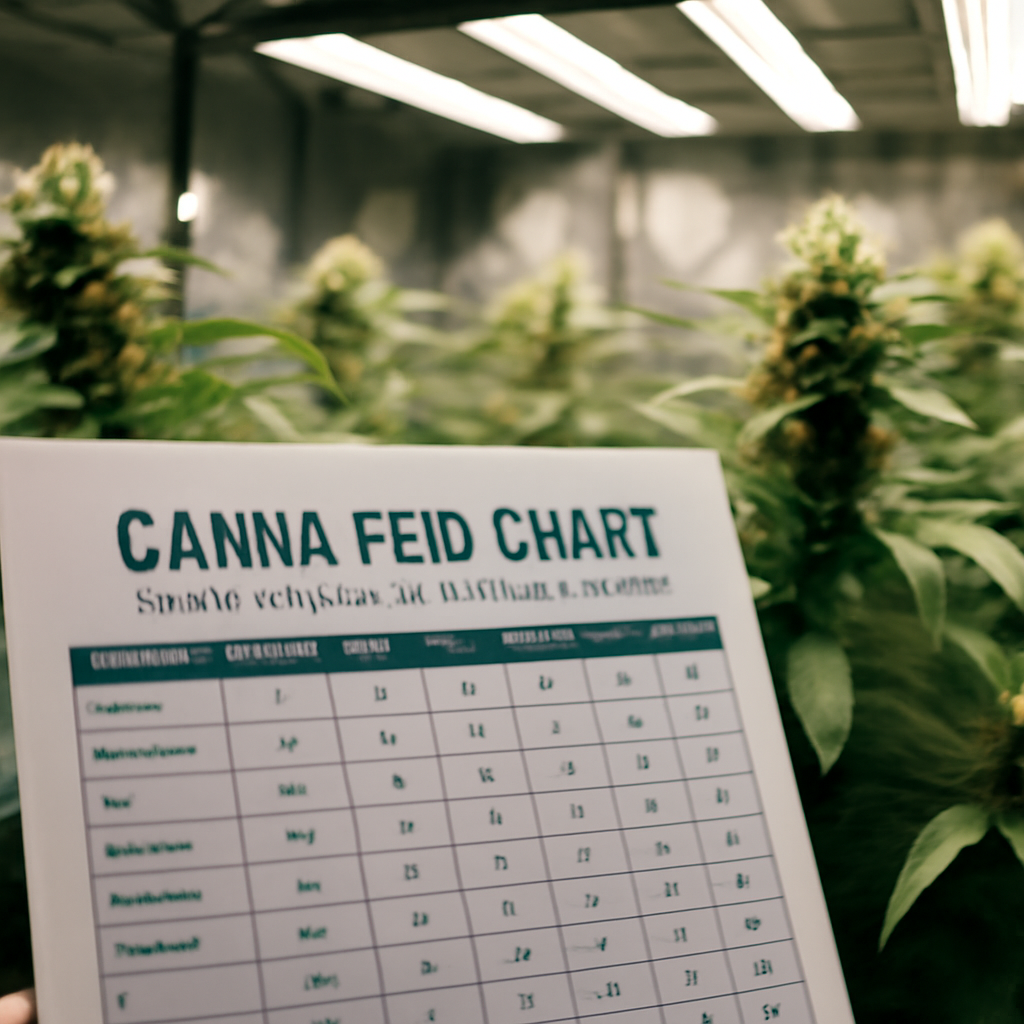
Why the Canna Feed Chart Matters More Than You Think
If you've ever looked at a CANNA feed chart and wondered which column actually applies to your setup, you're not alone. CANNA produces five distinct nutrient lines — Terra, Coco, Hydro, Aqua, and BioCanna — and each comes with its own dosing schedule, EC targets, and pH window. Using the wrong chart for your substrate is one of the most common reasons growers see deficiencies mid-flower despite spending good money on nutrients. According to Grow Guide platform data from over 1,000 tracked grows, 63% of growers run soil, 14.8% use coco coir, and the remainder split across hydro and other systems — meaning the CANNA Terra and CANNA Coco charts are the most relevant starting points for most readers here.
This guide breaks down each CANNA feed chart by substrate, gives you the specific numbers to dial in at every growth stage, and explains where the common mistakes happen. Use it alongside our Grow Schedule Planner to map dosing against your actual calendar.
Understanding CANNA's Nutrient Logic Before You Mix Anything
CANNA builds its nutrient lines around the principle that substrate chemistry drives availability. Soil buffers pH and holds cation exchange; coco is essentially inert but cation-active (high sodium/potassium displacement); hydro and aqua systems offer zero buffering but total control. That's why the same plant in week 3 of veg might want EC 1.4 in soil but only EC 1.1 in a recirculating aqua setup — the substrate is already contributing or competing.
Every CANNA chart is structured around a base nutrient (A+B two-part or single-bottle formula) plus optional additive stacking. The base sets your macronutrient foundation. Additives like Rhizotonic, Cannazym, CannaBoost, and PK 13/14 layer on top at specific growth windows. Don't skip the base to add more additives — that's backwards.
Canna Feed Chart for Soil: CANNA Terra Week by Week
The Terra line is CANNA's most forgiving chart and the right starting point for the majority of growers. Terra Vega handles vegetative growth; Terra Flores takes over at the flip. Both are single-bottle formulas mixed directly into your watering can.
Vegetative Phase (Weeks 1–4 from transplant)
- Week 1: Terra Vega at 1.5 mL/L. Add Rhizotonic at 4 mL/L if plants are freshly transplanted — it speeds root establishment measurably within 5–7 days.
- Week 2: Ramp Terra Vega to 2.5–3 mL/L. Target EC in solution: 1.0–1.2 mS/cm.
- Week 3–4: Terra Vega at 4–5.5 mL/L. Introduce Cannazym at 2.5 mL/L to break down older root material in the pot.
- pH your final mix to 5.8–6.2 every feed. Soil buffers, but drift toward 6.8+ will lock out iron and manganese fast.
Flowering Phase (Weeks 1–8 from flip)
- Flower Week 1: Transition to Terra Flores at 5 mL/L. Keep Cannazym running at 2.5 mL/L.
- Flower Weeks 2–4: Terra Flores at 6–7 mL/L. EC target 1.4–1.7 mS/cm. CannaBoost can be introduced at 2 mL/L from week 2 onward.
- Flower Weeks 5–6 (peak bulk): Terra Flores at 7 mL/L + PK 13/14 at 1.5 mL/L. PK 13/14 runs for 1–2 weeks only — it's a potassium/phosphorus spike, not a continuous feed. Overdoing it causes tip burn and pH crash.
- Flower Weeks 7–8: Drop PK 13/14. Maintain Terra Flores at 5–6 mL/L. Begin tapering EC down toward 1.0 mS/cm.
- Final 10–14 days: Plain pH-adjusted water only. This is the flush window. EC in runoff should drop toward 0.4–0.6 mS/cm by harvest day.
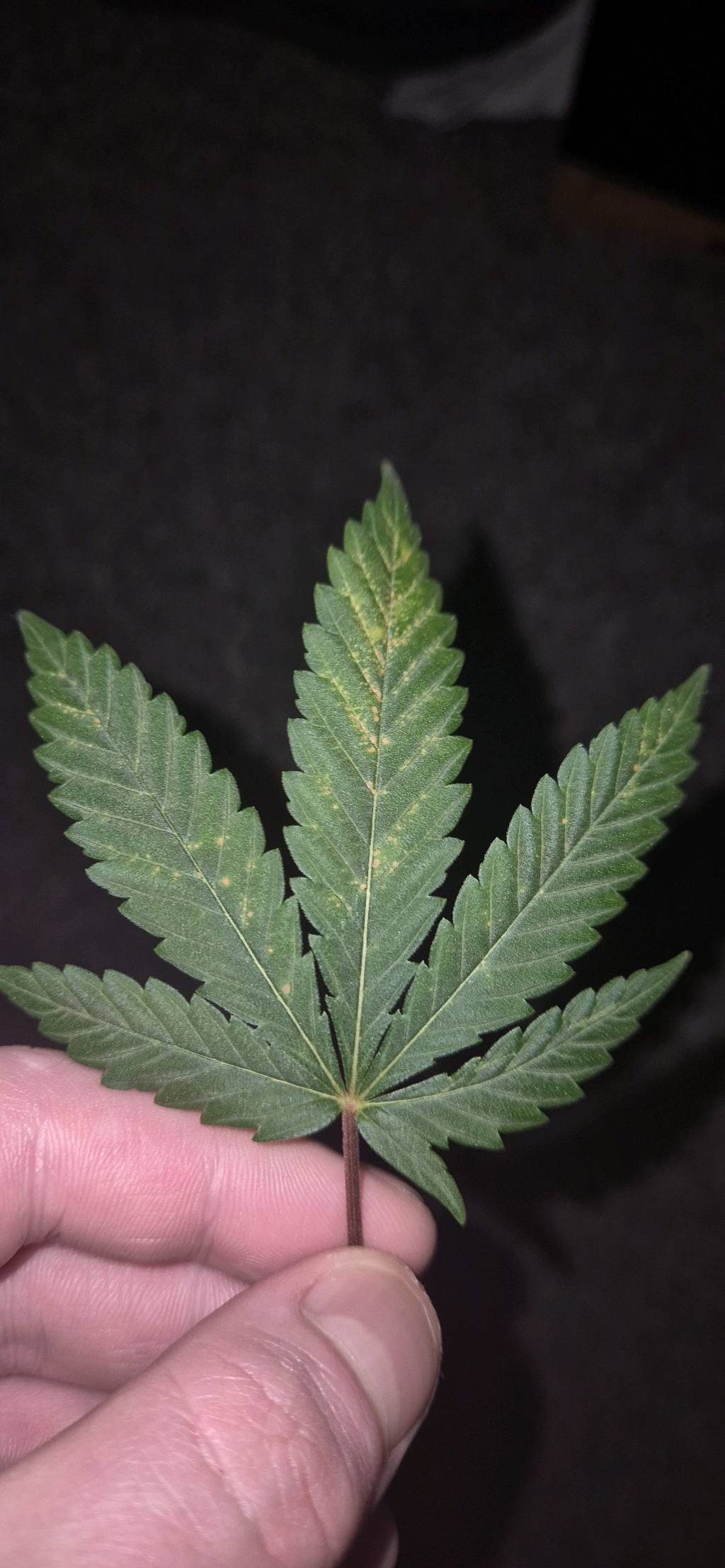
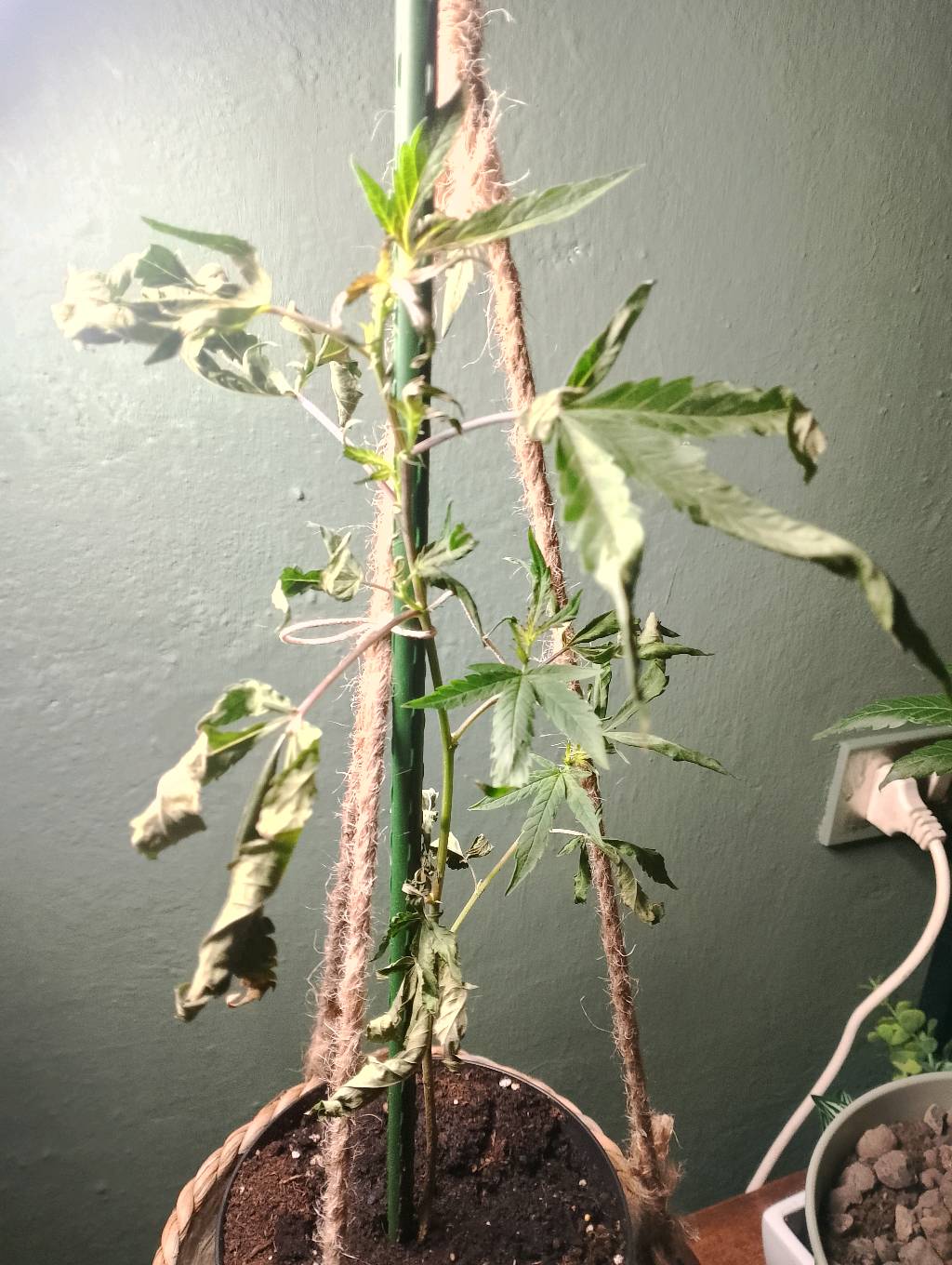
If you spot yellowing between leaf veins during mid-flower, run it through the Nutrient Deficiency Identifier before adding anything — interveinal chlorosis on canna soil is almost always a pH lockout rather than a true deficiency.
Canna Feed Chart for Coco: CANNA Coco A&B
Coco coir is electrically inert but cation-hungry, which means you need to be feeding at every watering — no plain-water days unless you're flushing. The Coco A&B two-part formula compensates for coco's natural calcium and magnesium binding, which is why you should never swap a coco-specific formula for a soil one in this medium.
Growth Phase Dosing
- Week 1: Coco A&B at 1.5 mL/L each (always mix A and B separately before combining). EC target: 1.0–1.2 mS/cm. pH: 5.5–6.0.
- Weeks 2–3: Ramp A&B to 3–3.5 mL/L each. EC 1.2–1.5 mS/cm. Add Rhizotonic at 4 mL/L through week 2 if roots are still establishing.
- Week 4 (late veg): A&B at 3.5 mL/L each. EC up to 1.5 mS/cm. Cannazym at 2.5 mL/L.
Flowering Phase Dosing
- Flower Weeks 1–3: A&B at 3–3.5 mL/L each. EC 1.4–1.8 mS/cm.
- Flower Weeks 4–6: A&B at 4 mL/L each. Peak EC 1.8–2.0 mS/cm for heavy-feeding strains. Add CannaBoost at 2 mL/L and PK 13/14 at 1.5 mL/L in weeks 5–6.
- Flower Weeks 7–8: Reduce A&B to 2.5–3 mL/L. Drop PK 13/14. CannaBoost can continue.
- Final 7–10 days: Flush coco aggressively — it holds less salt than soil but still needs clearing. Target runoff EC below 0.5 mS/cm.
Coco growers running drain-to-waste systems should aim for 15–20% runoff per feed to prevent salt accumulation. This also gives you a real-time EC/pH readout from the runoff — check it every third feed minimum. See our guide on best nutrients for seedlings if you're starting younger plants in coco before moving to a full canna feed schedule.
Canna Feed Chart for Hydroponics: CANNA Hydro and Aqua
Hydro and Aqua are where precision really pays. With no substrate buffering, your pH and EC are exactly what the roots see — so being 0.2 mS/cm off matters more here than it does in soil.
CANNA Hydro (Drain-to-Waste / Run-to-Waste DWC)
- Veg Week 1: Hydro Vega A&B at 1 mL/L each. EC 0.8–1.1 mS/cm. pH 5.5–6.0.
- Veg Weeks 2–4: Ramp to 3 mL/L of each part. EC 1.3–1.7 mS/cm.
- Flower Weeks 1–2: Switch to Hydro Flores A&B at 2.5 mL/L each. EC 1.3–1.6 mS/cm.
- Flower Weeks 3–6: Increase to 3–3.5 mL/L each. EC 1.5–1.7 mS/cm. Stack CannaBoost and PK 13/14 in weeks 5–6.
- Final 7–10 days: Flush reservoir to plain water. Drain and refill with fresh pH-adjusted water at 5.8.
CANNA Aqua (Recirculating Systems)
Aqua is designed specifically for recirculating setups where the same nutrient solution cycles repeatedly. EC is managed more conservatively because nutrient concentration rises over time as plants transpire water.
- Root formation: Aqua Vega A&B at 15–25 mL/10L. EC 0.7–1.1 mS/cm.
- Vegetative development: Increase to 20–35 mL/10L. EC 0.9–1.3 mS/cm.
- Flowering: Aqua Flores A&B at 30–40 mL/10L. EC 1.2–2.2 mS/cm depending on strain vigor.
- Change your reservoir every 7–10 days in recirculating setups to prevent salt and pathogen buildup. Never top off indefinitely.
Use the Grow Schedule Planner to map reservoir change days against your nutrient transitions — this matters especially in recirculating Aqua systems where reservoir chemistry changes fast.
Canna Feed Chart Additives: When and How to Stack Them
CANNA's additive lineup works as a stack, not a replacement. Here's how to sequence them correctly:
| Additive | When to Use | Dose | Purpose |
|---|---|---|---|
| Rhizotonic | Seedling through first 2 weeks of veg | 4 mL/L | Root stimulator — accelerates rhizosphere development |
| Cannazym | Mid-veg through mid-flower | 2.5 mL/L | Enzymatic breakdown of dead root material; reduces anaerobic zones |
| CannaBoost | Flower weeks 2–7 | 2 mL/L | Flower set and metabolic rate; works synergistically with PK 13/14 |
| PK 13/14 | Flower weeks 5–6 only | 1.5 mL/L | Phosphorus/potassium spike for bulk and density — do not extend beyond 2 weeks |
A common mistake is running PK 13/14 for 3–4 weeks. It causes phosphorus toxicity — leaves show dark green coloring, then tip burn, and root zone pH drops. Two weeks max, peak flower bulk only.
Environmental Parameters That Make or Break Any Canna Feed Chart
The most accurate feed chart is useless if your environment is out of spec, because nutrient uptake is driven by transpiration — which is driven by VPD. CANNA's guidelines assume:
- Root zone temperature: 16–22°C (61–72°F). Below 16°C, phosphorus uptake slows. Above 22°C in hydro, dissolved oxygen drops and root pathogens thrive.
- Relative humidity: 70–80% in veg, 45–55% in flower. High humidity in flower isn't just a mold risk — it suppresses transpiration and slows nutrient uptake at the root zone.
- Lighting schedule: 18/6 in veg, 12/12 for flower. PPFD targets: 400–600 µmol/m²/s in early veg, 800–1000 µmol/m²/s in peak flower. Use the Grow Light Calculator to match your fixture to your canopy area.
For a full environmental walkthrough from seed to harvest, see our complete indoor grow guide.
Harvest, Dry, and Cure: The Final Phase of Your Feed Schedule
The feed chart doesn't end at the last nutrient feed — what happens after is just as critical for final quality. After your flush window:
- Harvest timing: Check trichomes under 60× magnification. Mostly cloudy with 10–20% amber is the typical sweet spot for a balanced effect profile.
- Drying: Hang whole branches in darkness at 18–22°C, 45–55% RH, with gentle airflow (not blowing directly on buds). Target 7–14 days. Stems should snap, not bend, when dry enough to jar.
- Curing: Burp jars daily for the first 7 days, then weekly for 2–4 weeks total. Relative humidity inside the jar should stabilize at 58–62% — use Boveda 62 packs if needed.
Use the Dry & Cure Timer to track your cure days and burp schedule automatically. Want to know what your harvest is worth per gram after accounting for your nutrient spend? The Cost Per Gram Calculator handles that math for you.
Troubleshooting Your Canna Feed Chart in Real Time
Here are the four most common issues growers hit when running CANNA nutrients, and what to actually do about them:
- Yellow leaves in week 3 of flower: First check pH — if it's drifted above 6.5 in soil, you have a lockout, not a deficiency. Correct pH before adding more nutrients.
- Burnt tips despite low EC: Check your runoff EC. If it's significantly higher than your feed EC, salts are accumulating. Flush once with 2× the pot volume in plain pH water.
- Slow growth in coco despite full feed schedule: Coco needs calcium. If you're not running a coco-specific formula that includes elevated calcium, you'll see deficiency fast. Don't substitute Terra nutrients in coco.
- PK 13/14 causing leaf curl and tip burn: You ran it too long or at too high a dose. Flush immediately, drop back to base nutrients only for 4–5 days, then reassess.
Log every feed with EC, pH in, and pH/EC out. Growers who track this data catch problems 5–7 days earlier than those who don't. If you're not keeping a grow journal yet, start one — our guide on how to keep a cannabis grow diary covers the minimum data points worth logging.
Frequently Asked Questions
What is the ideal EC for CANNA nutrients during flowering?
It depends on your substrate. For CANNA Terra (soil), target EC 1.4–1.7 mS/cm during peak flower. Coco can run slightly higher at 1.8–2.0 mS/cm. Hydro sits at 1.5–1.7 mS/cm, and Aqua recirculating systems peak at 1.2–2.2 mS/cm depending on strain and reservoir age.
Can I use the CANNA Terra feed chart in coco coir?
No — Terra nutrients are formulated for soil's cation exchange and calcium availability. Coco binds calcium differently and requires the Coco A&B formula, which has adjusted calcium and magnesium ratios. Using Terra in coco will cause calcium deficiency within 1–2 weeks of heavy feeding.
How long should I run PK 13/14 on the CANNA feed chart?
One to two weeks maximum, during peak flower bulk (typically weeks 5–6 of an 8-week flowering strain). Running it longer than 2 weeks causes phosphorus toxicity — visible as dark, clawed leaves and tip burn — and can crash your root zone pH.
Do I need all of CANNA's additives, or just the base nutrients?
The base nutrients (Terra/Coco/Hydro A&B) are all you strictly need. Rhizotonic speeds root establishment, Cannazym helps in longer grows, CannaBoost and PK 13/14 add measurable yield in flower — but they're all optional. Start with just the base for your first run, then add additives once you understand how your plants respond to the baseline schedule.
How do I know when my flush is complete before harvest?
Measure the EC of your runoff water. Start your flush with plain pH-adjusted water (pH 5.8–6.2) and continue until runoff EC drops to 0.4–0.6 mS/cm. In soil this typically takes 10–14 days of plain watering; in coco and hydro it can be done in 7–10 days.
References
- CANNA Research (2024). CANNA Feeding Charts — Terra, Coco, Hydro, Aqua, and BioCanna product lines. Official dosing schedules and EC/pH targets published by CANNA for each substrate-specific nutrient line. canna-uk.com
- Semillas de Marihuana (2024). CANNA Fertilizer Tables: Full dosing reference for Terra, Coco, Hydro, Aqua, and BioCanna lines including additive timing and EC targets. semillas-de-marihuana.com
- Bugbee, B. (2016). Nutrient Management in Recirculating Hydroponic Culture. Utah State University. Covers EC management principles, substrate-specific nutrient availability, and the relationship between root-zone temperature and phosphorus uptake in controlled-environment agriculture.
- Grow Guide Platform Data (2026). Analysis of 1,000 cannabis grow journals tracking substrate distribution (63% soil, 14.8% coco coir), feed method preferences (54.6% manual), and grow environment (73.2% indoor). Internal dataset, growguide.app.
- BudTrainer (2024). Cannabis Environmental Parameters — Temperature, Humidity and Light Scheduling for Indoor Cultivation. Covers RH targets by growth stage and optimal root zone temperature ranges. budtrainer.com