What Is Garlic Gas?
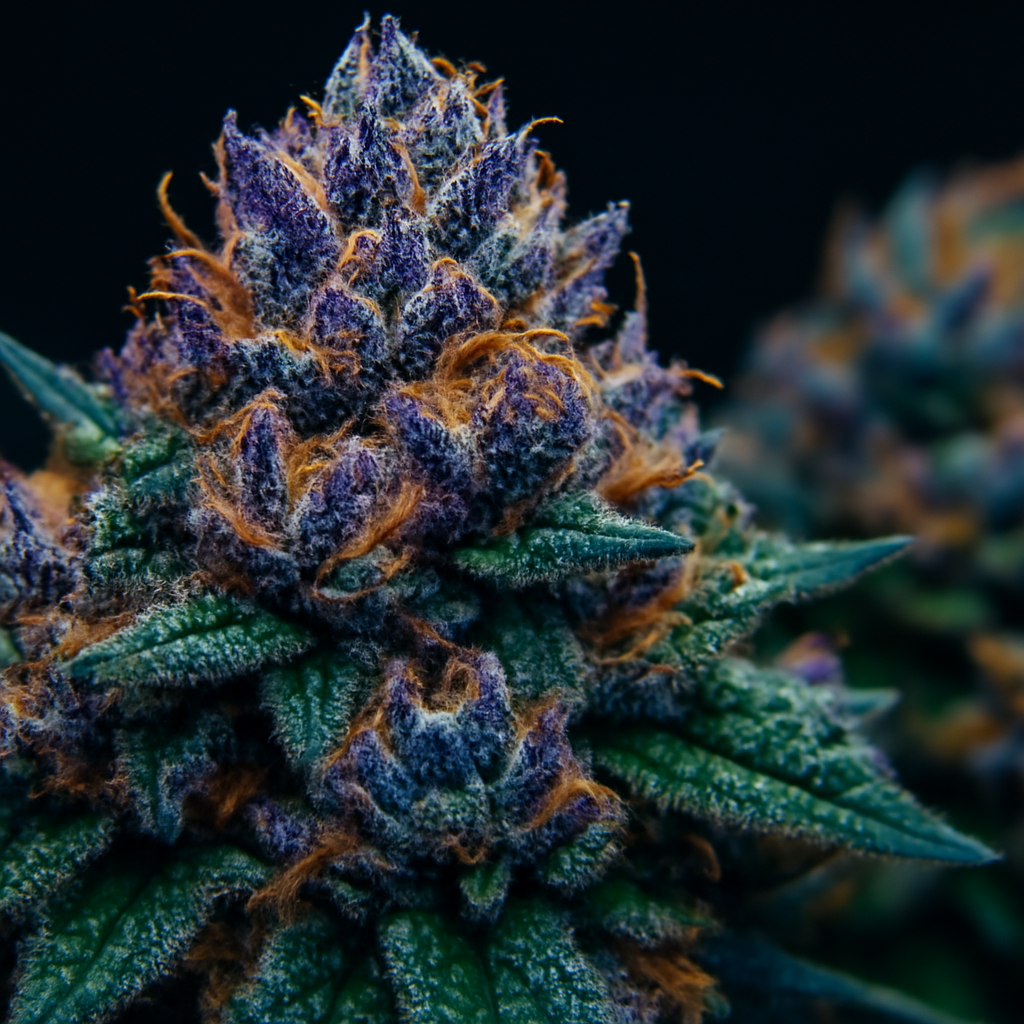
Garlic Gas is one of those strains that polarizes rooms — you either lean into the funk or you walk away fast. A cross most commonly attributed to GMO Cookies (itself a Chemdog × GSC cross) and a high-octane fuel-leaning parent, Garlic Gas has become a fixture in premium dispensaries precisely because its terpene signature is almost impossible to fake with extracts. The real thing smells like roasted garlic cloves dropped into a can of petrol, and when you grow it properly, that aroma fills your entire facility.
This guide is written for growers who already have Garlic Gas seeds or cuts in hand and want specific numbers — not a vague overview. We'll cover the full grow from environment to harvest, with particular focus on the terpene-preservation techniques that make or break this strain at the jar.
Garlic Gas Genetics and Terpene Profile
The dominant terpenes in Garlic Gas are myrcene, β-caryophyllene, and limonene, with secondary contributions from terpinolene and the sulfur-containing compounds (thiosulfinates) that produce the distinctive garlic note. These sulfur volatiles are what set Garlic Gas — and its GMO Cookies parentage — apart from other funky cultivars. They're also extremely heat-sensitive, which has direct implications for your drying and curing protocol.
Use the Terpene Explorer to dig into what each of these compounds contributes to effects and aroma — it's particularly useful for explaining Garlic Gas to customers or logging terpene data in your grow journal.
Expect tested flower to show:
- THC: 26–30%
- CBD: <0.5%
- Myrcene: 0.8–1.4%
- β-Caryophyllene: 0.5–0.9%
- Limonene: 0.3–0.6%
Setting Up Your Environment for Garlic Gas
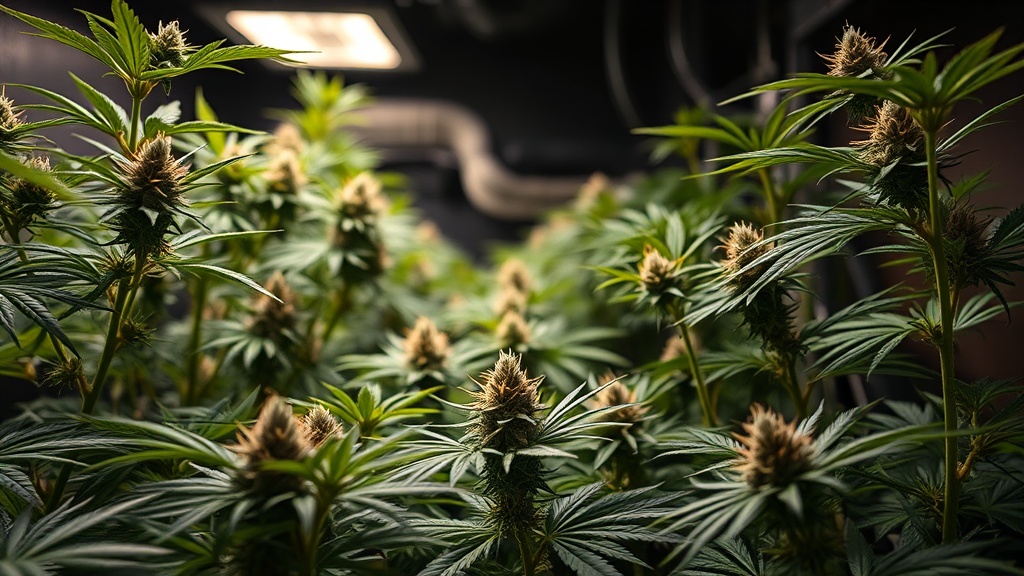
Garlic Gas is a moderately hungry, moderate-difficulty strain — not a beginner plant, but far from the most demanding thing you'll grow. Its GMO lineage means it appreciates a bit of stretch and responds well to defoliation. Plan for 30–40% height increase in the first two weeks of flower.
Lights and PPFD
Run at 600–750 µmol/m²/s PPFD in vegetative growth (18/6) and ramp to 900–1,000 µmol/m²/s in flower once the canopy is established. Garlic Gas is not a light-hog compared to some modern cultivars — pushing beyond 1,100 µmol/m²/s without CO₂ supplementation will plateau yield and stress trichomes. Use the Grow Light Calculator to dial in your fixture placement for your tent or room dimensions.
Temperature and VPD
- Veg: 24–26°C canopy temp, VPD 0.8–1.1 kPa
- Early flower (weeks 1–4): 22–24°C, VPD 1.0–1.3 kPa
- Late flower (weeks 5–10): 20–22°C, VPD 1.3–1.6 kPa
Dropping your canopy temps to 18–20°C in the final 10 days triggers anthocyanin expression (purple hues) and — more critically for Garlic Gas — slows terpene volatilization. Those sulfur compounds you're paying premium for will off-gas rapidly above 24°C late in flower.
Odor Control
This is non-negotiable with Garlic Gas. A single mature plant at peak flower (weeks 7–9) will overwhelm a basic carbon filter. Size your filter at 25–30% above your extraction fan's rated CFM and replace activated carbon annually at minimum. If you're running multiple plants, a dedicated scrubber on negative pressure before your main exhaust is worth the investment.
Feeding Garlic Gas: Nutrients and EC Targets
Garlic Gas performs best in coco coir with a hand-watered or drip-fed drain-to-waste system. Of the 1,000 grow journals tracked on Grow Guide, 63.5% use soil and only 14.8% use coco — but growers chasing peak terpene expression and yield in this strain consistently report coco outperforming soil by 15–20% in grams per plant.
Target pH of 5.8–6.0 in coco (never let it drift above 6.2 — you'll lock out iron and manganese fast). EC targets:
- Seedling/early veg: 0.8–1.2 mS/cm
- Late veg: 1.6–2.0 mS/cm
- Early flower (weeks 1–5): 2.0–2.4 mS/cm
- Weeks 6–8: 1.8–2.2 mS/cm (begin tapering)
- Final flush (weeks 9–10): 0.4–0.6 mS/cm (plain water or low-EC flush)
Garlic Gas shows a moderate-to-high calcium demand due to its dense bud structure and high transpiration rate. Run CalMag at 3–5 mL/L throughout flower in coco. If you see interveinal chlorosis on mid-canopy leaves around week 4, use the Nutrient Deficiency Identifier to confirm before adjusting — it's almost always Ca or Mg in this genetic.
Garlic Gas Grow Timeline
Use the Grow Schedule Planner to map this timeline to a real calendar — especially useful if you're coordinating multiple Garlic Gas runs back-to-back.
Training Garlic Gas for Maximum Yield
Garlic Gas has a classic indica-dominant structure: squat internodal spacing in veg, with a main cola that wants to dominate. Without training, you'll get a dense Christmas-tree plant that produces a huge top and small popcorn lower down. Here's what actually works:
- Topping at node 4–5: Do this at day 21–25 in veg. It creates two dominant colas and opens the canopy for light penetration. See our Fimming vs Topping guide for the tradeoffs.
- LST (Low Stress Training): Begin bending and tying from day 28, pulling tops level with the canopy edge. Garlic Gas responds aggressively — you may need to retie every 2–3 days during veg stretch.
- SCROG: A screen at 40cm above your pot base works well. Weave tops through the screen during veg and stop tucking at flip. Garlic Gas fills a screen densely — allow 0.5m² per plant minimum.
- Defoliation: Remove 20–30% of fan leaves at flip, then again at day 21 of flower. This strain's dense bud sites need airflow or you risk botrytis in weeks 7–9 when buds are swollen and dense.
Expected yield with a proper SCROG in coco under a 600W HPS or equivalent quantum board: 420–550g/m². Run the Yield Calculator with your specific setup to set realistic targets before harvest.
Garlic Gas Harvest: Reading Trichomes
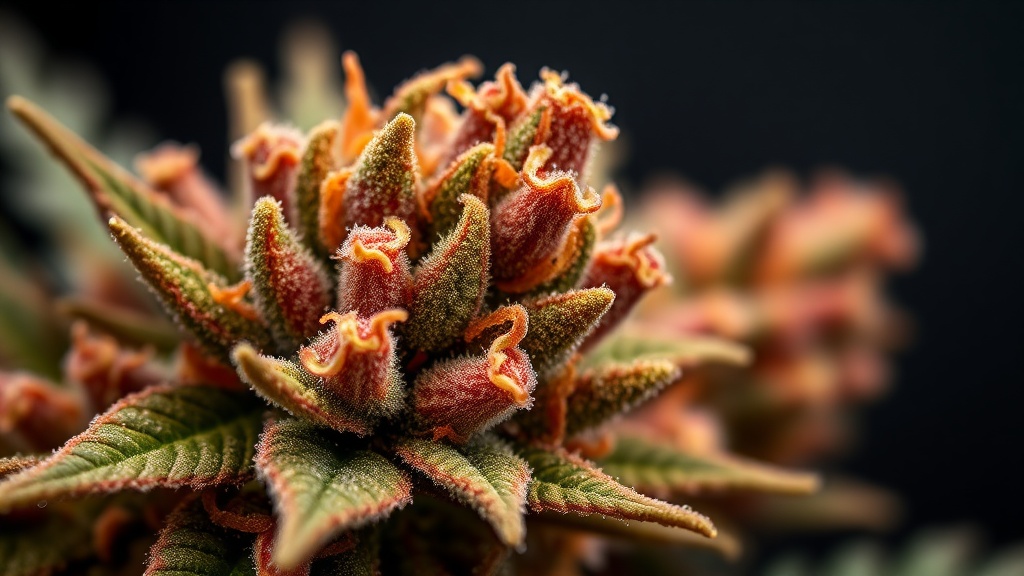
Harvest timing matters more with Garlic Gas than with most strains because the sulfur-based terpenes degrade quickly once amber trichomes begin dominating. The sweet spot for this strain is 10–15% amber trichomes on the calyxes (not the sugar leaves — those amber faster and will mislead you). At this point, THC conversion to CBN is beginning but the terpene payload is still intact and at its heaviest.
Wait past 20% amber and you'll notice the garlic-fuel character starts softening toward a more general earthy musk — still pleasant, but not what you grew this strain for.
Tools needed: a 60–100x jeweler's loupe or a digital microscope. Check 3–5 bud sites across the canopy, not just the top cola, which matures fastest.
Drying and Curing Garlic Gas: Where the Magic Lives
This is the step where most Garlic Gas grows fail at the finish line. The sulfur-containing volatile compounds responsible for the garlic note are exquisitely sensitive to both heat and excessive oxidation. A fast dry at 22°C and 45% RH will bleach your terpene profile and leave you with a flat, vaguely chemical-smelling product.
Target these conditions for drying:
- Temperature: 15–18°C
- Relative humidity: 55–60%
- Airflow: Gentle circulation, no fans blowing directly on buds
- Duration: 10–14 days until small stems snap (not bend)
- Darkness: UV degrades terpenes — keep the drying space completely dark
Once in jars, burp 2–3 times daily for the first week, then once daily for weeks 2–4. Relative humidity inside sealed jars should stabilize between 58–62% (use Boveda 62s). By week 4 of cure, the garlic-fuel profile on Garlic Gas reaches peak integration — sharp and pungent, but with a rounded, almost savory depth underneath. Use the Dry & Cure Timer to track your burping schedule and log humidity readings.
Common Problems Growing Garlic Gas
Botrytis (Bud Rot) in Late Flower
Dense GMO-lineage buds trap moisture. Keep RH below 45% in weeks 7–10 of flower, and maintain gentle airflow through the canopy. If you spot grey mold, remove affected material immediately and drop RH to 40%. There's no saving infected buds — don't risk the rest of your harvest.
Nitrogen Toxicity at Week 3–4 of Flower
Garlic Gas finishes as a moderate nitrogen feeder, not a heavy one. Growers pushing high EC through weeks 3–5 commonly see clawing leaves and dark, over-lush foliage. Start tapering nitrogen by week 4 of flower and shift your ratio toward phosphorus and potassium for bud swelling.
Smell Fading Post-Harvest
If your dried Garlic Gas smells flat or like generic cannabis — not the pungent garlic-fuel you remember from the live plant — your dry temperature was too high. Unfortunately this cannot be fully recovered in cure. Prevention is the only solution: slow, cool drying at 15–18°C from day one.
Is Garlic Gas Worth Growing?
For the grower who values unique terpene expression, premium dispensary positioning, and a product that sells itself on smell alone — yes, without question. The 63–70 day flower time is not the fastest finish available, and the odor control requirements are real overhead. But Garlic Gas at its best is a jar that gets opened and immediately clears a room, and that kind of shelf presence is hard to replicate with more generic genetics.
Track your Garlic Gas run from seed to harvest using a grow diary — documenting EC, VPD, and terpene notes week by week will make your second run significantly better. You can also calculate your actual cost per gram at harvest using our Cost Per Gram Calculator.
Frequently Asked Questions
How long does Garlic Gas take to flower?
Garlic Gas finishes in 63–70 days of flower from the flip to 12/12. Harvest timing should be confirmed with trichome inspection — target 10–15% amber on calyx trichomes for peak terpene preservation.
What makes Garlic Gas smell like garlic?
The garlic character comes from sulfur-containing volatile compounds (thiosulfinates) inherited from its GMO Cookies lineage. These are distinct from standard cannabis terpenes and are particularly heat-sensitive, which is why slow, cool drying at 15–18°C is critical to preserving the aroma post-harvest.
What yield can I expect from Garlic Gas indoors?
Trained under a SCROG in coco coir with a quality quantum board or HPS, expect 420–550g/m². Untrained or in suboptimal environments, yields will be 200–300g/m².
Does Garlic Gas need a bigger carbon filter than other strains?
Yes. The sulfur-based terpenes in Garlic Gas penetrate standard carbon media more aggressively than typical myrcene or limonene-heavy strains. Size your carbon filter 25–30% above your extraction fan's CFM rating and replace the carbon every 12 months regardless of apparent performance.
Is Garlic Gas good for beginners?
It's a moderate-difficulty grow — manageable for growers who have completed at least one successful run. The odor control requirements, specific drying conditions, and botrytis risk in late flower make it less forgiving than simpler indica crosses. It rewards growers who are methodical about environment and post-harvest handling.
References
- Booth, J.K., Page, J.E., & Bohlmann, J. (2017). Terpene synthases from Cannabis sativa. PLOS ONE. Found that terpene accumulation in cannabis is highly sensitive to environmental conditions during late flower development. View study
- Fischedick, J.T., et al. (2010). Terpenoid chemotypes in Cannabis sativa. Phytochemistry. Identified sulfur-containing volatile compounds as key differentiators in pungent cannabis chemotypes sharing Chemdog ancestry. View study
- Namdar, D., et al. (2018). Dried cannabis potency and terpene content influenced by post-harvest handling. Industrial Crops and Products. Demonstrated that drying temperature above 22°C resulted in significant monoterpene loss within 72 hours of harvest. View study
- McPartland, J.M., & Russo, E.B. (2001). Cannabis and cannabis extracts: Greater than the sum of their parts? Journal of Cannabis Therapeutics. Foundational work on the entourage effect explaining how terpene profiles including caryophyllene and myrcene interact with cannabinoids for whole-plant effect.
- Grow Guide Platform Data (2026). Analysis of 1,000 tracked grow journals showing medium distribution: 63.5% soil, 14.8% coco coir. Internal dataset, Grow Guide.