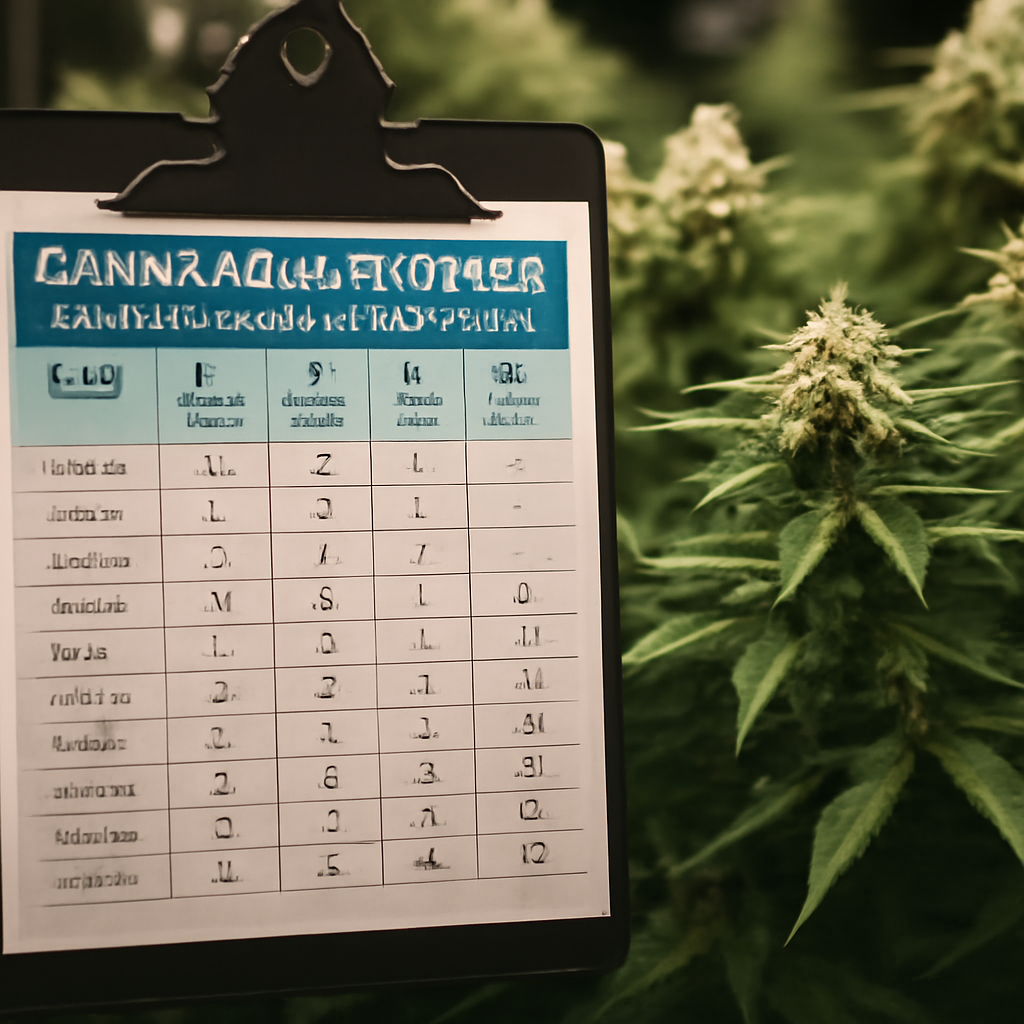
If you're running a recirculating hydroponic setup — NFT, DWC, or a recirculating top-feed — the Canna Aqua feed chart is one of the most precisely engineered nutrient schedules available for cannabis. Unlike Canna Coco or Canna Hydro (drain-to-waste), Canna Aqua is specifically formulated for closed-loop systems where the same solution cycles back through roots repeatedly. That changes everything: your EC management, reservoir top-ups, and flush timing all follow different rules. This guide breaks it all down week by week, with exact dosing numbers you can apply today.
Why Canna Aqua Is Different From Other Canna Lines
CANNA makes four distinct nutrient lines — Soil, Coco, Hydro, and Aqua — and they are not interchangeable. Aqua is built around the chemistry of recirculating systems. Because the same water continuously contacts roots and then returns to the reservoir, nutrient ratios need to remain stable across multiple cycles without salt accumulation tipping out of range.
The key differentiator: Canna Aqua nutrients contain built-in pH stabilizers. This reduces how dramatically pH drifts in a closed loop, which is a real problem in DWC and NFT where microbial activity and root respiration are constantly pushing pH around. You still need to monitor pH — but you'll spend less time chasing it compared to using a non-recirculating-specific formula.
Of the 1,000 grow journals tracked on Grow Guide, 148 growers use coco coir and 125 run top-feed drain-to-waste systems. Recirculating hydro remains a smaller but highly engaged segment — growers running Canna Aqua tend to be optimizing hard for yield and speed, not just learning the basics. If you want to model your schedule before you mix a drop, the Grow Schedule Planner lets you map every week from clone to harvest.
Canna Aqua Feed Chart: Full Week-by-Week Breakdown
All dosing figures below are per 10 litres of water. Always add A and B separately — never mix them in concentrate form, always into water first.
Canna Aqua Vega Phase (Vegetative)
Root Formation — Days 1 to 5
- Aqua Vega A & B: 15–25 ml per 10L
- Rhizotonic: 40 ml per 10L
- Target EC: 0.7–1.1 mS/cm
- pH: 5.2–6.2
Keep EC on the low end during root formation. Young or recently transplanted cuttings are easily burned at higher concentrations, and the Rhizotonic root stimulator works best in a low-salinity environment. If you're starting from seed rather than clone, stay closer to 0.7 for the first few days and ramp slowly.
Vegetative Development — Weeks 1 to 4
- Aqua Vega A & B: 20–35 ml per 10L
- Cannazym: 25 ml per 10L
- Target EC: 0.9–1.3 mS/cm
- pH: 5.2–6.2
Cannazym is added here to break down dead root material and improve enzyme activity — especially relevant in recirculating systems where dead root cells can harbour pathogens. Ramp EC through this phase rather than starting at 1.3 from Week 1. A sensible ramp: 0.9 in Week 1, 1.0–1.1 in Week 2, up to 1.2–1.3 by Weeks 3–4 as canopy develops and uptake increases.
Canna Aqua Flores Phase (Flowering)
Start of Flowering — Weeks 5 and 6
- Aqua Flores A & B: 30–40 ml per 10L
- Cannazym: 25 ml per 10L
- Cannaboost: 20–40 ml per 10L
- PK 13/14 (Week 6 only): 20 ml per 10L
- Target EC: 1.2–1.6 mS/cm
- pH: 5.2–6.2
Switch to Aqua Flores as soon as you flip to 12/12. The transition from Vega to Flores should happen in the same reservoir swap — drain completely, clean the reservoir, and fill fresh with your Flores mix. Do not run a partial mix of Vega and Flores. PK 13/14 is a phosphorus-potassium booster added only in Week 6, timed to coincide with early bud set. Don't extend its use — it's a one-week addition, not a long-term supplement.
Flower Development — Weeks 7 and 8
- Aqua Flores A & B: 30–40 ml per 10L
- Cannazym: 25 ml per 10L
- Cannaboost: 20–40 ml per 10L
- Target EC: 1.8–2.2 mS/cm
- pH: 5.2–6.2
This is peak EC territory for Canna Aqua. 1.8–2.2 mS/cm covers the heavy demand of mid-to-late flowering. Watch your plants closely at 2.2 — tips that curl slightly upward or show very minor tip burn are telling you to back off 0.1–0.2 points. The range is a ceiling, not a target for every strain. Faster-finishing or lighter-feeding varieties may max out comfortably at 1.9.
Reservoir Management for the Canna Aqua Feed Chart
In a recirculating system, reservoir discipline is as important as getting the dosing right. Here's how to manage it:
Daily Top-Ups
Plants uptake water faster than they uptake nutrients, especially under strong light. As water level drops, EC will creep up because the nutrient concentration is now in less water. Top up to your maximum reservoir volume daily using plain, pH-adjusted water (target the low end of your pH range when topping up, as plain water typically sits lower in pH after adjustment). If EC is rising, your plants are drinking more than eating — good. If EC is falling while water level drops fast, your plants are hungry — increase your next mix slightly.
Full Reservoir Swaps
Change out the entire nutrient solution every 1–2 weeks, or whenever you've added a cumulative volume of fresh water equal to your reservoir's maximum capacity. In practice, a 100L reservoir that's been topped up with 100L of plain water over 10 days should be completely drained and refreshed. Stale solution accumulates antagonistic ion ratios that no amount of top-up corrects. Clean the reservoir with H2O2 or a dilute bleach solution, rinse thoroughly, then mix fresh from scratch.
Temperature Control
Keep your nutrient solution between 16°C and 22°C. Below 16°C and root uptake of phosphorus slows dramatically — you'll see purple stems and slow growth even if your EC reads fine. Above 22°C, dissolved oxygen drops and pythium (root rot) risk spikes. A chiller is not optional if your room runs warm. If you spot brown, slimy roots, get your temperatures down first before reaching for any biological treatment. Use our Nutrient Deficiency Identifier if you're unsure whether a deficiency is pH, temperature, or nutrient-lock related.
pH Management on the Canna Aqua Feed Chart
The target pH for Canna Aqua is 5.2–6.2 across all stages — a wider window than many hydro systems require, thanks to the built-in pH buffers. In practice, aim to mix your reservoir at 5.8 and let it float naturally between 5.5 and 6.1 before correcting. Correcting every single day creates pH oscillation that's worse than gentle drift. Only adjust if you're at or below 5.2 or at or above 6.2.
Use quality pH up (potassium hydroxide) and pH down (phosphoric or citric acid) — don't use hardware store alternatives. In a recirculating system, contamination of the solution introduces unpredictable chemistry that your plants will pay for. Always add pH adjustment after nutrients, never before.
Mixing Order for Canna Aqua
- Fill reservoir with plain water at target temperature
- Add Aqua Vega A (or Flores A) — stir well
- Add Aqua Vega B (or Flores B) — stir well
- Add additives (Rhizotonic, Cannazym, Cannaboost, PK 13/14) one at a time
- Check and adjust EC
- Check and adjust pH last
Never pre-mix A and B together in concentrate. They are kept in separate bottles for a reason — combined at high concentration they form insoluble precipitates (calcium-phosphate lock) that will coat your pipes and block your system over time.
Pre-Harvest Flush
In the final 1–2 weeks before harvest, drop nutrient concentration to near zero — plain pH-adjusted water at EC 0.0–0.4 only. In a recirculating system this means a final drain-and-fill with plain water, run continuously through the system. Flushing recirculating systems is easier than drain-to-waste because you're already working with a contained solution — drain it, fill with flush water, run for 5–7 days, check EC is below 0.4, and harvest when trichomes confirm readiness. After harvest, check our Dry & Cure Timer to nail the drying and curing window — growers who flush and then rush the cure are wasting the first part of the work.
Common Problems When Running the Canna Aqua Feed Chart
EC Creeping Up Between Top-Ups
Normal — water is being consumed faster than nutrients. Top up with plain pH-adjusted water only. If EC keeps climbing toward the top of your stage range and plants look healthy, they're drinking well. Only worry if EC climbs above the recommended ceiling for that stage — then flush and remix at a lower concentration.
EC Dropping While Reservoir Volume Is Stable
Plants are eating more than they're drinking. Increase your next reservoir mix by one step (e.g. from 1.4 to 1.5 mS/cm) or add a small amount of A+B to the current reservoir, adjusting EC back to target.
pH Swings Wider Than Expected
The Canna Aqua buffers help, but they don't fully prevent drift in large reservoirs with high plant-mass root zones. If you're seeing swings of more than 0.5 in 24 hours, check: solution temperature (high temps increase microbial activity), root health (rotting roots cause dramatic pH crashes), and light leaks into the reservoir (algae spikes drive pH up).
Nutrient Deficiencies Despite Correct EC
In recirculating systems, ion antagonism builds up over time. If you're weeks into the same reservoir batch and seeing iron or calcium deficiency symptoms despite correct EC, it's time for a full reservoir swap regardless of schedule. Use our Nutrient Deficiency Identifier to confirm what you're looking at before adding supplements. Piling in iron chelate to a solution that already has imbalanced calcium can make things worse.
Canna Aqua vs. Canna Hydro: Which to Use
Canna Hydro is formulated for drain-to-waste systems — the solution contacts roots once and drains away. Canna Aqua is specifically for systems where solution recirculates. If you're running a DWC bucket, NFT channel, or recirculating drip system, use Canna Aqua. If you're running a coco slab or rockwool with drain-to-waste, use Canna Hydro or Canna Coco. Mixing these up is one of the most common and avoidable causes of poor performance with CANNA products.
If you want to estimate what a well-dialled Canna Aqua grow can deliver before you flip, run your numbers through the Yield Calculator — input your canopy size, light output, and strain type to get a realistic ceiling. Pair that with the Cost Per Gram Calculator to figure out whether the full Canna Aqua additive stack makes economic sense for your setup size.
For a broader look at structuring your nutrient schedule across different systems and mediums, see our guide on best nutrients for cannabis seedlings — understanding the seedling phase is where most Canna Aqua growers find they're overdosing earliest.
Frequently Asked Questions
Can I use the Canna Aqua feed chart in a DWC bucket?
Yes — DWC is a recirculating system (or a static reservoir system), making it exactly the intended application for Canna Aqua. The pH stabilizers and recirculation-optimized nutrient ratios are well-suited to DWC. Keep solution temps at 16–22°C and swap your reservoir every 1–2 weeks.
What pH should I target when using Canna Aqua?
Mix your reservoir at pH 5.8 and allow it to drift naturally between 5.5 and 6.1. Only correct pH when it reaches 5.2 (too acidic) or 6.2 (too alkaline). Canna Aqua contains built-in pH buffers that reduce drift compared to standard hydro formulas, but won't eliminate it.
When do I switch from Canna Aqua Vega to Aqua Flores?
Switch at the same time you flip your photoperiod to 12/12. Drain the reservoir completely, clean it, and fill fresh with Aqua Flores A & B. Don't attempt to blend leftover Vega solution with Flores — start fresh each time you change phases.
How often should I change my reservoir when using the Canna Aqua feed chart?
Every 1–2 weeks, or whenever you've topped up a cumulative volume of fresh water equal to your reservoir's maximum capacity — whichever comes first. In practice, most growers on the Canna Aqua schedule land on a 10–14 day swap cycle.
Do I need all the Canna additives (Rhizotonic, Cannazym, Cannaboost, PK 13/14)?
No — the base Aqua Vega A & B and Aqua Flores A & B will grow good cannabis without any additives. Rhizotonic speeds root development early, Cannazym aids enzyme activity in the root zone, Cannaboost aims to enhance flower metabolism, and PK 13/14 delivers a phosphorus-potassium boost at bud set. Each has a specific role, but smaller operations often skip all additives and achieve strong results with base nutrients alone.
References
- CANNA Research (2024). Canna Aqua Vega: Product Information and Application Guide. Official CANNA product documentation outlining recirculating system use, pH stabilization, and EC targets for vegetative growth. other.canna.com/aqua_vega
- Growell (2024). CANNA Hydro & Aqua Nutrients Feed Chart. Retailer-published feeding guide detailing reservoir management, full swap schedules, and solution temperature recommendations for closed-loop systems. growell.co.uk
- Sauce Growing (2024). CANNA Feeding Charts: Schedules for All Grow Mediums. Comprehensive comparison of CANNA nutrient lines including Aqua, Coco, Hydro, and Soil, with stage-by-stage dosing tables. saucegrowing.be
- Bugbee, B. (2021). Nutrient Management in Controlled Environment Agriculture. Utah State University. Research covering EC management, ion antagonism in recirculating systems, and temperature effects on hydroponic nutrient uptake. cpl.usu.edu
- Grow Guide Platform Data (2026). Internal grow journal analysis. Based on 1,000 tracked grows: 148 coco coir growers, 125 top-feed drain-to-waste growers, and 732 indoor cultivators — informing nutrient system usage patterns across active cannabis grows.