What Is Blueberry Auto?
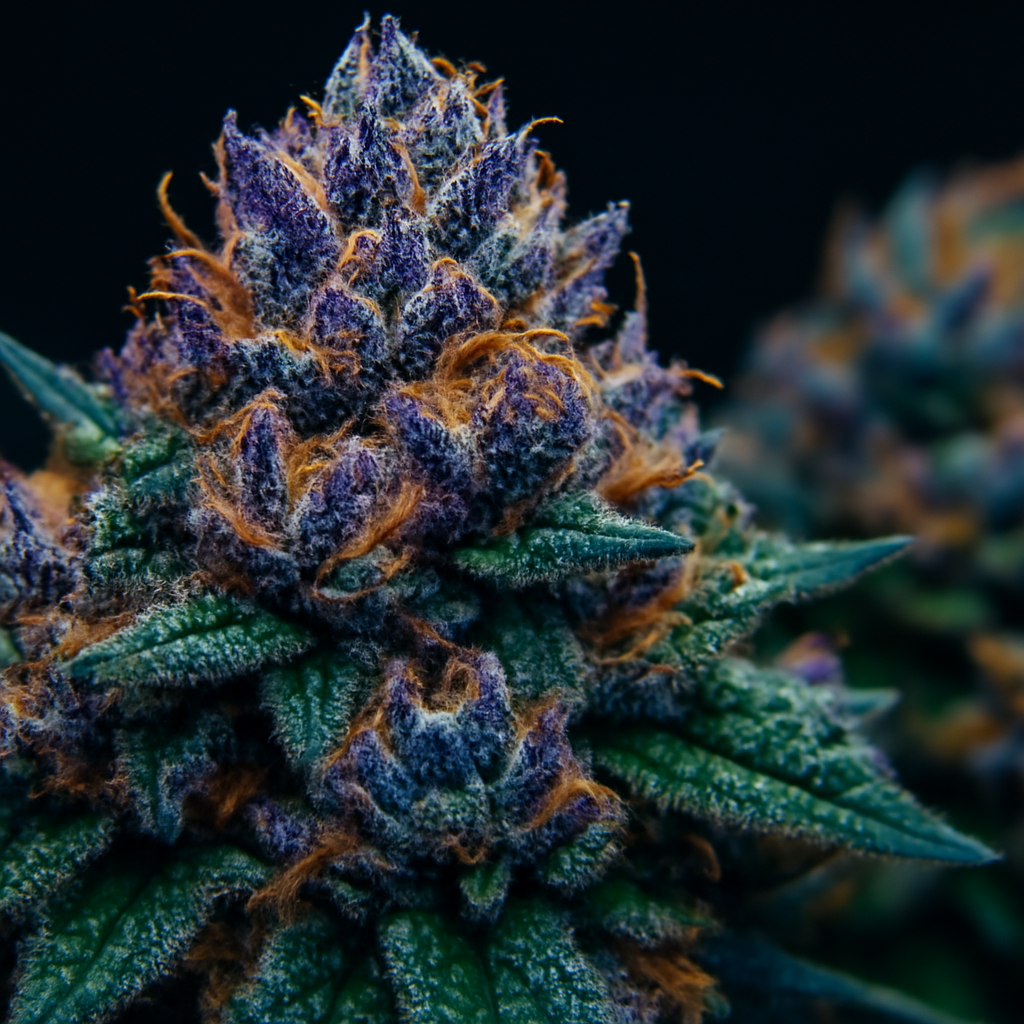
Blueberry Auto is an indica-dominant autoflowering strain produced by crossing the legendary Blueberry cultivar with Cannabis ruderalis. The result is a compact, fast-finishing plant that delivers a genuinely sweet blueberry aroma alongside a relaxed, body-forward effect — all without needing a photoperiod flip. THC typically lands between 14% and 19%, CBD stays low at 0.1–0.3%, and the lifecycle from seed to chop clocks in at 65–85 days depending on environment. If you want to track a grow journal for this strain, you can browse Blueberry Auto grows on Grow Guide to see what other cultivators are pulling off in real conditions.
According to Grow Guide platform data across 1,000 tracked grows, 73% of growers run indoor environments and 63% grow in soil — both of which suit Blueberry Auto perfectly. Its compact stature (70–120 cm indoors) and forgiving nature make it one of the most practical autos for a tent setup.
Blueberry Auto Lifecycle at a Glance
Setting Up Your Environment for Blueberry Auto
Lighting
Blueberry Auto responds best to 18–20 hours of light per day from seed to harvest. A full-spectrum LED dialled to 400–600 PPFD during the seedling stage, ramping up to 800–900 PPFD through peak flowering, gives you the best trade-off between growth rate and heat stress. Running 24 hours continuous is possible but unnecessary — plants benefit from a short dark period for metabolic recovery. Use our Grow Light Calculator to confirm you're hitting the right PPFD for your tent footprint before you drop your first seed.
Temperature and Humidity (VPD)
Target 22–26°C (71.6–78.8°F) throughout the grow. Blueberry Auto is more sensitive to heat than many autos — above 28°C you'll see bleaching at the tops and terpene degradation that flattens that blueberry profile. Keep VPD in the 0.8–1.0 kPa range during veg and early flower, tightening to 1.0–1.3 kPa in late flower. Relative humidity should sit at 50–60% in veg and drop to 40–50% in flowering to protect those dense colas from botrytis.
Air Circulation
Run an oscillating fan at low speed so leaves shimmer but don't whip. Blueberry Auto builds tight, resinous buds — without airflow they're a mold target. Exhaust should turn over the tent volume at least once per minute.
Growing Medium and Container Choice
Soil is the most forgiving medium for Blueberry Auto, and it's what the majority of Grow Guide users choose (63% across all tracked grows). A light, airy mix — think perlite at 20–30% by volume — helps prevent waterlogging, which this strain hates. A 10–15 L (3–4 gallon) fabric pot gives roots enough room without leaving excessive wet soil between waterings.
Critical point: sow seeds directly into their final container. Transplanting an auto — even once — risks stressing the plant during its brief, non-negotiable vegetative window. Any stress-related delay in an autoflower is permanent; you don't get the recovery time a photoperiod plant has.
Coco coir is a legitimate alternative if you're comfortable with more frequent fertigation. EC control becomes more important in coco, but the faster dry/wet cycles can push slightly better yields. If you go coco, buffer your coir before planting and expect to water daily by week 4.
Blueberry Auto Nutrient Schedule
Seedling Stage (Days 1–10)
Leave the seedling alone. Pre-amended soil has everything it needs for the first 7–10 days. Feeding too early is the number one beginner mistake — it causes nutrient burn on fine root tips and slows establishment. Water with plain, pH-adjusted water (6.0–7.0 for soil, 5.8–6.2 for coco) in a small circle around the stem to encourage outward root growth. For more detail on seedling nutrition, see our guide on Best Nutrients for Cannabis Seedlings.
Vegetative Stage (Days 11–28)
Once the third node appears, introduce a balanced grow formula at low EC — start around 0.8–1.0 mS/cm and step up to 1.2–1.4 mS/cm over two weeks. Blueberry Auto has moderate-to-light feeding requirements compared to photoperiod strains. Nitrogen-forward nutrients support canopy development, but keep cal-mag in the mix from day one if you're running LEDs — intense diodes pull more calcium and magnesium than HPS at equivalent PPFD.
Flowering Stage (Days 35–65)
Flip to bloom nutrients as soon as pre-flowers appear — usually around week 3–4. Reduce nitrogen, increase phosphorus and potassium. EC can rise to 1.6–1.8 mS/cm at peak flower, then taper back to 1.0–1.2 mS/cm in the final 10–14 days as you flush or reduce inputs before harvest. Maintain pH at 6.0–7.0 in soil throughout. If you spot signs of lockout or deficiency, the Nutrient Deficiency Identifier can help you pinpoint the issue before it costs you yield.
Low-Stress Training (LST) on Blueberry Auto
Because autos can't recover from high-stress training (topping, fimming) the way photoperiod plants can, LST is your best yield lever. Start bending the main stem outward at week 2–3, once the plant has 4–5 nodes. Secure the stem with soft ties to the rim of the fabric pot and gently redirect growth toward horizontal. As secondary branches grow upward, tie those down too, building a flat, even canopy.
The payoff: more bud sites exposed to direct light, more even PPFD across the canopy, and a meaningfully bigger harvest from the same watt count. If you want to experiment with topping on autos, read the Fimming vs Topping guide first — the timing windows are tight and variety-dependent. For Blueberry Auto specifically, stick to LST unless you've grown it before and know your phenotype's stretch rate.
Plan your full training and feeding schedule with the Grow Schedule Planner so you don't miss key intervention windows in that narrow veg phase.
Harvesting Blueberry Auto
The calendar is a rough guide only — trichomes tell the real story. Pick up a jeweler's loupe (60×) or a digital microscope and check trichomes on the calyx, not the sugar leaves. You're looking for:
- Clear trichomes: too early — THC still developing
- Cloudy/milky trichomes: peak THC, more energetic/cerebral effect
- Amber trichomes: THC degrading to CBN, heavier body effect
For Blueberry Auto's indica-forward profile, harvest at 80–90% milky with 10–20% amber. This hits that relaxed, body-heavy sweet spot while preserving the terpene profile. Calyxes should be swollen and pistils 70–80% receded and darkened. Most plants are ready between day 70 and day 85 — anything before day 65 is usually premature regardless of seed bank claims.
Stop nutrients 10–14 days before your target harvest and flush with pH-adjusted water if running soil, or simply reduce EC to 0.6–0.8 for a final feed week in coco. This clears residual salts and lets the plant use stored reserves, which improves the cleanliness of the final smoke. Estimate your expected output with the Yield Calculator before you chop so you know how much dry/cure space you need.
Drying and Curing Blueberry Auto
This is where most growers leave quality on the table. Blueberry Auto's terpene signature — primarily myrcene and caryophyllene — is volatile. Rush the dry and you'll lose it.
Drying: Hang whole branches (or trimmed buds on a rack) in a dark room at 18–20°C (64–68°F) with 50–60% relative humidity. Airflow should be gentle — a small fan set to low on the opposite wall, not blowing directly on buds. Target a 7–10 day dry. The small stems should snap rather than bend when done. Rushing to 4–5 days with high heat or low humidity crushes the terpene profile and produces harsh smoke.
Curing: Pack dried buds loosely into wide-mouth glass jars, filling to about 75% capacity. For the first 7 days, burp jars twice daily for 15–20 minutes to release moisture and CO₂. After week one, burp once daily for another week, then seal and leave for a further 2–4 weeks minimum. Four weeks of cure transforms the smell from fresh-cut hay into that distinctly sweet blueberry character this strain is known for. Use the Dry & Cure Timer to track burp intervals and log humidity inside your jars — you're aiming for 58–62% RH once sealed.
If you're tracking this grow as a journal, our guide on how to keep a cannabis grow diary covers what data to log at each stage so your next run is even better.
Common Blueberry Auto Problems and Fixes
- Dark, clawing leaves: Nitrogen toxicity. Don't immediately cut your N — first check EC (runoff vs input) and pH. A lockout can mimic toxicity. Correct pH first, then adjust EC down by 0.2–0.3 mS/cm if confirmed overfeed.
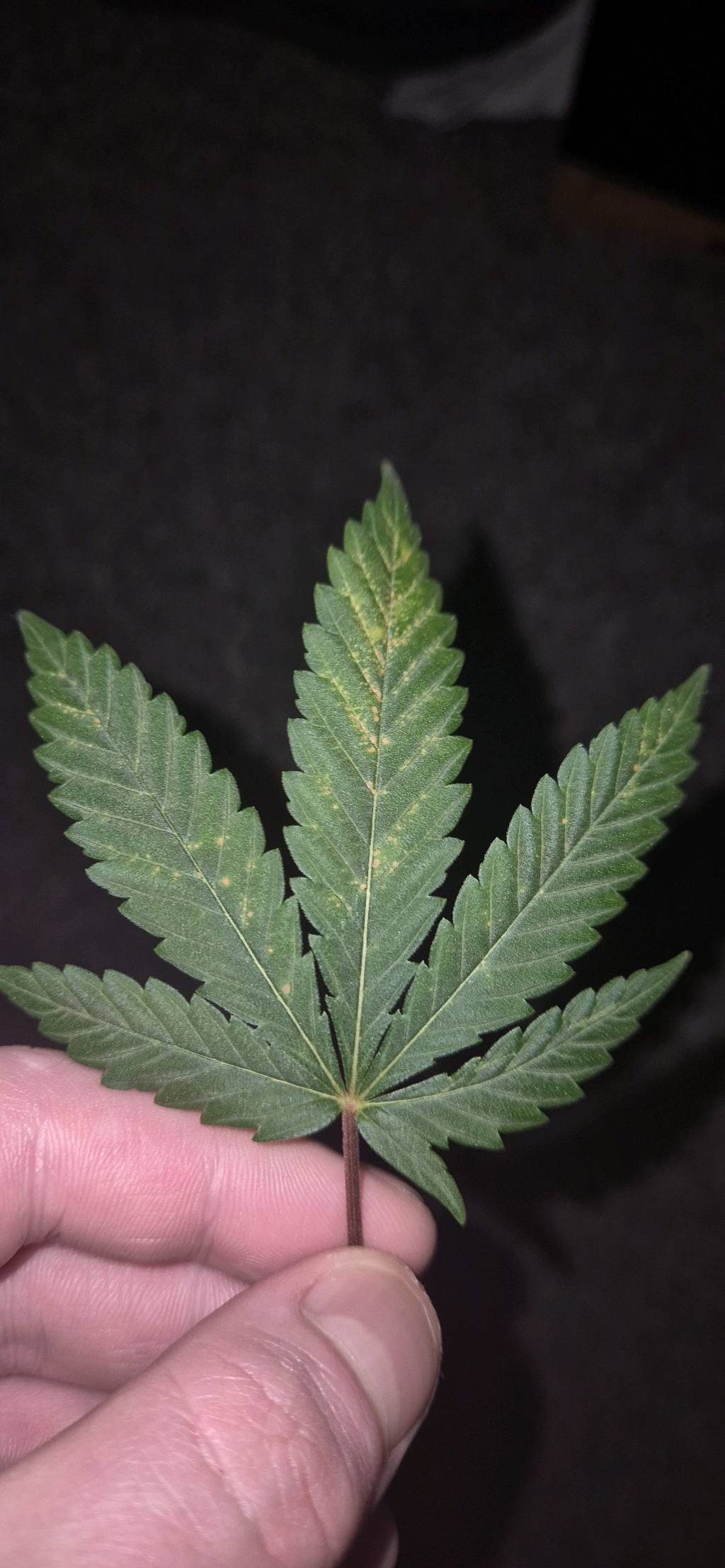
- Brown spots on mid-canopy leaves: Calcium deficiency, especially common under high-output LEDs. Supplement with cal-mag at 5 mL/L, confirm pH is in range (calcium uptake drops below pH 6.0 in soil).
- Yellowing lower leaves in late flower: Normal senescence. If it's happening before week 7 and spreading upward fast, check magnesium — classic mag deficiency pattern on autos in late veg/early flower.
- Foxtailing buds: Usually heat or light stress. Drop canopy temps below 26°C and raise lights if PPFD is exceeding 900+ at the tops.
- Slow growth, pale seedling: Overwatering. Autos hate wet feet. Let the top inch of soil dry before watering again.
Frequently Asked Questions
How long does Blueberry Auto take from seed to harvest?
Expect 65–85 days from germination to harvest. The seed bank number (often 65–70 days) is optimistic — most real-world grows finish closer to 75–80 days when grown in optimal conditions. Always use trichome colour to confirm harvest readiness rather than relying on the calendar alone.
Can I top or fim Blueberry Auto?
It's possible but risky. Autoflowers have a fixed vegetative window — typically 3–4 weeks — and any high-stress technique costs recovery time you can't get back. LST applied from week 2–3 delivers comparable canopy evenness without the yield risk. If you want to experiment with topping, do it no later than the 3rd node and only if the plant is growing vigorously.
What light schedule works best for Blueberry Auto?
18/6 (18 hours on, 6 hours off) is the standard recommendation and works well across the full lifecycle. Some growers run 20/4 for a slight yield bump. True 24/0 is not recommended — the dark period supports root development and metabolic processes even in autos.
What yield can I expect from Blueberry Auto indoors?
Under optimised conditions with LST and quality LED lighting, indoor yields typically range from 350–500 g/m². First-time growers in less dialled environments should expect 150–250 g/m². Pot size, light intensity, and training have more impact on final yield than any other variable. Use the Yield Calculator to model your specific setup.
Why does my Blueberry Auto smell like hay after drying?
A hay smell after drying usually means the dry happened too fast — typically under 5–6 days at low humidity or high temperature. Chlorophyll didn't fully break down. The cure fixes this: burp jars daily for 1–2 weeks and the smell should transition to the characteristic blueberry sweetness within 3–4 weeks of curing in glass jars at 58–62% RH.
References
- Pevgrow (2024). Blueberry Auto Growing Guide — covers germination temperature ranges (22–25°C), humidity targets, and nutrient staging for autoflowering cultivars. pevgrow.com
- Joint Commerce / Cannabis 101 (2024). Blueberry Auto Strain: A Comprehensive Strain Guide — documents harvest indicators including trichome amber ratios (10–20%) and real-world day counts of 70–85 days from sprout. jointcommerce.com
- Cannabis Market Cap (2024). Auto Blueberry Strain Data — THC range 14–19%, CBD 0.1–0.3%, used as reference for cannabinoid profile accuracy. cannabismarketcap.io
- Seeds66 (2024). Blueberry Auto Strain Specifications — indoor height range 70–120 cm, outdoor 100–160 cm, lifecycle 65–70 days. seeds66.com
- Grow Guide Platform Data (2026). Internal grow journal dataset, 1,000 tracked grows — 73% indoor environments, 63% soil medium, used to contextualise typical cultivator setups for Blueberry Auto.