If you've got Royal Queen Seeds genetics — commonly searched as "royal qeen" — in your tent right now, this is the guide you actually need. Royal Queen Seeds (RQS) is one of Europe's most prolific seed banks, and their strains cover the full spectrum from fast autoflowers to high-THC photoperiods. The cultivation principles are consistent across the catalogue: control your environment obsessively, dial nutrients to the stage, and don't rush the back end. Here's the full picture, from seedling to sealed jar.
Understanding Royal Queen Seeds Genetics
RQS offers hundreds of cultivars — photoperiod feminised, autoflowering, CBD-dominant, and fast-flowering variants. The core difference that matters for your grow plan:
- Photoperiod feminised: Vegetative growth controlled by 18/6 light schedule; flowering triggered by switching to 12/12. Total cycle typically 10–20 weeks indoors depending on variety.
- Autoflowering: Flowers based on age, not light schedule. Most RQS autos finish in 8–10 weeks from seed. Keep lights at 18/6 or 20/4 throughout.
- Fast Flowering: Photoperiod genetics bred for shortened flower windows — typically 6–7 weeks of flower rather than 8–10.
Before you plant, map out your timeline using the Grow Schedule Planner — it'll help you align feeding stages, environmental transitions, and harvest windows.
Environment Setup for Royal Queen Seeds Strains
Temperature and Humidity by Stage
Environment is the variable most growers under-invest in. RQS genetics are dialled to perform within specific windows — push outside them and you'll see deficiencies, stretch, and mould that nutrients alone can't fix.
| Stage | Temp (Day) | Temp (Night) | Relative Humidity | VPD Target |
|---|---|---|---|---|
| Germination | 22–25°C | 20°C+ | 70–90% | 0.4–0.8 kPa |
| Seedling | 22–25°C | 20°C+ | 65–75% | 0.4–0.8 kPa |
| Vegetative | 20–26°C | 15°C+ | 50–60% | 0.8–1.2 kPa |
| Early Flower | 24–26°C | 18–20°C | 45–50% | 1.0–1.4 kPa |
| Late Flower | 22–24°C | 16–18°C | 40–45% | 1.2–1.6 kPa |
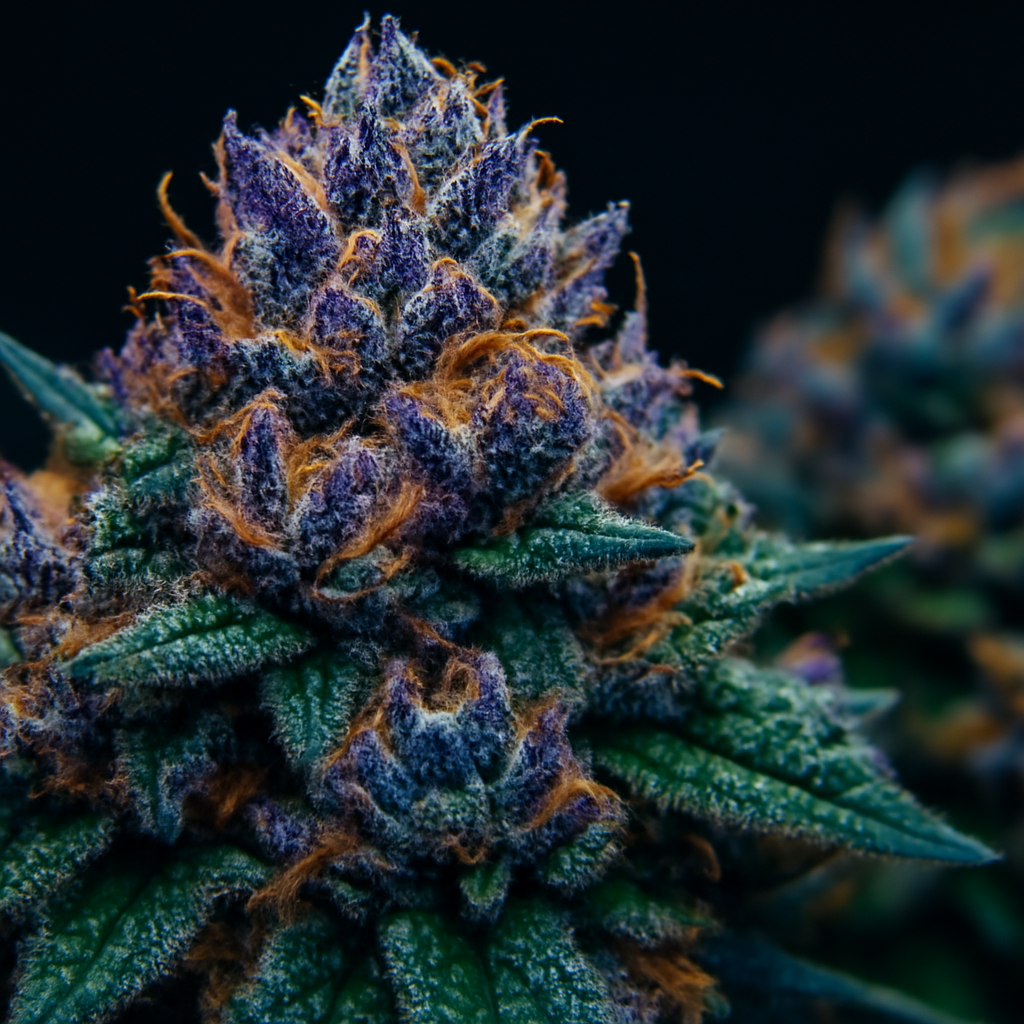
Keep night temps above 15°C during veg — below that and growth stalls noticeably. In late flower, a 5–8°C day-to-night differential helps trigger anthocyanin expression in some purple RQS phenotypes.
Lighting: PPFD and Spectrum
Of the 1,000 grow journals tracked on Grow Guide, 734 (73.4%) are indoor grows — which tells you exactly where people need the most lighting guidance. Use the Grow Light Calculator to match fixture output to canopy size.
- Seedling / early veg: 200–400 µmol/m²/s PPFD at canopy
- Mid-late veg: 400–600 µmol/m²/s PPFD, 18/6 schedule
- Flower: 600–900 µmol/m²/s PPFD, 12/12 schedule
- Late flower peak: Up to 1,000–1,100 µmol/m²/s with CO₂ supplementation at 1,200 ppm
HPS works well but LED (full-spectrum quantum boards) give you finer control over spectrum and heat. At flip, cut blue spectrum by 20–30% if your fixture allows — it reduces stretch and thickens internodes.
Royal Queen Seeds Nutrient Schedule
Cannabis nutrient requirements shift dramatically across the cycle. Getting this wrong is the single fastest way to wreck otherwise healthy Royal Queen Seeds genetics. According to RQS's own cultivation resources, the N-P-K priority flips completely between veg and flower.
pH and EC Targets
Nail your pH or no nutrient schedule on earth will work. Lockout happens fast when you drift outside the window.
- Soil pH: 6.0–7.0 (sweet spot 6.3–6.5)
- Coco coir / hydro pH: 5.8–6.2 (sweet spot 5.9–6.1)
- Seedling EC: 0.4–0.8 mS/cm
- Veg EC: 1.2–1.8 mS/cm
- Flower EC: 1.6–2.2 mS/cm
- Flush / final 2 weeks: Plain pH-adjusted water only, EC <0.4
Of the grows tracked on Grow Guide, 633 out of 1,000 use soil as their medium. If that's you, your buffer for pH swings is wider, but runoff EC monitoring still matters — especially in mid-to-late flower when salt build-up is common. Use the Nutrient Deficiency Identifier to cross-reference symptoms before adding more feed. For seedling-specific feeding, see our Best Nutrients for Cannabis Seedlings guide.
Feeding Schedule Logic
- Weeks 1–2 (seedling): No added nutrients. Cotyledons provide what the plant needs. pH-adjusted water only.
- Weeks 3–8 (veg): Nitrogen-forward feed. Build up gradually — don't start at full dose. Aim for 1.2 mS/cm and adjust upward based on plant response.
- Weeks 9–12 (early flower): Reduce N, increase P and K. Transition nutrients should bridge this phase — watch for nitrogen toxicity (clawed, dark green leaves).
- Weeks 13–harvest minus 2 (peak flower): Full bloom feed. P and K at maximum. Calcium and magnesium supplementation is commonly required, particularly under LED.
- Final 2 weeks (flush): Stop all nutrients. pH-corrected water, EC <0.4. This significantly improves smoothness and flavour in the cured product.
For organic approaches to any of this, the Best Organic Nutrients guide has strain-agnostic protocols that work well with RQS genetics.
Common Troubleshooting for Royal Queen Grows
Overwatering — The Most Frequent Error
Soil growers especially: overwatering is responsible for more failed grows than any other single cause. Symptoms include drooping leaves that still look plump (not crispy), slow growth, and yellowing lower leaves. The fix is simple: insert your finger 3 cm into the medium. If it's still moist, don't water. In fabric pots — which RQS and most experienced growers recommend for aeration — the pot will feel noticeably lighter when it's time to water. Use pot weight as your primary indicator.
Nitrogen Deficiency Mid-Grow
If lower leaves yellow and drop in veg or early flower, you're likely nitrogen deficient or locked out by pH. Check runoff pH first — if it's drifted above 7.0 in soil, a flush with pH 6.3 water will often resolve it within 48–72 hours without adding any new nutrients. Only increase N feed if pH is already correct.
Pest Pressure
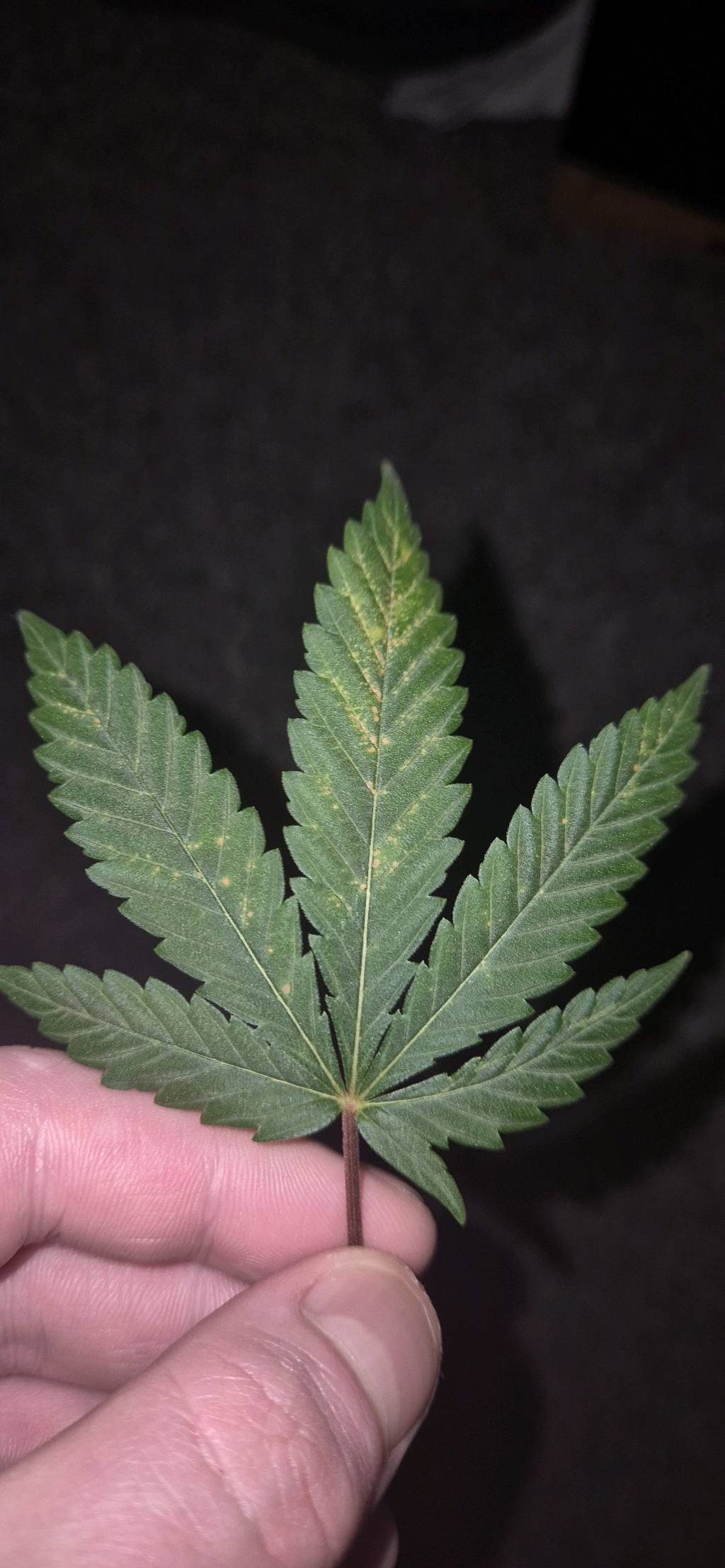
Spider mites thrive when humidity drops below 40% and temperatures exceed 28°C — conditions that can occur in poorly managed tents during hot weather. Inspect the undersides of leaves weekly. At first sign, introduce predatory mites (Phytoseiulus persimilis) and strip the worst-affected leaves. Preventive airflow and clean grow spaces eliminate 80% of pest risk before it starts.
Training Royal Queen Seeds Plants
Most RQS photoperiod strains respond well to low-stress training (LST) during veg, and many support topping or FIMing. Topping during week 3–4 of veg allows the canopy to recover fully before flip. For a direct comparison of these techniques, see our Fimming vs Topping guide.
- LST: Bend and tie main stem outward from week 3. Continue throughout veg. No recovery time needed.
- Topping: Remove apical tip above the 4th–5th node. Two main colas result. Wait 5–7 days before flipping.
- SCROG: Works exceptionally well with RQS indica-dominant strains. Net at 20–25 cm above pot, weave until 60–70% of the net is filled before flip.
Harvesting Royal Queen Seeds Genetics
Harvest timing is the most common place growers leave quality on the table. The visual cues are more reliable than day-count alone:
- Pistil colour: Wait until 70–80% of pistils have darkened from white to orange/red/brown.
- Trichome inspection: Under a loupe or digital microscope (60–100x), look for mostly cloudy/milky white trichomes with 10–30% amber. All cloudy = peak THC, slightly more amber = heavier, more sedative effect. Harvest before trichomes go fully amber.
- Calyx swell: Calyxes should appear swollen and buds dense. If the top colas are still building weight, give them another 5–7 days.
Before you cut, estimate your return with the Yield Calculator — it helps set realistic expectations based on your setup and canopy size.
Drying and Curing After the Royal Queen Harvest
Rushing drying and curing is the fastest way to ruin months of careful cultivation. This is where most of the aroma, smoothness, and final potency is either preserved or destroyed.
Drying Protocol
- Hang whole branches or individual buds in a dark room at 15°C (60°F) and 60% RH
- Ensure gentle airflow — a small fan oscillating in the room, not directed at buds
- Dry for 7–14 days minimum. Faster drying at higher temps destroys terpenes
- Buds are ready when small stems snap rather than bend
Curing Protocol
- Fill glass mason jars to 75% capacity — never pack tight
- Store in a cool, dark location (15–20°C)
- Burp jars twice daily for the first week (15–30 minutes each time)
- After week 1, burp once daily for week 2, then every 2–3 days for weeks 3–8
- Minimum cure: 2 weeks. Optimal: 4–8 weeks
- If buds feel spongy or smell like hay/ammonia, leave lids off for 2–4 hours before resealing
Use the Dry & Cure Timer to track your burp schedule and hit the optimal window automatically. It's the easiest way to avoid over or under-curing a hard-earned harvest.
If you want to track your entire Royal Queen Seeds grow from seed to sealed jar, start a journal on Grow Guide — see our guide on how to keep a cannabis grow diary to set it up properly. You can also browse Royal Queen Seeds grows from other cultivators on the platform for real-world data on phenotype expression, yield, and timings.
Frequently Asked Questions
What light schedule should I use for Royal Queen Seeds autoflowers?
Most RQS autoflowers perform best on 18/6 (18 hours light, 6 hours dark) throughout the entire cycle — there's no need to flip to 12/12. Some growers use 20/4 to maximise photosynthesis, though 18/6 gives plants a necessary rest period that can improve terpene production in the final weeks.
How long does it take to grow a Royal Queen Seeds photoperiod strain indoors?
From seed to harvest, expect 14–20 weeks for most RQS photoperiod feminised strains — roughly 4–8 weeks veg and 8–10 weeks flower depending on cultivar. Add another 2–3 weeks for drying and a minimum 4 weeks curing to reach optimal smoke quality. See our How Long to Grow Cannabis Indoors guide for a full breakdown.
When should I flush Royal Queen Seeds plants before harvest?
Begin flushing — switching to plain pH-adjusted water only — approximately 2 weeks before your anticipated harvest date. This clears residual mineral salts from the medium and plant tissue, resulting in noticeably smoother, cleaner-tasting cannabis after curing. EC of runoff should drop below 0.4 mS/cm by the final few days.
What's the best medium for growing Royal Queen Seeds genetics indoors?
High-quality amended soil suits RQS genetics well and gives you a wider pH buffer, which suits most home growers. Coco coir gives faster growth and more control over nutrients but requires more frequent watering and stricter pH management at 5.8–6.2. Of 1,000 Grow Guide journals tracked, 633 use soil — it's the dominant choice for good reason.
How do I know my Royal Queen Seeds buds are fully cured?
A properly cured bud should feel slightly crisp on the outside but slightly springy in the centre — not bone dry and not spongy. The aroma should be pungent and distinct to the cultivar, with no hay, grass, or ammonia notes. Most RQS strains hit their flavour peak at 6–8 weeks of cure in sealed glass jars stored at 15–20°C.
References
- Royal Queen Seeds (2026). "Top 10 Biggest Mistakes Made by Cannabis Growers." Covers overwatering, pH errors, and nutrient management. royalqueenseeds.com
- Royal Queen Seeds (2026). "Growing Medical Marijuana." Outlines stage-specific nutrient protocols including flush timing two weeks before harvest, and environmental targets for flowering. royalqueenseeds.com
- Royal Queen Seeds (2026). "Let's Get Started — Beginner Cultivation Guide." Documents germination conditions (22–25°C, 70–90% RH) and early-stage watering technique. royalqueenseeds.com
- Royal King Seeds (2026). "Best Practices for Harvesting Cannabis for Maximum Potency." Details trichome inspection methodology and dry-trimming protocols for preserving terpenes. royalkingseeds.us
- Grow Guide Platform Data (2026). Internal analysis of 1,000 tracked grow journals: 73.4% indoor grows, 63.3% soil medium, confirming soil as the dominant cultivation choice among home growers.