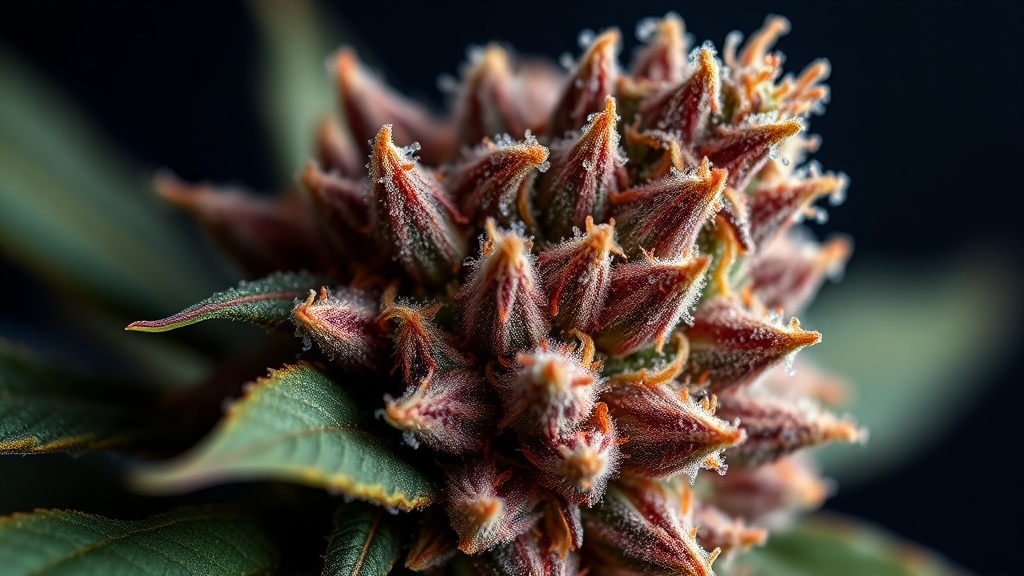
What Is the Mimosa Strain?
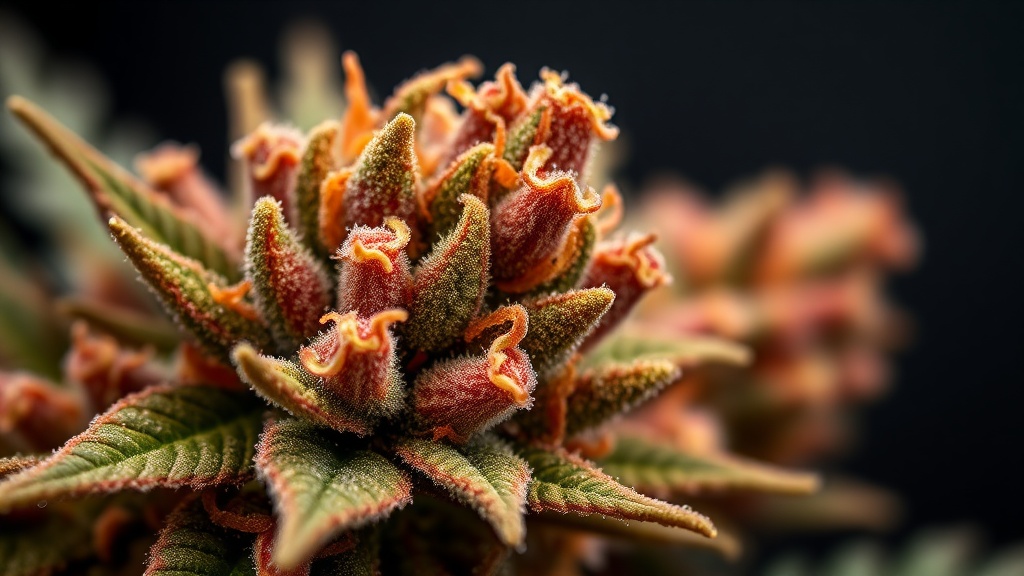
The mimosa strain is a cross between Clementine and Purple Punch — two parents that pull in opposite directions in the best possible way. Clementine donates the sativa structure, the soaring THC ceiling, and that sharp, freshly-peeled orange aroma. Purple Punch grounds the grow with its indica density, resin production, and shorter-than-average flowering window for a sativa-leaning plant. The result is a fast-finishing, heavy-yielding strain that smells like citrus sorbet and hits like a proper sativa — uplifting, clear-headed, and social without the anxious edge.
THC typically lands between 19–27% depending on environment and pheno expression. CBD sits below 1%. The dominant terpenes are limonene, beta-caryophyllene, and myrcene — which explains both the bright citrus nose and the grounded, non-jittery high. You can dig into the full terpene profile using our Terpene Explorer if you want to map what drives the effect.
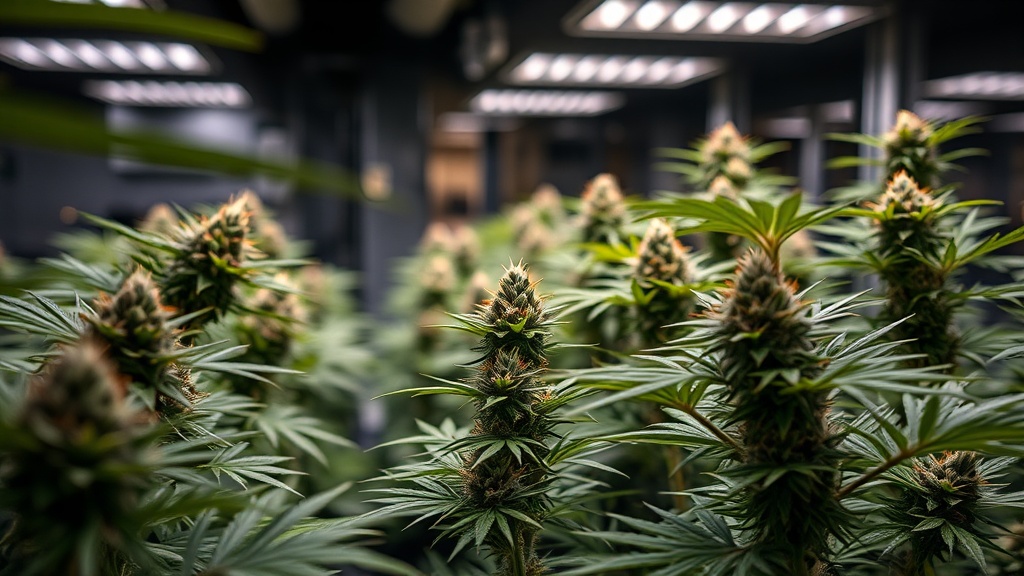
Across the Grow Guide platform, indoor cultivation is by far the most common approach — 734 of 1,000 tracked grows happen indoors, and a sativa-dominant, stretch-heavy strain like mimosa is exactly why growers invest in height management techniques. If you're logging a mimosa grow, check out mimosa grow journals on the platform for real-world pheno data.
Growing the Mimosa Strain Indoors: Structure and Training
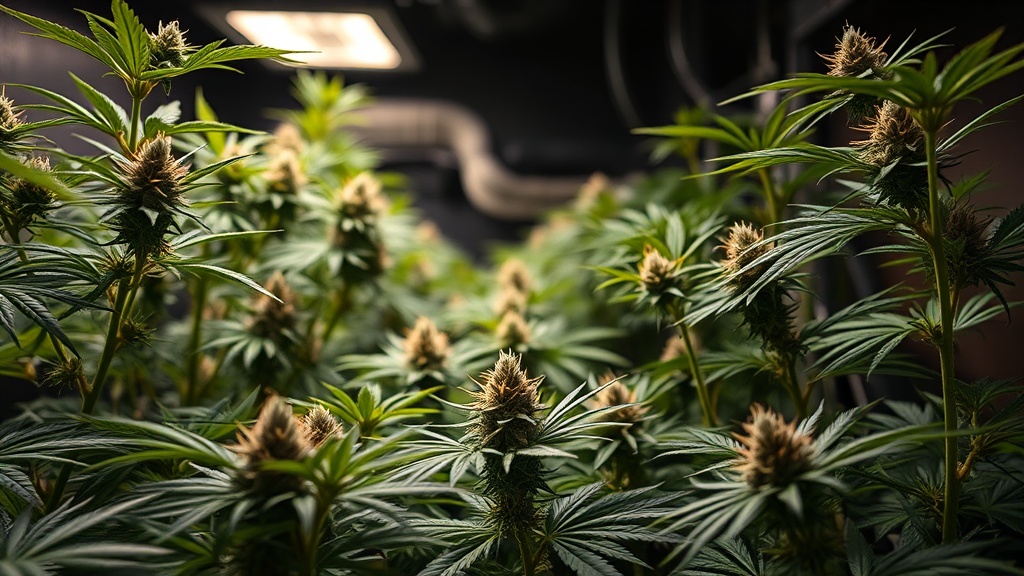
The single biggest thing that catches first-time mimosa growers off guard is the stretch. Flip too late and you're pushing your lights up against the ceiling by week 3 of flower. The fix is simple: initiate the 12/12 flip when your plants are sitting at 40–50% of your total usable canopy height. If you've got 1.5m of vertical grow space, flip at 60–75cm. The plant will add another 50–75% on top of that before stretch slows around week 3–4.
Topping and SCROG for the Mimosa Strain
Mimosa's multi-branched structure makes it ideal for Screen of Green (SCROG). Top at week 3–4 of veg — not earlier, let the node count build first. After topping, apply Low-Stress Training (LST) to bend the two new mains outward and start anchoring side branches under the net as they rise. You want the canopy filled to about 70% of the screen before you flip. The remaining 30% fills in fast during stretch.
If you're new to topping decisions, our Fimming vs Topping guide breaks down exactly when each technique gives you the better result. For mimosa specifically, topping wins — it produces two dominant mains and a more even stretch response than FIMing.
Lighting: aim for 600–900 PPFD during veg, stepping up to 900–1,100 PPFD in flower. Mimosa is a high-light strain and rewards the extra intensity with resin density. Run our Grow Light Calculator to verify you're hitting those numbers across the whole canopy, not just at the centre.
Mimosa Strain Nutrient Schedule
Mimosa is a moderately heavy feeder. It's not as aggressive as some commercial sativas but it will show you fast if you underfeed in week 4–6 of flower — typically as a yellowing that moves from lower fan leaves upward faster than normal senescence would explain.
- Seedling (days 1–14): No added nutrients in amended soil. In coco, start at 0.4–0.6 EC with a seedling-specific formula. See our Best Nutrients for Cannabis Seedlings guide for specific product recommendations.
- Vegetative (wks 2–6): EC 1.2–1.8. High nitrogen phase. N-P-K ratio around 3-1-2. Maintain pH 6.0–6.5 in soil, 5.8–6.0 in coco.
- Early flower (wks 1–4): EC 1.6–2.0. Begin transitioning to a bloom ratio — drop nitrogen, push phosphorus and potassium. Aim for N-P-K around 1-3-2.
- Peak flower (wks 5–7): EC 1.8–2.2. Max potassium phase. Supplement cal-mag if running RO or soft water — Mimosa can show calcium spotting on upper leaves if mag is low.
- Flush/fade (wks 8–9): Drop EC to 0.5–0.8 or plain water depending on your medium. Monitor leaf fade — a proper nitrogen fade with coloured calyx development (purple is possible with cool nights) signals you're on track.
If you're seeing unexpected discolouration mid-grow, run it through our Nutrient Deficiency Identifier before you adjust feeds. Chasing deficiencies without confirming the root cause is one of the fastest ways to stress a plant mid-flower.
Environmental Control for Dense, Resinous Mimosa Buds
Mimosa builds genuinely dense buds for a sativa-leaning plant, which is a gift and a liability. Dense bud structure means excellent yield potential — it also means any humidity mismanagement in weeks 5–9 of flower is going to cost you in mold. Don't skip your humidity targets.
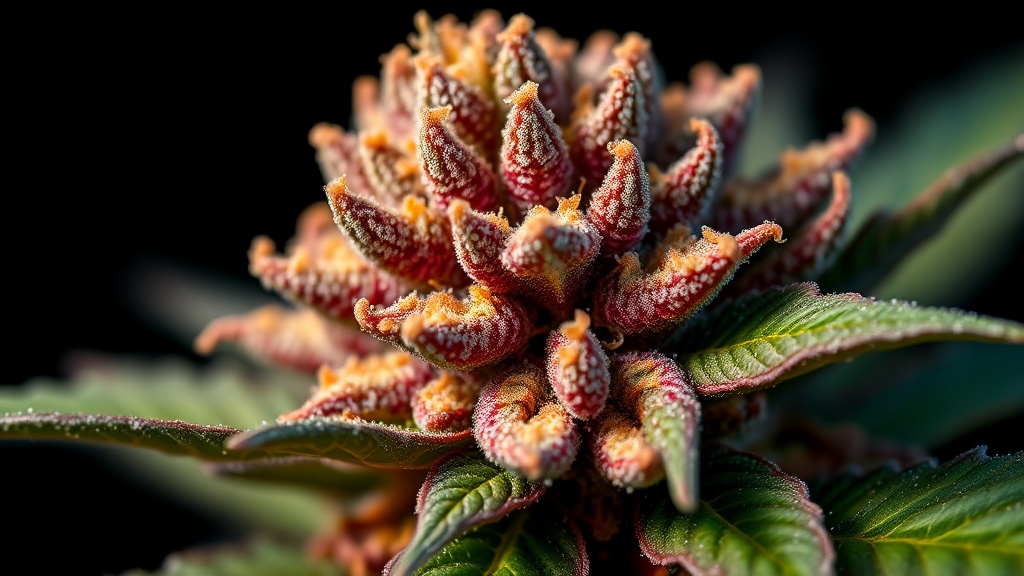
From week 5 of flower onward, get daytime temps down to 20–24°C and push nighttime temps to 18–20°C. That 6–8°C differential in the final two weeks does two things: it triggers anthocyanin expression (the purple hues that some mimosa phenos are known for) and it slows terpene evaporation, concentrating the citrus aroma you're growing this strain for. Think of the last two weeks as flavour-locking mode.
VPD management matters here more than most growers realise. At peak flower (wks 5–8), you want VPD sitting at 1.2–1.6 kPa. Too low and you risk bud rot in those dense colas. Too high and the plant will close stomata, slowing uptake during the critical final fattening weeks. A decent temperature/RH controller with an integrated VPD readout is not optional for a strain with this bud density.
CO₂ supplementation: if you're already running a sealed room with proper environmental control, pushing CO₂ to 1,000–1,200 ppm during the light cycle (paired with the higher PPFD levels mimosa can handle) will show measurable yield improvement. Without the PPFD to match, supplemental CO₂ is wasted money.
Harvesting the Mimosa Strain at Peak Potency
Mimosa's listed flowering window is 8–9 weeks, but don't harvest by the calendar. Harvest by the trichomes. At week 8, start checking under magnification every 2–3 days. What you're looking for:
- Mostly cloudy/milky trichomes with 10–20% amber: Peak THC, energetic effect — ideal for the uplifting mimosa experience most people grow this strain for.
- 30–40% amber: THC has begun converting to CBN, effect becomes heavier and more sedating. Only go here if that's specifically what you want from this strain — it works against the genetics.
Check bud structure before you cut. The calyxes should be fully swollen, pistils mostly orange/red (70%+), and the sugar leaves on top of colas should be absolutely caked in visible trichomes without magnification. If you're unsure whether you're at peak swell, give it another 4–5 days and check again.
Use our Grow Schedule Planner to map backwards from your target harvest window — it keeps feeding cutoffs, flush timing, and trichome check days all in one view so nothing falls through the cracks.
Drying and Curing Mimosa for Maximum Flavor
Mimosa's limonene-forward terpene profile is volatile. You can grow perfect buds and destroy the aroma in a bad dry. The goal is slow and cool.
Drying
- Hang whole branches (or hang the whole plant if space allows) in a dark room at 15–18°C with 55–60% RH.
- Air movement should be gentle — a fan oscillating in the room is fine, but don't blow directly on buds.
- Target 10–14 days. Test by bending a mid-stem: it should snap cleanly with no flex. If it bends, give it more time.
- Fast drying (under 7 days) will burn off limonene before it has a chance to preserve in the cure. Don't rush this phase.
Curing
- Trim and pack into airtight glass jars at 58–62% RH (use Boveda 62 packs if your environment isn't dialled).
- Week 1: burp jars twice daily for 10–15 minutes to release CO₂ and excess moisture. If you open a jar and it smells like ammonia, buds went in too wet — leave lids off for 2–4 hours then reassess.
- Weeks 2–3: reduce burping to once daily, then every 2–3 days.
- Minimum cure: 3 weeks. The citrus and floral notes that make mimosa distinctive don't fully open up until at least week 3. At 6–8 weeks the profile is noticeably more complex and smooth.
Use our Dry & Cure Timer to track burping schedules and get reminders — it's easy to lose count of where you are in the cure, especially across multiple jars from one harvest.
Yield Expectations and Grow Medium Notes
Indoor SCROG grows running well-dialled environments can expect 400–550g/m² from mimosa. Outdoor grows — where the plant can fully express its sativa structure — can push significantly higher, particularly in climates with a long, warm autumn. Mimosa finishes outdoor around early–mid October in the Northern Hemisphere.
On grow medium: across Grow Guide's 1,000 tracked journals, 633 growers run soil and 149 run coco coir. For mimosa, coco is worth considering — the faster uptake and oxygen availability suits the strain's vigorous root system, and dialling EC precisely in coco gives you more control over the final flavour outcome. In soil, use a well-draining mix and avoid overwatering, which is the most common mistake with mimosa's dense root zone.
Run your numbers through our Yield Calculator before you start — it'll help you set realistic targets per plant versus per m² based on your specific setup, and flag whether your current light footprint supports the yield you're expecting.
For a full walkthrough of running an indoor cannabis grow from start to finish, our How to Grow One Cannabis Plant Indoors guide covers the fundamentals you can apply directly to mimosa.
Frequently Asked Questions
How long does the mimosa strain take to flower?
Mimosa finishes flower in 8–9 weeks indoors from the flip to 12/12. Don't harvest by the calendar — verify with trichome inspection from week 8 onward. Mostly cloudy trichomes with 10–20% amber is the sweet spot for the strain's signature uplifting effect.
How much does the mimosa strain stretch during flower?
Expect 50–75% height increase during the first 2–3 weeks of the flowering phase. Flip the plants when they're at 40–50% of your total available canopy height to avoid running out of vertical space before stretch stops.
What causes mimosa to turn purple?
Purple hues in mimosa buds are triggered by anthocyanin expression, which is activated by cool nighttime temperatures — specifically dropping nights to 16–18°C in the final 2 weeks of flower. The underlying genetics from the Purple Punch parent make some phenotypes more prone to colour than others; not every mimosa pheno will purple up equally.
What's the best training method for the mimosa strain?
SCROG (Screen of Green) is the strongest match for mimosa's structure. Top at week 3–4 of veg, apply LST throughout, and aim to fill 70% of the net before flipping. This distributes the canopy evenly and allows mimosa's many lateral branches to develop into producing colas rather than popcorn sites.
How do I preserve the citrus aroma during drying and curing?
The key is a slow, cool dry: 15–18°C at 55–60% RH for 10–14 days in a dark room. Limonene — the dominant terpene driving mimosa's citrus character — degrades rapidly in heat and with too-fast airflow. Follow with a glass jar cure at 58–62% RH for at least 3 weeks, burping daily in week 1.
References
- Medusa Filters (2026). "Mimosa Strain Review: Effects, Growing, and Terpene Profile." Documents THC range of 19–27% and cultivation environment guidance for Mimosa. medusafilters.at
- Sacred Seeds Australia (2026). "Mimosa Strain Review and Grow Guide." Details 50–75% flowering stretch, flip timing at 40–50% height, and post-harvest drying conditions of 15–18°C at 55–60% RH. sacredseedsaustralia.co
- MMJ.com (2026). "Drying and Curing Cannabis: The Complete Guide." Covers jar curing protocols, burping schedules, and the 58–62% RH target for optimal cure. mmj.com
- Grow Guide Platform Data (2026). Internal analytics across 1,000 tracked grow journals: 734 indoor grows, 633 soil medium, 149 coco coir. Original platform data, Grow Guide.
- Toledo Indoor Garden (2026). "Drying and Curing Guide: Trichome Timing for Harvest." Outlines milky-to-amber trichome progression as the primary harvest readiness indicator. toledoindoorgarden.com