Why OG Kush Demands Precision Growing
OG Kush is one of those strains that rewards growers who sweat the details — and punishes those who don't. Its terpene profile (heavy on myrcene, limonene, and caryophyllene) is genuinely exceptional when conditions are dialed in, but it's also one of the first things to collapse when temperature swings or humidity spikes go unchecked. If you've got OG Kush plants in front of you right now, this guide will walk you through every stage with specific numbers so you're not guessing.
On the Grow Guide platform, soil is the dominant medium across tracked journals — 634 out of 1,000 active grows — and OG Kush growers are no exception. It's a forgiving starting point for this strain, but coco coir runs a close second for those chasing faster vegetative growth. Whatever medium you're running, the environmental targets and feeding strategy below apply.
You can browse OG Kush grow journals on Grow Guide to see how other cultivators are running this strain, or use the Grow Schedule Planner to map out your full cycle before your first watering.
OG Kush Grow Environment: Temperature, Humidity & VPD
OG Kush is particularly sensitive to humidity during late flower. Its dense, resin-packed buds are exactly the kind of structure where botrytis takes hold fast if you let RH climb above 45% after week four of bloom. Keep these targets posted near your tent.
VPD is the metric that ties temperature and humidity together — and it's more reliable than chasing either number in isolation. If you're not already tracking it, add a quality digital hygrometer with a VPD readout to your setup. A VPD of 1.4–1.6 kPa during late flower keeps transpiration high enough to move nutrients without stressing the plant or creating the surface moisture that triggers mold.
Use the Grow Light Calculator to confirm your PPFD levels are stage-appropriate — OG Kush responds well to 600–800 µmol/m²/s during vegetative and up to 900–1,000 µmol/m²/s at peak bloom when CO₂ and VPD are managed correctly.
OG Kush Nutrients: EC, pH, and Cal-Mag Demands
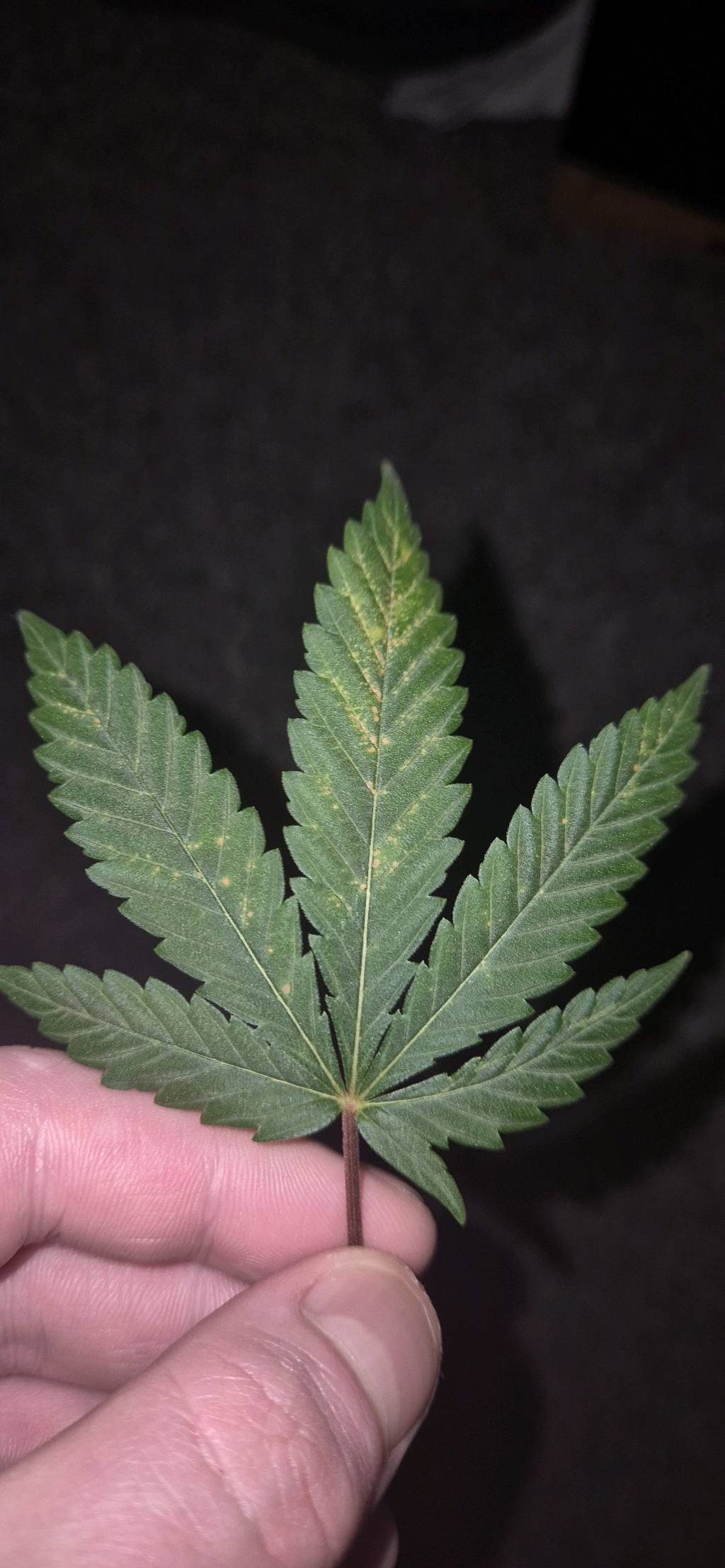
OG Kush is a moderate-to-heavy feeder with a known tendency toward calcium and magnesium deficiency, especially in coco coir or when running RO water. The first signs are curled leaf tips and interveinal chlorosis — catch them early. Use our Nutrient Deficiency Identifier if you're unsure whether what you're seeing is a lockout, a deficiency, or something environmental.
Maintain pH at 6.2–6.5 in soil and 5.8–6.1 in coco for optimal uptake across all macros and micros. Here's the EC ladder to work through across the grow:
- Early vegetative (weeks 1–2): 0.8–1.2 mS/cm (400–600 ppm). Keep it light — OG Kush seedlings tip-burn easily.
- Late vegetative (weeks 3–5): 1.4–1.8 mS/cm (700–900 ppm). Ramp up nitrogen, introduce cal-mag at 2–3 mL/gal.
- Early bloom (weeks 1–3 of flower): 1.6–1.8 mS/cm. Begin transitioning to a P/K-forward formula. Reduce N by roughly 50%.
- Peak bloom (weeks 4–7): 1.8–2.0 mS/cm (900–1,000 ppm). Monitor runoff pH closely — OG Kush can push roots toward acidity under heavy feeding.
- Flush (final 7–14 days): Plain pH-adjusted water, or a low-dose flush solution. Watch leaves fade naturally — a controlled fade signals clean ripening.
For organic feeding approaches that work well with OG Kush in soil, see our roundup of Best Organic Nutes for Cannabis (2026).
Training OG Kush: Structure and Canopy Management
OG Kush grows with a classic indica-leaning structure — stocky internodal spacing, lateral branching that responds well to low-stress training (LST), and main colas that get dense and heavy. Left untrained in a 2×2 tent, you'll get a Christmas tree structure that underperforms on lower branches. A simple LST tie-down starting in week two of veg dramatically improves canopy evenness and yield.
Topping or FIMing at the fourth or fifth node is standard practice. If you're debating which technique, the Fimming vs Topping guide breaks down the tradeoffs in detail. After topping, give OG Kush at least 10–14 days to recover before flipping to 12/12 — it's not the fastest responder.
Harvesting OG Kush: Reading Trichomes and Timing the Cut
OG Kush finishes in 8–9 weeks of 12/12 indoors. Don't go by calendar alone — trichomes are your most reliable indicator. At 8 weeks, check daily with a 60x loupe or a digital microscope. You're looking for:
- Mostly cloudy trichomes with 10–15% amber for peak potency and cerebral effect. This is the window most OG Kush growers target.
- 25–30% amber if you prefer a more sedative, body-heavy effect — the THC is degrading to CBN at this point.
- 70–90% of pistils should have darkened and receded before you even start the trichome countdown.
The buds should be dense, slightly swollen, and producing that unmistakable OG fuel and earth aroma. If they still smell green and grassy, give it another few days. Harvest too early and you lose yield and potency. Harvest too late and the terpene profile flattens out.
Before harvest, run a plain-water flush for 7–14 days in soil (5–7 days in coco). This lets the plant metabolize residual salts and contributes to a cleaner-burning final product.
Use the Yield Calculator to estimate your expected output before harvest so you're not caught off-guard on jar counts and dry space requirements.
OG Kush Drying and Curing: Preserving the Terpene Profile
This is where most home growers lose the most value. OG Kush's terpene profile — particularly the volatile monoterpenes like limonene — degrades rapidly above 70°F or in low humidity environments. Rushing the dry is the single biggest mistake you can make with this strain.
Drying setup:
- Dark room, complete light exclusion — UV degrades terpenes and cannabinoids.
- Temperature: 60–65°F. Below 60°F slows the process too much; above 68°F and you're driving off terpenes.
- Relative humidity: 55–65%. This is the sweet spot for a 10–14 day dry rather than a 4-day rush-dry.
- Gentle airflow — a small fan on a wall nearby, not blowing directly on buds.
- Hang whole branches or use drying racks. Avoid wet trimming if you can — the extra leaf matter helps buffer moisture loss.
Curing protocol:
- Trim and jar when the smaller stems snap but larger stems still bend slightly. Interior moisture will redistribute over the first 48–72 hours in jars.
- Fill glass mason jars to 75% capacity — enough airspace for gas exchange without excess oxygen.
- Burp daily for 10–15 minutes in week one, every other day in week two, twice weekly through week four.
- Target 58–62% RH inside jars (use Boveda or Integra packs to monitor and control).
- Minimum cure: 4 weeks. OG Kush really opens up at 8–12 weeks — the fuel and pine notes sharpen considerably.
The Dry & Cure Timer takes the guesswork out of burp scheduling and tracks your cure progress automatically.
For a deeper look at keeping records across your full grow, the Cannabis Grow Diary guide walks through exactly what to log and when.
OG Kush Troubleshooting: Common Problems and Fast Fixes
Even experienced growers hit snags with OG Kush. Here are the most common issues and what to actually do about them:
- Leaf tip curl (nitrogen toxicity or cal-mag excess): Back off your base feed by 10–15% and check pH. If runoff EC is significantly higher than input, flush and recalibrate.
- Interveinal chlorosis in mid-veg: Almost always magnesium deficiency in OG Kush. Add cal-mag at 3–5 mL/gal and check pH — Mg locks out below 6.0 in soil.
- Stretch during flip: OG Kush can double in height during the first three weeks of flower. If you're in a short tent, flip earlier (when plant is 40–50% of max height) and consider supercropping the tallest colas at week two of stretch.
- Bud rot (botrytis) in dense colas: Prevention is the only real strategy. Keep late-flower RH below 40%, run an oscillating fan directly across the canopy, and defoliate any large fan leaves blocking airflow into the bud sites at week three of bloom.
- Slow rooting in coco: OG Kush in coco benefits from a dilute enzyme product and slightly lower EC in the first two weeks to encourage aggressive root development before ramping feeds.
Frequently Asked Questions
How long does OG Kush take to flower indoors?
OG Kush typically finishes in 8–9 weeks of 12/12 light cycle indoors. Most phenotypes hit the trichome window — mostly cloudy with 10–15% amber — at day 56–63 of flower. Check daily from day 50 onward with a 60x loupe.
What yield can I expect from OG Kush indoors?
A well-trained OG Kush plant in a 3-gallon fabric pot under a 400–600W LED can yield 1.5–2.5 oz per plant in a 2×2 space, or 1.5–2.0 oz per square foot with a proper ScrOG. Yield depends heavily on VPD management during bloom and how long you ran vegetative. Use the Yield Calculator to set realistic targets for your specific setup.
Why does my OG Kush keep showing calcium deficiency?
OG Kush is a heavy calcium user, and the deficiency is compounded by pH being even slightly out of range. In soil, lock pH at 6.2–6.5 and add cal-mag at 2–4 mL/gal from seedling onward. In coco, run 5–7 mL/gal cal-mag and maintain pH at 5.8–6.1. Check the Nutrient Deficiency Identifier if symptoms don't resolve after two waterings.
How do I get the best terpene expression from OG Kush?
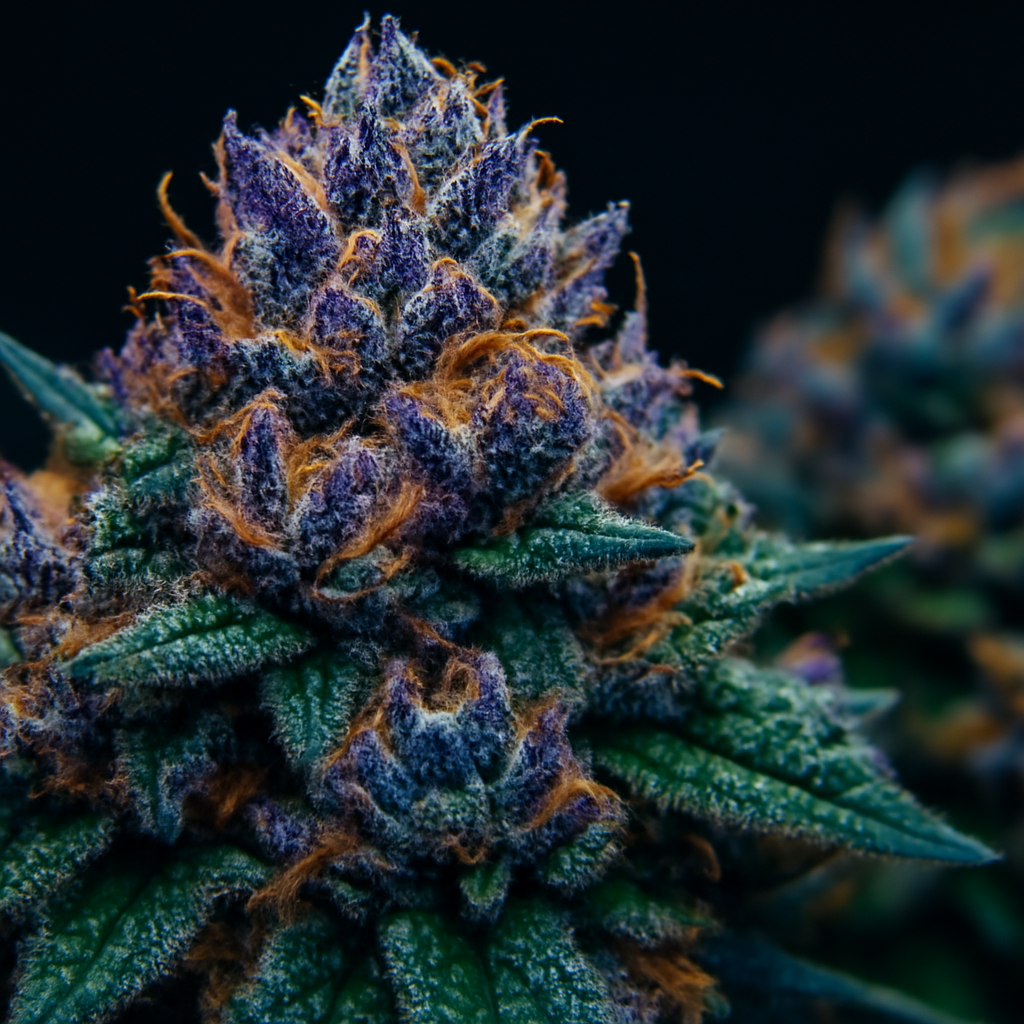
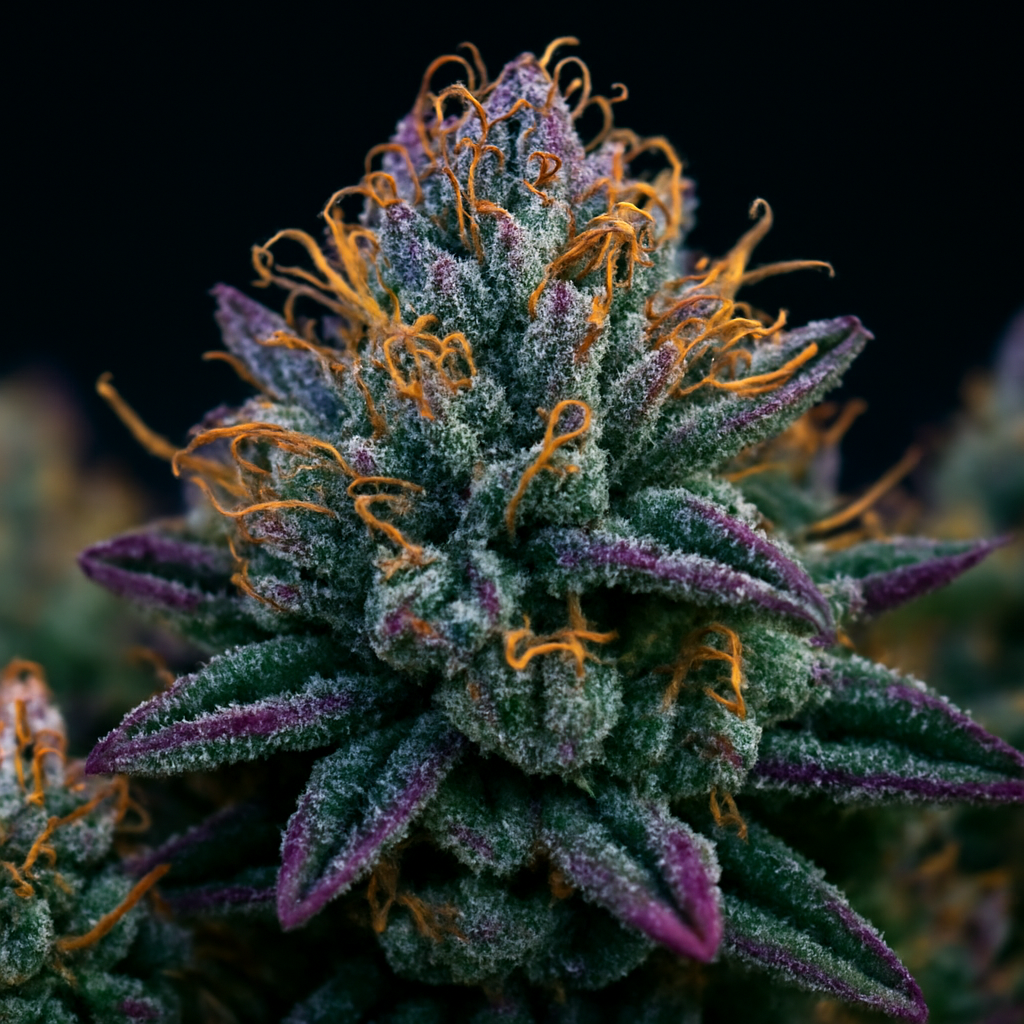
Drop nighttime temperatures to 62–65°F in the final two weeks of flower (a 10°F differential from daytime) to stress the plant into producing more terpenes and anthocyanins. Slow-dry at 60–65°F for at least 10 days and cure for a minimum of 8 weeks — OG Kush's fuel and pine notes sharpen considerably with extended cure time. You can explore its terpene composition with the Terpene Explorer.
Should I grow OG Kush in soil or coco coir?
Both work well. Soil (with 20–30% perlite) is more forgiving on pH swings and feeds naturally into OG Kush's terpene expression — across Grow Guide's tracked journals, 634 of 1,000 grows use soil as their primary medium. Coco coir gives faster vegetative growth and more precise nutrient control but demands daily watering and consistent cal-mag supplementation from day one.
References
- McPartland, J.M. & Russo, E.B. (2001). Cannabis and Cannabis Extracts: Greater Than the Sum of Their Parts? — Establishes the role of terpenes like myrcene and limonene in cannabis chemotype expression. Journal of Cannabis Therapeutics.
- Casierra-Posada, F. & Peña-Olmos, J.E. (2022). Influence of Vapor Pressure Deficit on Cannabis sativa Growth — Confirms VPD ranges of 1.0–1.6 kPa optimize transpiration and dry matter accumulation in cannabis during flowering. Frontiers in Plant Science.
- Caplan, D., Dixon, M., & Zheng, Y. (2017). Optimal Rate of Organic Fertilizer during the Vegetative-Stage for Cannabis — Provides EC and macronutrient benchmarks for indoor cannabis production. HortScience, 52(12).
- Small, E. (2015). Evolution and Classification of Cannabis sativa (Marijuana, Hemp) in Relation to Human Utilization — Background on OG Kush's indica-dominant hybrid morphology and compact growth habit. Botany, 93(4).
- Grow Guide Platform Data (2026). Internal grow journal analytics across 1,000 tracked grows — Medium distribution: soil 634 grows (63.4%), coco coir 149 grows (14.9%), environment split: indoor 735 (73.5%), outdoor 170 (17%).