Why Northern Lights Cannabis Is a Grower's Benchmark Strain
Northern Lights cannabis has been a staple of indoor cultivation since the 1980s, and it's still one of the most-grown indica strains on legal home grows today. If you're tracking a Northern Lights grow right now, you're in good company — it's a strain that rewards attention to the basics without punishing minor mistakes. Compact structure, fast flowering, dense resinous buds, and genuine mold resistance make it the benchmark many growers use to dial in a new tent or setup. This guide walks you through every stage, with specific numbers for every variable that matters.
Setting Up Your Environment for Northern Lights
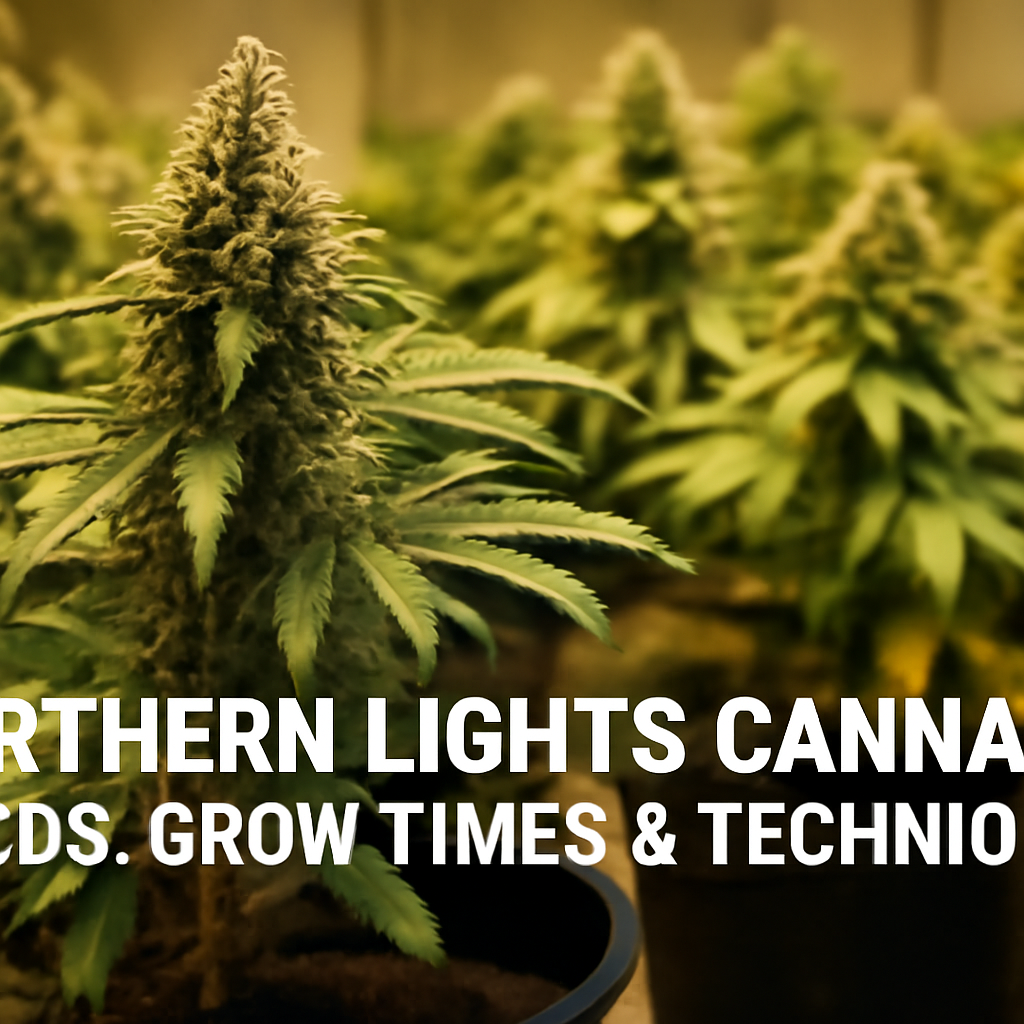
Northern Lights cannabis is compact — most phenotypes stay under 100cm indoors — which makes it ideal for a standard 4×4 tent. The strain's manageable size doesn't mean you can skip environment fundamentals. Consistency in temperature and VPD is what separates dense, sticky harvests from airy, underdeveloped ones.
Lighting
A 600W HPS is the classic choice and still delivers excellent results, covering a 4×4 space at roughly 600–700 PPFD at canopy level. Modern LED equivalents drawing 300–350W achieve similar or higher PPFD with less heat — useful if you're in a warmer climate. Use our Grow Light Calculator to confirm you're hitting the right PPFD for your tent dimensions before you start. During veg, target 400–600 PPFD; ramp up to 800–1000 PPFD in peak flower.
Temperature and Humidity
- Germination: 70–85°F (21–29°C), humidity 60–70%
- Vegetative: 70–85°F (21–29°C), humidity 50–60%, VPD ~0.8–1.1 kPa
- Flowering: 65–75°F (18–24°C), humidity 40–50%, VPD ~1.0–1.4 kPa
- Late flower (final 2 weeks): Drop humidity to 35–40% to push resin and prevent botrytis
A digital hygrometer-thermostat combo is non-negotiable. Oscillating clip fans pointed at the mid-canopy help equalize microclimate and prevent the hot, still pockets where mold starts. For a full ventilation setup in a 4×4, use an exhaust fan rated at minimum 200 CFM paired with a carbon filter.
Northern Lights Vegetative Stage: 18/6 and LST
Run 18 hours on, 6 hours off from seedling through end of veg. Northern Lights stays naturally bushy, so low-stress training (LST) pays off even without topping. Start bending the main stem outward at 2–3 weeks and tie down side branches to create a flat, even canopy. This alone can improve your yield by 15–25% versus an untrained plant under the same light. If you want to compare topping versus other canopy techniques for this strain, see our Fimming vs Topping guide.
Veg for 4–6 weeks indoors if you want a manageable plant around 60–80cm at harvest. Push to 8 weeks if you're filling a larger space. Use our Grow Schedule Planner to map out exact flip dates once you know your tent size and target plant height.
Nutrients for Northern Lights Cannabis
Northern Lights is not a heavy feeder — it's one of the reasons beginners love it. Running full-strength commercial nutrient doses will burn the tips before you hit mid-veg. Start at half the manufacturer's recommended dose and increase based on plant response.
Vegetative Nutrients
- EC: 1.2–1.6 mS/cm in soil
- pH: 6.0–7.0 (soil) or 5.8–6.2 (coco)
- Higher nitrogen ratio (e.g. 3-1-2 NPK) to support vigorous leafy growth
- Include cal-mag, especially under LED or in coco/soft water situations
Flowering Nutrients
- EC: 1.4–2.0 mS/cm
- Transition to bloom base (low N, high P/K) at flip — roughly week 3 of flower once stretch begins to slow
- Add a PK booster (PK 13/14 or similar) during weeks 5–7
- Begin flush or reduce feeding in the final 10–14 days depending on your medium
If you spot unexpected yellowing, clawing, or burnt tips, use the Nutrient Deficiency Identifier to diagnose before adjusting. Many "deficiencies" on Northern Lights are actually pH-driven lockout, not a true lack of the element. For seedling-stage feeding recommendations, our Best Nutrients for Cannabis Seedlings guide covers ratios and timing in detail.
According to Grow Guide platform data from over 1,000 tracked grows, 63% of growers use soil as their primary medium — and Northern Lights is particularly well-suited to soil, where its natural buffering against salt buildup is an asset.
Flowering Stage: What to Watch Week by Week
Switch to 12/12 and within 7–10 days you'll see pistils forming at bud sites. Northern Lights moves through flower predictably:
- Weeks 1–2: Stretch phase — plants can gain 30–50% in height. Keep lights adjusted to avoid burn.
- Weeks 3–4: Bud sites stack and bulk begins. Push EC to 1.8–2.0. Introduce PK booster.
- Weeks 5–6: Dense cola formation. Smell intensifies. Humidity must stay below 50%.
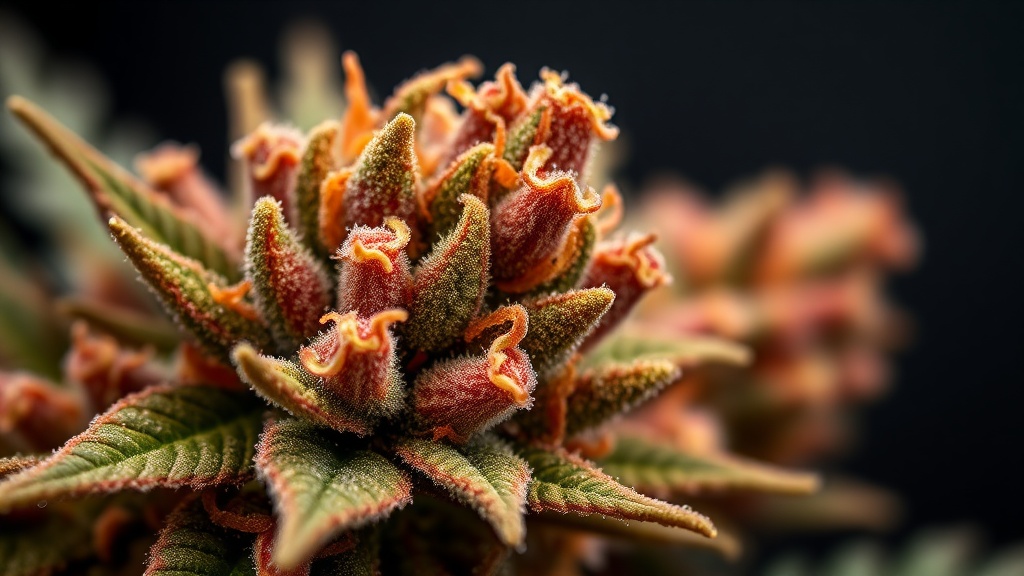
- Weeks 7–8: Trichomes transition from clear to milky. Watch closely with a 60–100x loupe or digital microscope.
- Week 9 (if running full): Amber trichomes appear. Harvest window opens. Begin final flush if using synthetic nutrients.
For harvest timing, pull when trichomes are predominantly milky white with 10–20% amber if you want the classic Northern Lights body effect. All clear = too early. More than 30% amber = past peak THC, heavier sedative profile.
Harvest, Drying, and Curing Northern Lights Cannabis
Harvest Day
Harvest in the final hours of the dark cycle when terpene concentrations are highest. Wet trim is easier with Northern Lights' open structure — remove large fan leaves before hanging. Bucking individual branches rather than whole plants speeds drying and airflow.
Drying
Hang trimmed branches upside down in a dark space at 60–70°F (15–21°C) with humidity at 50–60%. Airflow should be gentle — indirect fan movement, not direct airflow blowing across buds. Drying typically takes 7–14 days. You're ready to jar when small stems snap cleanly rather than bending.
Curing
Fill glass jars three-quarters full and store in darkness at 60–70°F with 58–62% RH (use Boveda 62 packs to maintain this). Burp jars twice daily for the first two weeks to release moisture and CO₂. After week two, burp once every 2–3 days. A minimum 4-week cure is standard; 6–8 weeks is where Northern Lights' earthy, sweet terpene profile really comes forward. Use the Dry & Cure Timer to track your jar dates and burping schedule automatically.
Yield Expectations and Maximizing Output
Indoor yields on Northern Lights cannabis under a 600W HPS typically run 400–500g/m² with trained plants and dialed-in conditions. Under lower-wattage LEDs in a 2×2, expect 80–120g per plant. Outdoor plants in full sun can reach 500–600g per plant by late September.
Key yield levers in order of impact: light intensity (PPFD at canopy), canopy training (LST or SCROG), and defoliation in early flower. Feeding and watering consistency matters, but environment and light placement are what determine your ceiling. Run your setup through the Yield Calculator to get a baseline estimate before you flip to flower. For a full breakdown of total grow economics, the Cost Per Gram Calculator will help you understand what each harvest actually costs you.
Common Problems and How to Fix Them
Overwatering
Northern Lights in soil is prone to overwatering because of its compact root zone early in life. Water only when the top inch of soil is dry and the pot feels light when lifted. Drooping, downward-curved leaves that don't perk up after lights-on is the key indicator.
Nutrient Burn
Brown, crispy leaf tips appearing in veg almost always mean EC is too high or pH is drifting. Drop EC by 0.2–0.3 and re-check runoff pH before adding more feed. Don't mistake nitrogen toxicity (dark green, clawing leaves) for a deficiency and chase it with more nitrogen.
Spider Mites
Mites thrive in hot, dry conditions (above 80°F, below 40% RH). Check the underside of lower leaves weekly. At first sign: lower temps, raise humidity slightly, and apply neem oil or insecticidal soap in the lights-off period. Don't use neem past week 3 of flower — it affects terpene profile and can leave residue.
Mold Mid-Flower
Despite Northern Lights' decent resistance, dense buds in week 6–8 can develop botrytis if humidity spikes above 55%. Increase exhaust fan speed, add a dehumidifier, and ensure there's no stagnant air at the base of colas. Remove any affected material immediately with sterilized scissors.
For a broader look at indoor growing principles that apply to this strain, the How to Grow Good Weed Indoors guide and our piece on How Long to Grow Cannabis Indoors both have relevant timing and environment breakdowns.
Frequently Asked Questions
How long does Northern Lights cannabis take from seed to harvest?
From germination to harvest day, expect 14–18 weeks total indoors: 1–2 weeks seedling, 4–6 weeks vegetative, and 7–9 weeks of flowering. Add 7–14 days drying and 4–6 weeks curing for finished product. Autoflowering Northern Lights varieties can cut total grow time to 10–12 weeks seed to harvest.
What yield can I expect from Northern Lights indoors?
Under a 600W HPS or equivalent LED covering a 4×4 space with trained plants, expect 400–500g/m². Untrained plants in the same space typically produce 250–350g/m². Dialing in PPFD, VPD, and a proper flush before harvest will push you toward the upper end of that range.
What's the ideal pH for growing Northern Lights in soil?
Maintain a root-zone pH of 6.0–7.0 in soil, with 6.2–6.8 being the sweet spot for broadest nutrient availability. In coco coir, target 5.8–6.2. pH drift outside these windows is the most common cause of apparent nutrient deficiencies on this strain.
When should I harvest Northern Lights for the strongest effect?
Harvest when trichomes are mostly milky white with 10–20% amber under magnification. This delivers peak THC with the strain's classic full-body indica effect. More amber shifts the profile toward a heavier, more sedative high as THC degrades to CBN.
Is Northern Lights a good strain for beginner cannabis cultivators?
Yes — it's widely considered one of the best first-grow strains available. Its compact size, short flowering time, natural mold and pest resistance, and tolerance for minor environmental fluctuations make it forgiving without sacrificing yield quality. Stick to half-strength nutrients and a consistent watering schedule and it's hard to fail.
References
- Cervantes, J. (2015). The Cannabis Encyclopedia. Van Patten Publishing. Foundational cultivation data for indica-dominant strains including temperature, humidity, and VPD targets across growth stages. cannabisencyclopedia.com
- Bugbee, B. (2020). "Fundamentals of Growth and Production of Cannabis." Utah State University. Research on PPFD, photoperiod, and canopy management for indoor cannabis production. usu.edu
- Way of Leaf Editorial Team. (2023). "8 Tips for Growing Northern Lights Cannabis." Practical strain-specific guidance on nutrient dosing, pH management, and flowering environment. wayofleaf.com
- Biology Insights. (2026). "How to Grow and Care for Northern Lights Auto." Detailed breakdown of autoflower and photoperiod Northern Lights trichome development, drying, and curing parameters. biologyinsights.com
- Grow Guide Platform Data. (2026). Internal analytics from 1,000+ tracked cannabis grow journals, covering medium preference (63% soil), environment type (74% indoor), and feeding method distribution among active cultivators. growguide.app