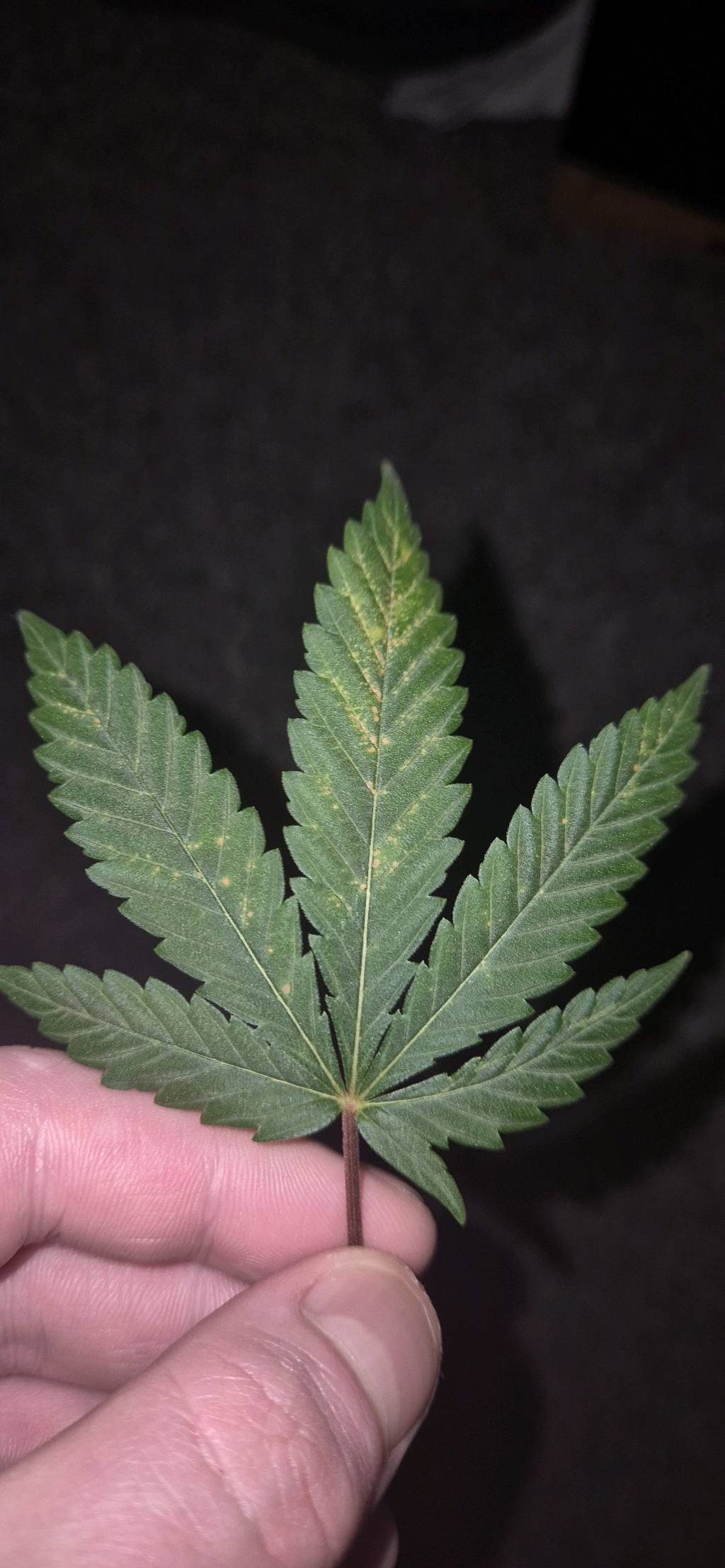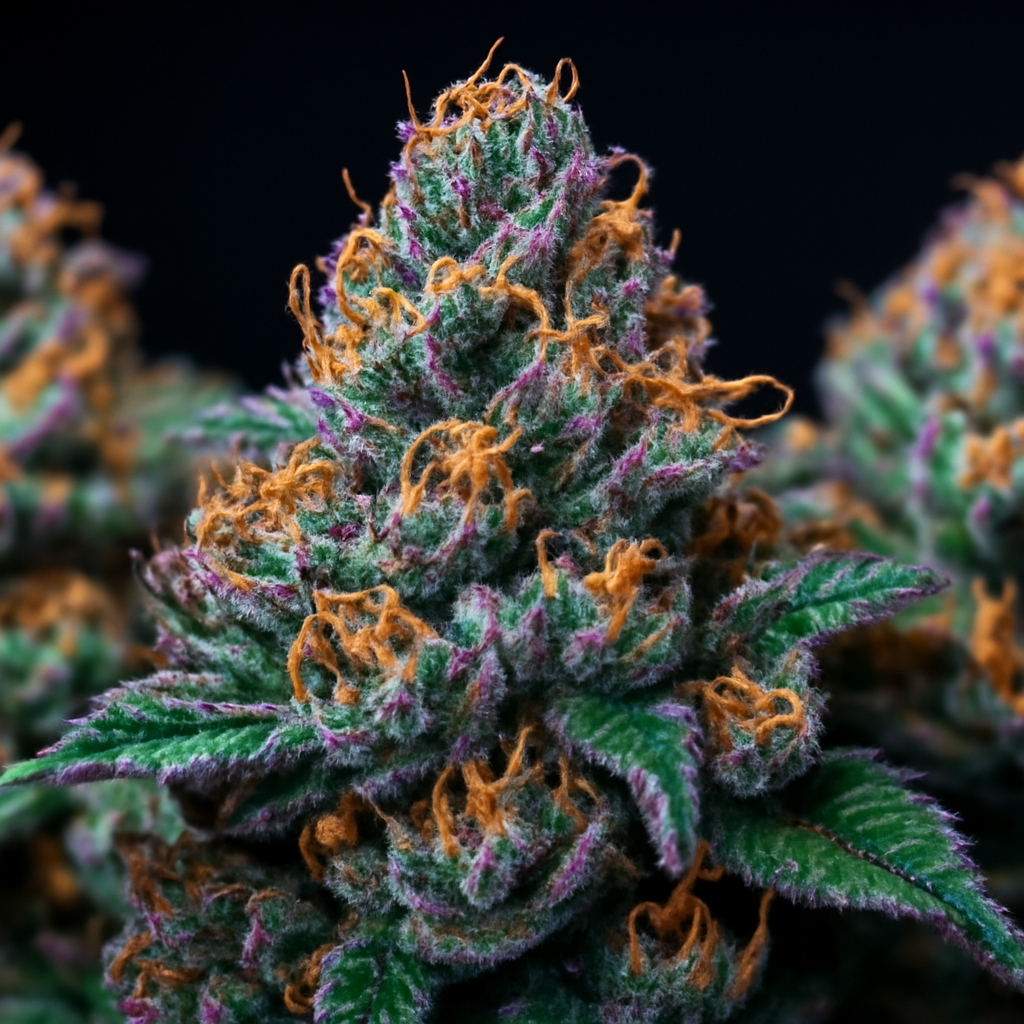
What Is the Mendo Breath Strain?
The Mendo Breath strain is an indica-dominant hybrid bred from OG Kush Breath (OGKB) and Mendo Montage — two heavy-hitting parents that pass on dense, resin-caked structure and a terpene profile dominated by vanilla and caramel sweetness with earthy undertones. THC typically tests between 19–24%, CBD sits low at 0.1–0.3%. If you're growing it for the first time, expect compact, bushy plants that reward structure training and precise environmental control. Indoor growers at Grow Guide run this one mostly in soil (soil accounts for 73% of tracked grows across the platform), and it's a strain that rewards patience — particularly in the cure.
This guide covers everything from seed to jar: environment, training, nutrients, harvest timing, and drying. If you want to track your run properly from day one, the Grow Schedule Planner is the fastest way to map out your full timeline.
Mendo Breath Strain: Vegetative Environment and Light
Keep veg temperatures between 75–82°F (24–28°C) with relative humidity at 55–65%. VPD at these temps and humidity should sit around 0.8–1.1 kPa — tight enough to push transpiration without stressing young plants. PPFD during veg runs 400–600 µmol/m²/s; if you're unsure what that translates to in your tent with your specific fixture, use the Grow Light Calculator to dial it in properly.
Mendo Breath stays naturally compact — expect 60–90 cm indoors at flip if you're running a 5-week veg. If you're working with limited canopy height, that's actually a feature. Don't let it grow past 40–50 cm before topping if you want a manageable indoor plant.
Training the Mendo Breath Strain for Maximum Canopy
This strain responds well to both topping and LST. Top once at node 4–5, then LST the two main colas outward. A second top or FIM at week 3 of veg builds a wider, more even canopy. If you're running multiple plants, SCROG netting at 20–25 cm above the pot surface locks everything in place before flip — Mendo's tight internode spacing means the canopy fills in fast once the stretch starts.
- Topping: Top once at node 4–5, optionally again after two new nodes develop. Read our Fimming vs Topping guide if you're weighing which technique fits your setup.
- LST: Use soft tie-downs to bend colas outward and flatten the canopy. Start as soon as the plant is established post-top.
- SCROG: Net at 20–25 cm above medium. Tuck aggressively through the first 2–3 weeks of flower; stop tucking once pistils develop to avoid stress.
- Defoliation: Light defoliation at week 3 and week 6 of flower improves airflow and reduces botrytis risk — critical with Mendo's dense bud structure. Don't strip more than 20–25% of fan leaves in a single session.
Flowering Environment: Temperature, Humidity, and VPD
At flip (12/12), bring temps down to 68–79°F (20–26°C) and tighten RH to 40–50%. By weeks 6–8, drop RH further to 38–42% — dense, resinous Mendo Breath buds are susceptible to botrytis if airflow and humidity aren't managed. Run air exchange every 1–3 minutes in your grow space. A clip fan directed at bud sites helps interrupt the still-air pockets that invite mold.
PPFD in flower: target 700–900 µmol/m²/s. If you're CO₂-enriched at 1,200 ppm, you can push to 1,100 µmol/m²/s without burning. VPD in mid-to-late flower should be 1.2–1.6 kPa. If you're not tracking VPD yet, it's the single most impactful environmental variable to dial in — temperature and humidity alone don't tell the full story.
Mendo Breath Nutrient Schedule: EC, NPK, and Cal-Mag
Mendo Breath isn't a heavy feeder, but it's specific about ratios. In veg, run an NPK around 3-1-2 at EC 1.2–1.6 mS/cm. Calcium needs to be consistently available — target 150–200 ppm Ca and 40–60 ppm Mg throughout veg and into early flower to prevent the interveinal chlorosis this strain can show when Cal-Mag is light. If you spot early signs of deficiency, the Nutrient Deficiency Identifier can help you confirm before you adjust your feed.
At flip, shift to approximately 1-3-2 NPK. Nitrogen tapers off, phosphorus drives bud development, and potassium supports resin production and terpene expression — those vanilla-caramel notes you're growing for come through best when K is sufficient in weeks 4–7. EC climbs to 1.6–2.0 mS/cm through peak flower, then steps down for the final 10–14 days. Whether you flush or taper nutrients in the final two weeks, get EC near baseline (0.4–0.6) before harvest.
pH in soil: keep it 6.2–6.8. In coco (if you're running drain-to-waste, which 125 of the 1,000 Grow Guide growers use), tighten to 5.8–6.2. Mendo's trichome production ramps up sharply in weeks 6–7, so don't let a pH swing cost you uptake right when the plant needs it most.
For seedling nutrition before your first true feed, check out Best Nutrients for Cannabis Seedlings 2026 — getting that early foundation right means less correction later.
Harvest Timing: Reading Mendo Breath Trichomes
Mendo Breath finishes in 7–9 weeks of flower indoors — most cuts land at 8 weeks. Don't go by the calendar alone. Pull out a loupe or digital microscope and look at the trichomes on the bud itself, not the sugar leaves (leaves amber faster and skew your reading).
- Mostly cloudy (milky white), 0–5% amber: Peak THC, energetic-leaning effect. Not Mendo's best expression — this strain's heavy body effect needs more time.
- Mostly cloudy, 5–15% amber: Sweet spot for Mendo Breath. THC is converting to CBN at the edges, which rounds out the sedative, relaxing quality this strain is grown for.
- 20%+ amber: Heavier, more sedative — some growers intentionally push here for nighttime use or extract production.
Pistils will be 70–90% orange/red at peak. That's a useful early indicator to start checking trichomes, but it's the trichomes that give you the precise call.
Drying and Curing Mendo Breath
This is where most grows lose quality. Mendo Breath's vanilla-caramel terpene profile comes through in the cure — rush it and you lose the complexity you spent 8+ weeks building.
Drying: Hang whole branches upside down (wet-trimmed or dry-trimmed, personal preference) in a dark room at 60–70°F (15–21°C) and 45–55% RH. Airflow should be gentle — a fan on low pointed at the wall, not the buds directly. Target 7–10 days. You're done when small stems snap cleanly rather than bend. If buds dry in under 5 days, your room is too dry or too warm — slow it down.
Curing: Pack loosely into airtight glass jars at 58–62% RH (Boveda 62s or a digital hygrometer inside each jar). Burp jars twice daily for the first week — open, fan for 30–60 seconds, reseal. Week 2–4, burp once daily. The vanilla-caramel terps sharpen noticeably between weeks 2 and 4. Minimum cure: 2 weeks. Optimal: 4–6 weeks. Use the Dry & Cure Timer to track your burp schedule and monitor where you are in the cure cycle.
Yield Expectations: Indoor vs. Outdoor
Indoor: with a SCROG setup and properly dialed environment, expect 350–500g/m². Less if you're running fewer plants with simple LST. The Yield Calculator can help you model expected output based on your canopy size, light intensity, and plant count before you commit to a setup.
Outdoor: in warm, dry climates (think Northern California, Mediterranean, similar), Mendo Breath reaches 90–140 cm tall in 8–13 gallon containers and yields 400–700g per plant. Harvest outdoors typically lands in late September. Watch humidity closely in your final two to three weeks — dense outdoor colas in early autumn dew conditions are a botrytis setup.
If you want to track this run from day one, a structured grow journal is the fastest way to build a reference for future cycles — read How to Keep a Cannabis Grow Diary for the framework.
Common Problems with Mendo Breath and How to Fix Them
- Botrytis (grey mold): The number one risk. Dense buds + late-flower humidity = disaster. Drop RH below 42% from week 6, run air exchange aggressively, and do your week 6 defoliation without skipping it. If you see soft, discolored spots forming at bud cores, cut that section out immediately — it spreads fast.
- Cal-Mag deficiency: Shows as interveinal chlorosis in mid-veg and early flower. Keep Ca at 150–200 ppm and Mg at 40–60 ppm throughout. In RO water systems, add Ca-Mg before any other base nutrients.
- Light bleaching: With its compact structure, tops can get very close to HLEDs. Keep fixtures at manufacturer-recommended distance and use your Grow Light Calculator to verify canopy PPFD isn't spiking above 1,000 µmol/m²/s without CO₂ to support it.
- Stunted stretch: Mendo naturally doesn't stretch much. If your canopy is flatter than expected, that's normal — adjust your SCROG or training approach accordingly rather than blaming the genetics.
Frequently Asked Questions
How long does the Mendo Breath strain take to flower?
Mendo Breath flowers in 7–9 weeks indoors on a 12/12 schedule. Most growers hit their harvest window at 8 weeks. Always confirm with trichome inspection — look for 5–15% amber on the bud trichomes (not sugar leaves) for the classic heavy, relaxing effect.
What is the typical yield for Mendo Breath grown indoors?
In a well-managed SCROG setup with dialed lighting (700–900 PPFD) and proper nutrition, expect 350–500g/m² indoors. A single LST'd plant in a 5-gallon pot without netting will yield considerably less — closer to 60–120g depending on veg time and canopy management. Use the Yield Calculator to model your specific setup.
Is Mendo Breath a difficult strain to grow?
It's intermediate difficulty. The genetics are stable and it responds well to training, but the dense bud structure means botrytis management is non-negotiable. Keep RH below 42% from week 6 onward, maintain strong airflow, and defoliate at weeks 3 and 6 of flower. Get those three things right and it's a very rewarding grow.
What does Mendo Breath taste and smell like?
The dominant profile is sweet vanilla and caramel with earthy, slightly kushy undertones. The terpenes responsible — primarily myrcene, caryophyllene, and limonene — express most fully after a proper cure of at least 3–4 weeks. A rushed cure produces a flat, generic cannabis smell that doesn't represent the strain's potential.
Can I grow Mendo Breath outdoors?
Yes, in warm, dry climates (Zone 9+). Plants reach 90–140 cm in 8–13 gallon containers and yield 400–700g per plant with a late September harvest. Humidity management in the final 3 weeks is critical — dense outdoor colas in early autumn conditions are highly susceptible to botrytis if weather turns wet or dewy.
References
- MMJ.com (2024). Mendo Breath Strain Profile: THC Content, Effects, and Genetics. Reports THC range of 19–24% and CBD of 0.1–0.3% with indica-dominant classification. mmj.com/learn/strains/mendo-breath/
- Atlas Seed / Joint Commerce (2024). Mendo Breath by Atlas Seed: A Comprehensive Strain Guide. Documents vegetative and flowering environment targets, training techniques, defoliation timing, and nutrient EC ranges. app.jointcommerce.com
- Strainy.com (2024). Mendo Breath Strain Data: Drying and Curing Parameters. Covers drying temperature and humidity targets (60–70°F, 45–55% RH, 7–10 days) and cure protocol (2–4 weeks minimum in airtight containers). strainy.com/cannabis/strains/mendo-breath
- Grow Guide Platform Data (2026). Internal grow journal statistics across 1,000 tracked grows. Shows 73% of tracked grows using soil medium and 73.2% of grows conducted indoors, used here to contextualize strain growing trends on the platform.
- Cervantes, J. (2015). The Cannabis Encyclopedia. Van Patten Publishing. Foundational reference for VPD, PPFD, EC management, and botrytis prevention in dense indica varieties.