What Greener Days Cultivation Actually Looks Like
The phrase greener days means something specific to serious cannabis cultivators — it's the point in a grow where your environment is locked in, your plants are thriving, and every decision you make compounds into a better harvest. This guide breaks down exactly how to reach that state: the training techniques, environmental targets, nutrient timing, and post-harvest protocols that separate a good grow from a great one. Whether you're running a single tent or a multi-light setup, the principles are the same.
According to Grow Guide platform data across 1,000 tracked grows, 73.7% of growers are working indoors — which means environment control is the single biggest lever most cultivators have. Get that right first, and everything else falls into place.
Greener Days Training: SCROG and LST Done Right
Plant training is where greener days are built or broken. Two techniques dominate modern indoor cultivation for good reason — they're repeatable, low-risk, and they work in any medium.
Screen of Green (SCROG)
SCROG works by installing a horizontal screen 30–40 cm above the pot and weaving branches through it as they grow. The goal is a flat, even canopy where every bud site receives direct light. In practice, you want roughly 80–90% of the screen filled before flipping to 12/12. Start weaving once the plant is 15–20 cm above the screen — any earlier and you're fighting the plant rather than guiding it.
Use a screen with 5×5 cm openings for most photoperiod strains. Larger openings work for more vigorous cultivars. Plan for one plant per 0.5–1 m² of screen. With a SCROG setup and a quality LED running 600–800 µmol/m²/s PPFD during veg and 900–1,000 µmol/m²/s at peak flower, you're putting yourself in position for serious harvests. Use our Grow Light Calculator to confirm your PPFD coverage before you commit to a screen height.
Low-Stress Training (LST)
LST is SCROG's more forgiving cousin — no screen required, just soft ties (silicone is ideal) and a bit of patience. Bend the main stem to a 90° angle when the plant has 4–6 nodes, and secure it to the pot rim. New growth will rise vertically from each node, creating multiple dominant colas. Adjust ties every 2–3 days during rapid veg growth.
LST pairs beautifully with topping or fimming — check our Fimming vs Topping 2026 guide for specifics on when and how to cut. Combined, these techniques can double your bud site count without adding a single extra day to your schedule.
Environment: The Numbers That Actually Matter
Greener days don't happen by accident — they happen when your VPD, temperature, and CO₂ are all dialed in simultaneously. Here are the targets that matter:
- Temperature (lights on): 70–85°F (21–29°C). Aim for the lower end during seedling stage, upper end during mid-flower when CO₂ is elevated.
- Temperature (lights off): 10–15°F cooler than lights-on temperature. This differential (DIF) encourages terpene production in late flower.
- Relative Humidity: 65–70% for seedlings, 50–70% during veg, 45–55% during flower. Drop to 40–45% in the final 2 weeks to reduce botrytis risk and encourage resin production.
- VPD: 0.8–1.0 kPa in veg, 1.2–1.6 kPa in flower. VPD is the real driver behind transpiration — hitting the right number means your plants are pulling nutrients efficiently.
- CO₂: At ambient (400 ppm) with good airflow you can expect solid results. Supplement to 1,200–1,500 ppm during the light cycle and your plants can support 30–50% higher light intensity without stress — but only if temperature and nutrition are also elevated to match.
Automated climate control systems — even basic ones like an Inkbird IHC-200 humidity controller paired with a temperature-triggered fan — take the manual guesswork out of hitting these numbers consistently. This is where the investment pays off directly in the jar.
Nutrients: What to Feed and When
Greener days nutrition isn't complicated, but it is precise. Of the 1,000 grows tracked on Grow Guide, 63.3% are run in soil and 15% in coco coir. Your medium changes your baseline significantly.
Soil Grows
In a quality amended soil, seedlings and early veg often need no added nutrients for the first 2–4 weeks. Once you start feeding, run EC at 0.8–1.2 mS/cm in veg and step up to 1.6–2.2 mS/cm in peak flower. pH should sit at 6.2–6.8 throughout. A high-nitrogen base nutrient (N-P-K ratio around 3-1-2) carries you through veg; flip to a bloom formula (1-3-2 range) at week 1 of flower and maintain it until the final flush. See our Best Organic Nutes for Cannabis guide for specific product recommendations.
Coco Coir and Hydro
Coco is inert — every nutrient comes from you, every feed. Start at EC 0.6–0.8 mS/cm for seedlings and ramp to 1.8–2.4 mS/cm in peak flower. pH range tightens to 5.8–6.2. With hydroponics and top-feed drain-to-waste (used by 12.6% of tracked growers on Grow Guide), you can push EC higher because nutrient uptake is more efficient — but watch runoff EC closely. If runoff is more than 0.3 mS/cm above input, salts are building up and you need a flush.
Micronutrients and Organic Amendments
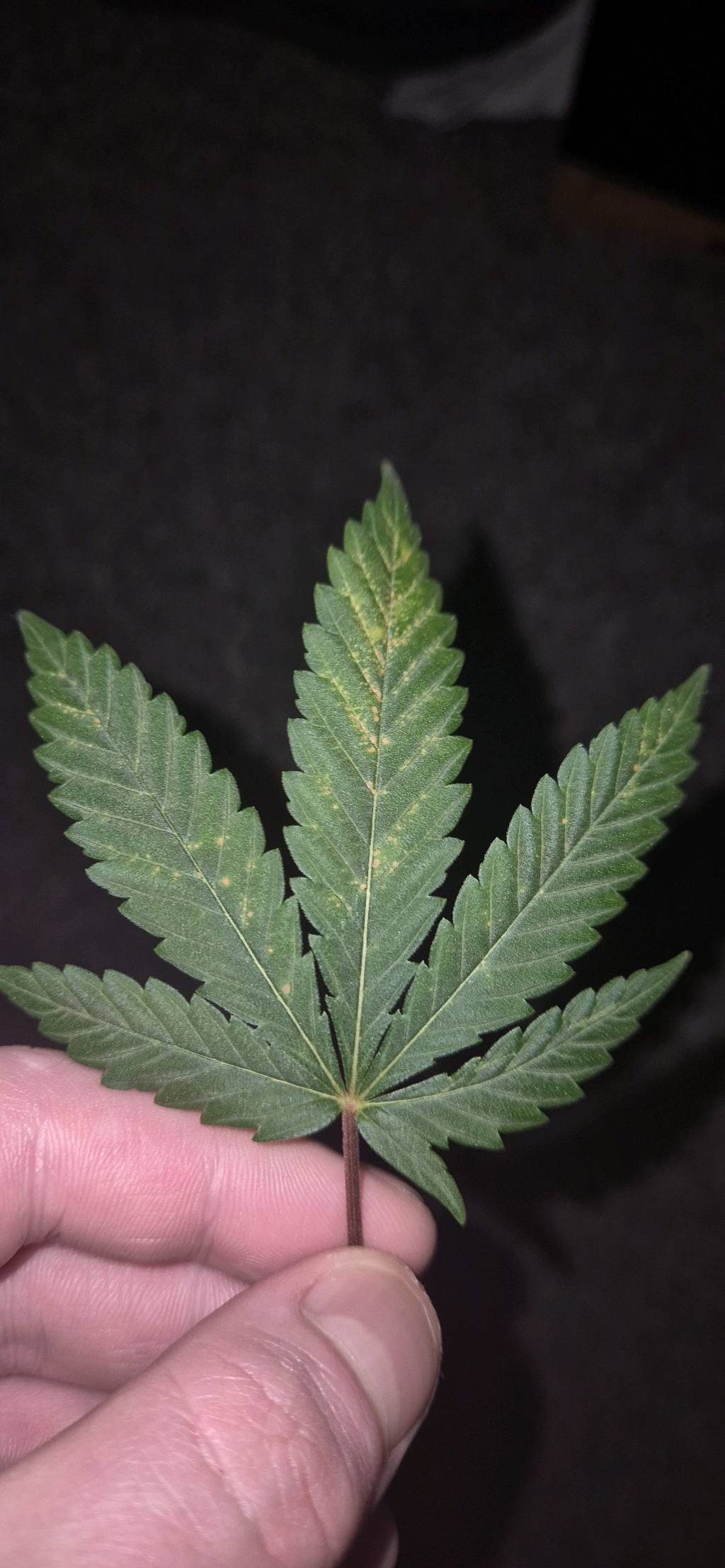
Calcium and magnesium are the most commonly deficient micronutrients in both coco and RO-water soil grows. A cal-mag supplement at 2–3 ml/L during veg and early flower heads this off before it becomes visible. If you're seeing interveinal chlorosis or dark green leaves with brown edges, run a diagnosis before adjusting — use our Nutrient Deficiency Identifier to narrow it down fast. Compost teas and humic acid amendments in soil grows are not marketing fluff — they genuinely enhance microbial activity and nutrient bioavailability, especially when you're trying to run lighter EC levels.
For seedling-stage nutrition specifics, our Best Nutrients for Cannabis Seedlings 2026 article covers this in detail.
Greener Days Pest and Mold Management
Integrated Pest Management (IPM) is not optional if you want consistent results. The greener days mindset means preventing problems rather than reacting to them. Two-spotted spider mites, fungus gnats, and russet mites are the most common indoor threats. Botrytis (bud rot) and powdery mildew are the most damaging environmental diseases.
- Weekly scouting: Inspect leaf undersides with a 60× loupe every 7 days. Catching spider mites at 5 per leaf is infinitely easier than at 500.
- Beneficial insects: Amblyseius cucumeris (predatory mites) at 50 per plant as a preventive measure is one of the most cost-effective IPM tools available. Introduce before you see pests.
- Humidity discipline: Keeping RH below 55% during flower and ensuring canopy airflow with oscillating fans removes the conditions botrytis needs to establish. A fan that moves all leaves slightly but doesn't cause wind burn is your target.
- Organic pesticides: Spinosad (for thrips and caterpillars), insecticidal soap (soft-bodied insects), and neem oil (fungal issues, early veg only — never in flower) are your three go-to tools.
Harvest: Reading the Plant, Not the Calendar
Breeders give you a flowering time estimate, not a harvest date. Your actual harvest window depends on trichome maturity — check with a digital microscope (60–100× magnification) rather than a jeweler's loupe for accuracy.
- Clear trichomes: Not ready. Cannabinoid production is still ramping up.
- Cloudy (milky white) trichomes: Peak THC. Harvest here for a more cerebral, energetic effect.
- Mixed cloudy + amber (10–20% amber): Peak potency with some CBN conversion. Most cultivators target this window.
- Predominantly amber: CBN levels rising, THC degrading. Harvest here for a heavier, sedating effect.
Stop feeding plain water 7–10 days before harvest to allow nutrients to clear from plant tissue. This isn't a "flush" in the aggressive sense — it's simply not adding more salt to a plant that's finishing. Pull the plant when the target trichome window hits, not when the calendar says week 8.
Greener Days Dry and Cure Protocol
This is where most growers leave quality on the table. A rushed dry or a skipped cure doesn't just hurt flavor — it degrades cannabinoid and terpene content that cannot be recovered.
Drying
Hang whole branches (or whole plants if space allows) in a dark room at 60–70°F (15–21°C) with RH at 45–55%. Airflow should be gentle and indirect — never point a fan directly at buds. The target is a slow, even dry that takes 10–14 days. A stem snap test (the small branch snaps cleanly rather than bending) indicates the outer structure is dry enough to jar. Internal moisture will continue to equalize during cure.
Curing
Trim and place buds in wide-mouth glass mason jars filled to 70–75% capacity — don't pack them. Store in a dark environment at 60–65°F (15–18°C). For the first 7–10 days, open jars for 15 minutes twice daily ("burping") to release accumulated moisture and ethylene gas. If humidity inside jars is above 65% when you open them, leave lids off for 30–60 minutes. After week 2, burp once every 2–3 days. A 4–week cure is minimum for quality; 6–8 weeks transforms the experience noticeably.
Use our Dry & Cure Timer to track burping schedules and moisture milestones automatically. For planning your next grow from seed to jar, the Grow Schedule Planner keeps every phase on track.
Tracking Your Grow: Journals and Planning
Every greener days outcome starts with documentation. Growers who log daily — even briefly — catch problems earlier, identify what worked, and replicate results. If you're not keeping a grow journal yet, our How to Keep a Cannabis Grow Diary guide walks through a proven format. When you're ready to map out your next run from day 1, the Grow Schedule Planner handles phase timing, task reminders, and feed schedules in one place.
Want to see what your current setup should yield before you flip to flower? Run your numbers through the Yield Calculator — it accounts for light intensity, canopy coverage, and grow medium to give you a realistic target rather than a breeder's best-case number.
Frequently Asked Questions
What does "greener days" mean in cannabis cultivation?
It refers to the point in a grow cycle when environment, nutrition, and plant training are all optimized simultaneously — resulting in vigorous, healthy growth and a high-quality harvest. It's a mindset as much as a milestone: sustainable practices and precise inputs that compound into better results every run.
How long should I cure cannabis for the best results?
A minimum of 4 weeks in sealed glass jars at 60–65°F and 58–62% RH. Six to eight weeks produces noticeably smoother smoke and more complex terpene expression. Beyond 8 weeks, gains are marginal unless you're storing long-term, in which case proper humidity control (Boveda 62% packs) is essential.
What CO₂ level should I target for indoor cannabis grows?
At ambient CO₂ (400 ppm) with good airflow, you can achieve excellent results. If you're supplementing, target 1,200–1,500 ppm during the light cycle — but only if your light intensity is above 800 µmol/m²/s PPFD and temperatures are in the 80–85°F range. CO₂ enrichment without increased light and heat produces diminishing returns.
Is SCROG or LST better for a single-plant indoor grow?
LST is easier to implement in a small space and requires no additional equipment beyond soft ties. SCROG produces a more even canopy and typically higher yields per light watt, but requires more planning and a longer veg period to fill the screen. For beginners or single-plant grows under 1 m², start with LST and add a SCROG on your next run once you understand your strain's growth pattern.
What EC should I run in coco coir during flowering?
Ramp EC from 1.2 mS/cm at the start of flower to 1.8–2.4 mS/cm at peak flower (weeks 3–6), then step back down to 1.2–1.6 mS/cm in the final 2 weeks. Always check runoff EC — if it exceeds your input by more than 0.3 mS/cm, flush with plain pH-adjusted water until it normalizes.
References
- Caplan, D., Dixon, M., & Zheng, Y. (2017). Optimizing Cannabis Yields Indoors Using LED Lighting and Controlled Environments. HortScience, 52(9), 1278–1286. Found that PPFD levels between 800–1,000 µmol/m²/s produced peak dry weight in indoor cannabis under LED illumination. doi.org/10.21273/HORTSCI12271-17
- Zheng, Y. (2021). Cannabis Post-Harvest Quality: Drying and Curing Best Practices. University of Guelph Controlled Environment Systems Research Facility. Confirmed that slow drying at 15–21°C and 45–55% RH over 10–14 days preserves significantly more terpene content than fast drying. uoguelph.ca/cesrf
- Chandra, S., Lata, H., Khan, I.A., & ElSohly, M.A. (2008). Photosynthetic response of Cannabis sativa to variations in photosynthetic photon flux densities, temperature and CO₂ conditions. Physiology and Molecular Biology of Plants, 14(4), 299–306. Established that CO₂ supplementation to 1,500 ppm increased net photosynthesis rate by up to 50% when temperature and PPFD were elevated proportionally. doi.org/10.1007/s12298-008-0027-x
- VanderDussen, M. (2020). Integrated Pest Management for Controlled Environment Cannabis Production. American Society for Horticultural Science Annual Conference Proceedings. Documented that preventive beneficial insect deployment reduced spider mite infestations by 78% compared to reactive treatment-only programs.
- Grow Guide Platform Data (2026). Internal analytics from 1,000 tracked cannabis grow journals. Key findings: 73.7% of growers cultivate indoors, 63.3% use soil as primary medium, and 12.6% use top-feed drain-to-waste hydroponic systems. growguide.app