What Is Grape Ape?
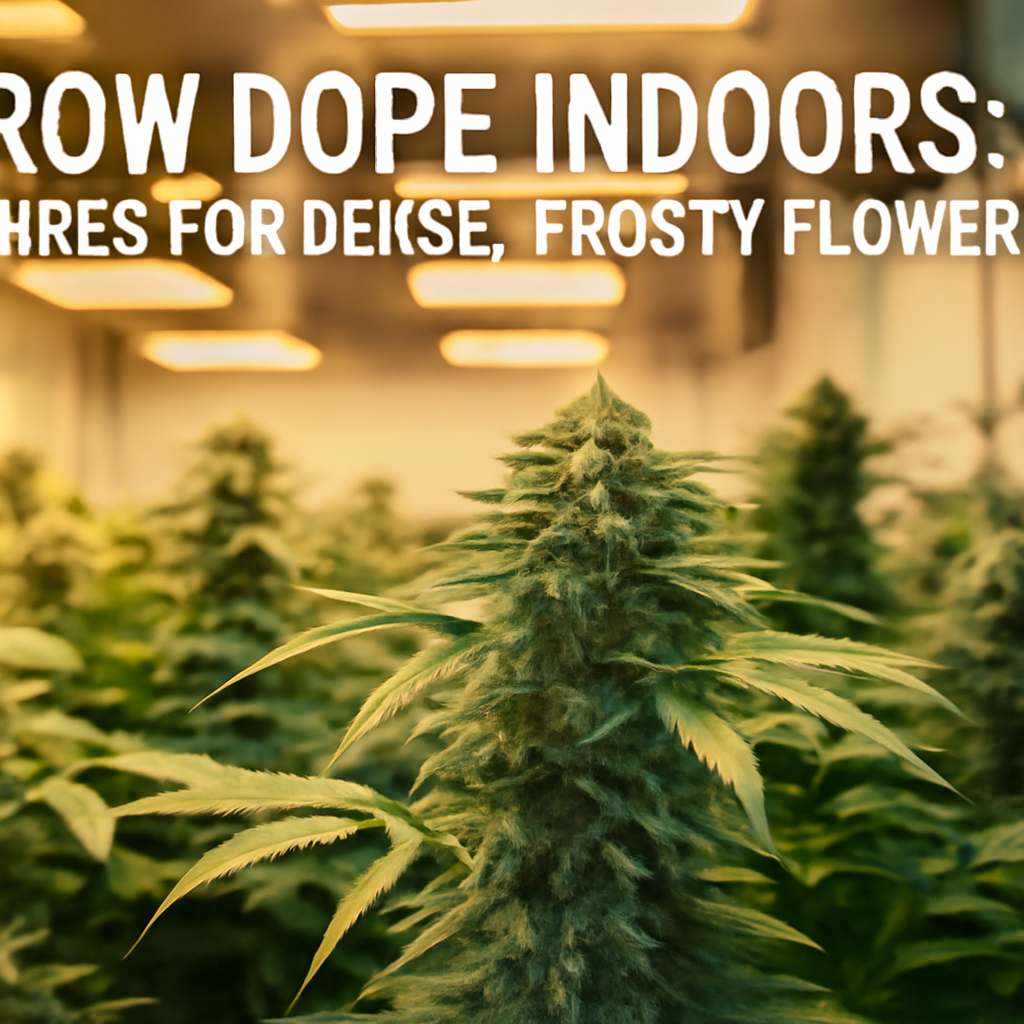
Grape Ape is an indica-dominant cannabis strain with a lineage that traces back to Mendocino Purps, Skunk #1, and Afghani. It's built short and stocky, throws dense, resin-coated buds, and produces a distinctly grape-forward terpene profile dominated by myrcene, caryophyllene, and linalool. If you want to see exactly how those terpenes interact, check out the Terpene Explorer. The strain finishes in 56–63 days of flower — fast enough to fit a tight schedule, compact enough to work well in smaller tents. If you're growing Grape Ape for the first time, this guide gives you every number and timing you need from seed to sealed jar.
Across the Grow Guide platform, 73.6% of tracked grows are run indoors — which makes sense for a strain like Grape Ape, where humidity control is the difference between a pristine harvest and a moldy one. Soil remains the dominant medium (63.4% of growers), and it works well here, though coco coir with 30% perlite gives you tighter control over feeding.
Grape Ape Grow Timeline
Setting Up for Grape Ape: Equipment and Environment
Lighting
For a 4×4 tent running Grape Ape, a 300–450W full-spectrum LED hitting 600–900 µmol/m²/s (PPFD) at canopy is the sweet spot. During veg, dial back to 400–600 PPFD on an 18/6 schedule. Once you flip to 12/12, push PPFD to 700–900 and ensure your DLI (Daily Light Integral) is hitting 35–45 mol/m²/day in peak flower. Use the Grow Light Calculator to dial in coverage for your specific space before you hang anything.
Containers and Medium
Go with 3–5 gallon fabric pots. Grape Ape stays compact — typically 60–90 cm indoors after training — so you won't need the root volume of a 7-gallon. Fabric pots air-prune roots passively and prevent the overwatering issues that plague dense-rooted indicas in plastic. For medium, a quality peat or coco base with 25–30% perlite mixed in gives you the drainage these plants need. If you're running coco, treat it as a hydroponic medium: feed every watering, keep EC between 1.2–2.0 mS/cm, and maintain pH at 5.8–6.2.
Ventilation
Dense buds mean mold risk — full stop. Run an inline fan sized to turn over your tent volume every 1–3 minutes. Pair it with a carbon filter for odor control (Grape Ape's grape-skunk aroma gets loud by week 5 of flower). Add two oscillating fans at canopy level to keep air moving across bud sites. This is your insurance policy against botrytis.
Temperature and Humidity
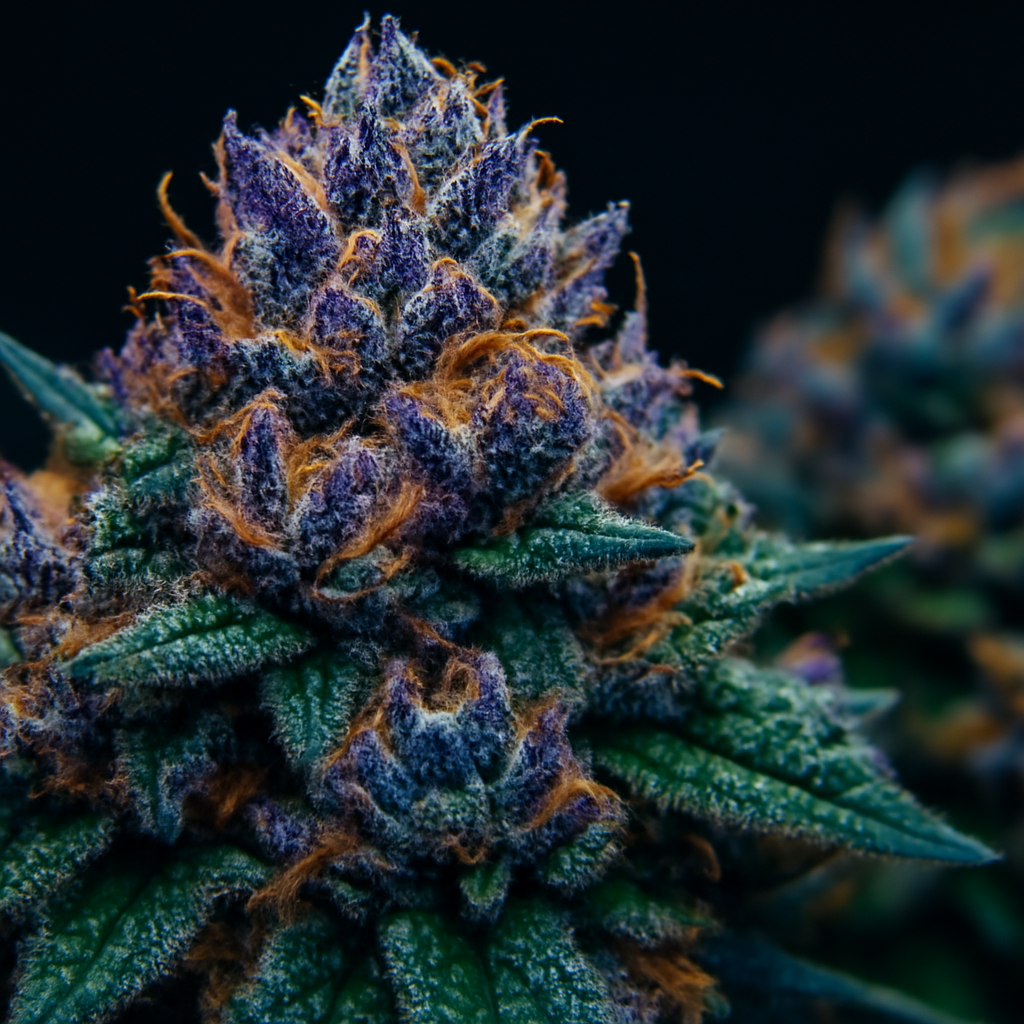
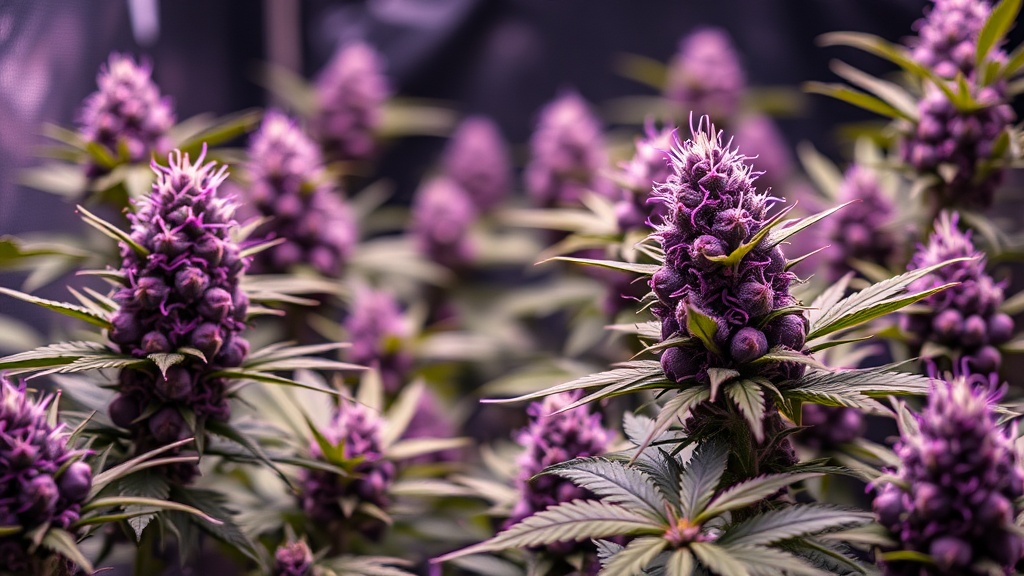
Target daytime temps of 72–80°F (22–27°C) in veg, pulling back slightly to 68–77°F (20–25°C) during flower. The night drop is where Grape Ape shines: keep nights 10–15°F cooler than days during late flower to trigger anthocyanin expression — that's what turns your buds deep purple. Don't just chase the color for aesthetics; the cooler nights also tighten VPD and reduce late-flower stress.
For humidity, stay at 60–65% RH during veg. Once you flip, walk it down: 50–55% in early flower (weeks 1–4), then 40–50% from week 5 through harvest. Your VPD target in flower should sit between 1.2–1.5 kPa. Going above 55% RH in late flower on Grape Ape's tight colas is asking for bud rot.
Training Grape Ape for Maximum Yield
Grape Ape has a natural tendency to produce one dominant central cola. Left untraned, that's a waste of your light footprint. The fix is simple: top at node 4–5 early in veg, then bend and tie the resulting branches outward using LST. This creates an even canopy where 8–12 tops are all sitting at the same height, all hitting the same PPFD. See our Fimming vs Topping guide if you want to compare approaches for this growth structure.
Defoliation matters too. At the flip to 12/12, remove any large fan leaves blocking bud sites and strip out lower growth that won't receive adequate light. Do a second light defoliation around day 21 of flower — just enough to open the canopy without stressing the plant mid-stretch. After that, leave it alone and let it build resin.
Grape Ape Nutrient Schedule
Grape Ape responds well to a structured feed program. If you're growing in amended living soil, you can coast through veg with minimal additions. In coco or a lighter medium, you're driving the bus entirely. Use the Grow Schedule Planner to map out your full feed calendar before you start.
Vegetative Stage
Target a balanced-to-growth-forward NPK ratio around 3-1-2 (or equivalent in your chosen line). EC should run 1.0–1.4 mS/cm in early veg, stepping up to 1.4–1.8 mS/cm as plants bulk out. pH soil at 6.2–6.8, coco at 5.8–6.2. Calcium and magnesium are the two deficiencies you'll most commonly encounter — supplement at 3–5 mL/gallon of a quality Cal-Mag from week 2 onward. See our guide on Best Nutrients for Cannabis Seedlings for the early weeks.
Flowering Stage
At the flip, transition to a bloom-focused NPK in the 1-3-4 range. Phosphorus and potassium drive bud structure and resin production; nitrogen should taper hard after week 3 of flower. Running too much nitrogen late in flower is one of the most common reasons Grape Ape buds come out airy and produce flat-tasting smoke. EC in peak flower: 1.8–2.2 mS/cm. Taper feeding back to 1.2–1.4 EC for the final two weeks (your flush or pre-harvest lean-out period), then run plain pH-corrected water for the last 5–7 days.
If you see yellowing leaves mid-flower that doesn't match nitrogen fadeout timing, run it through the Nutrient Deficiency Identifier before you start adding things — diagnosis before intervention.
Harvesting Grape Ape
Grape Ape typically finishes at 56–63 days of flower. Don't harvest by calendar — harvest by trichomes. Under a 60–100x loupe or jeweler's scope, you want to see mostly milky/cloudy trichomes with 10–20% amber. All-clear trichomes mean you're early; mostly amber means you've gone past peak THC into CBN conversion, which shifts the effect heavier and more sedative. For Grape Ape's classic indica profile, that milky-to-amber window is your target.
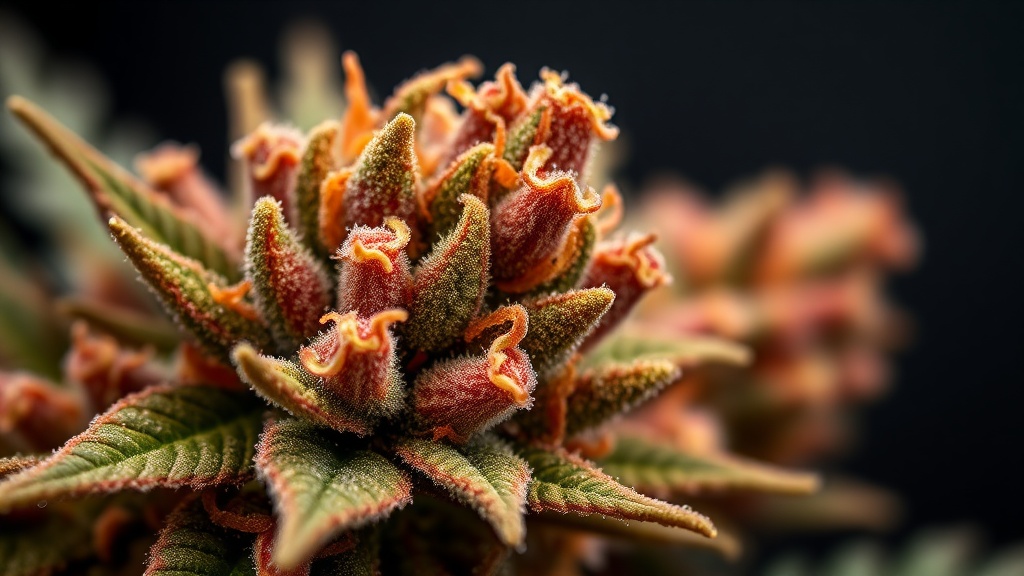
In the final week, watch pistil color too: 70–90% of white hairs darkened and curled in is a reliable secondary indicator that harvest is close. Combine both data points and you won't be guessing.
Drying and Curing Grape Ape
Grape Ape's buds are dense enough that a rushed dry will trap moisture in the center and invite mold or a hay-like smell. Take it slow. Hang whole branches upside down in a dark, well-ventilated space at 60°F (15.5°C) and 55% RH. At those conditions, you're looking at 10–14 days before the outer stems snap cleanly rather than bend. Don't rush this with heat or low humidity — you'll volatilize terpenes and lose the grape aroma that makes this strain worth growing.
Once dry, trim (if you're doing a wet-then-dry trim, skip this step earlier), then move into wide-mouth glass mason jars at 62% RH using Boveda or Integra packs. Burp lids once or twice daily for the first two weeks to release CO₂ and residual moisture. After two weeks, you can burp every few days. Minimum cure: 4 weeks. Optimal: 6–8 weeks. The grape-fuel terp profile on Grape Ape genuinely opens up at the 6-week mark in a way that a 2-week cure can't touch. Track your dry and cure timeline precisely with the Dry & Cure Timer.
Yield Expectations and Grow Costs
Under dialed conditions indoors — good light, correct VPD, trained canopy — Grape Ape yields 400–500 g/m² (14–18 oz/m²). Outdoors in a warm, dry climate with a full season, individual plants can produce 500–600 g (18–21 oz) each. If your grow falls short of those numbers, the most common culprits are insufficient light intensity (PPFD too low), high humidity in flower causing loose bud structure, or nitrogen overload suppressing flower development.
Run your expected numbers through the Yield Calculator to set realistic targets for your setup size, and pair it with the Cost Per Gram Calculator to understand what your harvest actually costs to produce.
Common Problems When Growing Grape Ape
- Botrytis (bud rot): The #1 threat. Dense colas trap moisture. Prevention is your only real tool: maintain sub-50% RH in late flower, keep airflow across every bud site, and defoliate to open the canopy. Catch it early (gray fluff inside a cola) and remove the affected section immediately.
- Powdery mildew: More common in veg when humidity runs high. Keep RH under 65% and maintain good airflow. A diluted potassium bicarbonate or hydrogen peroxide foliar in early veg can knock it back.
- Cal-Mag deficiency: Shows up as interveinal chlorosis or brown spots, especially under LEDs where calcium uptake can be slower. Supplement consistently from week 2 of veg through week 6 of flower.
- Nitrogen toxicity in late flower: Dark green, clawing leaves and loose buds. Taper nitrogen hard at the flip and don't be tempted to push it back up if leaves start to yellow naturally — that's the plant remobilizing nutrients, not a problem to fix.
For a deeper guide on growing cannabis indoors from start to finish, our How to Grow One Cannabis Plant Indoors guide covers the full process. And if you want to track every stage as you go, keeping a cannabis grow diary is the fastest way to improve run over run.
Frequently Asked Questions
How long does Grape Ape take to flower?
Grape Ape flowers in 56–63 days (8–9 weeks) from the flip to 12/12. Most phenotypes are ready at the 8-week mark, but always confirm with trichome inspection — look for mostly cloudy trichomes with 10–20% amber before cutting.
How do I get Grape Ape buds to turn purple?
The purple coloration is triggered by anthocyanins responding to cool temperatures. Drop nighttime temps to 55–65°F (13–18°C) during the last 2–3 weeks of flower while keeping daytime temps in the 72–77°F range. This 10–15°F differential activates the color without stressing the plant.
What humidity should I run for Grape Ape in flower?
Target 50–55% RH in early flower (weeks 1–4) and drop to 40–50% from week 5 through harvest. Grape Ape's dense colas are mold-prone — staying below 55% RH in late flower is non-negotiable for a clean harvest.
What yield can I expect from Grape Ape indoors?
Under optimized conditions — proper VPD, 700–900 PPFD at canopy, trained canopy — expect 400–500 g/m² (14–18 oz/m²). Yields below that range usually point to insufficient light intensity, humidity issues affecting bud density, or excess nitrogen in late flower.
How long should I cure Grape Ape?
Minimum 4 weeks in sealed glass jars at 62% RH, burped daily for the first two weeks. The grape and fuel terpene profile on this strain continues developing noticeably through 6–8 weeks of cure. A 2-week cure is functional but leaves a lot of aroma on the table.
References
- Leafly (2026). "How to Grow Grape Ape Marijuana." Covers indoor vs. outdoor cultivation, LST and topping techniques, and humidity management for mold prevention. leafly.com
- Hypno Seeds (2026). "How to Grow Grape Ape Seeds – Grow Diary." Provides equipment recommendations including lighting wattage, container sizes, and drying parameters (60°F / 55% RH for 10–14 days). hypnoseeds.com
- Planet 13 Cannabis (2026). "Grape Ape Cannabis Strain." Documents indoor yield expectations of 400–500 g/m² and outdoor yields of 500–600 g per plant under favorable conditions. planet13.com
- Joint Commerce (2026). "Grape Ape CBD: A Comprehensive Strain Guide." Details NPK nutrient ratios across veg (3-1-2) and bloom (1-3-4) stages, plus flowering humidity targets for mold prevention. app.jointcommerce.com
- Wikipedia / Cannabis Cultivation (2026). "Cannabis Cultivation." General reference on trichome-based harvest timing — cloudy trichomes with amber onset as the indicator for peak cannabinoid levels. en.wikipedia.org