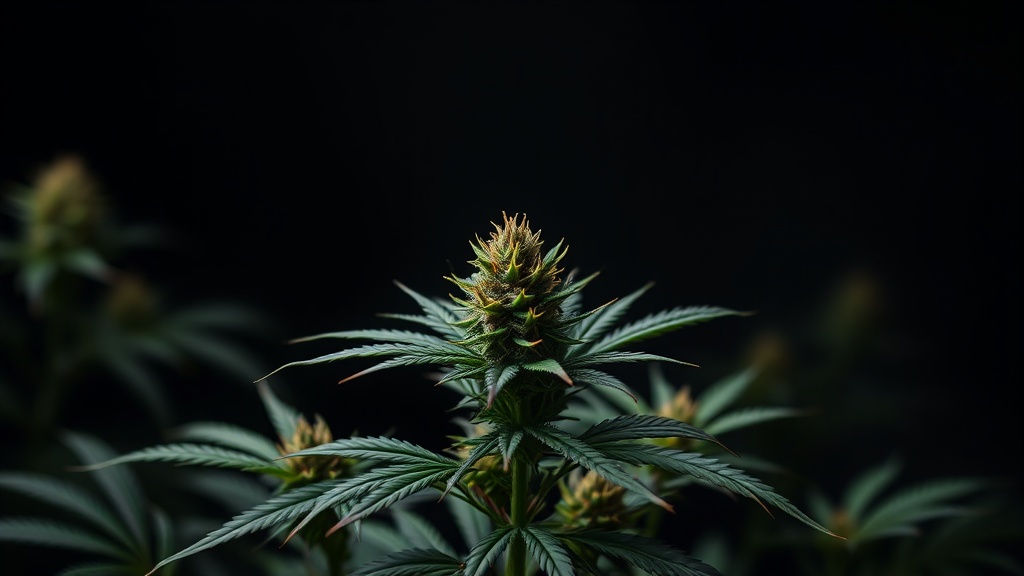
If you've got a plant sitting at its 4th or 5th node right now and you're trying to decide whether to top it clean or take the fim approach, this is the breakdown you need. Both fimming vs topping come up constantly in grow journals because they're the two most effective high-stress training moves you can make in veg — but they produce different plant structures, different recovery timelines, and suit different grow setups. Here's exactly how they compare and when to use each one.
Quick Comparison Table
| Factor | Topping | Fimming |
|---|---|---|
| New colas produced | 2 (reliable) | 3–4 (variable) |
| Recovery time | 5–7 days | 3–5 days |
| Canopy evenness | Very uniform | Often uneven |
| Stress level | High | Moderate–High |
| Technique difficulty | Easy (clean cut) | Moderate (precision pinch) |
| Best for | Beginners, ScrOG, height control | Experienced growers, multi-cola SOG |
| Predictability | High | Medium |
| Ideal timing | Node 4–6, early veg | Node 4–6, early veg |
Fimming vs Topping: The Core Difference in Execution
Topping is a full removal of the apical meristem — you cut the main stem cleanly above the 5th node, removing the growth tip entirely. This completely redirects the plant's auxin flow to the two lateral branches directly below the cut, producing exactly two new main colas. The result is symmetrical, predictable, and easy to train flat with LST ties or into a ScrOG screen.
Fimming comes from the accidental discovery of a grower who missed a topping cut — hence "F**k, I Missed." Instead of cutting through the stem, you pinch or snip roughly 70–80% of the new growth tip at the very apex, leaving a small amount of new leaf material behind. That remaining tissue triggers a more chaotic hormonal response that can push out 3–4 new shoots instead of 2. It recovers slightly faster because the cut is less severe, but the resulting structure is messier.
How to Top a Cannabis Plant: Step by Step
- Wait for node 4–6. The plant needs enough root mass and leaf area to bounce back fast. Topping too early — at node 2 or 3 — stresses young seedlings harder and extends total veg time unnecessarily.
- Sterilize your blade. Isopropyl alcohol (91%+) on sharp scissors or a razor. Dirty cuts on cannabis are how you invite pythium and botrytis through an open wound.
- Cut above the 5th node. Make one clean, decisive cut. You're removing the entire apical tip above the node pair. Don't saw — one clean slice.
- Watch the two lateral shoots below the cut. Within 24–48 hours they'll begin reaching upward. By day 5–7 you'll have two clearly defined new main colas competing for the top spot.
- Tie them down immediately after recovery. Once the new growth is 2–3 cm tall, LST both branches outward at 45–90 degrees to start building a flat, even canopy.
How to Fim a Cannabis Plant: Step by Step
- Identify the newest growth tip. You're looking at the very top of the plant — the tight cluster of folded new leaves emerging from the apex.
- Pinch or cut 70–80% of that new growth. This is the part that trips people up. Leave roughly 20–30% of the new tip material attached. If you remove too little, you get a mangled top with only 2 shoots. If you remove too much, you've just topped it.
- Use your fingernails or scissors. Either works. Fingernail pinching is surprisingly effective and reduces the surface area of open wound vs a blade cut.
- Expect messiness for 3–5 days. The new growth will look ragged. Don't panic and don't top over it — give it a full week before evaluating the results.
- Manage uneven growth with LST. The 3–4 new shoots rarely emerge at the same rate. Use soft ties to pull the faster-growing shoots down and give slower ones a chance to catch up.
Fimming vs Topping: Recovery, Nutrients, and Environment
Both techniques put the plant into a short stress response. During recovery, keep your VPD dialed in tight — 0.8–1.0 kPa during veg is the sweet spot — and don't push EC above 1.4–1.6 mS/cm right after the cut. Higher EC during stress just compounds the problem. Keep PPFD at your normal vegetative level (400–600 µmol/m²/s is plenty) and resist the urge to increase light intensity thinking it will speed up recovery. It won't.
After recovery — day 7–10 for topping, day 5–7 for fimming — you can ramp EC back up to 1.8–2.2 mS/cm and push PPFD toward 600–800 µmol/m²/s as the new shoots stretch. This is also when you want your grow schedule planner updated with the new canopy structure in mind, especially if you're calculating flip timing.
pH matters more post-cut than growers often realise. Wounded tissue is slightly more susceptible to calcium and magnesium lockout. Keep pH at 5.8–6.2 in hydro and 6.2–6.8 in soil during the recovery window, and consider a mild cal-mag boost (1–2 mL/L) for the first feed post-procedure.
When to Choose Topping
Top your plant when you need a predictable, even two-cola structure that's easy to train. This is the technique for:
- ScrOG grows — two symmetrical branches fill a screen far more efficiently than the unpredictable 3–4 shoot cluster from fimming
- Height-limited tents — topping hard in veg keeps internodal stretch in check and gives you a defined two-branch structure to LST flat
- First-time HST growers — it's a clean, unambiguous action with a predictable result
- Multiple toppings — topping twice produces 4 even colas; three times gives you 8. Each round doubles the main branch count symmetrically, which fimming can't reliably replicate
- Strains with already vigorous lateral branching — adding fimming on top of a naturally bushy Wedding Cake or Gelato phenotype can cause an overcrowded canopy
When to Choose Fimming
Fim when you want maximum shoot count from a single intervention and you're comfortable managing an uneven canopy afterward. This technique shines for:
- Experienced growers running SOG or dense multi-plant setups — more tops per plant per cut means fewer plants needed to fill a canopy
- Sativa-dominant genetics with long internodal spacing — a Durban Poison or a Haze cut has the vigor to push 4 strong shoots from a fim and grow them out without the structure collapsing
- When you're tight on veg time — the 2–3 day faster recovery adds up if you're running short cycles
- Growers combining with aggressive LST — if you're already planning to tie everything down anyway, the uneven shoot development from fimming becomes a non-issue
Combining Both with LST and ScrOG
The most productive grows in 2026 aren't choosing one technique — they're stacking them. A common high-yield workflow: top at node 5, LST the two new branches outward at 90 degrees, then fim those two branches individually once they have 3–4 nodes of their own growth. Done right, this can give you 6–8 main tops with relatively even canopy height, filling a 1.2m × 1.2m tent almost perfectly before the flip.
Use the yield calculator to estimate whether that extra veg time is worth it for your specific setup — sometimes a clean double-top into a ScrOG outperforms the more complex approach on a per-watt basis.
Troubleshooting Common Mistakes
- Cut made too early (node 2–3): Plant bounces back but takes 10–14 days minimum and can stall badly in small pots. Wait for node 5 at minimum.
- Fimming removed too much: If you accidentally took more than 85% of the tip, you've effectively topped it. Just treat it as a top — two colas will emerge.
- Not sterilizing tools: If you see the cut site turning brown, mushy, or showing white fuzz within 48–72 hours, you've introduced pathogens. Check the nutrient deficiency identifier if you're unsure whether what you're seeing is a disease symptom or stress response.
- Topping or fimming in flower: Both techniques are veg-only. If your plant has been flowering for more than a week, do not cut the apex. Defoliation is your tool in flower, not HST.
- Expecting equal colas from fimming: They won't be equal. Budget an extra week of LST work to even out the canopy after fimming.
Verdict: Fimming vs Topping — Which One Wins?
For most growers: top. It's clean, predictable, doubles your main colas per cut, and integrates seamlessly with ScrOG and repeated HST cycles. If you're running a structured grow with a defined flip date, topping gives you a canopy you can plan around.
For experienced growers chasing maximum tops per plant in minimum time: fim. The potential for 3–4 new shoots from a single cut with a 3–5 day recovery is genuinely useful when you know how to manage uneven growth with LST. On vigorous genetics with plenty of veg time, fimming followed by aggressive LST can outperform topping on raw cola count.
Both techniques reward clean execution and good post-cut care. Get your grow schedule updated after you cut, keep the environment dialled (VPD 0.8–1.0 kPa, EC 1.4–1.6 during recovery), and give the plant the 5–7 days it needs before you judge the result. When harvest comes around, run your numbers through the yield calculator to see how much the training added — most growers running either technique consistently report 20–40% yield increases over untrained plants in the same space.