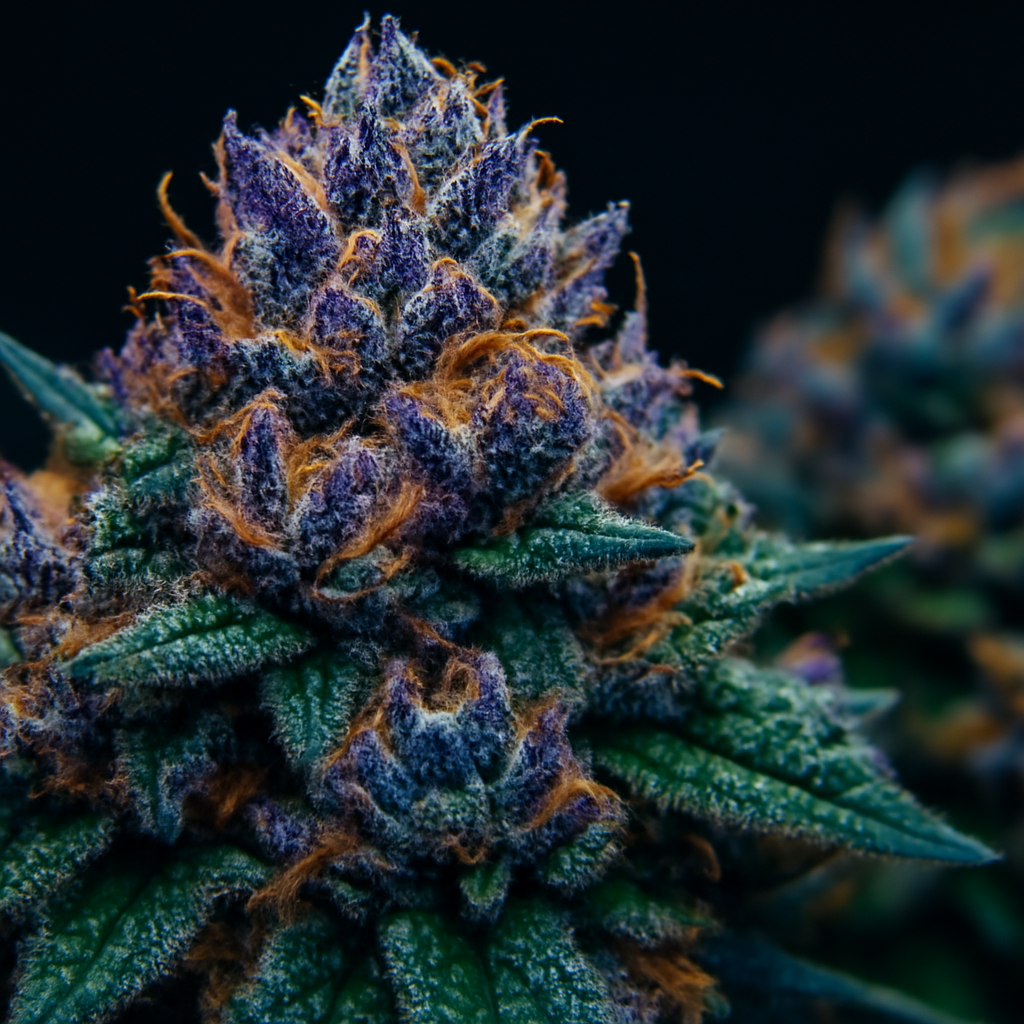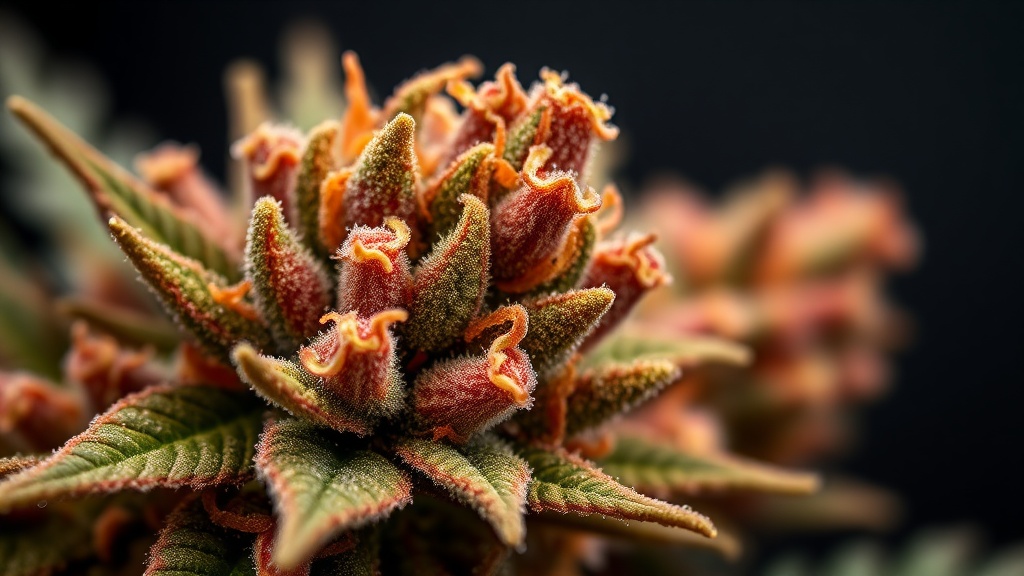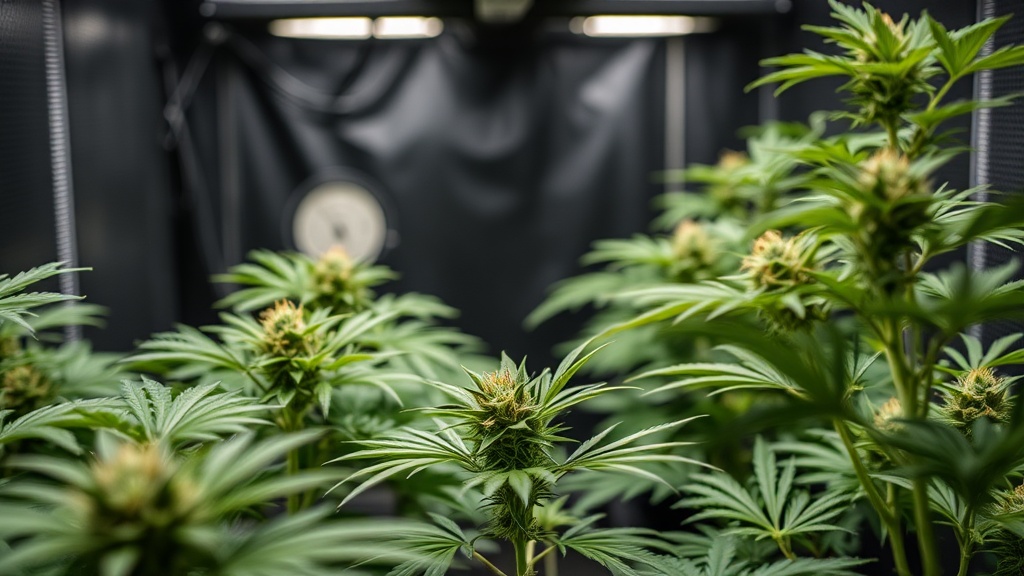
What Is Cookie Crip? Setting the Record Straight
If you searched for "cookie crip" expecting a strain page with full genetic lineage and terpene breakdowns, here's the honest answer: as of 2026, no verified cannabis strain goes by that name in any major seed bank catalog or breeder registry. What you're almost certainly dealing with is one of three scenarios — a dispensary's informal shorthand, a phonetic misspelling of a Cookie-family hybrid, or a regional street name for something like Cookie Crumbles, Cookie Breath, or Cookie Dough. The "Crip" portion likely isn't a separate genetic marker — it may even be a mishearing of "Crumbles."
The good news: all three of these actual Cookie-family strains share a very similar cultivation profile. If you've got plants in front of you sold under the cookie crip name, this guide covers everything you need to grow them successfully — environment, nutrients, training, harvest, dry, and cure.
Cookie-Family Strain Overview: Genetics and Grow Characteristics
Cookie-family strains all descend from the legendary GSC (Girl Scout Cookies) lineage, crossed with various indica or hybrid partners. Here's what to expect from the most likely "cookie crip" candidates:
| Strain | THC Range | Indoor Height | Flower Time | Indoor Yield |
|---|---|---|---|---|
| Cookie Crumbles | 18.5–26% | 60–80 in | 8–9 weeks | 0.5–1 oz/ft² |
| Cookie Breath | 20–25% | 50–70 in | 8–9 weeks | 0.5–0.9 oz/ft² |
| Cookie Dough | 19–24% | 55–75 in | 8–10 weeks | 0.6–1 oz/ft² |
Cookie Crumbles is the most vigorous of the three and the most stretch-prone — plan for it to add 50–75% of its vegetative height once you flip to 12/12. If your grow space has a hard ceiling limit, top early and aggressively. Use the Yield Calculator to map your expected output before you commit to a specific canopy size.
Grow Environment for Cookie Crip Phenotypes
Regardless of which cookie crip phenotype you're working with, the environmental targets are nearly identical. Cookie genetics are moderately sensitive to humidity swings — they don't forgive sloppy VPD management in late flower, where dense bud structure makes botrytis a real risk.
Temperature and Humidity by Stage
- Seedling: 70–75°F (21–24°C), 65–70% RH — keep VPD low, around 0.4–0.6 kPa
- Vegetative: 72–80°F (22–27°C), 55–60% RH — target VPD 0.8–1.1 kPa
- Early Flower (weeks 1–4): 68–78°F (20–26°C), 45–50% RH — VPD 1.0–1.3 kPa
- Late Flower (weeks 5–harvest): 65–75°F (18–24°C), 35–42% RH — VPD 1.2–1.5 kPa
Day/night temperature differential of 8–10°F in late flower encourages trichome production and can deepen any purple phenotype expression if your genetics carry that trait. Don't let temps drop below 60°F — Cookie genetics stall resin production when they get too cold.
Lighting: PPFD Targets by Stage
Full-spectrum LED is the go-to for Cookie strains. These plants respond well to high DLI in flower but can show light stress if you push too hard too fast.
- Seedling: 200–400 µmol/m²/s PPFD, 18/6 photoperiod
- Vegetative: 400–600 µmol/m²/s PPFD, 18/6
- Early Flower: 600–800 µmol/m²/s PPFD, 12/12
- Peak Flower: 800–1000 µmol/m²/s PPFD, 12/12
Use the Grow Light Calculator to verify you're hitting these PPFD numbers at canopy level before you lock in your light height. Underpowering Cookie genetics in flower is one of the most common reasons growers miss the 1 oz/ft² ceiling.
Growing Medium and Nutrients for Cookie Crip Strains
According to Grow Guide platform data from over 1,000 tracked journals, 63.3% of growers use soil as their primary medium — and Cookie-family strains genuinely do well in amended living soil or a quality peat-based mix. That said, coco coir (used by 14.8% of tracked growers) gives you tighter control over EC and can push yields closer to the 1 oz/ft² ceiling.
Nutrient Targets by Stage
- Seedling (weeks 1–2): EC 0.4–0.8, pH 6.0–6.5 (soil) or 5.8–6.0 (coco). Light nitrogen, no heavy amendments. See our guide on best nutrients for cannabis seedlings.
- Vegetative (weeks 3–6): EC 1.2–1.8, pH 6.0–6.5 (soil). Push nitrogen and calcium — Cookie genetics are calcium-hungry, and deficiencies show up fast as interveinal chlorosis on upper fan leaves.
- Early Flower (weeks 1–3 of 12/12): EC 1.6–2.0. Transition away from nitrogen, ramp up phosphorus and potassium.
- Peak Flower (weeks 4–6): EC 2.0–2.4. High PK, maintain calcium and magnesium. CalMag at 3–5 mL/gal is standard with RO water.
- Late Flower / Flush (final 1–2 weeks): EC 0.4–0.8 or plain water depending on your method.
If you see yellow or brown spotting mid-canopy during veg, run it through the Nutrient Deficiency Identifier before throwing more feed at the problem — calcium and magnesium deficiencies in Cookie strains are frequently misdiagnosed as nitrogen issues.
Training Cookie Crip Phenotypes: Topping, LST, and Canopy Management
Cookie-family plants tend toward a dominant central cola with lateral branching that lags behind without intervention. Left untopped, you'll get one big main cola and underdeveloped larf on the sides — not what you want if you're after the 1 oz/ft² mark.
Recommended Training Sequence
- Top at node 4–5 during early veg (plant is 4–6 inches tall). This creates two main colas and triggers lateral branch development. See our fimming vs topping guide if you're deciding between the two.
- Apply LST immediately after topping recovers: bend the two new main branches outward and anchor with soft ties to the pot rim. Do this progressively over 1–2 weeks.
- Second top at week 3–4 of veg (optional, for larger canopy): top each of the two main shoots again for a 4-cola structure.
- SCROG net placement at about 12–14 inches above the medium: weave branches through as they grow, aiming for even canopy coverage before the flip.
- Lollipop at flip: remove the bottom third of the plant — all bud sites that won't receive adequate light. This redirects energy to the main canopy and reduces botrytis risk in the dense lower structure.
Cookie Crumbles in particular can push 80 inches in unrestricted growth — if you're in a tent with a 7-foot ceiling, you need to either top aggressively or flip to 12/12 while the plant is still under 24 inches to leave room for the stretch. Use the Grow Schedule Planner to map out exactly when to flip based on your space constraints.
Harvest Timing: Reading Cookie-Family Trichomes
Cookie genetics typically finish between 56–70 days of flower depending on the specific phenotype. Don't rely on the seed bank's stated finish time — use a jeweler's loupe at 30–60x or a digital microscope to read trichomes directly.
- Clear trichomes: Too early. THC still building. Harvest now and you'll get a racy, anxiety-prone effect with weak yield.
- All cloudy/milky: At peak THC. Effects will be cerebral and energetic. Good harvest point if that's your target.
- Mostly cloudy, 10–20% amber: THC beginning to degrade to CBN. Body-heavy, sedative effects. The sweet spot for most Cookie-strain consumers.
- 30%+ amber: Overripe for most purposes. Strong sedative, "couch-lock" effect, reduced overall potency.
Also watch pistil coloration: when 70–80% of pistils have darkened and curled inward, you're in the harvest window. Combine both indicators — pistils and trichomes — for the most accurate read.
Drying and Curing Cookie Crip Genetics
Cookie-family strains have dense, resinous bud structure that holds moisture well — which is an asset for cure quality but a liability if you rush the dry. Botrytis (bud rot) can develop inside a dense nug while the outside looks and feels dry. Cut to the center of any suspicious bud before jarring.
Dry Phase (7–14 Days)
- Hang whole branches upside down in a dark room at 60–68°F (15–20°C), 50–58% RH
- Gentle airflow — oscillating fan on walls or ceiling, never directly on buds
- Target a slow dry: 10–14 days is ideal for Cookie strains. Fast drying at low humidity destroys terpenes and produces harsh smoke.
- Ready to jar when the smallest stems snap rather than bend, and buds feel dry on the outside but slightly spongy in the center
Cure Phase (2–8 Weeks)
- Trim and jar in wide-mouth glass mason jars, filled to 75% capacity
- Burp jars 2× daily for the first week — open for 15 minutes each session
- Week 2: reduce to once daily burping
- Weeks 3–4: burp every 2–3 days, monitor RH with a hygrometer inside each jar (target 58–62% RH)
- Minimum 4-week cure for Cookie strains to fully express their sweet, earthy terpene profile
The Dry & Cure Timer takes the guesswork out of scheduling your burp sessions and tracks elapsed cure time across multiple jars. If you're tracking cost efficiency across your grow, run your final yield through the Cost Per Gram Calculator to benchmark your run.
Common Troubleshooting Issues with Cookie-Family Strains
- Purple leaf coloration in late flower: Usually temperature-related (night temps below 62°F) — not a deficiency. Can intensify color in phenotypes with purple genetics. Not harmful.
- Calcium deficiency in veg: Brown spotting on mid-upper leaves. Raise CalMag dose and verify pH is in range — lockout is more common than true deficiency.
- Stretch beyond 75% height increase at flip: A sign the plant was either under-lit or under-trained in veg. Top sooner in the next run and increase PPFD during veg.
- Botrytis in dense colas (late flower): Drop RH to 38–42%, improve airflow between colas, and lollipop more aggressively at the flip. Sulfur-based foliar treatments (up to week 3 of flower only) can help as a preventative.
- Slow root development in seedling stage: Cookie genetics can be slow starters. Keep temps at the high end of the seedling range (74–75°F) and don't overwater — small containers dry faster and force root growth.
If you're tracking your grow from start to finish, a structured grow diary is the fastest way to identify what went wrong and fix it in the next run. Over 1,000 growers on Grow Guide are doing exactly that.
Frequently Asked Questions
Is "cookie crip" a real cannabis strain?
As of 2026, no verified cannabis strain called "cookie crip" exists in any major seed bank or breeder catalog. It's almost certainly an informal name or misspelling for a Cookie-family hybrid — most likely Cookie Crumbles, Cookie Breath, or Cookie Dough. If you purchased seeds or clones under this name, the grow profile in this guide applies to all three.
How long does Cookie Crumbles take to flower?
Cookie Crumbles typically finishes in 56–63 days of flower (8–9 weeks) under a 12/12 photoperiod. Always confirm with trichome inspection rather than relying solely on the seed bank's stated finish time, as phenotype variation can push finish time toward 70 days.
What yields can I expect from Cookie-family strains indoors?
With proper training (topping + LST or SCROG), adequate lighting at 800–1000 µmol/m²/s PPFD in peak flower, and dialed-in VPD, Cookie Crumbles can yield 0.5–1 oz/ft². Cookie Dough sits in a similar range at 0.6–1 oz/ft². Untrained plants with poor light coverage will land significantly lower — often 0.3–0.5 oz/ft².
Why are my Cookie-strain plants turning purple in late flower?
Purple coloration in Cookie-family phenotypes during late flower is almost always temperature-induced — night temps dropping below 62°F trigger anthocyanin expression. It's not a deficiency and doesn't harm potency or yield. If you want to enhance it, maintain a 10°F day/night differential in the final 2–3 weeks of flower.
How long should I cure Cookie-family buds?
A minimum of 4 weeks in airtight glass jars at 58–62% RH is recommended for Cookie-family strains to fully develop their sweet, doughy terpene profile. Many experienced growers extend to 6–8 weeks for premium-quality results. Rushing the cure under 3 weeks typically produces harsh smoke that doesn't represent the strain's true flavor.
References
- Weedpedia.org (2025). Cookie Crumbles Strain Profile — documents THC range of 18.5–26%, indoor height of 60–80 inches, and yield estimates of 0.5–1 oz/ft² for Cookie Crumbles. weedpedia.org/cookie-crumbles-strain
- Strainy.com (2025). Hippie Crippler Strain Cultivation Data — provides grow environment parameters including temperature ranges, humidity targets, and lighting schedules applicable to Cookie-adjacent hybrid strains. strainy.com/cannabis/strains/hippie-crippler
- MMJ.com (2025). Drying and Curing Cannabis: A Complete Guide — details optimal drying conditions (60–70°F, 50–60% RH, 7–10 days) and curing protocols for preserving terpenes and potency. mmj.com/learn/guides/drying-curing-cannabis/
- Grow Guide Platform Data (2026). Internal grow journal analytics across 1,000 tracked grows — shows 63.3% of tracked growers use soil as primary medium, 14.8% use coco coir, and 73.2% of all tracked grows are conducted indoors.
- Cervantes, J. (2015). The Cannabis Encyclopedia. Van Patten Publishing — foundational reference for VPD management, trichome maturation staging, and nutrient EC targets across hybrid cannabis phenotypes.