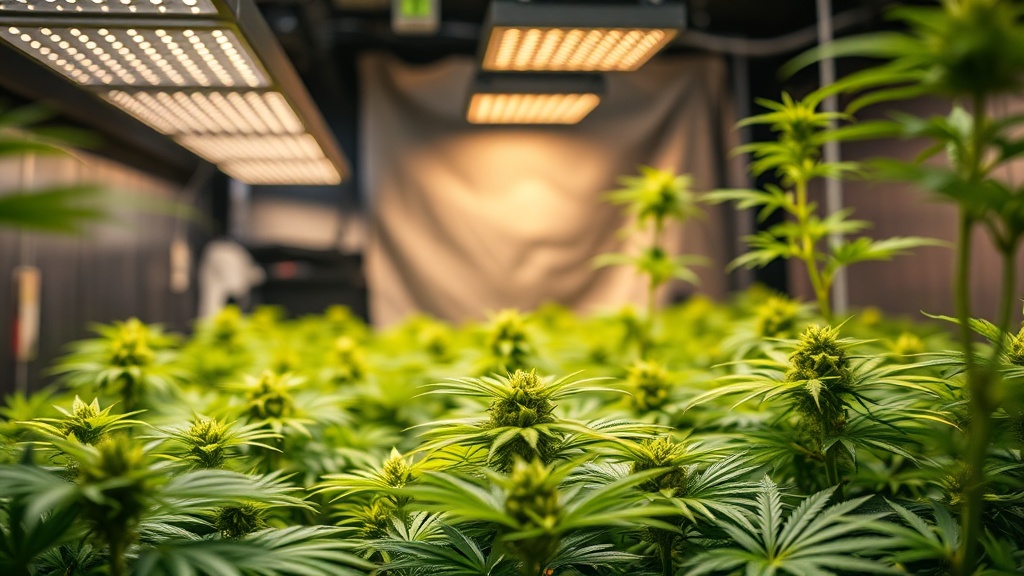
TL;DR: A cannabis grow diary is the single highest-leverage habit you can build as a grower. Log your environment (temp, RH, VPD), nutrients (EC, pH), plant observations, and photos at every stage. Review it after harvest. Repeat. Within two or three grows you'll have a personalized playbook no YouTube video can give you.
Why a Cannabis Grow Diary Changes Everything
Most growers who plateau — stuck at the same yield, same problems, same guesswork — have one thing in common: they're not keeping a cannabis grow diary. Memory is unreliable. You won't remember that you raised the EC to 1.8 in week four, or that the VPD crept to 1.6 kPa during that heat wave in mid-flower. Your diary will. Every data point you log is a variable you can isolate, tweak, and improve next run. This guide walks you through exactly what to record, when to record it, and how to use that data to grow better weed every single cycle.
Setting Up Your Cannabis Grow Diary: What to Log
The structure of your diary matters. Random notes are better than nothing, but a consistent format lets you compare run-to-run with precision. Use Grow Guide's grow schedule planner to pre-build your stage timelines before you even drop a seed, then fill in actual observations as you go.
Daily Entries (Takes Under 3 Minutes)
- Date and day count — Day 1 from sprout, not from seed soak. Keep it consistent.
- Lights-on temp / lights-off temp — Aim for 70–85°F (21–29°C) in veg, 65–80°F (18–26°C) in flower. Note any spikes.
- Relative humidity — 65–70% seedling, 50–65% veg, 40–50% flower, and drop to 35–45% in the final two weeks to protect against botrytis.
- VPD reading — Calculate or read from a sensor. Target 0.8–1.2 kPa in veg, 1.0–1.5 kPa in flower. VPD ties your temp and RH together into one actionable number.
- Any visual observations — Leaf color, canopy shape, new growth, anything odd.
Per-Watering Entries
- Feed or plain water — Note which plants got which.
- Input EC — Seedling: 0.4–0.8. Veg: 1.2–1.8. Early flower: 1.6–2.0. Late flower: 1.8–2.2. Flush: under 0.5.
- Input pH — Soil: 6.0–6.5. Coco/hydro: 5.5–6.1.
- Runoff EC and pH — The gap between input and runoff EC tells you how the root zone is behaving. Runoff EC climbing? Salts are building. Drop your input EC or water to runoff more aggressively.
- Volume fed — Track liters per plant. Consistency matters.
Weekly Photo Log
Same angle, same distance, same time of day (during lights-on). One top-down canopy shot, one side-on shot per plant. When you flip through a season of photos side by side, problem patterns become obvious — stretch that started in week three of flower, a slow plant that underperformed, a training decision that paid off.
Stage-by-Stage Cannabis Grow Diary Entries
Germination & Seedling (Days 1–21)
Log tap root emergence date and dome humidity (target 70–80% RH). First true leaves: note the day. If using a seedling mat, log surface temperature — 75–80°F is the sweet spot. Keep light intensity low: 100–200 PPFD at canopy. Any stretching means your light is too far away or intensity too low; note it and adjust. Use the grow light calculator to dial in your PPFD before the plants tell you something's wrong.
Vegetative Stage (Weeks 3–8)
This is where your diary earns its keep. Log every LST or topping event with a photo. Note node spacing — under 1.5 inches between nodes indicates good internodal density. Log PPFD ramp-ups: 400–600 PPFD early veg, pushing toward 600–800 PPFD by late veg. Record when you introduced CalMag (most coco growers start at 1 ml/L from day one). If you're running a ScrOG, log weave dates and canopy fill percentage weekly. Target 85–90% screen fill before flipping.
Flowering Stage (Weeks 1–10+)
The most critical diary period. Log the flip date clearly — everything downstream keys off it. Week-by-week notes should capture:
- Stretch factor — Most strains double to triple in height. Log height on flip day and weekly after.
- Pistil color — White to orange progression. Start logging pistil percentage at week six.
- Trichome status — Log your first scope check. Clear → cloudy → amber is your harvest countdown. At 50–70% cloudy with 10–20% amber, you're in the window.
- Bud density and structure — Airy buds in late flower can indicate light intensity issues (check PPFD — late flower wants 800–1000 PPFD), heat stress, or nutrient problems.
- Any deficiencies — Use the nutrient deficiency identifier to pinpoint issues fast. Log the symptom, your diagnosis, the fix, and whether it worked within 5–7 days.
Harvest, Dry & Cure: Don't Stop Logging Now
Most growers close their diary at chop. That's throwing away half the data. The post-harvest phase is where terpene profiles and final potency are made or broken, and your diary needs to capture it.
Harvest Day Entry
- Trichome ratio at chop: % clear, % cloudy, % amber. Be honest.
- Wet weight per plant (if you weigh whole branches).
- Any observations: bud density, smell profile, any pest damage, bud rot found and removed.
- Estimated yield versus your pre-grow projection. Use the yield calculator to benchmark your setup and see where you're leaving grams on the table.
Dry Room Log
Hang whole branches or individual buds in a dark room at 60–70°F (15–21°C), 45–55% RH. Log temp and RH twice daily for the first three days — this is when conditions are most variable as moisture leaves the plant. Target a 10–14 day dry. Stems should snap, not bend. If they're snapping before day seven, your RH is too low; bump it to 55–58% and slow the process. Log the snap test date. Use the dry & cure timer to track your drying window precisely and get alerts before you overshoot.
Cure Journal
Fill glass jars about ¾ full. For the first week, open (burp) jars twice daily for 15–20 minutes. Log the smell each time — ammonia smell means moisture content is too high and you need more drying time before resealing. After week one, drop to once daily. Log RH inside jars with a digital hygrometer pack; target 58–62% inside sealed jars. Continue for 4–8 weeks minimum. Log terpene development: when does the smell shift from green/grassy to complex? Most growers hit their flavor peak between weeks four and six of cure.
Common Cannabis Grow Diary Mistakes
| Mistake | What It Costs You | Fix |
|---|---|---|
| Logging only when problems appear | No baseline to compare against | Daily minimum entry, even if it's just "all good, day 14" |
| Skipping runoff EC/pH | Root zone drifts without you knowing | Log runoff every third watering minimum |
| No strain notes | Can't optimize for next run of the same cultivar | Log strain, seed bank, phenotype number — see grows for Wedding Cake, Gorilla Glue, etc. |
| No final yield vs. projected yield | No feedback loop on efficiency | Record dry weight per plant and per watt |
| Stopping at chop | Lose all dry/cure data | Keep the diary open until jars are sealed and stable |
Making Your Grow Diary Work for You: The Review Loop
A cannabis grow diary is only as useful as the review you do after harvest. Set aside an hour after your final dry weight is recorded. Go through the diary and answer three questions:
- What single change would have the biggest impact on yield or quality? — Use the yield calculator to model what different light levels, canopy sizes, or veg times would have done.
- What problem appeared first in the data, before I noticed it visually? — EC creep, VPD drift, and pH swing almost always show in the numbers before the leaves respond. Learn your early warning signs.
- What did I do that clearly worked? — Lock in one or two wins as your standard operating procedure for next run.
Quick-Start: Your First Cannabis Grow Diary Entry
Don't over-engineer it. Here's everything you need in your very first entry — write it today, right now, for whatever stage your plants are at:
- Date and stage — "April 14, 2026 — Day 22 of veg"
- Strain and plant count — Note the cultivar; link your journal to community grows for your strain to benchmark expected timelines.
- Current temp and RH — Read your meter right now and write it down.
- Last feed — What EC, what pH, how much volume.
- One observation — One honest sentence about what you see on the plants.
That's it. Do that every day. In eight weeks you'll have a dataset that tells you exactly who your plants are, what they need, and what you did right. A well-kept cannabis grow diary is the difference between hoping for a good harvest and engineering one.