What Is Agent Orange Cannabis?
Agent orange marijuana has earned its reputation the honest way — consistent citrus terps, an uplifting sativa-leaning high, and yields that reward growers who put in the structure work early. It's a cross between Orange Velvet and Jack the Ripper, two strains that between them contribute both aromatic intensity and the vigorous stretch you'll manage throughout veg and early flower. THC lands between 15% and 25% depending on how well you dial in the environment, with CBD sitting around 0.3% — so this is firmly a THC-forward cultivar.
If you want to track every stage of your run, start a grow journal for Agent Orange now and log from seed or clone. Documented grows produce measurably better outcomes — you'll have data to iterate on, not just memory.
Plant Structure and What to Expect Indoors vs. Outdoors
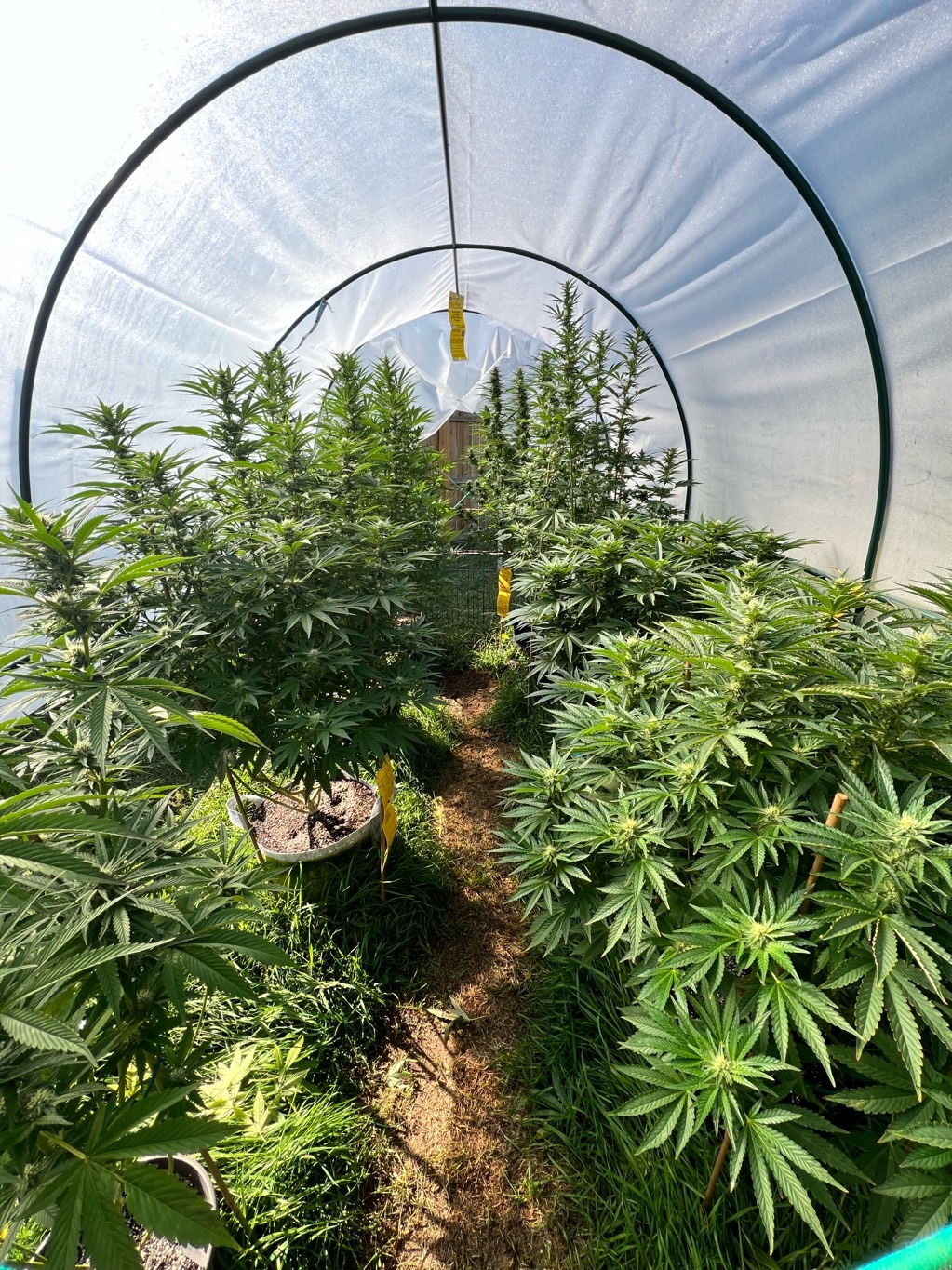
Indoors, Agent Orange reaches 3.5–5 feet at maturity. Left untrained, it will stretch hard — particularly in the first two weeks of flower — and can eat your vertical headroom fast. Outdoors in a long, warm season, plants can push past 10 feet. That sativa heritage from Jack the Ripper means internode spacing is generous, which is actually great news: the canopy opens up naturally, allowing light penetration without aggressive defoliation.
Bud density is where the indica influence from Orange Velvet shows up. Colas get heavy, so budget for bamboo stakes or a trellis net from week 3 of flower. Unsupported branches will bow and occasionally snap under the weight of fully developed buds.
Training Agent Orange Marijuana for Maximum Yield
This strain responds very well to early intervention. The goal is a flat, even canopy with 6–10 main colas receiving equal light intensity. Here's the sequence that works:
- Topping: Top at node 4 or 5 during veg, around day 21–28 from seed. This creates two main apical meristems and kicks off lateral branching. See our Fimming vs Topping guide for the full breakdown on each technique.
- LST (Low-Stress Training): Start tying down within a week of topping. Bend the two main branches outward and anchor with soft ties. As side branches grow up, tie those out too. You're building a wheel-spoke shape.
- SCROG (optional): If you're running multiple plants, a screen installed at 18 inches keeps the canopy uniform. Tuck growth below the net until flip, then let it grow through.
- Defoliation: Light defoliation at day 21 and day 42 of flower — remove fan leaves blocking bud sites, not structural fans. Agent Orange isn't a heavy defoliation candidate; its natural internodal spacing does a lot of the work.
Use our Yield Calculator to project what your trained canopy can realistically produce based on light wattage, plant count, and training method.
Environmental Targets: VPD, Temperature, and Humidity
Agent Orange is not particularly difficult environmentally, but it does have a narrow sweet spot in late flower where humidity management protects both yield and terpene integrity.
Those late-flower humidity numbers aren't arbitrary. Dense buds + humidity above 55% = real botrytis risk. The citrus terpenes — primarily limonene and myrcene — also express more intensely when you introduce a mild temperature differential between lights-on and lights-off during the final two weeks. A 10°F drop at night (e.g., 75°F day / 65°F night) can visibly deepen color and improve aromatic intensity.
For light intensity: target 600–900 PPFD in vegetative and ramp up to 900–1100 PPFD during flowering. Use the Grow Light Calculator to confirm your fixture is delivering the right intensity at canopy level for your space.
Nutrient Schedule for Agent Orange Cannabis
Agent Orange is not a particularly hungry strain, but it does follow the classic macro split. Mess up the transition from veg to bloom nutrients and you'll see the results in trichome development — or the lack of it.
- Seedling (weeks 1–2): Very light feeding. EC 0.4–0.8. Let the medium do most of the work. See our guide on best nutrients for cannabis seedlings for specific product recommendations.
- Vegetative (weeks 3–8): High nitrogen (N-P-K ratios around 3-1-2). EC 1.2–1.8. Keep pH at 6.0–7.0 in soil, 5.8–6.2 in coco. Watch for nitrogen toxicity — dark, clawing leaves mean back off.
- Transition / Early Flower (weeks 1–3 of flower): Drop nitrogen, increase phosphorus. Flip to a bloom base at 1-3-2 ratio. EC 1.4–2.0. Add a PK booster at week 3.
- Mid-Late Flower (weeks 4–7): Phosphorus and potassium dominant. EC 1.6–2.2. Introduce a terpene/resin booster if you want to lean into the citrus profile — silica and amino acid additives have shown results here.
- Flush (weeks 8–9): Flush with pH-adjusted water (6.2 in soil) for the final 7–10 days. EC to below 0.4. This is where clean, smooth smoke is built.
If leaves start showing unexpected color changes mid-run, the Nutrient Deficiency Identifier can walk you through a diagnosis based on what you're seeing. Yellowing lower fans in late flower is normal senescence — yellowing from the top down mid-flower is a problem worth investigating.
Growing organically? The principles are the same but delivery is slower. Our roundup of best organic nutrients for cannabis covers top inputs that work well with the flowering profile of strains like Agent Orange.
Grow Medium: Soil vs. Coco
Of the 1,000 grow journals tracked on Grow Guide, 63.4% of growers use soil as their primary medium — and for a strain like Agent Orange, that's a defensible choice. Soil buffers pH fluctuations well and supports the microbial activity that can enhance terpene expression. Amended living soils (with mycorrhizae and kelp meal) suit this cultivar well given its aromatic profile.
Coco coir (used by 14.8% of tracked growers) delivers faster veg growth and tighter control over nutrient delivery. If you're chasing maximum yield and are comfortable with EC management, coco is the move — just commit to daily watering and keep your cal-mag dialled in, since Agent Orange running hot in coco will show calcium deficiencies quickly.
Harvesting Agent Orange: Reading Trichomes Correctly
Flowering time is 7–9 weeks from flip (12/12). Don't harvest by calendar alone. Use a loupe (30×) or digital microscope to read trichomes directly:
- Mostly clear trichomes: Too early. THC still building.
- Mostly milky/cloudy: Peak THC, more cerebral effect. Harvest here for maximum uplifting sativa character.
- Milky with 10–20% amber: THC beginning to degrade to CBN, effect becomes slightly heavier. Most growers prefer this window for Agent Orange.
- 30%+ amber: You're past the sweet spot for this strain's intended effect profile.
Also check pistils — when 70–80% have darkened and curled inward, you're close. Cross-reference with trichomes for the final call.
Drying and Curing Agent Orange
This is where most of the aromatic work happens — or gets destroyed. Agent Orange's limonene and myrcene are volatile. Rush the dry and you lose them.
Drying: Hang whole branches (or bucked individual branches) in a dark room at 68–72°F with 45–55% RH. Airflow should be gentle and indirect — a fan aimed at the wall, not the buds. Expect 7–10 days. The test: a small stem should snap cleanly, not bend. Stems that still flex need more time.
Curing: Trim and pack into wide-mouth mason jars at around 60–65% moisture content. Burp twice daily for the first week — open the jars for 5–10 minutes to release moisture and refresh oxygen. If you're smelling ammonia when you open a jar, the buds went in too wet. Spread them on a rack for an hour and then re-jar.
Week 2 onwards: burp once daily. By week 3–4, burp every few days. A minimum of 2–4 weeks cures a functional product; 6–8 weeks is where Agent Orange's citrus terps fully develop into something distinct rather than just "fruity." Use the Dry & Cure Timer to track and schedule every burp window automatically.
Common Troubleshooting Scenarios
Powdery Mildew in Late Veg
Dense canopy + high humidity creates the conditions. Respond immediately with a potassium bicarbonate spray (1 tbsp per litre) and increase airflow. Strip affected leaves. If you catch it before flower you have time to recover. In flower, it's significantly harder to manage without affecting terpenes.
Stretch Management in Early Flower
Agent Orange can stretch 50–100% from its flip height in weeks 1–3. If you're space-limited, consider flipping at a shorter height than you think you need — around 50% of your available vertical space. Dropping light cycle to 12/12 is the trigger; use the Grow Schedule Planner to map out the whole run including flip date relative to available headroom.
Bud Support
By week 5–6 of flower, main colas will be heavy. If you didn't install a trellis net, bamboo stakes tied loosely at the base of each cola work well. Don't wait until a branch has already bent — a kinked stem reduces vascular flow to that cola for the remainder of the run.
Yellowing Leaves at Week 6–7 of Flower
If it's the lower, older fan leaves going yellow — that's normal. The plant is pulling nitrogen from stored tissue to feed the flowers. If it's the canopy yellowing while trichomes are still clear-to-cloudy, check your pH and consider a light nitrogen feed. The Nutrient Deficiency Identifier can help distinguish senescence from a genuine deficiency.
Frequently Asked Questions
How long does Agent Orange cannabis take to flower?
Agent Orange typically finishes in 7–9 weeks from the flip to 12/12 lighting. Most growers hit the harvest window around week 8 when trichomes are predominantly milky with 10–20% amber. Outdoor grows in a long season can run slightly longer depending on latitude and climate.
What yield can I expect from Agent Orange grown indoors?
A well-trained indoor plant under a 600W HPS or equivalent LED can yield 50–75g per plant, with optimized multi-plant setups hitting 400–500g/m². Yield depends heavily on training, light intensity, and canopy management. Use the Yield Calculator to estimate output for your specific setup.
Is Agent Orange cannabis difficult to grow?
It's considered intermediate difficulty. The genetics are stable and resilient, but the sativa stretch and dense bud structure require active management — you need to train early, support branches in flower, and keep humidity below 50% in the final weeks to avoid mold issues.
What terpenes give Agent Orange its citrus smell?
The dominant terpenes are limonene (citrus peel), myrcene (earthy mango undertones), and caryophyllene (spice/pepper). The limonene profile is particularly intense in a well-cured sample. You can explore this strain's terpene fingerprint in more detail using the Terpene Explorer.
What soil pH should I maintain when growing Agent Orange?
Target 6.0–7.0 pH at the root zone for soil grows, and 5.8–6.2 for coco or hydro. Letting pH drift outside these ranges locks out key nutrients — especially phosphorus and calcium — which becomes critical to manage during the heavy-feeding mid-flower phase.
References
- Leafly Editorial Team (2024). How to Grow Agent Orange Marijuana. Covers training recommendations, environmental conditions, and flowering timelines for the Agent Orange cultivar. leafly.com
- Blimburn Seeds (2024). How to Grow Agent Orange Weed Strain. Details nutrient transitions between vegetative and flowering stages, with EC and N-P-K guidance. blimburnseeds.com
- Strainy (2024). Agent Orange Strain Profile. Documents harvest indicators, drying and curing protocols, and pest management considerations. strainy.com
- Leafbuyer (2024). Agent Orange Strain. Covers plant height ranges for indoor and outdoor environments, THC/CBD content ranges, and general cultivar characteristics. leafbuyer.com
- Grow Guide Platform Data (2026). Aggregate grow journal statistics. Internal dataset of 1,000 tracked grow journals including medium preferences (63.4% soil, 14.8% coco coir) and environment breakdowns (73.4% indoor grows).