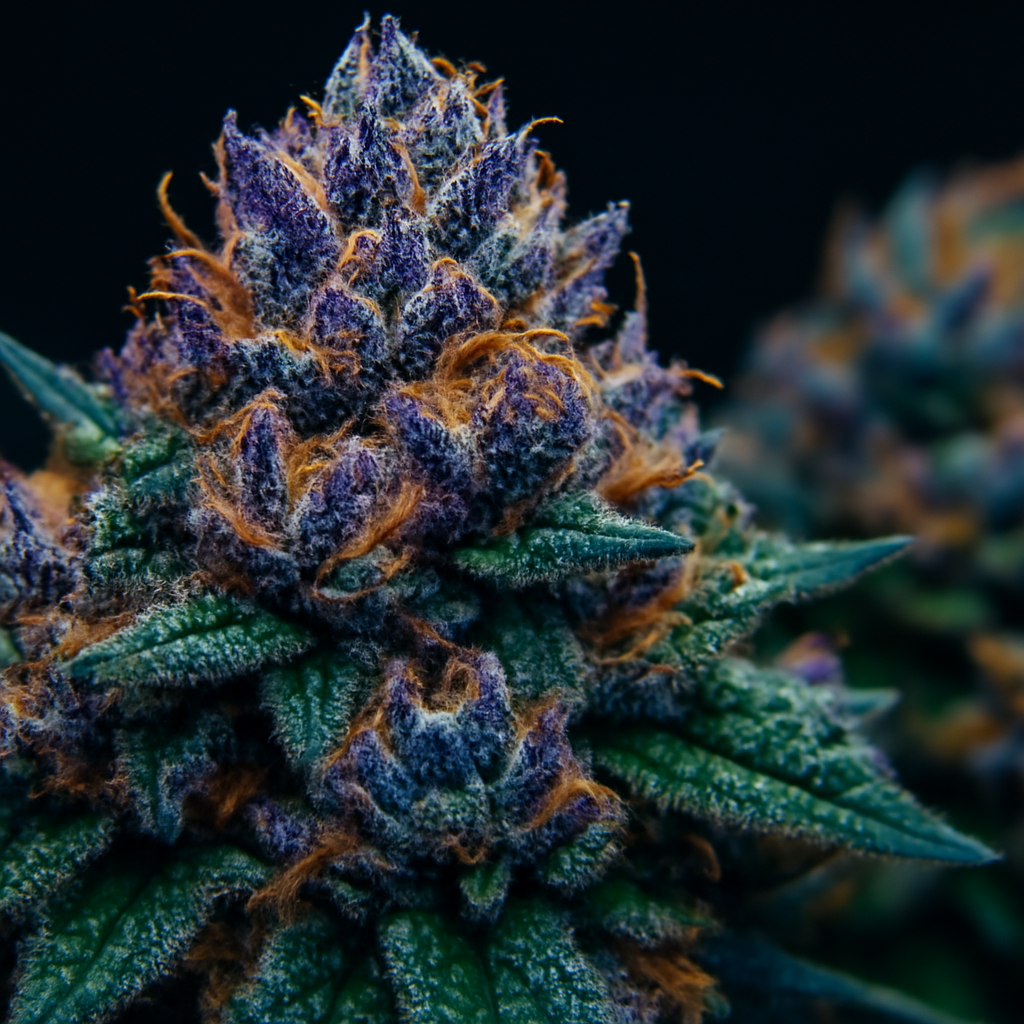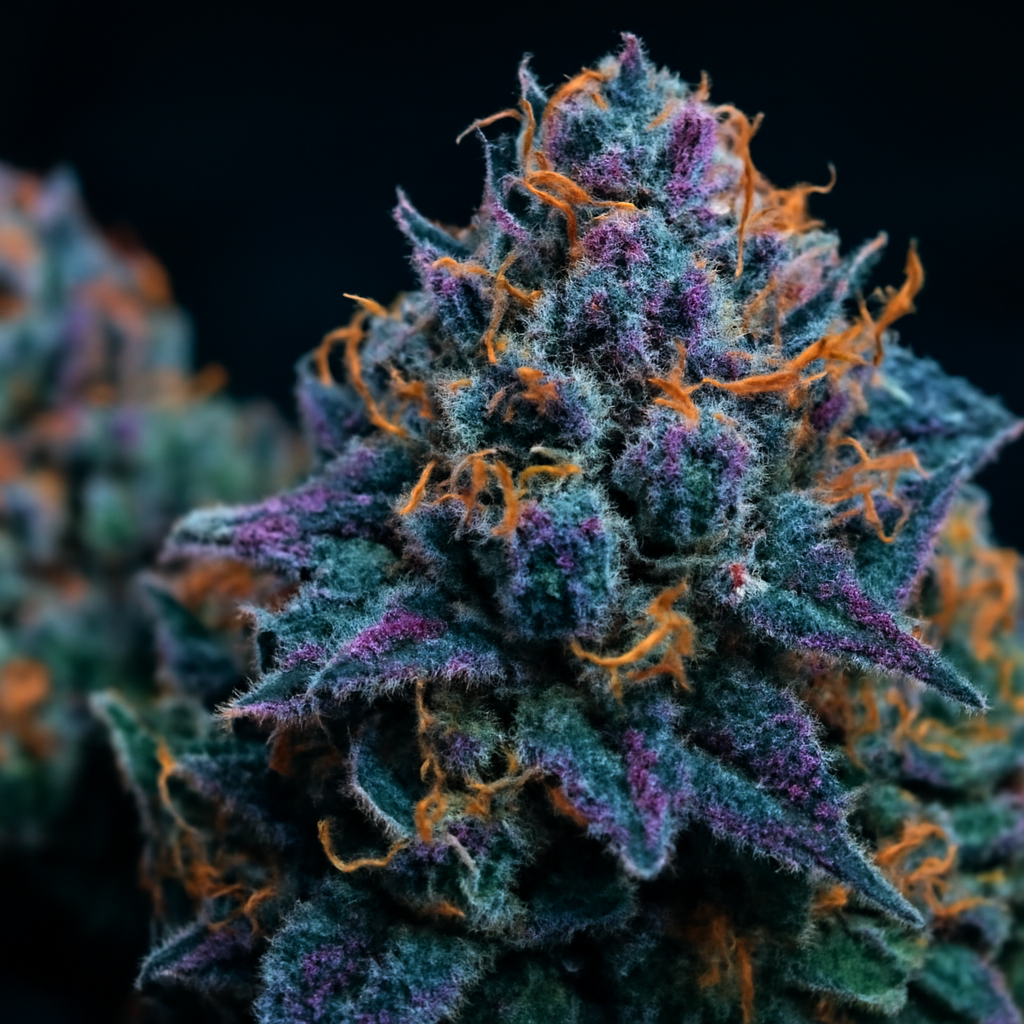
What Is the Permanent Marker Strain?
The Permanent Marker strain is a hybrid from Seed Junky Genetics, bred by crossing Biscotti, Jealousy, and Sherb Bx. The result is a high-THC cultivar with a complex terpene profile that sits somewhere between sharp fuel, sweet vanilla, and doughy cookie — depending on which phenotype you pull. It's become a benchmark strain in licensed craft cultivation circles precisely because it rewards growers who dial in their environment, and it punishes those who don't.
If you're logging this run, set up your journal now in the Grow Schedule Planner so you can track VPD, EC, and training milestones week by week — the data you capture on this grow will pay dividends on the next one.
---Permanent Marker Strain: Phenotype Selection
This is where most first-time Permanent Marker growers leave money on the table. Because it's a three-way cross with significant genetic variation, you're likely to find at least three distinct phenotypes across a pack of seeds:
- Phenotype A – "Fuel Forward": Taller, stretchier plants with a heavy gas and diesel aroma. Excellent for live resin and concentrate production. Expect a 2.0× stretch in the first three weeks of flower.
- Phenotype B – "Sweet Dreams": Compact and bushy with sweet vanilla and berry notes. Shorter internodal spacing makes canopy management easier. Best for premium dried flower.
- Phenotype C – "The True Marker": Medium height, balanced fuel-and-sweet aroma. Considered the most versatile — strong for flower, breeding, and hash. This is your keeper if you're running one mother.
Run at least 6–10 seeds to give yourself enough genetic diversity to identify your target pheno. Take cuts at week 3–4 of veg, root them, and flower the cuts from each candidate plant before committing to a mother. Don't rush this step — the Permanent Marker strain's reputation was built on Pheno C, and growing out Pheno A thinking it's the same experience will give you a different outcome entirely.
---Vegetative Stage: Building the Structure
Permanent Marker is a vigorous vegetator. Run your temps at 76–82°F (24–28°C) with 60–65% relative humidity and a VPD of 0.9–1.2 kPa. It will put on mass quickly, so your training window is shorter than you might expect.
Training Protocol
- Top at node 5 or 6: Do this early — around day 21–25 from seed or transplant. The plant responds aggressively and throws out strong lateral branches. See our breakdown of fimming vs topping if you're unsure which approach suits your canopy goals.
- LST from week 2: Tie down the main stem and any dominant laterals to keep the canopy flat and light penetration even. Permanent Marker's branching structure responds well to a modified manifold or screen of green (ScrOG).
- Flip when canopy fills 60–70% of your screen: Because of the 1.5–2.0× stretch ahead, flipping too late is a common mistake. If your tent is 2.4m tall, flip with your canopy no higher than 80–90cm from the light.
Vegetative Nutrients
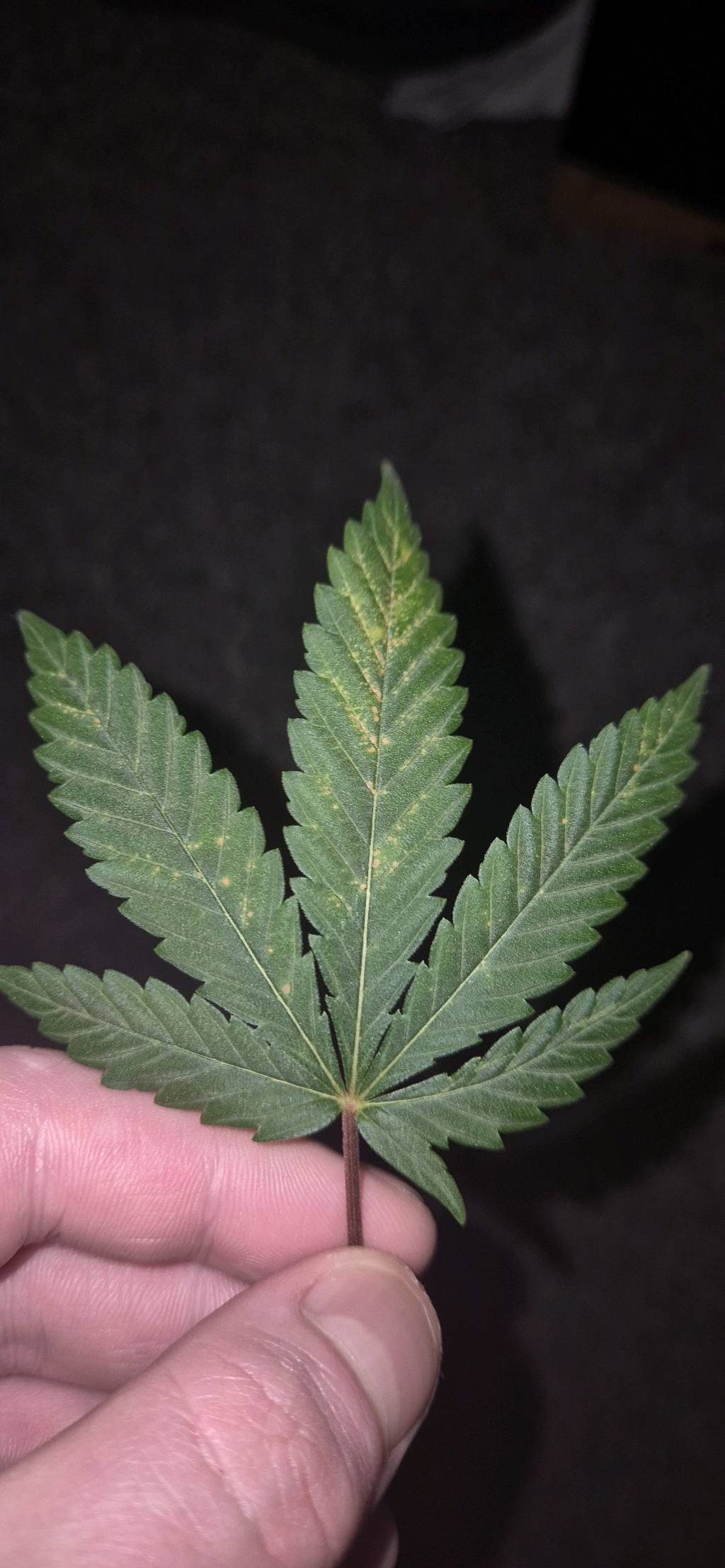
This strain is a heavy feeder even in veg. Target EC 1.2–1.6 mS/cm in soil or coco, pH 6.0–6.5 in soil, 5.8–6.2 in coco. Calcium and magnesium deficiencies are the most common issues growers report in veg — supplement at 150–200 ppm Cal-Mag regardless of your base nutrient line. If you're unsure what deficiency you're looking at, run your symptoms through the Nutrient Deficiency Identifier.
---Flowering Stage: Permanent Marker Strain Week by Week
Permanent Marker's 8–10 week flower period is where the magic — and the risk — lives. The dense, resinous bud structure that makes this strain so desirable is the same reason Botrytis can wreck a late-stage crop if you lose control of humidity.
Weeks 1–3: Early Flower and Stretch
This is where Permanent Marker tests your ceiling space. Expect 1.5–2.0× stretch depending on phenotype. Temps at 75–79°F, RH 50–60%, EC 1.4–1.8 mS/cm. Keep nitrogen relatively high here — the plant is still building biomass. PPFD 600–800 µmol/m²/s. Use your Grow Light Calculator to confirm your DLI targets aren't undershooting during this critical phase.
Weeks 4–6: Mid-Flower Bulk
Bud sites are stacking fast. Drop RH to 45–50%, temps to 74–78°F. This is where you push EC to 1.8–2.3 mS/cm with a phosphorus and potassium-heavy feed. Taper nitrogen — the plant doesn't need it for bud production and excess N at this stage delays ripening and suppresses terpene expression. PPFD can push to 700–900 µmol/m²/s. If you're running supplemental CO₂ at 1,000–1,200 ppm, you can safely push PPFD to 900–1,100 µmol/m²/s without light stress.
Weeks 7–10: Late Flower, Ripening, and Flush
Drop temps to 72–76°F and RH to 42–48%. A 5–8°F nighttime temperature drop will coax out the purple and deep green hues in Pheno C without slowing metabolism. PPFD 700–900 µmol/m²/s. Start tapering EC toward 1.2–1.4 mS/cm in week 7. If you're flushing (media-dependent), begin 10–14 days before anticipated harvest. Trichome monitoring starts in earnest around week 7 — you're looking for 60–70% cloudy trichomes for peak THC, with minimal amber unless you prefer a more sedative effect.
---Permanent Marker Strain: Pest and Disease Management
The dense cola structure that makes this strain visually stunning is also its Achilles heel. Botrytis cinerea (gray mold) and Pythium (root rot) are the two threats you need to plan around before they appear, not after.
- Airflow is non-negotiable: Every interior bud site needs moving air. Run oscillating fans at canopy level and below, not just above. Stagnant pockets inside those dense colas are where gray mold starts.
- Defoliate strategically: At day 21 and again at day 42 of flower, remove fan leaves blocking interior bud sites and any leaves touching adjacent buds. Don't strip the plant — you want 30–40% leaf removal at each defoliation, not 70%.
- Beneficial microbes: Apply Trichoderma harzianum and Bacillus amyloliquefaciens as a root drench from transplant through week 4 of flower. These inoculants colonize the root zone and actively suppress Pythium.
- Watch for early Botrytis signs: A single gray-brown calix on a top cola is your signal to check every bud site immediately. Remove infected material in a bag before it releases spores — one infected cola in week 8 can take out 20% of your harvest overnight.
Harvest, Dry, and Cure
How you handle post-harvest determines whether the Permanent Marker strain's terpene complexity actually makes it to the final product. Rush the dry or skip the cure and you'll lose the nuanced fuel-and-sweet profile that makes this cultivar worth growing.
Harvest Timing
Use a jeweler's loupe (60–100×) or a digital microscope. Harvest when 60–70% of trichomes have turned cloudy (milky white), with the remainder still clear. If you want more couch-lock, push to 10–20% amber. Don't rely on pistil color alone — Permanent Marker can show 70% orange pistils while trichomes are still 80% clear.
Drying
Hang whole plants or large branches (trim after dry, not before — it protects terpenes during the dry) in a dark room at 60–70°F and 55–60% RH. Target a 10–14 day dry for Permanent Marker's dense buds — a 7-day fast dry at high temps will mute the terpene profile. Stems should snap, not bend, before you move to jars. Use our Dry & Cure Timer to track your drying window precisely.
Curing
Pack buds loosely in wide-mouth glass jars at 62% RH (use Boveda or Integra packs). Burp jars twice daily for the first week, once daily for week 2, then every 2–3 days for weeks 3–8. The Permanent Marker strain's fuel-and-sweet terpene bridge fully develops between weeks 3 and 6 of curing — jars opened at week 2 will smell noticeably flatter than at week 5. Don't skip this part.
---Yield Expectations and ROI
Indoor growers running optimized lighting, ScrOG training, and dialed-in environment should realistically target 450–650 g/m². Outdoor in a long-season climate (120+ frost-free days), individual plants can produce 800–1,200 g per plant. Use the Yield Calculator to set realistic targets based on your canopy size and light intensity, and run your numbers through the Cost Per Gram Calculator to see where your production costs land relative to the premium price this cultivar commands at dispensary level.
Grow Guide platform data across 1,000 tracked journals shows that 73.6% of growers run indoor environments — this is exactly the kind of space where Permanent Marker's environmental sensitivity can be fully controlled, making it a strong choice for serious indoor cultivators.
---Frequently Asked Questions
How long does the Permanent Marker strain take to flower?
Permanent Marker typically flowers in 8–10 weeks from flip to harvest. Most phenotypes hit peak trichome maturity around day 63–70. Pheno A (Fuel Forward) tends toward the longer end of that range; Pheno B (Sweet Dreams) often finishes closer to day 56–63.
What are the biggest mistakes growers make with Permanent Marker?
Flipping too late and running out of vertical space is the most common issue — always account for the 1.5–2.0× stretch. The second biggest mistake is letting humidity creep above 50% in late flower, which invites Botrytis into those dense colas. Third: harvesting based on pistil color instead of trichome maturity.
Is Permanent Marker a good strain for beginners?
Pheno B (Sweet Dreams) is manageable for intermediate growers with a few successful runs under their belt. The full phenotype hunt and environmental precision required to max out Pheno C makes this more of an intermediate-to-advanced cultivar. If you're on your first or second grow, check out our guide on how to grow one cannabis plant indoors first.
What nutrients does Permanent Marker need in flowering?
It's a heavy feeder. Run EC 1.8–2.3 mS/cm in mid-bloom with a phosphorus and potassium-forward formula, dropping nitrogen progressively from week 4 onward. Taper EC to 1.2–1.4 mS/cm in the final 10–14 days. Calcium and magnesium supplementation throughout prevents common deficiencies on this cultivar.
What terpenes define the Permanent Marker strain's aroma?
The dominant terpene profile varies by phenotype but typically centers on limonene, caryophyllene, and myrcene — producing the characteristic fuel-and-sweet duality. Pheno C's balance of all three is what makes it the benchmark expression of the strain. Use the Terpene Explorer to map which terpenes to target based on your desired aroma and effect profile.
References
- Seeds Here Now (2026). Permanent Marker Strain Review — detailed phenotype breakdown and cultivation notes for Seed Junky's Biscotti × Jealousy × Sherb Bx cross. seedsherenow.com
- Joint Commerce Blog (2026). Permanent Marker: A Comprehensive Strain Guide — environmental parameters including VPD targets, EC ranges, and PPFD recommendations across the flowering timeline. app.jointcommerce.com
- Blimburn Seeds (2026). How to Grow Permanent Marker Strain — pest and disease management recommendations, including beneficial microbial applications for Botrytis and Pythium prevention. blimburnseeds.com
- MMJ.com (2023). Drying and Curing Cannabis: A Complete Guide — post-harvest protocols covering dry room conditions (60–70°F, 55–60% RH) and curing timelines for terpene preservation. mmj.com
- Wikipedia / Cannabis Cultivation entry (2026). Trichome maturity and harvest timing — overview of cloudy vs. amber trichome indicators for peak cannabinoid levels. en.wikipedia.org