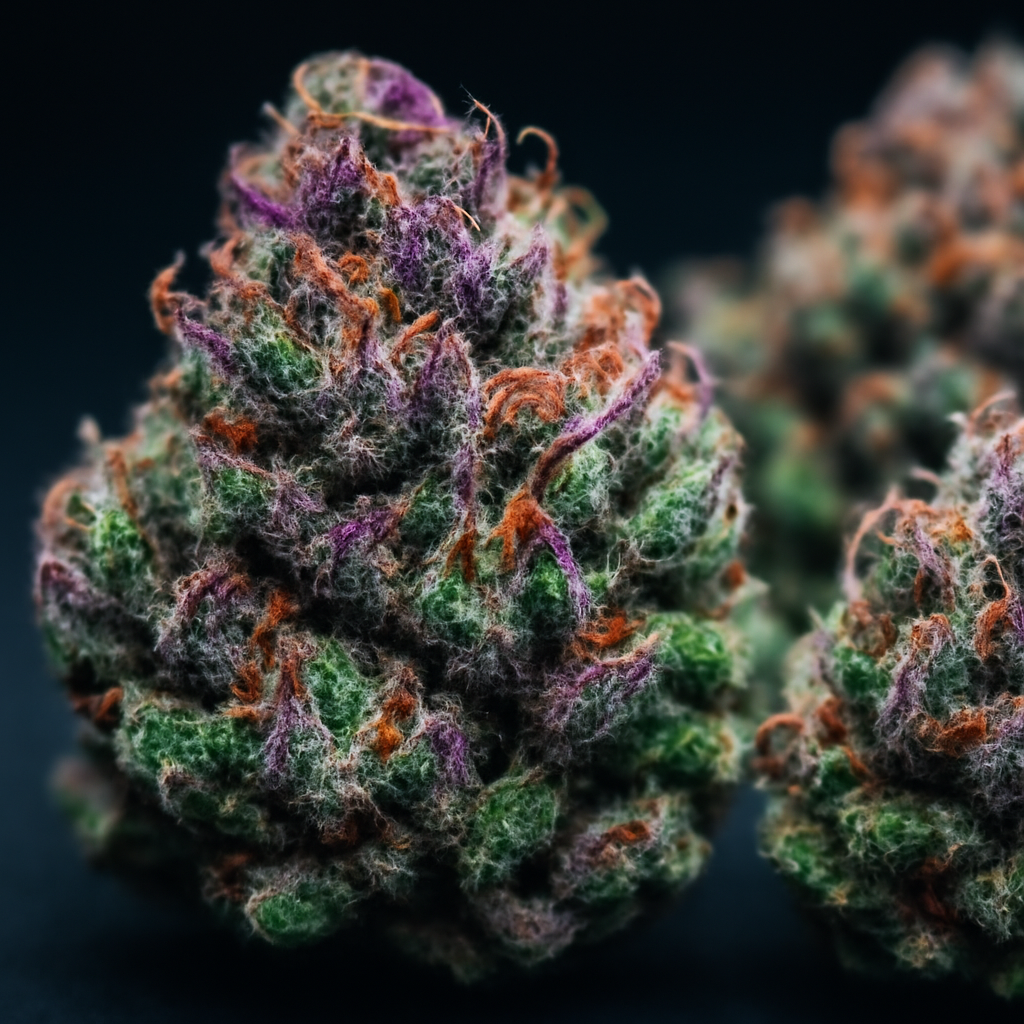
The Hawaii Maui Waui strain — also spelled Maui Wowie — is one of the original tropical landraces that built cannabis culture in the 1970s. Born on the volcanic slopes of Maui, it carries a genuine pedigree that most modern hybrids can only imitate. If you have seeds or a clone in front of you right now, expect a tall, lanky sativa that stretches hard, throws airy colas, and produces a terpene profile heavy on myrcene and terpinolene — that signature pineapple-citrus smell. This guide gives you the exact numbers and timings to get the best out of her, whether you're running an indoor tent or an outdoor plot in a warm climate.
Hawaii Maui Waui Strain: Genetics and Growth Characteristics
Maui Waui is a sativa-dominant landrace (roughly 80% sativa / 20% indica) originating from the Hawaiian Islands. It's not a hybrid — it's a stabilized landrace that adapted over generations to Hawaii's long sun hours, volcanic mineral-rich soils, and high humidity. That origin has direct practical consequences for how you grow it:
- Height: Expect 150–250 cm indoors without aggressive training. Outdoors, plants regularly exceed 3 meters.
- Node spacing: Wide internodal gaps — often 10–15 cm between nodes — meaning light penetration matters less than with dense indicas, but lateral spread is essential.
- Flowering time: 9–11 weeks from flip (63–77 days). Outdoor harvest falls in late October to early November in the Northern Hemisphere.
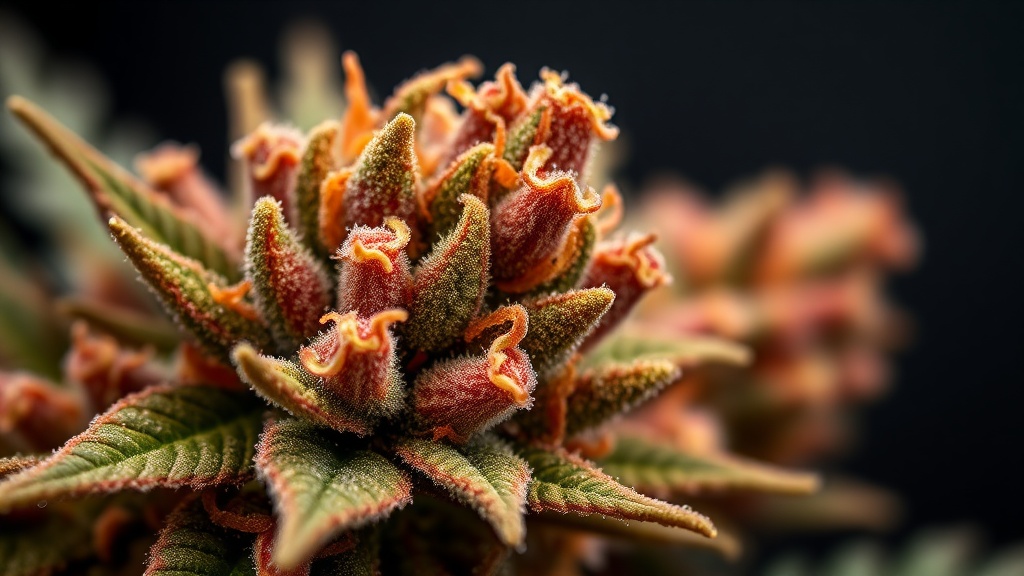
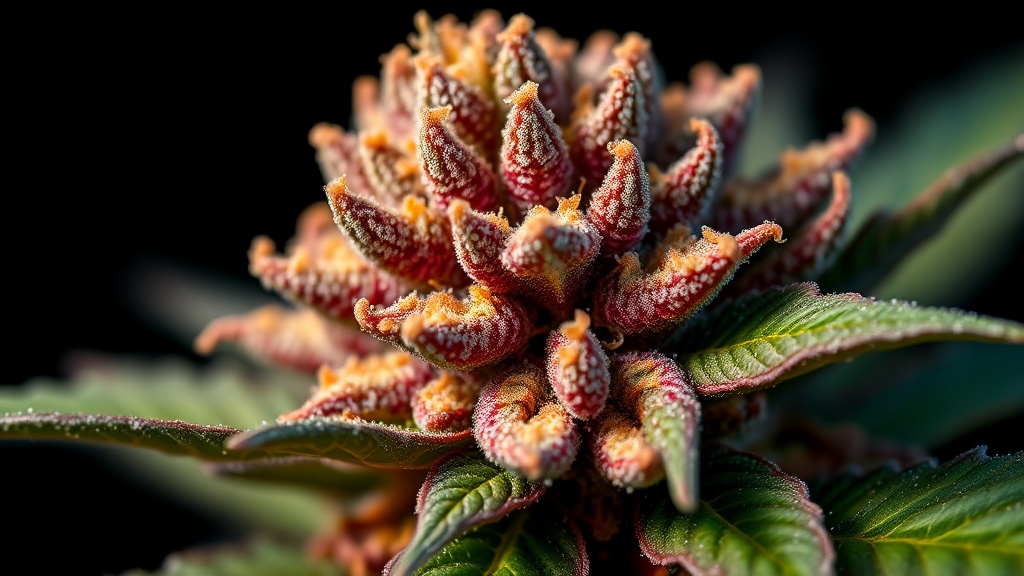
- Bud structure: Loose, airy, elongated colas. Not a bag-appeal strain in the traditional dense-nug sense, but the trichome coverage is excellent on well-fed plants.
- THC range: 19–26% under optimal conditions; lower (14–18%) with poor VPD or light management.
You can browse Maui Waui grow journals on Grow Guide to see real cultivation data from other growers tracking this strain.
Environment: Temperature, Humidity, and VPD
Maui Waui evolved in a tropical climate, but that doesn't mean you crank heat and humidity indoors. It means you need to replicate the diurnal swing and light intensity of a Hawaiian summer, not a sauna. Here are the hard targets:
| Stage | Day Temp | Night Temp | RH | VPD |
|---|---|---|---|---|
| Seedling (days 1–14) | 24–26°C (75–79°F) | 22–24°C | 65–70% | 0.4–0.8 kPa |
| Veg (weeks 2–6) | 24–28°C (75–82°F) | 20–22°C | 55–65% | 0.8–1.2 kPa |
| Early flower (weeks 1–4) | 24–27°C (75–81°F) | 18–20°C | 45–55% | 1.0–1.4 kPa |
| Late flower (weeks 5–11) | 22–26°C (72–79°F) | 16–18°C | 40–50% | 1.2–1.6 kPa |
| Final 2 weeks | 20–24°C | 15–18°C | 38–45% | 1.4–1.8 kPa |
The airy bud structure on Maui Waui is simultaneously its greatest protection and greatest vulnerability. Open colas mean airflow moves through easily — botrytis risk is lower than with dense indica flowers. But that same structure means any environmental stress (high humidity spikes, cold nights) shows up fast in resin quality. Keep RH below 50% from week 5 of flower onward without exception.
Lighting: PPFD, Spectrum, and the Hawaii Maui Waui Strain's Light Appetite
This strain came up under 13+ hours of direct equatorial sun daily. It is a light-hungry plant. Running a budget blurple LED at 400 µmol/m²/s will get you a plant — it won't get you terpenes. Target these PPFD levels at canopy:
- Seedling: 200–300 µmol/m²/s
- Veg: 400–600 µmol/m²/s
- Early flower: 600–800 µmol/m²/s
- Peak flower (weeks 4–9): 800–1,000 µmol/m²/s
- Final 2 weeks: Back down to 600–700 µmol/m²/s to reduce chlorophyll degradation and sharpen terpene expression
Full-spectrum LED fixtures with a solid red/far-red component (660 nm + 730 nm) are the current standard for replicating the complete Hawaiian solar spectrum indoors. Aim for a fixture that exceeds 650 µmol/m²/s at a 45–60 cm hanging height over your canopy. Use our Grow Light Calculator to dial in coverage area and confirm you're hitting target PPFD across your full canopy, not just at center.
For veg, run 18/6. Flip to 12/12 to initiate flower. Given the strain's sativa stretch, expect an additional 50–100% height gain in the first 3 weeks of flower — plan your vertical space accordingly or top/LST early in veg.
Training Maui Waui: Managing the Sativa Stretch
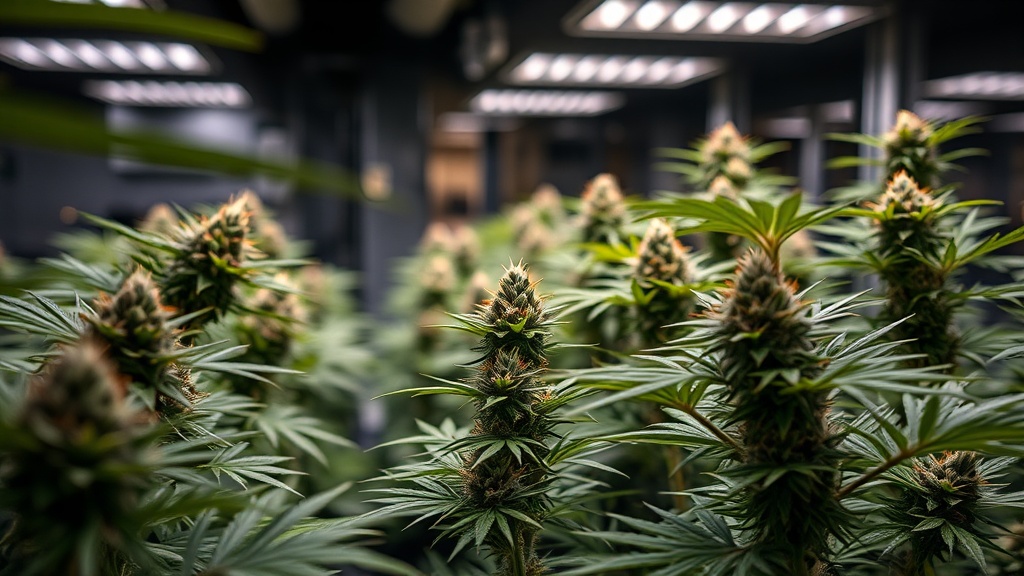
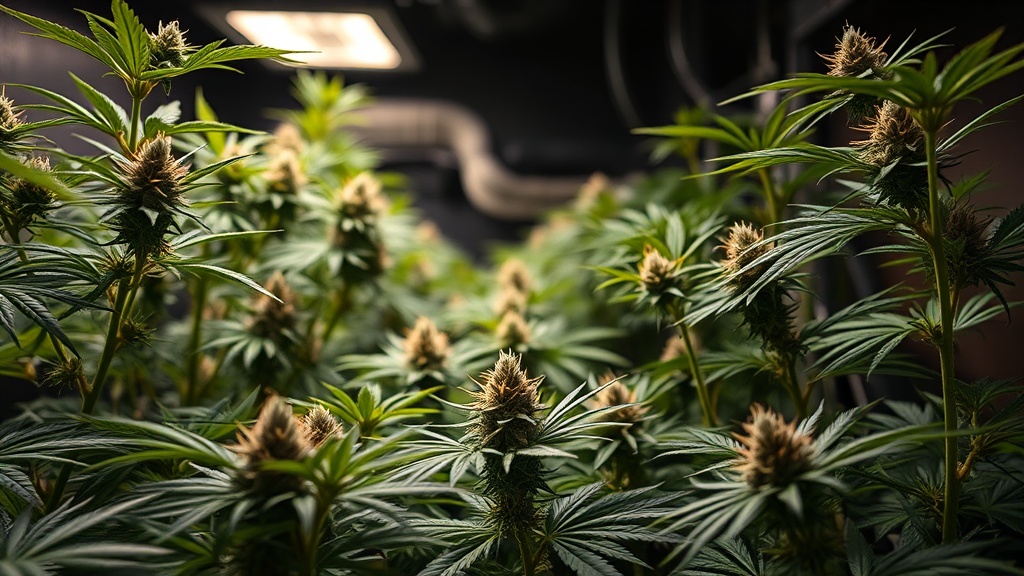
Letting Maui Waui grow unchecked in a 2.4-meter tent is a problem by week 4 of flower. Training is not optional — it's how you convert vertical growth into horizontal canopy and get light to more bud sites. Two approaches that work well:
Low-Stress Training (LST)
Start bending main branches outward from week 3 of veg. Secure with soft ties to the pot rim or a trellis. The goal is a flat, even canopy — every top at the same height. This maximizes even PPFD distribution and gives you more harvestable nodes. For a detailed breakdown of when and how to top, see our Fimming vs Topping guide.
Topping + SCROG
Top at node 5–6 during veg to create two main colas. Once lateral branches develop, weave them through a screen (SCROG net) set at 40–50 cm above the pot. Fill the screen to 60–70% capacity before flipping to 12/12. Maui Waui's wide node spacing actually makes SCROG easier than with compact indicas — you have room to work branches through the net without snapping them.
Growing Medium and Containers
Soil is the most forgiving medium for this strain and mirrors its native growing conditions. On Grow Guide's platform, 632 out of 1,000 tracked grows use soil — it remains the dominant choice for good reason: it buffers pH swings and feeds micronutrients slowly, which suits Maui Waui's moderate-to-high nutrient demand without the risk of salt buildup.
- Container size: Minimum 15L for indoor; 19L or larger preferred. Bigger root zone = bigger plant with this sativa.
- Soil mix: A well-draining peat or coco-amended organic soil with perlite at 20–30% by volume. Maui Waui's roots need oxygen — dense, compacted soil kills her yield potential.
- pH range: 6.0–7.0 in soil. Keep it in this window and potassium uptake stays smooth — the strain's most common deficiency is K-lockout caused by pH drift above 7.2.
- Coco coir: Works well but requires more frequent watering and closer EC monitoring. Target pH 5.8–6.2 in coco.
Nutrients: What Maui Waui Actually Needs
Maui Waui is not a heavy feeder by modern hybrid standards, but it does have specific needs at each stage. Running it too hot on nitrogen into flower is the single most common grower mistake — it pushes leaf growth at the expense of resin and delays maturation.
Vegetative Stage
- EC: 1.2–1.8 mS/cm (moderate)
- NPK emphasis: High N, moderate P and K (e.g., 3-1-2 ratio)
- Supplement with CalMag at 2–3 mL/L if running RO or soft water — Maui Waui's tropical roots love calcium
Flowering Stage
- Week 1–2 of flower: Begin transitioning — reduce N, increase P and K
- Weeks 3–8: EC 1.6–2.2 mS/cm; NPK emphasis shifts to 1-3-2
- Final 2 weeks: Flush or run plain pH-adjusted water (soil growers) / low-EC feed (coco) to clear salts
Potassium deficiency is the most common nutrient issue with this strain. It presents as browning leaf edges starting on older fan leaves, moving inward. First step: check your pH — K is locked out above 7.0 and below 5.5. If pH is correct, flush with half-strength nutrients and monitor new growth. Old damaged leaves won't recover; watch the new growth for 5–7 days. Use our Nutrient Deficiency Identifier to cross-check symptoms before adjusting your feed schedule.
For a deep dive into organic feeding options that work well with soil-grown sativas, see our Best Organic Nutes for Cannabis guide.
Harvesting the Hawaii Maui Waui Strain at Peak Potency
Trichome inspection under a 60–100x loupe or digital microscope is the only reliable harvest signal. For Maui Waui's classic energetic, cerebral effect, you want to harvest with the majority of trichomes at the cloudy/milky white stage, with no more than 5–10% amber. If you push past 20–30% amber, you shift the effect profile from energetic and euphoric toward relaxed and sedative — which is pharmacologically valid, but defeats the purpose of growing a Hawaiian sativa.
Watch these physical signals alongside trichomes:
- Pistils at 70–80% orange/red (not a reliable standalone indicator, but a useful flag to start checking trichomes daily)
- Fan leaves yellowing and dropping naturally (nitrogen draw-down)
- Calyxes swelling and resin glands clearly visible to the naked eye on sugar leaves
- Terpene smell at peak intensity — the moment the tropical, citrus-pineapple aroma is strongest is usually right at the harvest window
Use our Grow Schedule Planner to map your flip date against expected harvest, accounting for the 9–11 week window, so you're not caught off-guard by early maturation.
Drying and Curing Maui Waui
Maui Waui's airy structure means it dries faster than dense indica buds — a 7-day dry is common, but don't rush it. Fast drying kills terpenes. Here are the exact conditions:
Drying Phase (Days 1–10)
- Temperature: 18–21°C (65–70°F)
- Relative humidity: 45–55%
- Airflow: Passive circulation, no direct fan air on buds
- Light: Darkness or very low light — UV degrades terpenes
- Method: Hang whole branches upside down on a line or rack
- Done when: Smaller stems snap rather than bend; larger stems still have slight flex
Curing Phase (Weeks 2–6)
- Trim dry buds and place in wide-mouth glass jars, filled to 75% capacity
- First week: Burp jars 2–3 times daily for 15 minutes each to release moisture and CO₂
- Weeks 2–4: Burp once daily, then every 2–3 days
- Target in-jar RH: 58–62% (use Boveda or Integra packs to maintain)
- Minimum effective cure: 2 weeks. 4 weeks produces a noticeably smoother smoke with fuller terpene expression. Extended cures to 8 weeks are worth it with Maui Waui specifically because its terpinolene-heavy profile continues to develop.
Track your drying and curing precisely with our Dry & Cure Timer — it handles burp reminders, humidity targets, and stage progression automatically.
Yield Expectations and Planning
Maui Waui is not a yield monster by modern commercial standards. Realistic indoor yields with competent training and dialed-in environment:
- Indoor (trained, SCROG): 350–500g/m²
- Indoor (untrained, single plant): 80–150g/plant
- Outdoor (full season, warm climate): 500–900g/plant
The value of this strain isn't raw weight — it's the terpene complexity and effect quality that modern high-yield hybrids rarely match. Run our Yield Calculator to project your expected harvest weight against your setup and use our Cost Per Gram Calculator to benchmark the economics of your grow.
Want to explore which specific terpenes drive Maui Waui's tropical aroma? The Terpene Explorer breaks down myrcene, terpinolene, and ocimene — the three primary contributors to this strain's profile.
Outdoor Cultivation in Hawaii and Similar Climates
If you're fortunate enough to be growing in Hawaii, Southern California, Southern Spain, or another warm-latitude environment, Maui Waui in its element is a different plant entirely. Key outdoor considerations:
- Plant out: After last frost risk; in Hawaii this is year-round but optimal timing for the Northern Hemisphere is April–May from seedling
- Harvest window: Late October to early November in the Northern Hemisphere
- Soil prep: Amend with volcanic rock dust or basalt if available — genuinely replicates the mineral profile this strain evolved in
- Staking: Mandatory by midsummer. Maui Waui grows to 3+ meters outdoors and the sativa-structure colas catch wind easily
- Pest pressure: Spider mites in hot, dry conditions; caterpillars on outdoor plants as buds fatten in September. Inspect weekly from August onward.
Frequently Asked Questions
How long does Hawaii Maui Waui take to flower?
Maui Waui has a flowering period of 9–11 weeks from the flip to 12/12 light cycle indoors. Outdoors in the Northern Hemisphere, harvest typically falls in late October to early November, depending on your latitude and the specific phenotype you're running.
Is Maui Waui hard to grow indoors?
It's intermediate difficulty. The main challenges are managing the sativa stretch (expect 50–100% height gain in early flower) and keeping humidity below 50% in late flower to protect the airy bud structure. If you train early with LST or SCROG and maintain environment, it's a very rewarding indoor grow.
What is the most common deficiency in Maui Waui?
Potassium deficiency is the most frequently reported issue — it presents as browning leaf margins on older fan leaves. Almost always caused by pH drift above 7.0 in soil locking out K uptake. Correct pH first before adding more potassium to your feed schedule.
When should I harvest Maui Waui for the best energetic effects?
Harvest when the majority of trichomes are cloudy/milky white with minimal amber — under 10%. Letting amber trichomes develop past 20–30% converts more THC to CBN, shifting the effect from energetic and cerebral toward relaxed and sleepy, which undermines the core reason to grow this Hawaiian sativa.
How long should I cure Maui Waui?
A minimum of 2 weeks is required for a smokeable result, but 4 weeks significantly improves smoothness and terpene expression. Maui Waui's terpinolene-dominant profile continues developing through extended cures — 6–8 weeks in sealed glass jars at 58–62% RH is genuinely worth the wait with this strain.
References
- Canapuff (2026). What Is Maui Wowie Strain? Cultivation Characteristics and Terpene Profile. Discusses full-spectrum lighting requirements exceeding 650 µmol/m²/s for terpene maximization. canapuff.com
- Biology Insights (2026). Maui Wowie Outdoor Grow: Seed to Harvest. Documents NPK transition from veg to flower, trichome harvest timing, and outdoor yield data for this Hawaiian sativa. biologyinsights.com
- Strainy (2026). Maui Wowie Strain Drying and Curing Protocol. Details post-harvest environment targets: 70°F / 45–55% RH dry phase and 4-week minimum cure in airtight containers. strainy.com
- Weed Seeds Express (2026). Maui Waui Auto Week by Week. Container sizing recommendations (19L minimum) and root zone management for sativa cultivars. weedseedsexpress.com
- Evergreen OC (2026). Maui Waui Strain Profile. Documents 9–11 week flowering timeline, temperature range of 75–85°F, and humidity management during flowering. evergreenoc.com