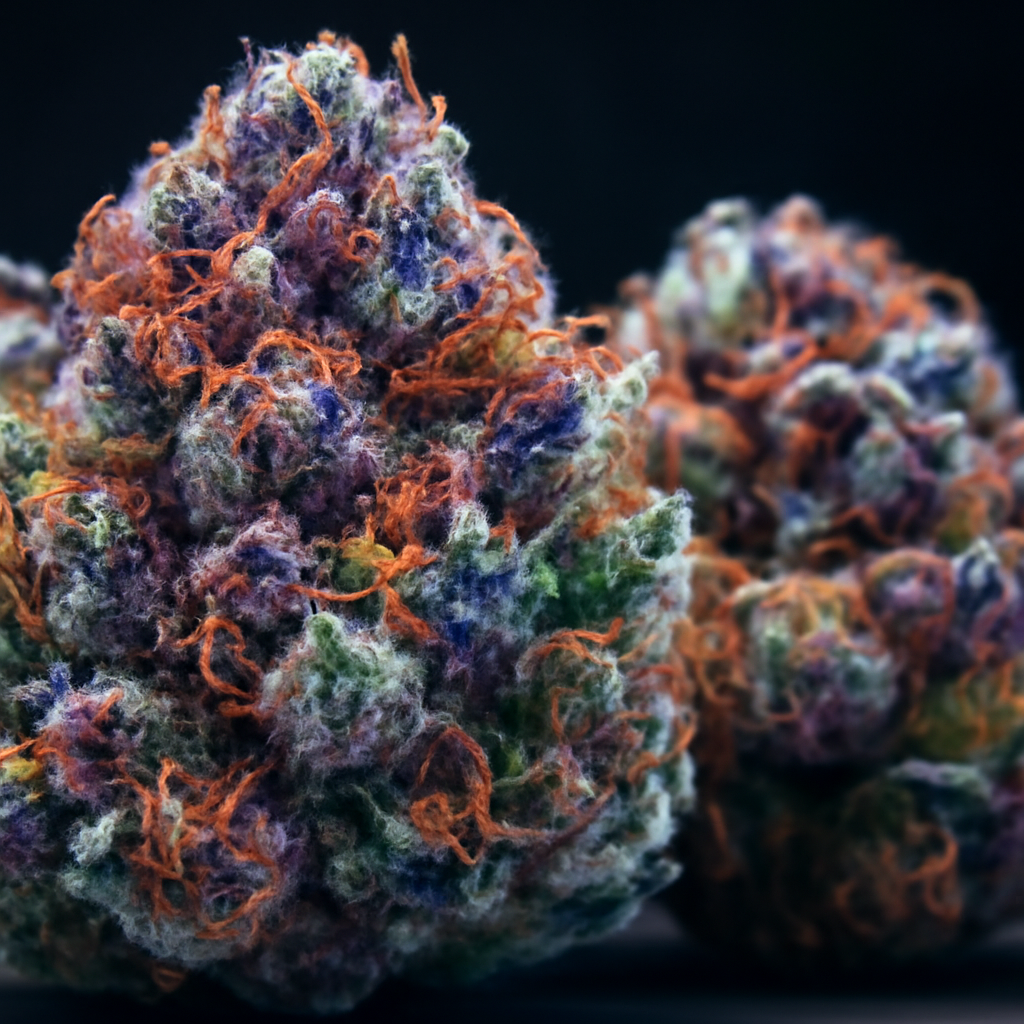
What Is the Papaya Punch Strain?
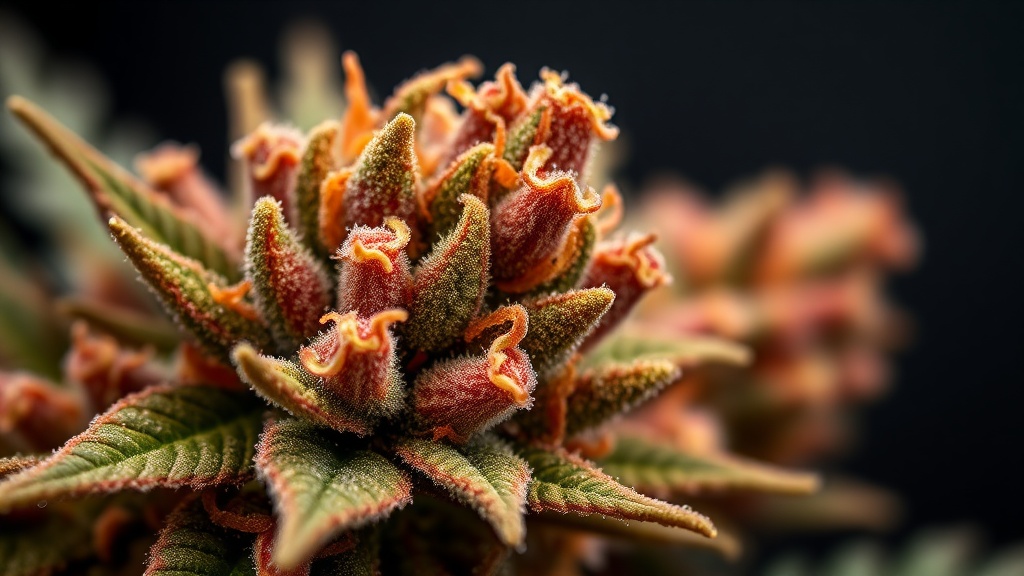
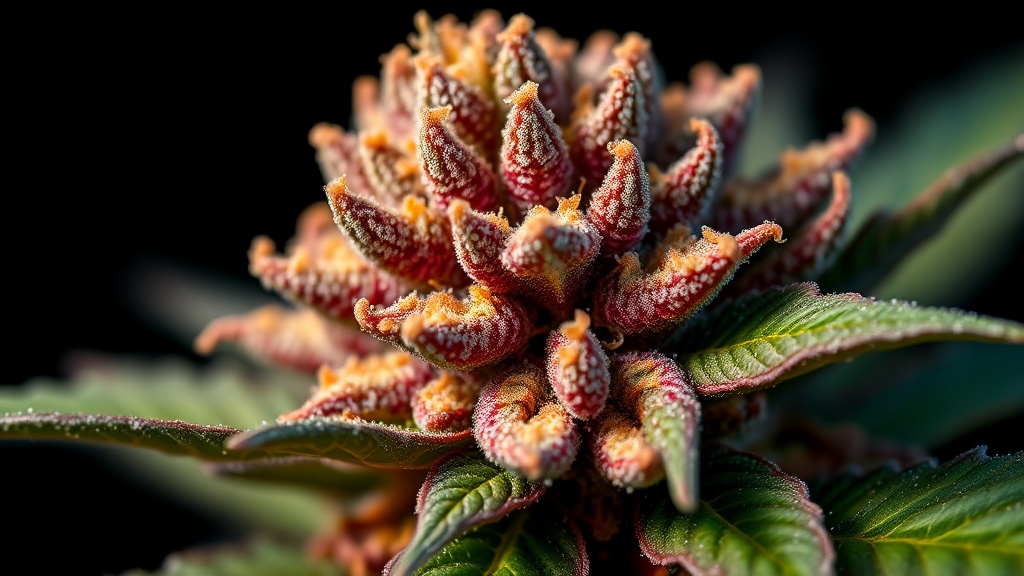
Papaya Punch is an indica-dominant hybrid cannabis strain bred from Papaya × Purple Punch — two cultivars already respected for resin production, bag appeal, and fruity terpene suites. The result is a plant that stacks dense, trichome-caked flowers with a tropical aroma led by myrcene, limonene, and caryophyllene, with supporting notes of linalool and pinene rounding out the profile. If you want to dig into exactly how those terpenes interact, the Terpene Explorer breaks it down compound by compound.
THC sits in the 20–29% range depending on phenotype, environment, and harvest timing. The high leans heavily sedative — this is an evening or end-of-day strain. For growers, the appeal is the combination of premium aesthetics, above-average potency, and solid yield potential. The challenge is managing the bushy, tight structure without letting it become a mold factory in late flower.
Browse Papaya Punch grow journals on Grow Guide to see how other cultivators are dialling it in.
Papaya Punch Strain Genetics and Structure
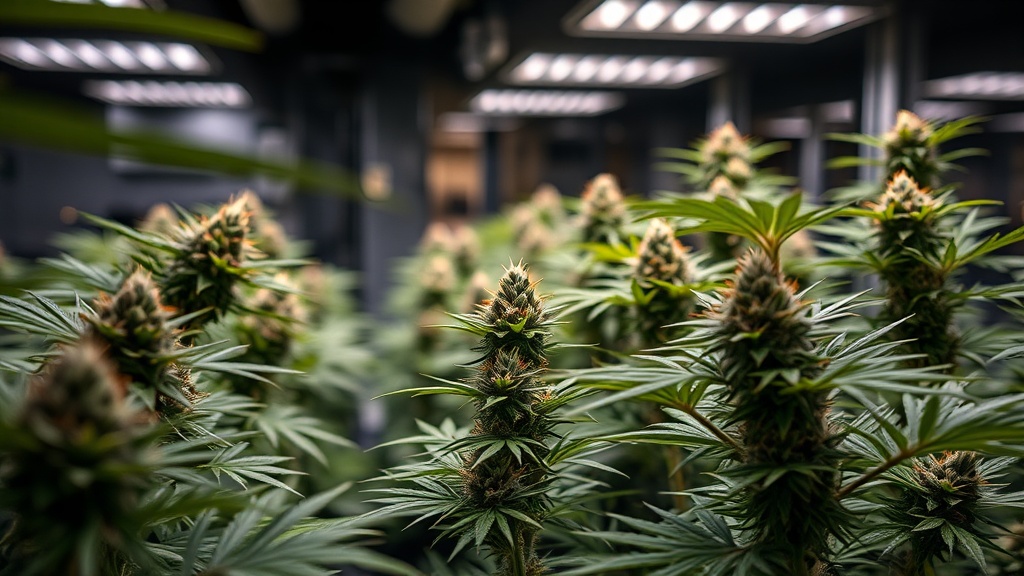
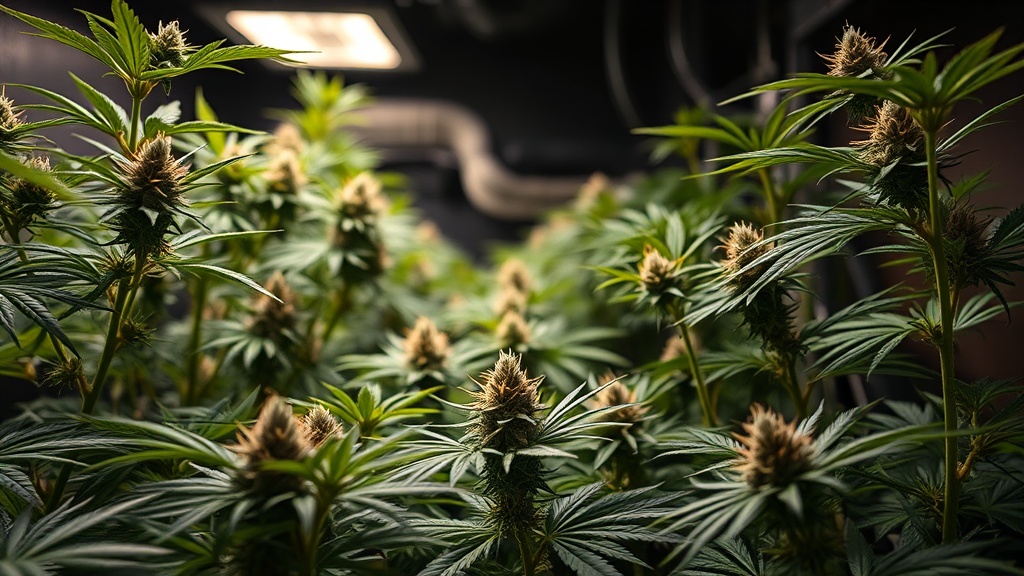
The indica lineage shows immediately in the plant's morphology: short internodal spacing, wide fan leaves, and a tendency to bush out laterally rather than stretch vertically. Expect plants to finish at 70–100cm indoors without aggressive training. Stems are robust, which is good news for heavy colas, but canopy management is non-negotiable if you want light to penetrate past the top third of the plant.
Growing the Papaya Punch Strain Indoors: Environment by Stage
Vegetative Stage (Weeks 1–5)
Run daytime temps at 24–26°C (75–79°F) with nights at 19–22°C (66–72°F). Relative humidity should sit at 55–65% RH. VPD target in the 0.8–1.0 kPa range keeps stomata open and transpiration moving at a healthy pace. PPFD starts at 200–300 µmol/m²/s in early veg and steps up to 400–600 µmol/m²/s by mid-veg as roots establish. Use the Grow Light Calculator to map coverage and intensity across your canopy before flipping.
This is where you do your structural work. Topping at node 4–5 and following up with LST creates the wide, multi-cola structure Papaya Punch naturally wants to build. A SCROG net set at 30–35cm above the pot is ideal for taming lateral branching and keeping the canopy even before the flip. Our Fimming vs Topping guide breaks down which approach suits your grow space.
Flowering Stage (Weeks 6–10+)
Drop temps to 22–25°C (72–77°F) days, 17–20°C (63–68°F) nights. That 5–8°C differential in the final two weeks is what triggers the purple anthocyanin expression inherited from the Purple Punch side. Humidity is your biggest lever here: bring it down to 45–55% RH in early flower, and tighten to 38–45% RH in weeks 7–10. Given how tightly Papaya Punch stacks its calyxes, anything above 50% RH in late flower is an invitation for botrytis.
Ramp PPFD to 700–900 µmol/m²/s at the canopy. At this intensity with a dialled VPD (1.2–1.5 kPa in flower), CO₂ supplementation to 1000–1200 ppm will push you toward the upper end of the yield range.
Flowering time is 62–69 days from flip. Some phenotypes — particularly those expressing more Papaya genetics — benefit from pushing to 70 days for full colour development and terpene maturation. Don't rush the finish based on breeder day count alone; go by trichomes.
Nutrient Schedule for Papaya Punch Strain
Papaya Punch has a medium feeding demand — it's not a heavy feeder like some commercial hybrids, and it punishes overfeeding with tip burn and leaf taco within two feedings. Work in these ranges:
- Veg EC: 1.4–1.8 mS/cm in coco; 0.8–1.2 in amended soil
- Early flower EC: 1.8–2.2 mS/cm — ramp up phosphorus and potassium (PK boost at week 3–4 of flower)
- Late flower EC: Taper back to 1.4–1.6 mS/cm from week 7 onward; flush or reduce salts in the final 10–14 days
- pH: 6.0–7.0 in soil (aim for 6.2–6.8 sweet spot); 5.8–6.2 in coco
Monitor runoff EC and pH from week 3 of flower onwards. If runoff EC is climbing more than 0.5 above your input, you're accumulating salt — flush with plain pH-adjusted water for one feeding. If you're seeing interveinal yellowing in weeks 5–7 despite correct pH, it's almost always a magnesium or iron availability issue. Use the Nutrient Deficiency Identifier to confirm before you start adding products. For seedling-stage feeding guidance, see our best nutrients for cannabis seedlings article.
Growers on Grow Guide's platform predominantly run soil (63.4% of all tracked grows) with manual feeding (54.7%), which maps well to Papaya Punch's medium demand — the buffering of good amended soil gives you margin for error that coco does not.
Training Strategy: Keeping the Papaya Punch Canopy Open
The two defoliation windows that matter most for this strain are day 21 and day 42 of flowering. At day 21, remove fan leaves blocking bud sites in the mid and lower canopy — this is aggressive but the plant has weeks of growth ahead to recover. At day 42, a lighter pass targeting any leaves still shading lower bud sites and anything trapping humidity inside dense colas. After day 42, hands off: you don't want to stress the plant during peak trichome development.
Combined with proper plant spacing (at minimum 60cm centres for untrained plants, or use SCROG to fill a defined footprint efficiently), you'll hit the upper end of the yield range. Plug your numbers into the Yield Calculator to model expected output per light before you set your grow up. Our indoor grow guide also covers canopy management strategy in detail.
Harvesting Papaya Punch: Reading Trichomes Correctly
Target harvest when trichomes are predominantly cloudy/milky with 10–20% amber visible on bud calyxes (not sugar leaves — those amber up faster and will skew your read). At this point you're capturing peak THC with just enough CBN conversion to round out the sedative profile.
For the purple phenotypes, the colour intensifies in the last two weeks with the cooler night temperatures. If you're running an aggressive 10°C day/night differential in the final stretch and still not seeing anthocyanin expression, don't wait indefinitely — trichome state is always the primary harvest signal.
Drying and Curing Papaya Punch
Given the density of Papaya Punch flowers, dry conditions are critical. Hang trimmed branches upside down in complete darkness at 15–21°C and 45–55% RH with gentle circulation — aim for 0.1–0.2 m/s airspeed across the room, not direct fan blast on buds. Drying takes 7–10 days. The slow dry protects terpenes; anything faster than 7 days and you're sacrificing the limonene and linalool that define the strain's aroma.
Stems should snap cleanly (not bend) before jarring. Cure in wide-mouth glass jars at 58–62% RH (Boveda 62 packs work well here), burping daily for the first week, then every 2–3 days for weeks 2–4. A full 4-week cure transforms the profile from sharp and green to the smooth tropical punch the genetics promise. Use the Dry & Cure Timer to track your burping schedule and moisture readings across the cure window. For a full end-to-end grow timeline including dry and cure, see our guide on how long it takes to grow cannabis indoors.
Papaya Punch Strain Yield Expectations and Efficiency
Indoor yields under optimized conditions fall in the 450–600g/m² range. With modern LED fixtures running 600–700W/m², that puts grams-per-watt efficiency at 0.9–1.6g/W — the upper end is achievable with CO₂ supplementation and a dialled VPD. Outdoor plants in long-season climates (Northern California, Southern Europe, comparable latitudes) can produce 500–1000g per plant with proper training and a full growing season.
Plug your setup into the Cost Per Gram Calculator to model whether the higher-input approach (CO₂, high-intensity LEDs) actually improves your cost efficiency at your target yield. Keeping a grow diary throughout the run is the fastest way to identify which variables are actually moving your numbers between cycles.
Common Problems With the Papaya Punch Strain
Botrytis in Dense Colas
This is the number one issue Papaya Punch growers report. The tight bud structure traps moisture in the core of large colas, and by the time you see grey mould on the outside, it's already worked inward. Prevention is the only real solution: hit the defoliation schedule, keep late-flower RH below 45%, and run horizontal airflow across the canopy rather than vertical. If you spot a single infected cola, remove it immediately with scissors you then sanitise — botrytis spores spread fast in a sealed tent.
Nutrient Burn in Early Flower
The medium feeding demand catches growers who come off heavier-feeding strains. If you see claw-down tips in weeks 1–3 of flower, your EC is too high. Drop input EC by 0.3–0.4 and flush once with pH-adjusted water. The plant will recover within a week and you won't lose bud sites.
Slow Trichome Development After Day 60
Some phenotypes genuinely need 70 days. If trichomes are still predominantly clear at day 62, extend the dark cycle (12/12 is fine, or push to 11/13 to accelerate maturation) and drop night temps to 16–18°C. This combination consistently speeds trichome clouding without sacrificing weight.
Frequently Asked Questions
How long does the Papaya Punch strain take to flower indoors?
Papaya Punch typically finishes in 62–69 days from the 12/12 flip. Some phenotypes benefit from extending to 70 days to fully develop colour, terpene profile, and trichome density. Always verify with a loupe or microscope rather than relying solely on breeder day counts.
What yield can I expect from Papaya Punch indoors?
Under optimised indoor conditions — strong LED lighting at 700–900 µmol/m²/s, CO₂ at 1000–1200 ppm, and proper training — expect 450–600g/m². Growers without CO₂ supplementation typically land in the 400–480g/m² range depending on canopy management and light intensity.
Is the Papaya Punch strain prone to mould?
Yes — its indica-dominant, dense bud structure creates pockets of trapped humidity that botrytis exploits. Keep late-flower RH at 38–45%, defoliate at days 21 and 42 of flowering, and maintain horizontal airflow across the canopy. Prevention is far more effective than treatment once grey mould appears.
What are the dominant terpenes in Papaya Punch?
The profile is led by myrcene (earthy, musky), limonene (citrusy, tropical), and caryophyllene (spicy, woody), with linalool and pinene as supporting players. The slow dry (7–10 days) and 4-week cure are critical to preserving the lighter volatile terpenes like limonene.
What medium works best for growing the Papaya Punch strain?
Amended soil suits its medium feeding demand well — the buffering capacity reduces the risk of salt build-up and gives you more margin on feeding intervals. Coco coir works and can push yields higher, but demands tighter EC and pH monitoring and more frequent feeding. Of all grows tracked on Grow Guide, 63.4% use soil, aligning with what works for similar indica-dominant hybrids.
References
- Joint Commerce (2025). Papaya Punch Strain: A Comprehensive Strain Guide — cultivation parameters including defoliation timing, PPFD targets, humidity ranges, and yield data for indoor grows. app.jointcommerce.com
- STIIIZY (2025). Papaya Punch Strain Cannabis Guide — flowering time range and phenotype variation notes, including the 70-day extended finish recommendation. stiiizy.com
- Strainy (2024). Drying and Curing Cannabis Strain Data — post-harvest drying parameters (60–70°F, 45–55% RH, 7–10 days) and curing protocol for dense indica-dominant flowers. strainy.com
- Grow Guide Platform Data (2026). Internal analytics across 1,000 tracked grow journals — medium distribution (63.4% soil), feed method distribution (54.7% manual), and environment split (73.2% indoor) informing context for indica-dominant hybrid cultivation patterns.
- Rodriguez, A. et al. (2022). Effects of Temperature Differential on Anthocyanin Expression in Cannabis sativa, Frontiers in Plant Science — validates the use of 5–10°C day/night differentials in late flowering to trigger purple pigmentation in anthocyanin-capable cultivars. frontiersin.org