What Is Papaya Bomb?
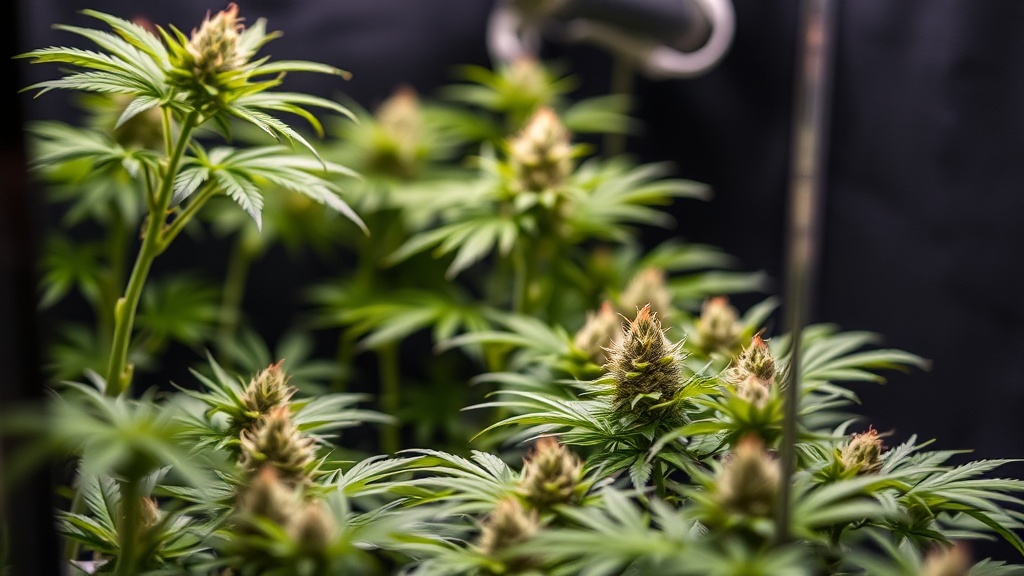
Papaya Bomb is a sativa-dominant hybrid developed by Purple City Genetics, crossing the fruity, resin-heavy Papaya with the explosive yielder THC Bomb. The result is a strain that routinely tests at 30% THC with a terpene profile dominated by β-myrcene, δ-limonene, and β-caryophyllene — a tropical-meets-spicy nose that stays loud all the way through a proper cure. Buds are described as greasy and compact, golden-green under good light, and coated in enough trichomes that even casual growers will notice the sparkle at day 50.
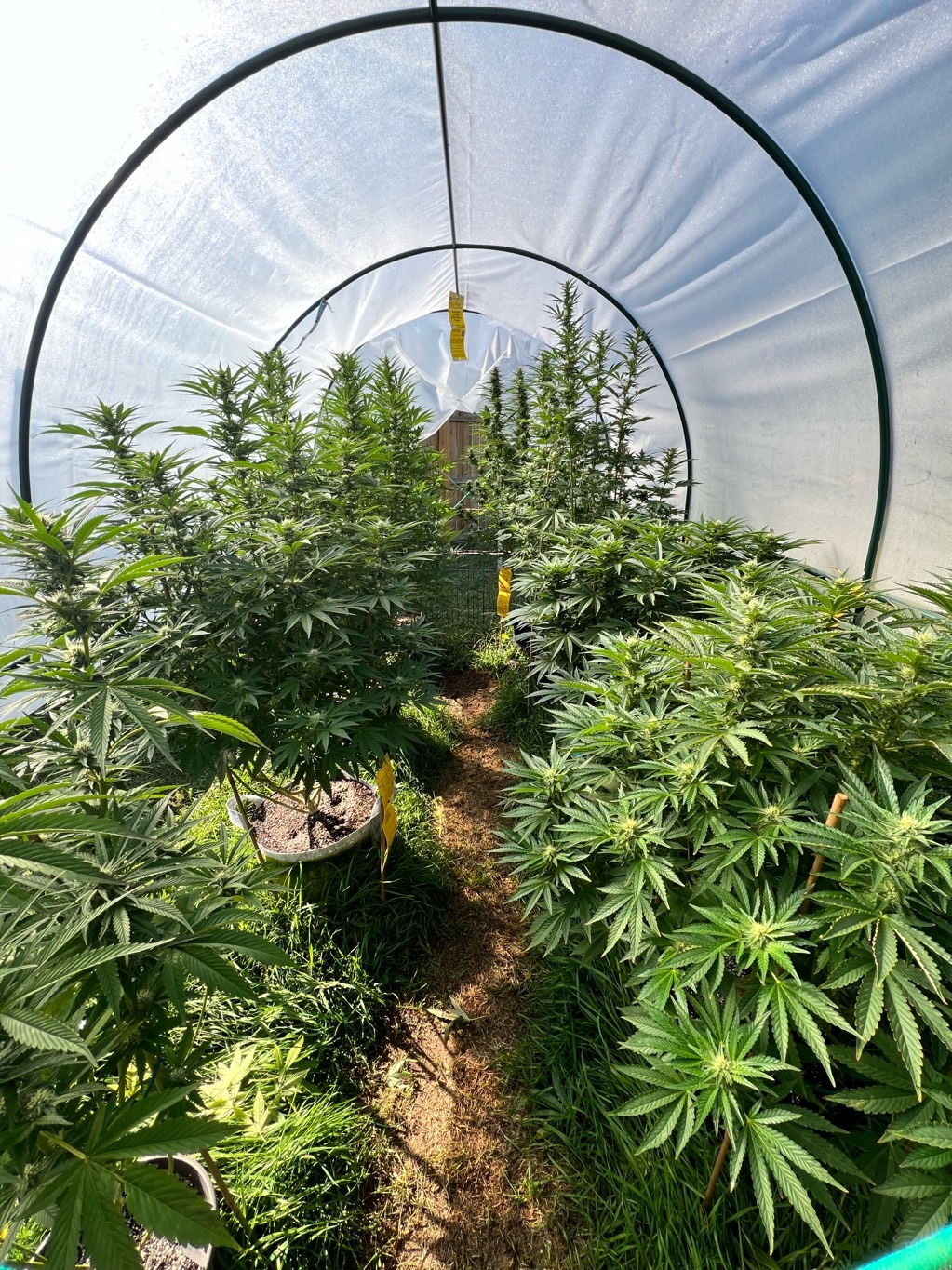
Indoors, Papaya Bomb finishes in 55–61 days of flowering — tight enough that you can fit multiple runs per year without pushing your luck on late harvests. Outdoors, plants are ready by early October in the Northern Hemisphere, producing 600–700g per plant under full sun. For most indoor growers chasing quality and repeatability, this is a strain worth running more than once.
Setting Up Your Environment for Papaya Bomb
Papaya Bomb rewards growers who dial in environment early. It's not a fussy strain, but at 30% THC potential, you're chasing a ceiling — sloppy VPD or temperature swings cost you trichome density in the last two weeks when it matters most.
Temperature and Humidity
- Vegetative: 72–80°F (22–27°C) days, 65–72°F nights. Relative humidity 50–65%. Target VPD around 0.8–1.0 kPa.
- Early Flower (weeks 1–4): 68–78°F days, 62–70°F nights. RH 45–55%. VPD 1.0–1.2 kPa.
- Late Flower (weeks 5–9): 65–75°F days. Drop RH to 35–45%. Push VPD to 1.2–1.5 kPa. This is where resin production kicks into overdrive and where mold risk is highest.
- Final week: Consider dropping night temps 10°F below day temp to stress anthocyanin expression and boost terpene density before harvest.
Lighting
Full-spectrum LEDs are the right call here — the heat management advantage matters because Papaya Bomb's compact, resinous buds are mold-prone at high RH under intense radiant heat. Aim for 600–800 PPFD during veg and ramp to 900–1,100 PPFD during peak flower. Position your fixture so the canopy sits in the sweet spot — use our Grow Light Calculator to dial in coverage area and PPFD for your room dimensions. Keep lights 18–24 inches from canopy during veg, adjusting closer (14–18 inches) during flower if your fixture's PAR map allows it without heat stress.
Run an 18/6 photoperiod through veg, then flip to 12/12 to trigger flowering. Papaya Bomb stretches moderately after the flip — expect 30–50% height increase — so flip before she hits 50% of your target canopy height.
Ventilation and CO₂
Run an exhaust fan sized for at least one full air exchange per minute in your grow space. Stagnant air on dense buds means botrytis, full stop. If you're running CO₂ supplementation, elevate to 1,200–1,500 ppm during peak photosynthesis hours and pair with PPFD at the upper end (1,000–1,100). That combination will push yields toward the 500g/m² ceiling. Without CO₂, stay at 800–900 PPFD and focus on canopy management instead.
Growing Medium and Nutrients for Papaya Bomb
Choosing Your Medium
Soil is the most forgiving choice and what most home growers are running — Grow Guide platform data shows 63% of tracked grows use soil. It also plays well with Papaya Bomb's terpene expression; a quality amended living soil will bring out the myrcene and limonene without you needing to chase EC targets obsessively. That said, coco coir gives you more control over feed timing and uptake speed, which is worth considering if you want to push yield. In coco, run pH at 5.8–6.0 and EC between 1.0–1.4 in veg, stepping up to 1.6–2.2 EC during peak flowering.
Nutrient Schedule
- Seedling (days 1–21): Very light feeding — EC 0.4–0.6 if using a base nutrient. Don't push it. See our guide on best nutrients for cannabis seedlings for specifics on seedling-safe formulas.
- Vegetative: Balanced N-P-K with elevated nitrogen. EC 1.0–1.4. pH 6.0–6.8 in soil, 5.8–6.0 in coco.
- Early flower (weeks 1–4): Transition to a bloom formula. Reduce nitrogen, increase phosphorus and potassium. EC 1.4–1.8.
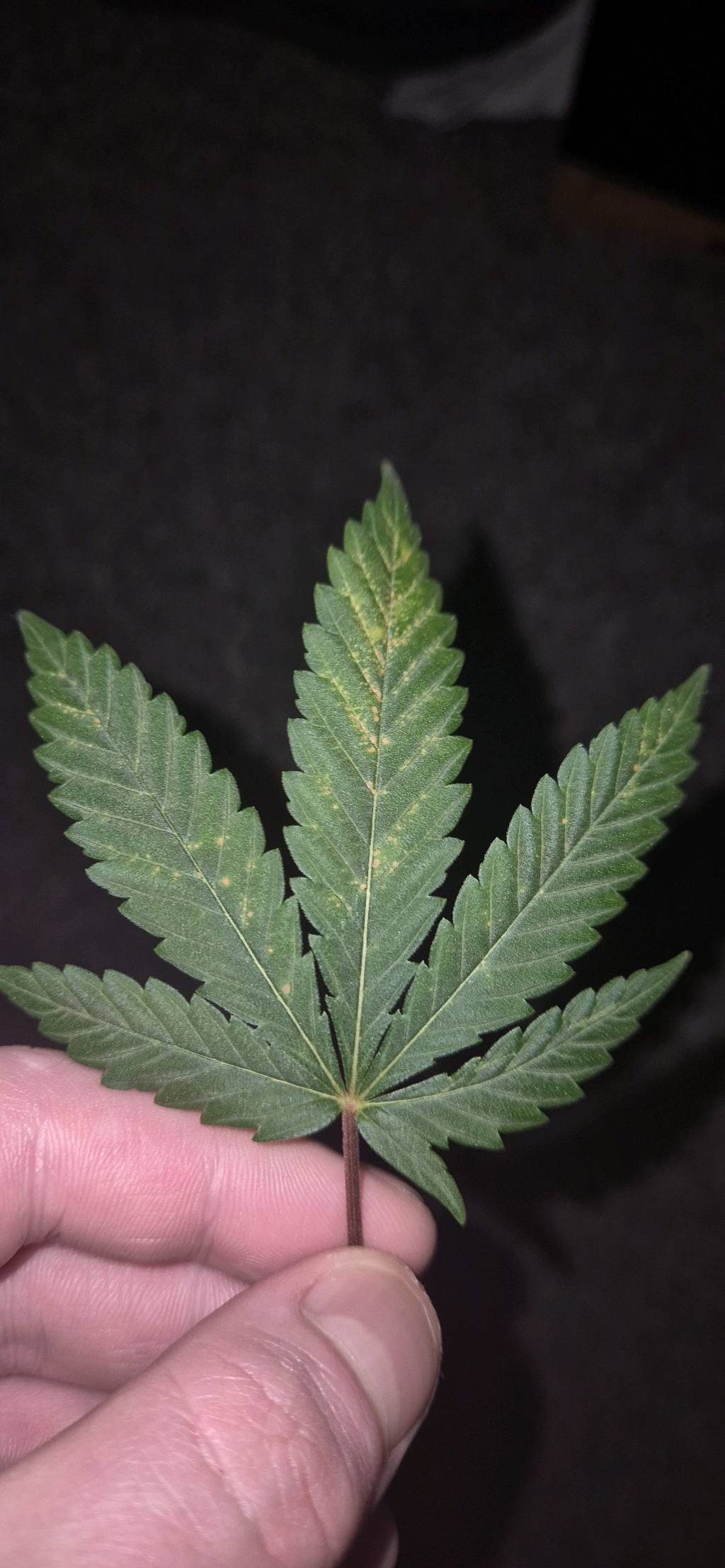
- Mid flower (weeks 4–7): This is the critical window for Papaya Bomb. Calcium and magnesium become the limiting factor for resin gland development. Add CalMag at 200–400 ppm on top of your base feed. Watch for interveinal yellowing — that's mag deficiency, not the flush panic some growers mistake it for. Use our Nutrient Deficiency Identifier if you're unsure what you're looking at.
- Late flower / pre-harvest (weeks 7–9): Begin tapering EC down to 0.8–1.0. Flush or not based on your medium — coco flushes fast, soil holds longer. Stop feeding 5–10 days before harvest.
If you prefer organic inputs, check out our breakdown of the best organic nutrients for cannabis — several of them pair well with the terpene-forward profile Papaya Bomb offers.
Training Papaya Bomb for Maximum Yield
Papaya Bomb's moderate stretch and naturally compact internodal spacing make it a good candidate for low-stress training (LST) or screen of green (SCROG). Both approaches open the canopy and expose lower bud sites to direct light, which is where a lot of indoor yield gets left on the table.
- LST: Start bending and tying during week 2–3 of veg. Anchor branches to the pot rim and keep the canopy flat. This is low-risk and recovers quickly.
- Topping or FIMming: Topping at node 4–5 during early veg creates two main colas and gives you a more symmetrical plant to work with. If you're not sure which technique suits your setup, read our breakdown of fimming vs. topping cannabis.
- SCROG: Install your net at 12–16 inches above the pot. Weave branches through as they grow, targeting an even canopy before the flip. Papaya Bomb fills a net well given its branching structure.
- Defoliation: Remove large fan leaves blocking bud sites at day 21 and day 42 of flower. Don't strip the plant — pull 20–30% of leaf mass per session, targeting anything shading lower nodes.
Use our Yield Calculator to model expected output based on your canopy size and training method before you commit to a setup.
Papaya Bomb Harvest: Reading Trichomes Correctly
At 55–61 days of flower, you're in harvest window territory. Don't trust the breeder's day count alone — read the trichomes. Get a 30–60x loupe or a digital microscope and check bud sites mid-canopy (not the very tips, which mature faster and will mislead you).
- Clear trichomes: Not ready. THC hasn't peaked.
- Milky/cloudy trichomes: Approaching peak THC. Harvest here for more cerebral, energetic effects — appropriate for a sativa-dominant strain.
- Amber trichomes (5–20%): Peak balanced effect. The myrcene in Papaya Bomb starts to add a heavier body component as amber increases. For most growers, 70–80% milky with 10–15% amber is the sweet spot.
- More than 25–30% amber: THC is degrading to CBN. Harvest immediately if you're here.
In the last 5–7 days before harvest, stop watering and let the medium dry almost completely. This mild stress can push terpene and resin production as the plant prepares to set seed (which it won't — but the biological trigger is useful).
Drying and Curing Papaya Bomb
A 30% THC strain is wasted on a poor cure. The β-myrcene and δ-limonene that make Papaya Bomb smell like tropical fruit punch degrade fast in heat and oxidize under improper storage. Do this right.
Drying
- Hang whole branches (or whole plants if space allows) upside down in a dark, ventilated room.
- Temperature: 60–68°F. Humidity: 50–58%. Airflow: gentle oscillating fan, never blowing directly on buds.
- Target a 7–10 day dry. Faster than 5 days and you trap chlorophyll — it'll taste harsh. Slower than 14 days and mold becomes a real risk with Papaya Bomb's density.
- Check stems daily. Dry is done when small stems snap cleanly and larger ones bend-before-snap. Buds should feel slightly springy, not wet.
Curing
- Trim and place in airtight glass jars. Fill jars 75% — don't pack them.
- Target 58–62% RH inside jars. Use Boveda or Integra packs to maintain this passively.
- Burp jars twice daily for the first week, once daily for week 2, then every 2–3 days for weeks 3–4.
- After 4 weeks, burp weekly. At 6–8 weeks, Papaya Bomb's terpene profile is fully expressed and the smoke is noticeably smoother.
- If a jar smells like ammonia at any point, buds are too wet. Spread them on a wire rack for 2–4 hours with the jar open, then re-jar.
Our Dry & Cure Timer will track your drying and curing progress and remind you when to burp — set it at harvest and let it run. For end-to-end grow planning, the Grow Schedule Planner can map your entire Papaya Bomb run from seed to jar.
Keeping a Grow Journal for Papaya Bomb
Papaya Bomb rewards repeatability. If you get a great run, you need your notes to replicate it. Log daily: temperature highs/lows, RH, EC runoff, pH runoff, any deficiencies, and bud development photos at least weekly. The how to keep a cannabis grow journal guide on Grow Guide walks through exactly what to track and when. Treat your first run as a calibration — the second run is where you hit the ceiling.
Frequently Asked Questions
How long does Papaya Bomb take to flower indoors?
Papaya Bomb finishes flowering in 55–61 days indoors under 12/12 lighting. Plan for the longer end of that window for the first run until you know how your specific phenotype expresses. Always confirm with trichome inspection — don't harvest on day count alone.
What yield can I expect from Papaya Bomb indoors?
Indoor yields can reach up to 500g/m² under optimal conditions — full-spectrum LED, dialed VPD, CO₂ supplementation, and a well-trained canopy. First-time growers or those without CO₂ should expect 300–400g/m² as a realistic target. Use the Yield Calculator to model your specific setup.
What are the dominant terpenes in Papaya Bomb?
β-myrcene, δ-limonene, and β-caryophyllene lead the terpene profile. That combination gives Papaya Bomb its signature tropical-fruit nose with a spicy, earthy undertone. The profile stays loud through a proper 6–8 week cure in 58–62% RH sealed jars. Explore how these terpenes interact using our Terpene Explorer.
Is Papaya Bomb suitable for beginner growers?
It's beginner-friendly in structure — moderate stretch, 55–61 day flower, and forgiving in soil. The challenge is the dense buds, which need strict humidity control (below 45% RH in late flower) to avoid botrytis. If you're new to growing indoors, read our indoor growing guide before starting.
When should I harvest Papaya Bomb outdoors?
Outdoor plants in the Northern Hemisphere are typically ready by early October. Watch trichomes from late September — the same 70–80% milky, 10–15% amber target applies. If rain is forecast and buds are approaching ready, harvest early to avoid bud rot on the dense outdoor colas.
References
- Hendrx Farm (2026). Papaya Bomb cultivar profile — documents flowering time of 55–61 days, greasy compact buds with golden-green hues, and terpene retention through winter and spring. hendrx.farm/cultivar/papaya-bomb/
- Grow Diaries (2026). Papaya Bomb harvest data aggregated from community grows — reports indoor yields up to 500g/m² and outdoor yields of 600–700g per plant under optimal conditions. growdiaries.com/strains/papaya-bomb/harvests
- The Seed Connect (2026). Essential effective cannabis cultivation techniques — trichome harvest guidance recommending 70–90% milky and 5–20% amber for peak balanced effect; drying at 60–70°F / 45–55% RH for 3–7 days; curing in sealed jars at 58–62% RH for 6–8 weeks. theseedconnect.com/blog/essential-effective-cannabis-cultivation-techniques/
- Strainy.com (2026). Papaya strain cultivation guide — LED lighting positioning at 18–24 inches from canopy, temperature targets of 68–80°F daytime, and humidity management from 40–50% veg to 30–40% in flower to prevent mold and encourage resin production. strainy.com/cannabis/strains/papaya
- Grow Guide Platform Data (2026). Internal grow journal dataset — 1,000 tracked grows — shows 63.2% of users growing in soil, 15% in coco coir, with 73.6% of all tracked grows conducted indoors. Original platform data, Grow Guide App.