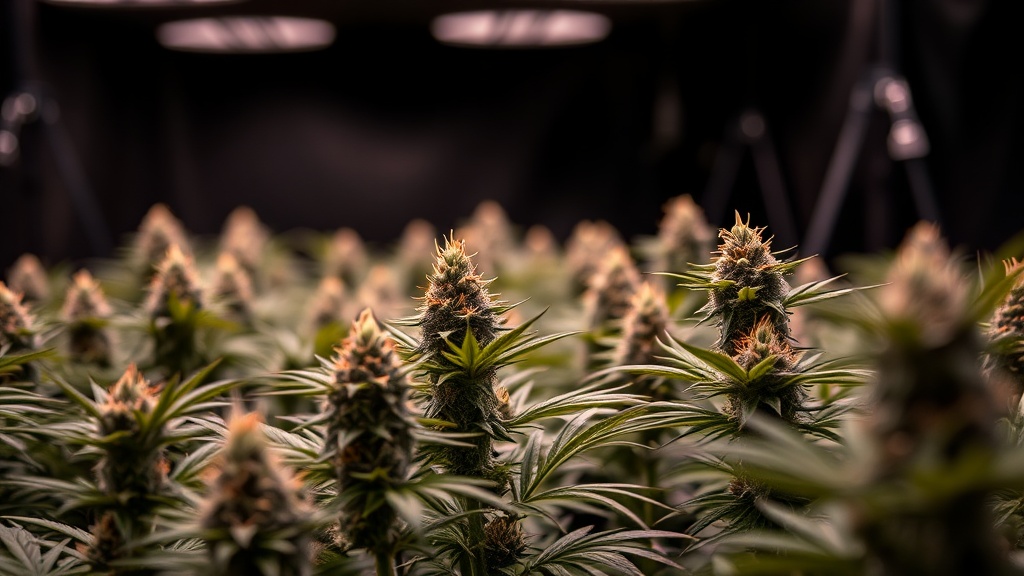
What Is Khalifa Kush?
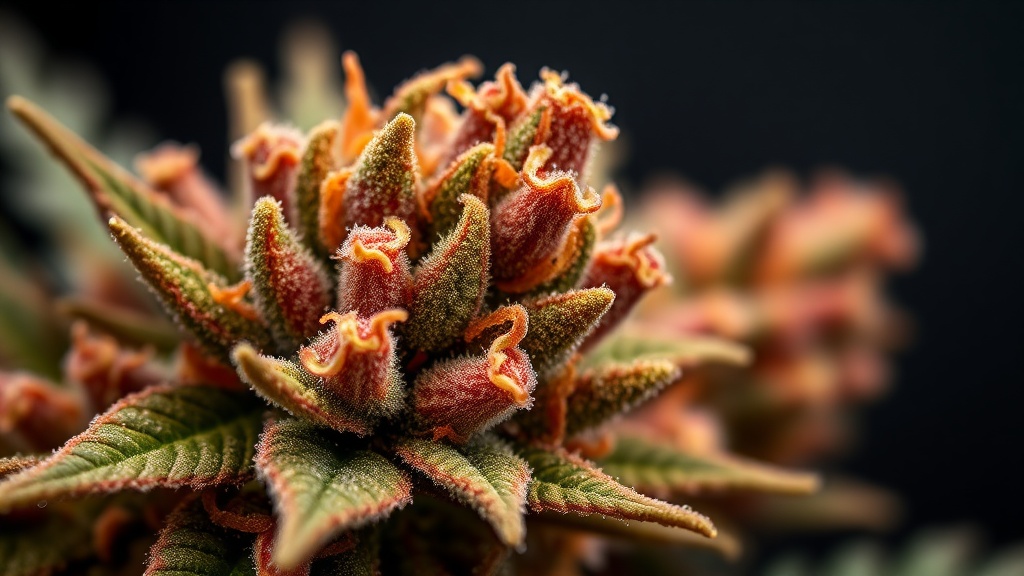
Khalifa Kush (often written as KK) is an indica-dominant hybrid originally developed for rapper Wiz Khalifa and later made commercially available through Cookie Fam Genetics and associated breeders. It sits in the OG Kush family tree — dense, frosty, and aggressive with resin production — but leans toward a citrus-and-pine terpene profile rather than the earthier expressions of classic OG cuts. If you've got Khalifa Kush in your tent right now, expect a plant that rewards precision feeding and tight environmental control. Get those two things right and you'll pull tight, trichome-loaded colas. Neglect VPD or let your EC drift, and the dense bud structure that makes KK special becomes a liability for mold.
Of the 1,000 grow journals tracked on Grow Guide, 737 are indoor grows — which is exactly where Khalifa Kush performs best, where you can dial in the climate control this strain demands.
Khalifa Kush Grow Timeline at a Glance
Vegetative Stage: Building the Structure for Khalifa Kush Yields
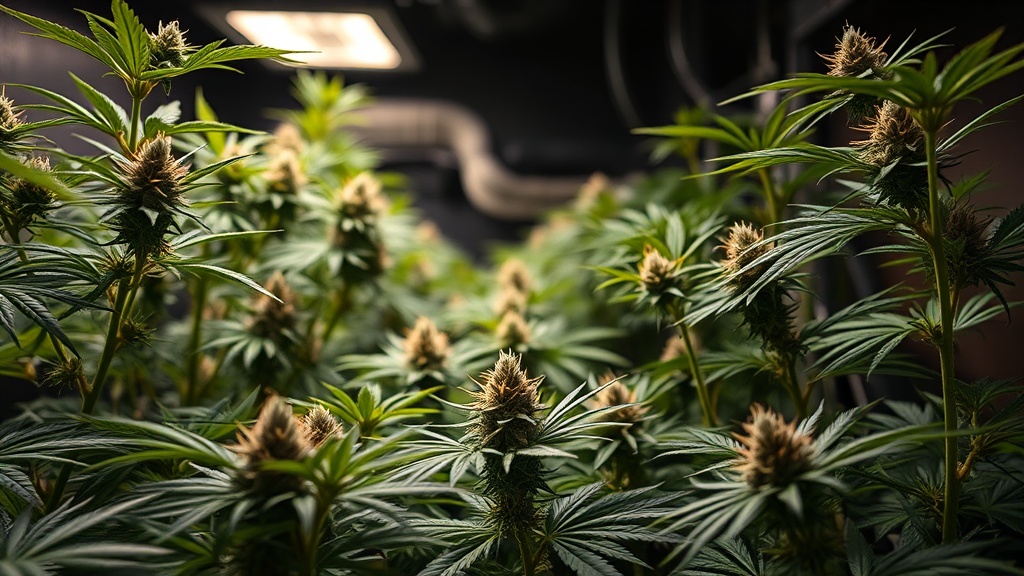
Run an 18/6 light cycle throughout veg. KK is a moderate-to-vigorous grower once established, and you'll want to put 3–5 weeks of veg time in to build enough internodal structure for the canopy training that follows. For indoor grows, aim to flip to flower when your plant is at roughly 40–50% of its target final height — KK will stretch 50–80% in the first three weeks of flower.
Training Khalifa Kush
Topping early (at the 4th–5th node) and following with low-stress training (LST) is the most effective approach for this strain. Tying down the main stem and side branches to create a flat, even canopy maximizes light penetration to lower bud sites without stressing a plant that's sensitive to heavy defoliation. If you want to compare topping versus other canopy methods, our Fimming vs Topping guide breaks down both approaches with timings.
In veg, feed a nitrogen-dominant nutrient solution. A target EC of 1.2–1.6 mS/cm in soil or 1.0–1.4 mS/cm in coco is appropriate for established veg plants. Keep pH at 6.0–7.0 in soil and 5.8–6.2 in coco. For seedling nutrition in the first two weeks, the best seedling nutrient guide has specific starter ratios worth bookmarking.
Environment: The Numbers That Protect Khalifa Kush's Dense Buds
KK's tight, resinous bud structure is its strongest feature and its biggest vulnerability. Botrytis (bud rot) and powdery mildew will find dense KK colas before they find anything else in your tent. Nailing your environmental parameters isn't optional with this strain.
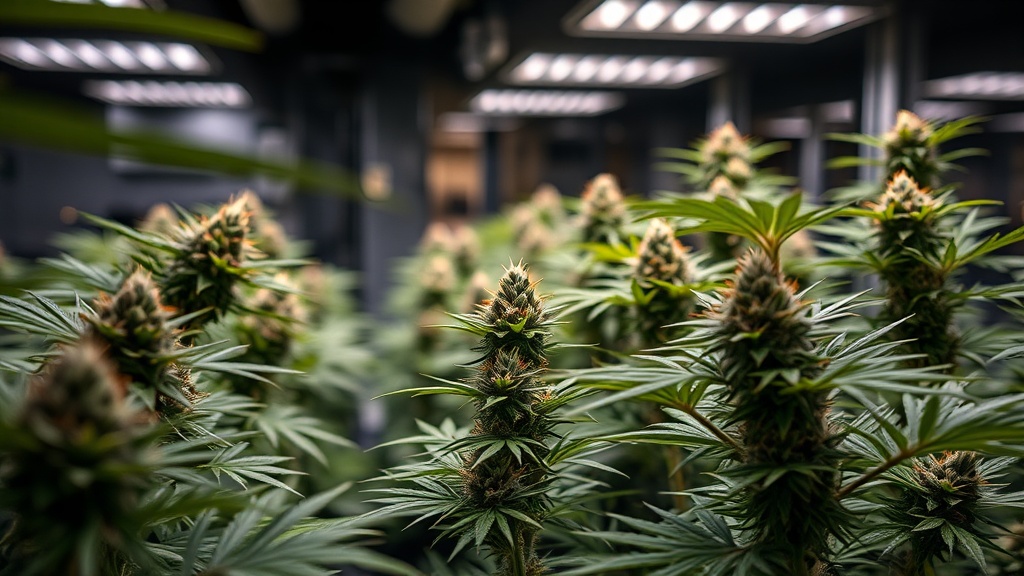
Run two oscillating fans inside the tent — one at canopy level and one below — to ensure air moves through and around those dense bud sites. Your exhaust fan should be turning over the tent air every 1–3 minutes. Use a quality inline carbon filter: KK's terpene output during late flower is substantial and the aroma will travel. To dial in your lighting intensity for PPFD targets, use the Grow Light Calculator.
Nutrients for Khalifa Kush: Stage-by-Stage
Vegetative Nutrition
In veg, lead with nitrogen. A 3-1-2 ratio NPK product works well. Target EC of 1.2–1.6 mS/cm in soil (633 out of 1,000 Grow Guide journals use soil as their medium — it's the dominant choice for good reason with OG-family strains that benefit from buffering). Keep pH between 6.0–7.0 in soil. Watch for interveinal chlorosis on young leaves as an early magnesium deficiency signal — Epsom salt at 1g/L resolves this quickly if caught early.
Flowering Nutrition
Flip to flower and shift your nutrient profile within the first two weeks. Drop nitrogen by about 50% and push phosphorus and potassium hard. A dedicated bloom formula with a PK booster (10-50-30 additive used at half manufacturer dose) from week 3 of flower supports the dense calyx stacking KK is capable of. EC in soil can climb to 1.8–2.2 mS/cm at peak flower. Back off to 1.0–1.2 EC for the final two weeks (flush period) to clear any salt buildup.
If leaves show signs of deficiency at any point, the Nutrient Deficiency Identifier lets you cross-reference symptoms against a full deficiency library — faster than working through the mental checklist when you're staring at a sick plant. For broader organic nutrient options throughout the grow, see our best organic cannabis nutrients guide.
Khalifa Kush Flowering Stage: What to Watch For
Week 1–2 of flower: stretch begins. KK can add 50–80% to its vegetative height during this window. Adjust your light height daily if needed — you want to maintain 45–60cm from canopy to a 600W HPS, or follow PPFD targets (600–900 μmol/m²/s) for LED setups.
Week 3–5: calyx and bract development. This is where KK builds its characteristic density. Maintain VPD at 1.0–1.2 kPa and inspect bud sites every two days for any early signs of botrytis — discolored or "wet" calyxes that don't match surrounding tissue. Remove any affected material immediately with sterilized scissors.
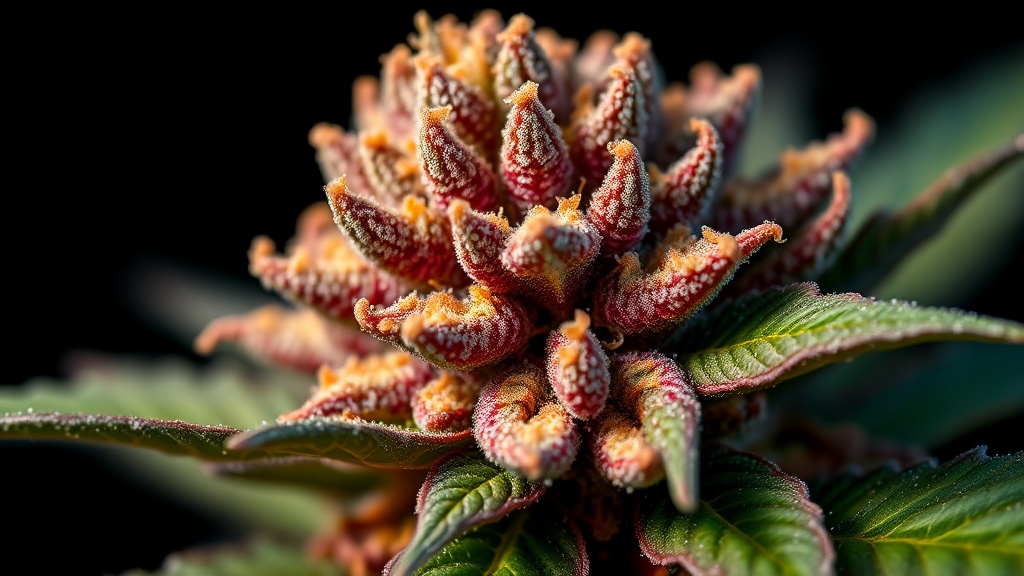
Week 6–8 (days 42–56): trichome development accelerates. Resin glands will shift from clear to milky. This is the window to start daily trichome checks with a 60–100x loupe or digital microscope. KK at peak potency sits at mostly milky with 5–15% amber trichomes — harvest in that window for the citrus-forward, clear-headed-but-heavy effect profile the strain is known for. Letting amber push past 20% will shift effects toward sedative and the terpene profile will become more musky.
Use the Grow Schedule Planner to map out your flip date, feeding schedule, and estimated harvest window so nothing sneaks up on you in late flower.
Harvesting Khalifa Kush
Stop all nutrients 10–14 days before harvest and flush with pH-adjusted plain water (6.2 in soil). Your runoff EC should drop to below 1.0 before you cut. On harvest day, work in the dark or under low green light for the first hour — cutting after your lights-off period reduces moisture content in stems slightly, making the dry process more forgiving.
Use clean, isopropyl-sterilized pruning shears. Cut branches at the main stem junction and work branch by branch. Remove large fan leaves immediately — they add no value and slow the dry. Leave sugar leaves intact; they protect trichomes during the dry and are easy to trim once dry, or wet-trim if you prefer a cleaner final presentation.
Drying and Curing Khalifa Kush
Hang branches upside down in a dark room. Target 18–20°C with 50–60% RH for the full dry. A slow dry preserves terpenes — KK's citrus and pine notes are volatile compounds that evaporate quickly above 22°C or in low-humidity conditions. Expect 7–14 days. The branches are ready to jar when smaller stems snap rather than bend, and the outside of buds feels dry but the inner density still has slight give.
Into glass jars at 58–62% RH (use Boveda 62 or Integra Boost packets to maintain target). For the first week, open jars twice daily for 15 minutes — this is called "burping" and allows CO₂ and excess moisture to escape. Week two, drop to once daily. Week three onward, once every 2–3 days. Minimum cure time for Khalifa Kush is two weeks, but four weeks is where the terpene complexity really opens up. The citrus notes that are muted at week two are noticeably brighter by week four.
Track your dry and cure timing precisely with the Dry & Cure Timer — it handles the burp schedule and humidity reminders automatically.
Tracking Your Khalifa Kush Grow
Logging your grow as you go is one of the highest-return habits in cultivation. When something goes wrong in late flower — a nutrient lockout, a pH spike, a humidity event — your journal entries are the only way to trace back the cause. See our guide on how to keep a cannabis grow diary for a practical framework, or jump straight to the complete grow diary guide for a more detailed system.
Once you've harvested, run your numbers through the Yield Calculator and the Cost Per Gram Calculator — knowing your actual cost per gram helps optimize your next run's setup and input choices.
Frequently Asked Questions
How long does Khalifa Kush take to flower?
Khalifa Kush typically finishes flowering in 56–63 days (8–9 weeks) under a 12/12 light cycle. Some phenotypes can push to 70 days, so always confirm by monitoring trichomes rather than relying solely on day count.
What humidity level should I maintain during Khalifa Kush flowering?
Keep relative humidity at 45–50% during early flower and drop it to 40–45% in late flower. Given KK's dense bud structure, exceeding 55% RH in weeks 5–9 meaningfully increases botrytis risk. VPD of 1.1–1.3 kPa is the target for late flower.
Is Khalifa Kush a good strain for beginner growers?
KK is a moderate-difficulty strain. It's not unforgiving, but its dense bud structure requires active humidity management and good airflow that beginners sometimes underestimate. If this is your first indoor grow, review our single-plant indoor grow guide first to get your environmental controls baseline solid before running KK.
What trichome color signals peak harvest for Khalifa Kush?
Harvest when trichomes are predominantly milky white with 5–15% amber. This window delivers the balanced potency and citrus terpene expression the strain is known for. Allowing amber to exceed 20% shifts the effect profile toward heavy sedation and dulls the bright terpene notes.
How long should I cure Khalifa Kush for the best flavor?
A minimum of two weeks in sealed glass jars at 58–62% RH is required, but four weeks is where Khalifa Kush's terpene profile reaches full expression. The citrus and pine notes that are muted at week two become noticeably more complex and vibrant after a full four-week cure.
References
- Joint Commerce (2026). Khalifa Kush by Cookie Fam Genetics: A Comprehensive Strain Guide. Covers flowering time windows, VPD targets, and terpene preservation parameters for KK cultivation. app.jointcommerce.com
- Blimburn Seeds (2026). How to Grow Khalifa Kush. Provides specific drying temperature, humidity ranges, cure duration, and harvest technique recommendations for KK. blimburnseeds.com
- Dank Bros (2026). How Do You Grow Kush? Covers vegetative training approaches — topping, LST, and light cycle management — applicable to KK and OG-family strains. dankbros.net
- Reality Pathing (2026). Tips for Growing High Quality Kush at Home. Outlines NPK ratios across growth stages, pH management ranges for soil and hydroponic systems, and EC targets for Kush varieties. realitypathing.com
- Grow Guide Platform Data (2026). Internal grow journal dataset: 1,000 tracked grows. Environmental and medium preference breakdowns drawn from active user grow journals on growguide.app.