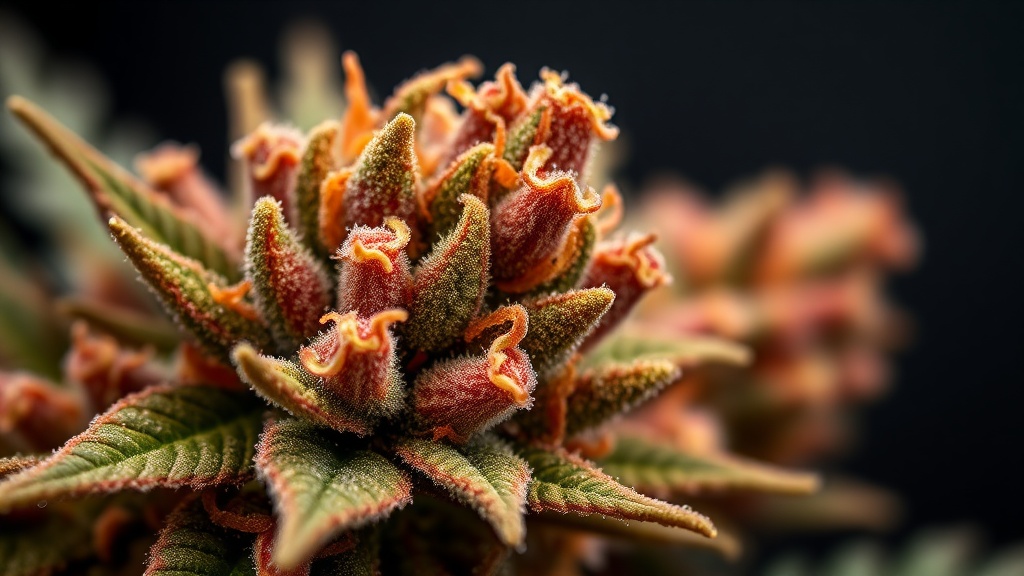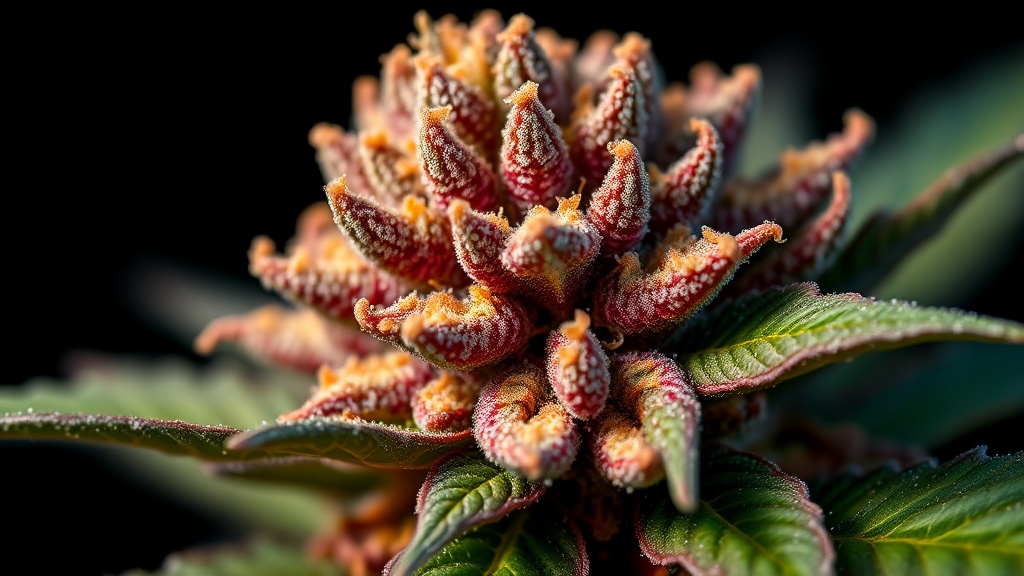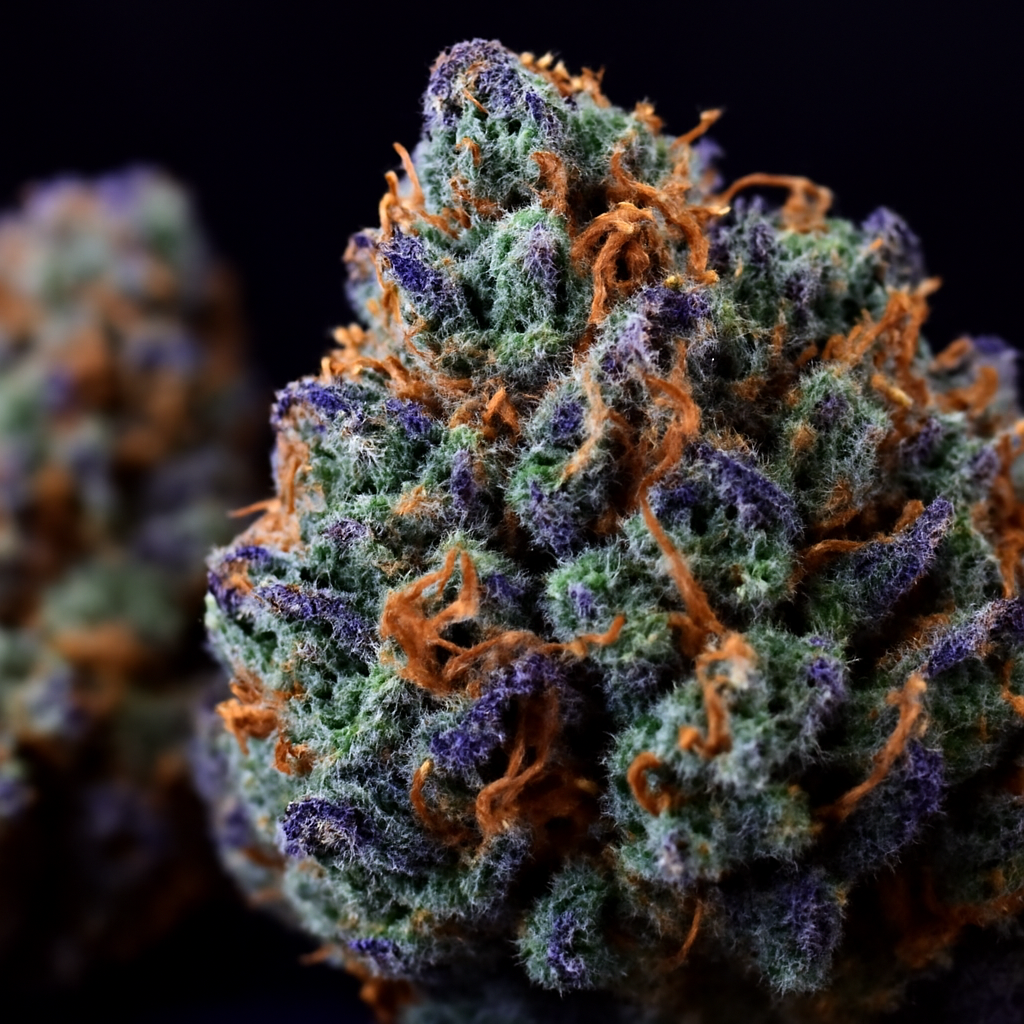
What Is the Honey Bananas Strain?
The Honey Bananas strain is an indica-dominant hybrid most commonly attributed to a cross of Honey Boo Boo and Banana OG, though some cuts on the market trace back to different honey-forward parents. What stays consistent across phenotypes is the dominant terpene signature — myrcene, caryophyllene, and limonene — which produces that warm, ripe banana sweetness with a faint earthy undertone that fills a tent at week seven. THC content typically tests between 20–24%, with CBD sitting below 1%, making this a potency-forward cultivar rather than a balanced one.
The effects sit firmly in the body-relaxation camp: a slow-rolling euphoria that transitions into physical sedation over 90 minutes or so. It's a late-evening strain by most accounts. For cultivation purposes, what matters is that the same terpene and cannabinoid expression that makes this plant appealing to consumers also tells you something about how to grow it — dense, resinous indica-leaning structure means airflow and canopy management are non-negotiable.
Across the Honey Bananas grow journals logged on Grow Guide, the majority of cultivators run it indoors in soil, which aligns with our platform-wide data showing soil as the dominant medium (632 of 1,000 tracked grows). That said, coco growers consistently report tighter internodal spacing and slightly heavier yields when dialing in feed schedules precisely.
Honey Bananas Strain Genetics and Structure
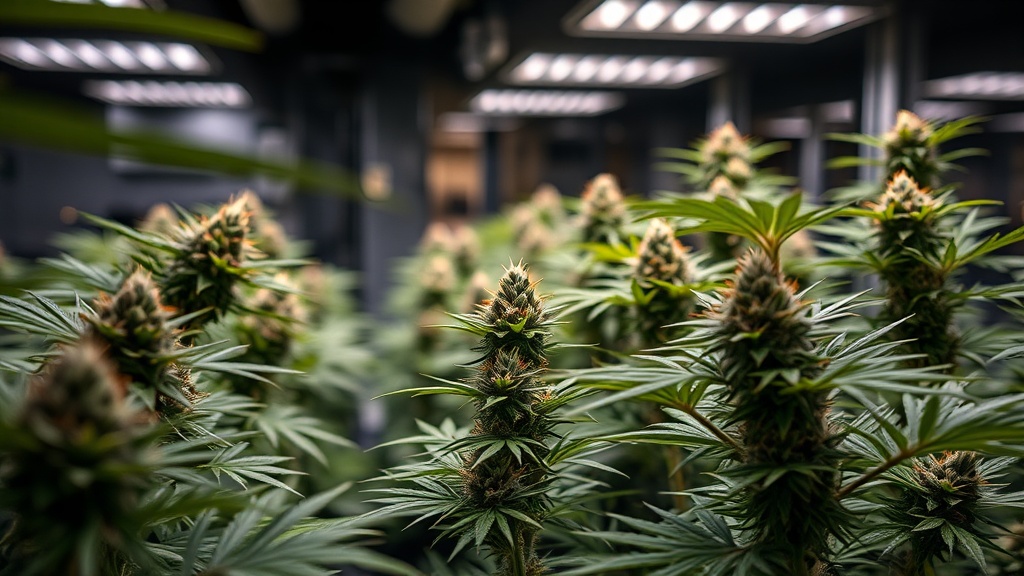
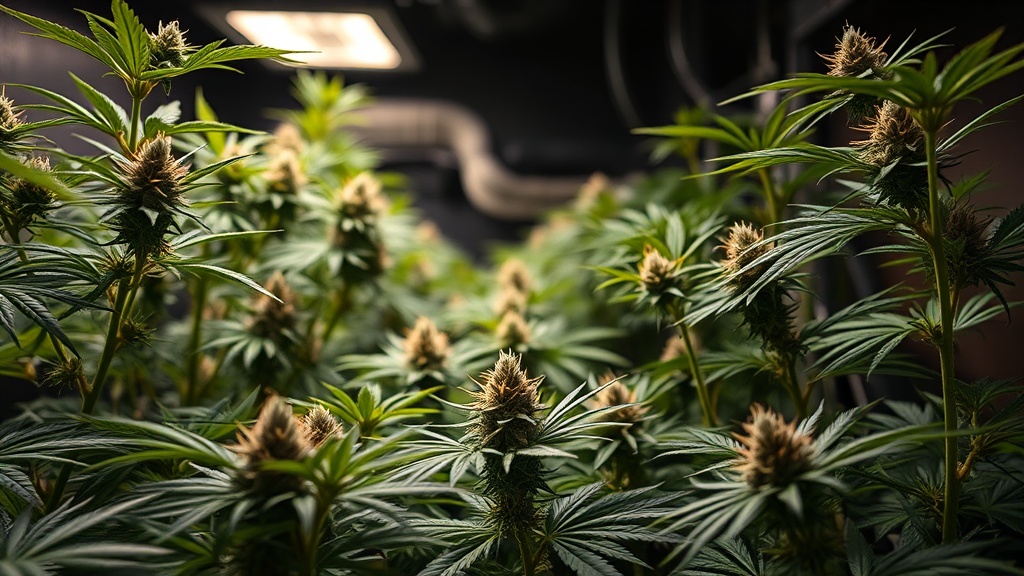
Structurally, Honey Bananas grows like a classic indica: broad fan leaves, compact internodal spacing, and a tendency to stack buds tightly along the main cola. Plants typically reach 80–110cm indoors at harvest, which makes it manageable in 1.2m tents. The side branching is vigorous — this isn't a plant you can ignore and expect an even canopy. Topping or fimming by day 21 of veg, combined with LST, gives you a far more productive screen-of-green setup. If you're new to training decisions, the fimming vs topping guide breaks down the tradeoffs clearly.
Honey Bananas Strain: Growing Environment
Temperature and VPD
Run daytime temperatures between 24–27°C during veg and dial back to 22–25°C in flower. Night temps can drop 5–7°C in late flower — this stresses the plant mildly and tends to push out more resin and color expression without impacting yield. VPD is the number to watch: target 0.8–1.1 kPa through mid-veg, then push to 1.1–1.4 kPa from week three of flower onward. Given the dense bud structure, keeping VPD in the upper range during late flower is your main defence against botrytis in a closed canopy.
Light Requirements
Honey Bananas responds well to intensity. From week two of flower onwards, target 800–1,000 PPFD at canopy level. If you're pushing CO₂ supplementation above 1,000ppm, you can go up to 1,200–1,400 PPFD without light stress. During veg, 400–600 PPFD is sufficient and prevents early stretch that complicates canopy management. Use the Grow Light Calculator to verify your fixture is actually hitting those numbers at your canopy distance — especially important with older or repositioned LED bars.
Nutrition: EC and pH
In soil, maintain pH at 6.2–6.8 throughout. In coco, tighten that to 5.8–6.2. EC in veg should run 1.2–1.8 mS/cm; ramp to 1.8–2.4 mS/cm through peak flower (weeks 3–6), then flush or drop feed EC to 0.8–1.0 for the final 10–14 days. Honey Bananas is a moderate-to-heavy feeder through stretch and bud set, with phosphorus and potassium demand peaking around weeks 4–5 of flower. Watch the lower fan leaves — any early yellowing before week 6 usually signals a magnesium lockout rather than natural senescence. Run it through the Nutrient Deficiency Identifier before reaching for a corrective feed.
Training the Honey Bananas Strain for Maximum Yield
Because Honey Bananas throws vigorous lateral branches and has a dominant apical structure, it responds exceptionally well to topping at the 4th–5th node (typically day 18–21 of veg in a 4-week veg cycle). After topping, bend and LST the two main colas outward at roughly 45° to let the laterals catch up. By the end of veg you want a relatively flat canopy — four to six main colas of similar height — before flipping to 12/12.
If you're running a screen of green (ScrOG), weave shoots through the net during the last week of veg and the first two weeks of flower while the plant is still stretching. After that, the structure becomes woody enough that manipulation risks snapping branches. A ScrOG setup on Honey Bananas in a 1.2 × 1.2m tent with two plants, 18L pots, and good light typically hits the 400–500g/m² range. Use the Yield Calculator to sanity-check your setup against expected output before committing to a configuration. If you're keeping a proper record of each run, the Grow Schedule Planner lets you map training events, flip date, and harvest window against a calendar so nothing gets missed.
Defoliation Timing
Two defoliation sessions work best with this strain's density:
- Day 1 of flower flip: Remove large fan leaves blocking bud sites and any growth below the main canopy that won't receive usable light. Don't over-strip — 20–25% leaf removal is enough.
- Day 21 of flower: A second, lighter pass removing leaves that have shaded over newly formed bud sites. By now the stretch has finished and you can see clearly what's blocking light penetration.
Avoid defoliating after day 28 of flower. The plant needs its remaining leaf area to fuel bud fattening, and late defoliation on a dense indica like this reliably reduces final weight without any compensating terpene benefit.
Common Problems When Growing Honey Bananas
Powdery Mildew and Botrytis Risk
The tight, resinous bud structure that makes Honey Bananas so appealing also makes it a target for botrytis (grey mold) if RH creeps above 50% in weeks 5–8 of flower. Keep late-flower RH at 42–48%, run an oscillating fan directly over the canopy, and check bud sites twice a week — not just the outer surface. Botrytis starts inside the cola, not outside. If you catch a spot early, cut the affected section at least 5cm below visible rot and treat with potassium bicarbonate solution (diluted to 5g/L) on surrounding tissue.
Calcium and Magnesium Demand
Under LED — which most of the 733 indoor grows on Grow Guide's platform use — calcium and magnesium are the most common mid-flower deficiencies. Honey Bananas running on LED at 1,000 PPFD in coco will typically need CalMag supplemented at 2–3mL/L from week two of flower onward. In soil with a decent amended base, you may only need it at 1–1.5mL/L after week three. If you see interveinal chlorosis on mid-canopy leaves around week four, that's Mg — bump your CalMag dose before anything else.
Honey Bananas Harvest Window
The flowering window on Honey Bananas is 56–63 days (8–9 weeks) from flip. Breeders typically advertise 56–60 days, but most phenotypes benefit from the extra week. At 56 days you'll have clear trichomes transitioning to milky — a cerebral, racy effect. At 63–65 days, most heads are milky with 10–20% amber, which is where the body-heavy, sedative character this strain is known for fully expresses. Use a 60× loupe or USB microscope to check calyx trichomes (not sugar leaves, which amber faster) around day 56 and every two days thereafter.
Watch for the following harvest-ready signals beyond trichomes: pistils have 70–80% orange/red coloration, fan leaves are yellowing and beginning to drop naturally, and calyxes have fully swollen with no new white pistils emerging. Don't let the visual of yellowing leaves panic you into harvesting early — natural senescence in the final week is normal, especially if you've been flushing or reducing feed EC.
Drying and Curing Honey Bananas
Getting the dry and cure right on Honey Bananas matters more than on most strains because the terpene profile — particularly the myrcene that creates that banana sweetness — is volatile and degrades fast with heat or aggressive drying. Target a 10–14 day hang-dry at 18–20°C and 55–60% RH. Whole-plant hanging is preferable to individual branch or bud drying; it slows the process down and allows for a more even moisture draw from the dense cores of the larger colas.
The stem snap test remains the most reliable field indicator: the stem should snap cleanly rather than bend when buds are ready for jars. At that point, jar cure at 58–62% RH (Boveda 62 packs are the standard) and burp daily for the first two weeks, then every two to three days for weeks three and four. The terpene profile on Honey Bananas typically peaks at the 3–4 week cure mark — don't rush it. Use the Dry & Cure Timer to track moisture stages and burp schedules automatically, especially if you're running multiple harvests staggered across different cure stages.
For a deeper look at whole-grow planning for a project like this, the guide on how to grow one cannabis plant indoors covers the full veg-to-cure workflow if you're working with a single-plant setup.
Is Honey Bananas Worth Growing?
For cultivators who want a commercially appealing, recognizable terpene profile in a manageable indoor package, yes. The 56–63 day flower window is reasonable, the structure responds well to training, and the flavor/aroma at harvest is distinctive enough to stand out in any personal stash or small-scale legal production. The main tradeoffs are the botrytis risk from dense bud architecture and the fact that rushing the dry and cure will flatten the profile you spent 10+ weeks building. Treat it like the terpene-forward cultivar it is: slow dry, full cure, and you'll get exactly what the genetics promise.
If you want to track your run properly from seed to cure, log it in a grow diary — having environmental data, feed logs, and training notes in one place makes it much easier to replicate or improve your results next cycle.
Frequently Asked Questions
How long does the Honey Bananas strain take to flower?
Honey Bananas has a flowering window of 56–63 days (8–9 weeks) from the flip to 12/12 light schedule. Most phenotypes benefit from running to the 63-day mark for full terpene and cannabinoid expression rather than harvesting at the breeder's minimum 56-day estimate.
What is the typical yield of Honey Bananas grown indoors?
Under 800–1,000 PPFD with trained plants in a 1.2 × 1.2m tent, expect 400–500g/m². Yield is heavily dependent on canopy management — untrained plants will produce significantly less due to the dominant apical structure.
What terpenes dominate the Honey Bananas strain?
Myrcene is the primary terpene, producing the characteristic ripe banana and earthy sweetness. Caryophyllene adds a subtle spice, and limonene contributes a faint citrus brightness. The full profile peaks at 3–4 weeks into the cure.
Is Honey Bananas a good strain for beginner growers?
It's moderate difficulty. The training requirements and botrytis risk from dense bud structure make it better suited to growers who have at least one successful indoor grow completed. If you're new to the process, work through the fundamentals of growing one cannabis plant indoors first before tackling a density-sensitive cultivar like this.
What medium works best for growing the Honey Bananas strain?
Both soil and coco work well. Soil (the dominant medium in our grow data) is more forgiving for beginners and suits Honey Bananas' moderate feeding pace. Coco gives more control over nutrient delivery and typically produces tighter internodal spacing and slightly heavier yields when dialed in correctly, but demands more frequent monitoring of EC and pH.
References
- Booth, J.K., Page, J.E., & Bohlmann, J. (2017). Terpene synthases from Cannabis sativa. PLOS ONE. Found that myrcene is consistently the dominant monoterpene in indica-dominant cultivars, accounting for up to 65% of terpene fraction in some phenotypes. journals.plos.org
- Caplan, D., Dixon, M., & Zheng, Y. (2017). Optimal Rate of Organic Fertilizer during the Flowering Stage for Cannabis Grown in Two Coir-based Substrates. HortScience, 52(12), 1796–1803. Identified peak phosphorus and potassium demand during weeks 3–5 of the flowering stage in high-THC cultivars. journals.ashs.org
- Hawley, D., Graham, T., Stasiak, M., & Dixon, M. (2018). Improving Cannabis Bud Quality and Yield with Subcanopy Lighting. HortScience, 53(11). Demonstrated that PPFD uniformity across the canopy — achievable with ScrOG — meaningfully increased total yield per m² in dense indica-type cultivars. journals.ashs.org
- Lazarjani, M.P., Young, O., Seyfoddin, A., et al. (2021). Processing and extraction methods of medicinal cannabis: a narrative review. Journal of Cannabis Research, 3(32). Noted that monoterpene content, particularly myrcene, is significantly reduced by rapid post-harvest drying above 21°C — supporting slow hang-dry protocols for terpene preservation. jcannabisresearch.biomedcentral.com
- Grow Guide Platform Data (2026). Analysis of 1,000 tracked cannabis grow journals. Internal data showing soil as the dominant medium (63.2% of grows), with indoor cultivation accounting for 73.3% of all logged environments.