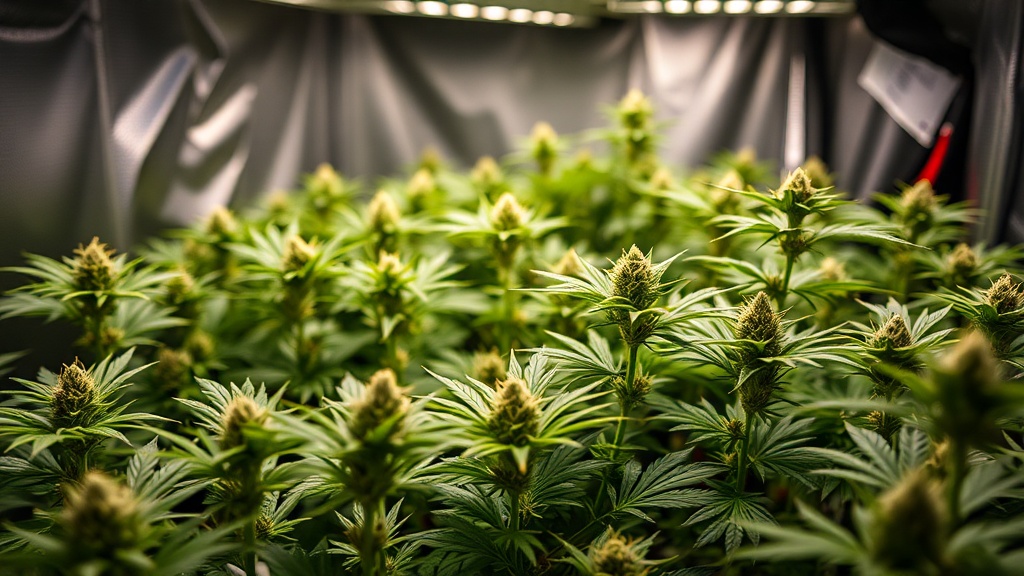
What Are FastBuds Autoflowering Strains?
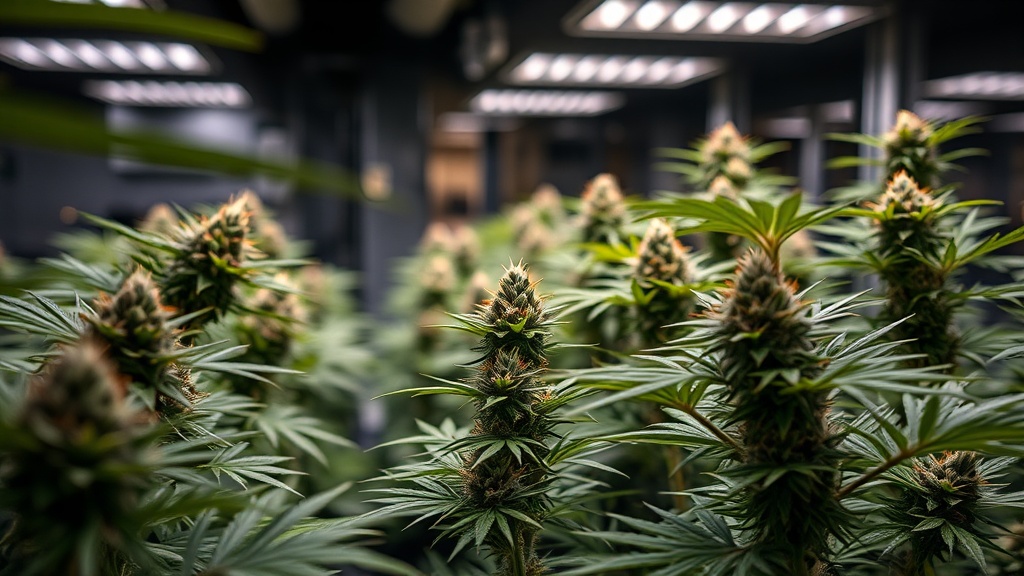
FastBuds — commonly referenced online as "fastbudz" — is a Barcelona-based seed bank that has built a strong reputation around high-performance autoflowering genetics. Unlike photoperiod strains, FastBuds autoflowers switch from vegetative growth to flowering based on age, not light schedule. That means you run one light schedule — typically 18/6 or 20/4 — from seed to harvest, with zero intervention. Across 1,000 tracked grows on Grow Guide, 734 are indoor grows, which is exactly the environment where FastBuds genetics shine: controlled, consistent, and compact.
This guide walks you through the entire grow — environment, training, feeding, harvest, and cure — with specific numbers at every stage. If you want to plan your run before you drop a seed, use the Grow Schedule Planner to map it out day by day.
Environment Setup for Fastbudz Genetics
Light Schedule and Intensity
Run 18/6 or 20/4 from day one through harvest. Most FastBuds strains hit their peak growth rate at 18/6, which also keeps heat and electricity costs manageable. For PPFD, target:
- Seedling (days 1–14): 200–400 µmol/m²/s
- Vegetative (days 15–42): 400–600 µmol/m²/s
- Flowering (days 43–harvest): 600–900 µmol/m²/s
Full-spectrum LEDs are the go-to for autoflowers — they run cooler than HPS, making canopy temperature easier to control. Keep the fixture 18–24 inches above the canopy and dial your dimmer up progressively. Use the Grow Light Calculator to confirm your fixture is delivering the right PPFD for your tent footprint before you even germinate.
Temperature and VPD
Daytime temps: 72–82°F (22–28°C). Nighttime: 65–72°F (18–22°C). More importantly, dial in your Vapour Pressure Deficit (VPD):
- Seedling/early veg: 0.4–0.8 kPa
- Late veg: 0.8–1.0 kPa
- Flower: 1.0–1.4 kPa
- Late flower (final 2 weeks): 1.4–1.6 kPa — stresses the plant slightly, pushes resin production and reduces mold risk
Relative humidity in flower should sit between 40–50%. Below 35% in late veg stresses young plants; above 55% in late flower invites botrytis, which devastates dense autoflower buds fast.
Containers and Medium
Fabric pots are non-negotiable for FastBuds autoflowers. Air pruning keeps roots healthy and prevents circling — both of which slow autoflowers at the worst possible time (they have no recovery window). Use 3-gallon fabric pots for most FastBuds strains; go 5-gallon if you're running under a strong 600W+ LED and want to push yield. Across Grow Guide users, 634 of 1,000 tracked grows use soil — a smart choice for autoflowers because buffered soil is forgiving with pH and nutrient uptake. Coco coir (148 of our tracked grows) is viable but demands tighter watering frequency and pH discipline.
Soil pH: 6.0–7.0. Coco/hydro: 5.5–6.5. Check runoff, not just input — a 0.3 point swing in runoff pH tells you more about root zone conditions than anything else.
Training Fastbudz Strains: LST Is Your Only Real Option
This is where a lot of new growers go wrong. FastBuds autoflowers have a genetic clock running — from the moment the seed pops, you have roughly 21–28 days of true vegetative growth before the plant initiates flowering. High-stress training (HST) like topping or fimming removes this time buffer. By the time the plant recovers, it's already throwing pistils. You can read more about the tradeoffs in our Fimming vs Topping guide, but for autoflowers: skip HST entirely.
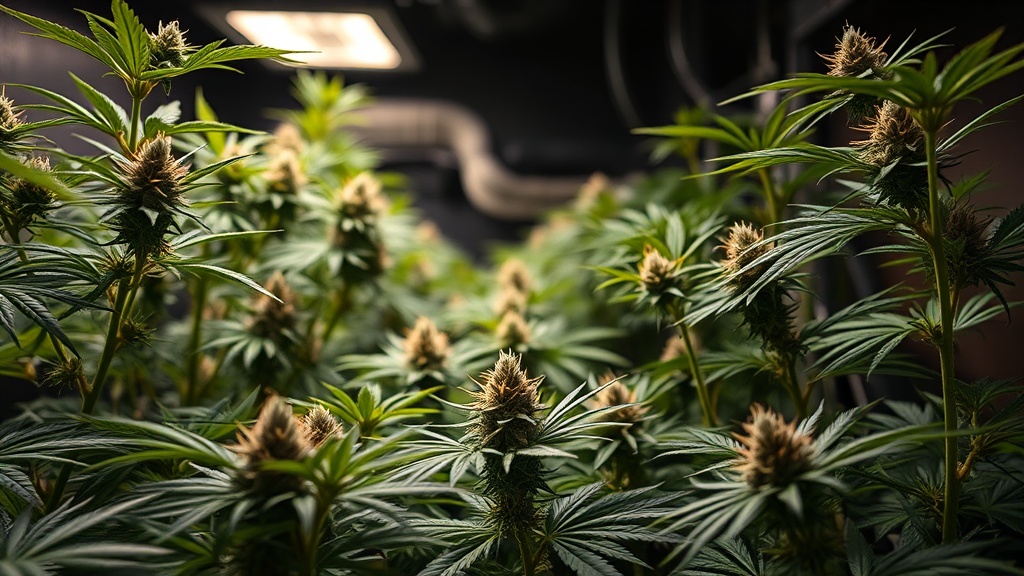
Low-Stress Training (LST) is the technique. Start around day 18–21, once the plant has 4–5 nodes. Gently bend the main stem outward and secure it with soft tie or pipe cleaners to the rim of your fabric pot. Repeat every 2–3 days as new growth emerges, training secondary branches outward to create a flat, even canopy. By day 35–40, you should have a wide, even structure with 6–10 main bud sites all sitting at roughly the same height under your light.
Fastbudz Feeding Schedule: Numbers You Can Actually Use
Autoflowers are lighter feeders than photoperiod strains. Start at 25% of any manufacturer's recommended dose and scale up based on plant response — not the calendar. The biggest mistake growers make with fastbudz genetics is overfeeding in weeks 2–3 because the plant looks "too small." It isn't; it's on schedule. For a deeper dive into seedling nutrition, see our Best Nutrients for Cannabis Seedlings guide.
| Growth Stage | Target EC (soil) | N-P-K Focus | pH Range |
|---|---|---|---|
| Seedling (days 1–14) | 0.4–0.6 | Balanced, light — or plain water | 6.2–6.5 |
| Veg (days 15–35) | 0.8–1.2 | Higher N (e.g. 3-1-2) | 6.0–6.8 |
| Early Flower (days 36–55) | 1.2–1.6 | Balanced, transition to P-K | 6.0–6.8 |
| Peak Flower (days 56–70) | 1.6–2.0 | High P-K (e.g. 1-3-2) | 6.2–6.8 |
| Flush (final 10–14 days) | 0.0–0.4 (plain water) | None | 6.2–6.5 |
If you spot yellowing, clawing, or purple stems and aren't sure what's going on, run the symptom through our Nutrient Deficiency Identifier before reaching for a bottle — misdiagnosed deficiencies waste time and money on autoflower timelines you can't afford to lose.
Watering frequency in soil: allow the top 1 inch to dry before watering again. In a 3-gallon fabric pot under an 18/6 schedule, that's typically every 2–3 days in veg, every 1–2 days in peak flower as transpiration increases. Lift the pot — a dry pot is noticeably lighter than a saturated one. Learn that weight difference on day one and use it as your primary indicator.
Harvest Timing for FastBuds Autoflowers
Most FastBuds strain pages advertise 70–75 days from seed. Real-world grows typically run 77–90 days when grown at optimal environmental parameters. Don't count days as your primary harvest signal — read trichomes. You need a 40–60x loupe or a digital microscope.
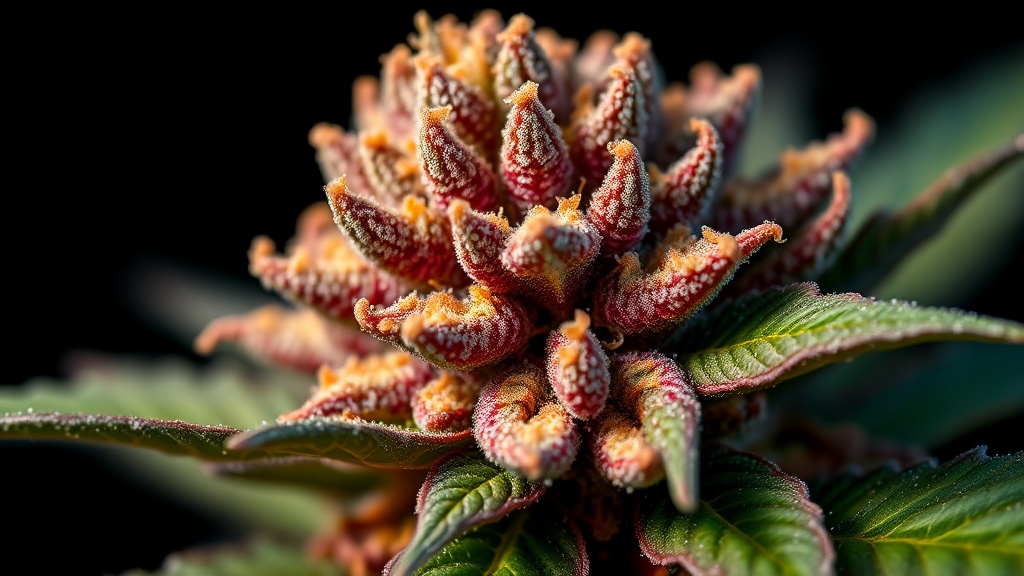
- Clear trichomes: Not ready. THC is still being synthesised.
- Milky/cloudy (70%): Approaching peak THC. Cerebral, energetic effect.
- Amber (20–30%): THC degrading to CBN. Body-heavy, relaxing effect.
- Harvest window: 70% milky + 20–30% amber = sweet spot for most FastBuds strains.
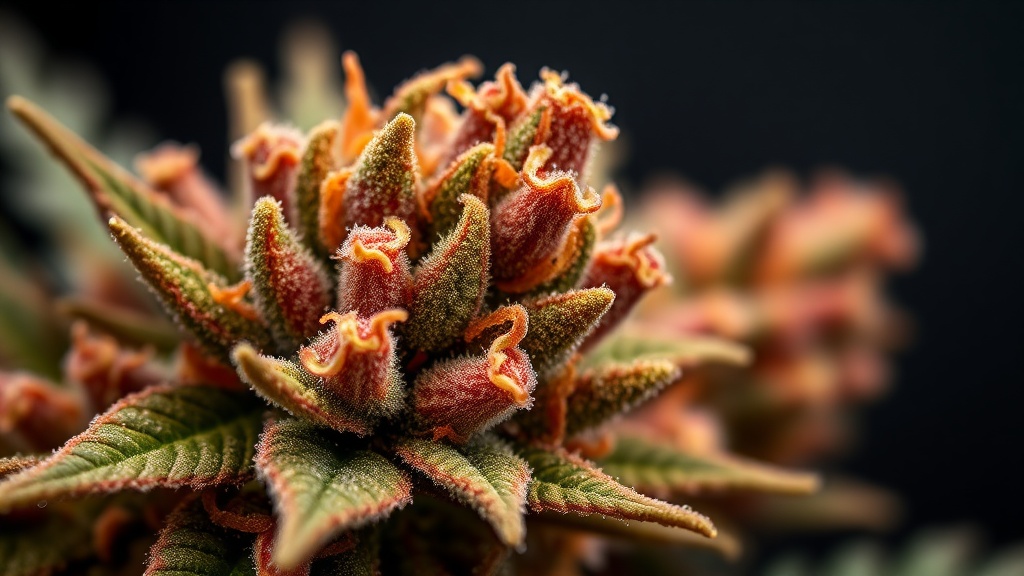
Also watch the pistils: when 70–90% have changed from white to orange/red, you're in the harvest window. Use both indicators together — trichomes are definitive, pistil colour is a secondary confirmation. Stop all nutrients 10–14 days before your target harvest date and water with pH-balanced water only (6.2–6.5). This is your flush window.
Want to estimate final yield before you start? Plug your setup into the Yield Calculator — it factors in light intensity, plant count, and medium to give you a realistic dry-weight projection.
Drying and Curing FastBuds Harvests
This is where most of the hard work either gets preserved or destroyed. The goal of drying is to remove surface moisture slowly and evenly without degrading terpenes or cannabinoids through heat or excessive airflow.
Drying
- Hang trimmed branches upside down in a dark room
- Temperature: 60–68°F (15–20°C)
- Relative humidity: 45–55%
- Airflow: oscillating fans on the walls, not blowing directly on buds
- Duration: 7–14 days. Test by bending a small stem — if it snaps cleanly, moisture is low enough to jar.
Curing
- Trim to final form and place in wide-mouth glass mason jars at 75% capacity
- Store in a cool, dark environment: 60–65°F (15–18°C), 58–62% RH inside the jar (use Boveda 62 packs)
- Burp jars 2x daily for the first 7 days, then once daily for weeks 2–4
- Minimum cure: 2 weeks. Optimal: 4–6 weeks. Terpene complexity increases significantly past the 3-week mark.
Use the Dry & Cure Timer to track your drying and curing stages automatically — it sends reminders for burping intervals and flags when you've hit optimal cure milestones.
Keeping a Grow Journal for Your Fastbudz Run
At 70–90 days total, every FastBuds grow is a data point you can use to improve the next one. Log your daily temps, RH, feeding EC, pH in and out, and any training you perform. Over 3–4 runs, patterns emerge: which weeks consistently show deficiencies in your setup, what your actual harvest day tends to be versus the seed bank's estimate, and where your dry weight lands relative to your projections. If you want to start documenting properly, our grow diary guide covers exactly how to structure it. You can also track your run directly on Grow Guide and compare it against other autoflower grows in the community.
To understand the actual cost of your grow — including electricity, nutrients, and consumables — run the numbers through the Cost Per Gram Calculator once you have a dry-weight figure. It's the fastest way to see whether a yield optimisation (better LED, larger pot) is actually worth the investment.
Frequently Asked Questions
How long do FastBuds autoflowers actually take from seed to harvest?
FastBuds' published timelines are typically 70–75 days, but real-world grows under optimised conditions commonly run 77–90 days. Don't pull based on the calendar — read trichomes and target 70% milky with 20–30% amber for peak potency.
Can I top or fim FastBuds autoflowering strains?
It's strongly discouraged. Autoflowers have a fixed vegetative window of roughly 21–28 days, and HST like topping takes 7–10 days of recovery time you simply don't have. Stick to LST starting around day 18–21 for the best canopy results without sacrificing development time.
What light schedule is best for FastBuds genetics?
18/6 is the most widely used and proven schedule — it delivers strong growth without excessive heat buildup. Some growers run 20/4 for a slight yield bump, but the difference is marginal in most setups. Avoid 24/0; plants benefit from a short dark period for root activity and metabolic recovery.
What pot size should I use for FastBuds autoflowers?
3-gallon fabric pots for most strains in standard indoor setups. Move to 5-gallon if you're running a powerful LED (600W+) and want to push yield — larger root volume allows greater biomass. Never transplant autoflowers; germinate directly into the final container.
When should I flush FastBuds autoflowers before harvest?
Start flushing with plain pH-balanced water (6.2–6.5 for soil) 10–14 days before your target harvest date. Watch trichome development to set that target date, not a fixed day count. Runoff EC should drop to 0.4 or below before you harvest.
References
- FastBuds Seeds (2025). Autoflowering Strain Cultivation Guidelines. FastBuds official grow documentation covering light schedules, training recommendations, and harvest windows for their autoflowering genetics. autofem.com
- Cervantes, J. (2015). The Cannabis Encyclopedia. Van Patten Publishing. Foundational reference on cannabis cultivation covering VPD, EC management, training techniques, and post-harvest processing with specific parameters applicable to autoflowering varieties.
- Caplan, D., Dixon, M., & Zheng, Y. (2017). Optimal rate of organic fertilizer during the vegetative-stage for cannabis grown in two coir-based substrates. HortScience, 52(12), 1–7. Establishes EC and N-P-K benchmarks during vegetative growth stages relevant to autoflowering cannabis. doi.org/10.21273/HORTSCI12202-17
- Grow Guide Platform Data (2026). Internal dataset of 1,000 tracked cannabis grow journals showing 734 indoor grows and 634 soil-medium grows, providing context on the dominant cultivation approaches used with autoflowering genetics.
- Small, E. (2017). Cannabis: A Complete Guide. CRC Press. Covers autoflowering cannabis botany, ruderalis genetics, and the agronomic characteristics that distinguish autoflowering varieties from photoperiod strains.