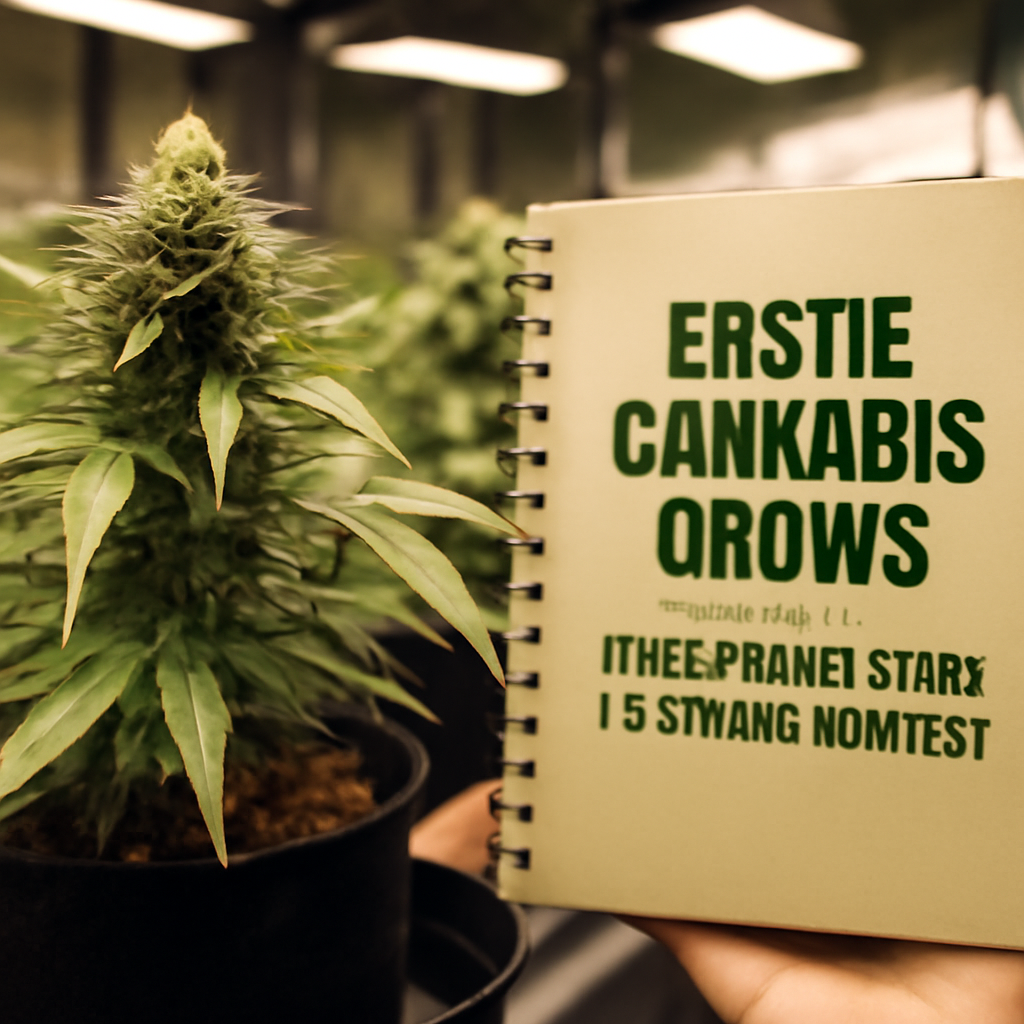
What Is an Erstie Grower — and Why It Matters
In the cannabis community, an erstie is a first-time grower — someone who's just cracked their first seed or received their first clone and is figuring it all out in real time. The word comes from the German erst, meaning "first," and it's earned its place as shorthand for a grower who's enthusiastic, maybe a little overwhelmed, and making decisions that will shape every grow after this one. Getting the fundamentals right on your erstie run doesn't just mean a better first harvest — it means you're building habits that compound over every subsequent grow. This guide skips the theory-heavy preamble and gets straight to the numbers and techniques that matter when you have plants in front of you right now.
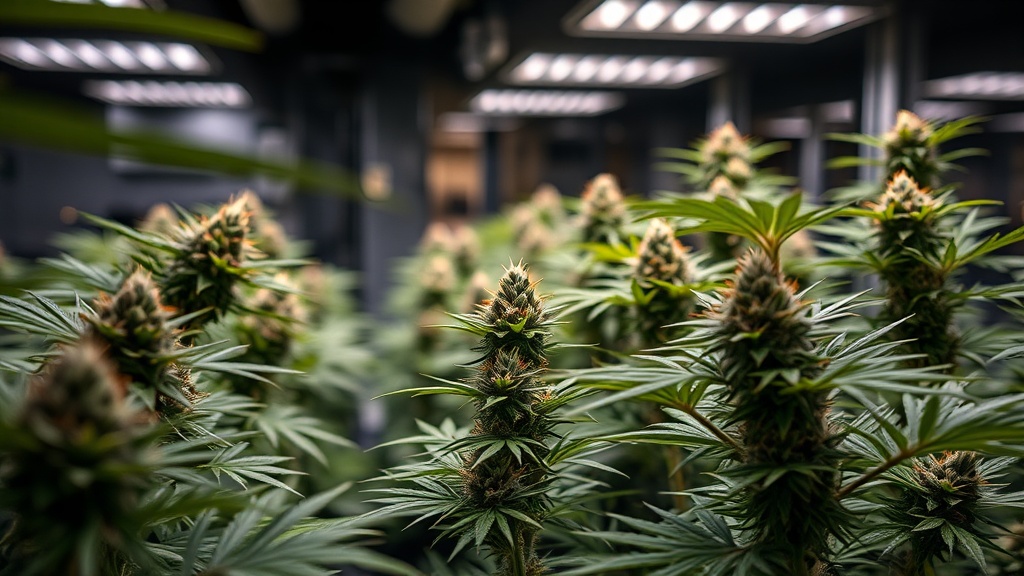
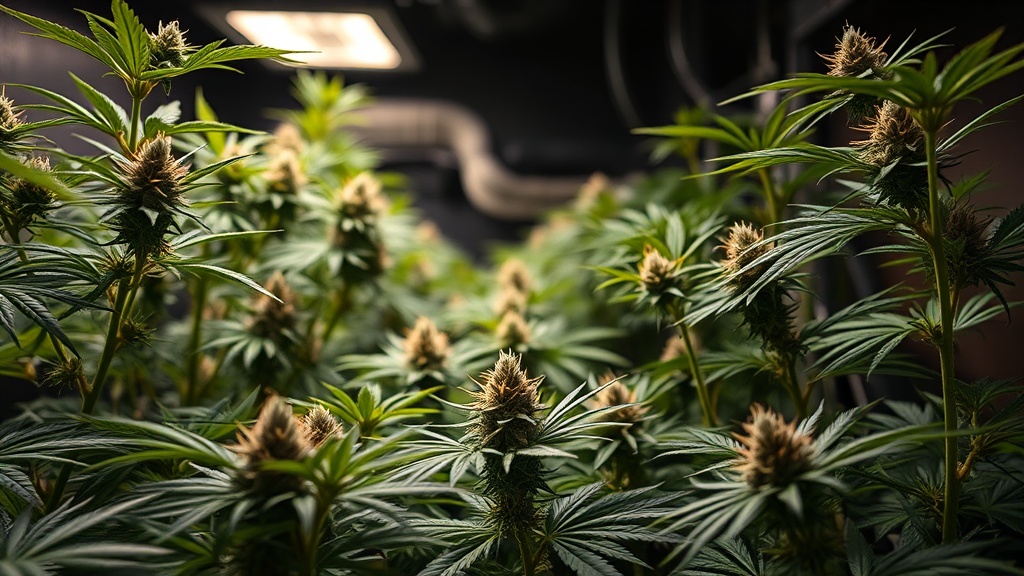
According to Grow Guide platform data, 737 of the 1,000 tracked grows on the platform are indoor grows, and 633 are in soil — so if you're an erstie running a soil grow under a tent light, you're in the majority. That also means most of the troubleshooting patterns in this guide are calibrated directly to your setup.
Erstie Grow Stage Overview
Germination and Seedling Stage: Don't Drown It
The most common erstie mistake happens before the plant even has leaves: overwatering. A freshly germinated seedling in a 3-gallon pot doesn't need a full watering — it needs a small circle of moisture, roughly 2–3 inches in diameter around the stem, every 2–3 days. Let the pot get noticeably light before you water again.
- Temperature: 22–26°C during lights-on, no lower than 18°C lights-off
- Humidity (RH): 65–70% for seedlings — use a dome if your room is dry
- Light: 18/6 schedule, 200–300 µmol/m²/s PPFD at canopy — seedlings burn easily
- pH: Water at 6.2–6.8 for soil. Use a decent pH pen, not drops
- Nutrients: None for the first 10–14 days if you're in a quality amended soil
For your first feeding, keep it simple. The seedling stage is well covered in our guide to best nutrients for cannabis seedlings — start at 25–50% of the recommended dose on any bottled nutrient line.
Vegetative Stage: Building the Structure That Holds Your Yield
Veg is where an erstie grow is either set up for success or quietly sabotaged. The plant doubles or triples in size here, and the branching structure you create now determines how much bud sites you're feeding at harvest. Run 18 hours of light, 6 hours dark. Keep PPFD at 300–400 µmol/m²/s and gradually increase toward 600 µmol/m²/s by late veg.
Your VPD target during veg is 0.8–1.0 kPa. At 25°C and 60% RH, you're sitting right in that window. VPD being too high (above 1.3 kPa) will show as leaf cupping and slower growth — it's often misread as a pH issue by first-timers.
Nutrients in Veg: The N-P-K Breakdown
During vegetative growth, run a nitrogen-heavy N-P-K ratio of approximately 3:1:2. In EC terms, you're targeting 1.2–1.8 mS/cm for most soil grows, rising toward 2.0 mS/cm by late veg. Check runoff pH and EC every third watering — if runoff EC is climbing more than 0.5 above your input, you're building up salts and need a plain-water flush.
Consider training during this phase. Low-stress training (LST) — bending and tying branches outward — is the safest technique for an erstie because it's reversible. Topping and FIMming are more aggressive; if you want to compare them, see our fimming vs topping guide.
Use the Grow Schedule Planner to map out your veg-to-flower transition date and set reminders for training and feeding windows.
Flowering Stage: Where Erstie Grows Win or Lose
Flip to 12/12 when your plant is roughly half the height you want at harvest — it will stretch 50–100% in the first three weeks of flower. Increase light intensity to 600–900 µmol/m²/s PPFD, and shift your nutrient ratio to low nitrogen, high phosphorus and potassium: roughly 1:3:2 N-P-K.
Environment in Flower: VPD, Temperature, and Airflow
This is where environment separates average grows from quality ones. Target VPD of 1.0–1.4 kPa in mid-to-late flower. At 24°C and 50% RH, you're around 1.2 kPa — a solid target. Keep RH below 50% from week 6 onward to prevent botrytis (bud rot), which is the most common and destructive problem in an erstie flowering room.
Ensure 20–30 air exchanges per hour in your tent. For a 1.2m × 1.2m tent, a 200–300 CFM inline fan achieves this. HEPA filters on intake significantly reduce spore load and are worth the investment if you're growing in a humid climate.
CO₂ enrichment at 1,200–1,500 ppm during the light period can increase yields by 20–30% — but this only pays off if your light intensity is already at 800+ µmol/m²/s and your temps are at 26–28°C. For a first grow without dialled-in environment, skip supplemental CO₂ and focus on the basics.
Identifying and Fixing Nutrient Problems as an Erstie
More first grows are damaged by overfeeding than underfeeding. Nutrient burn — the tips of leaves browning and curling down — is the most common sign an erstie is pushing too hard. If you see it, drop EC by 20% and increase watering volume slightly to flush accumulated salts.
pH lockout causes more deficiency symptoms than actual nutrient shortages. In soil, a pH below 5.5 or above 7.2 will lock out specific elements regardless of what you've fed. A pH of 5.8 locks out calcium in soil — you'll see interveinal chlorosis on upper leaves. Fix the pH first, then assess whether supplemental calcium/magnesium is needed.
Use the Nutrient Deficiency Identifier to cross-reference leaf symptoms with likely causes before spending money on supplements. For pest management, Integrated Pest Management (IPM) using biocontrol agents like Phytoseiulus persimilis for spider mites can reduce pesticide use by up to 70% — a much safer route for a home grow.
Harvest Timing: The Trichome Method
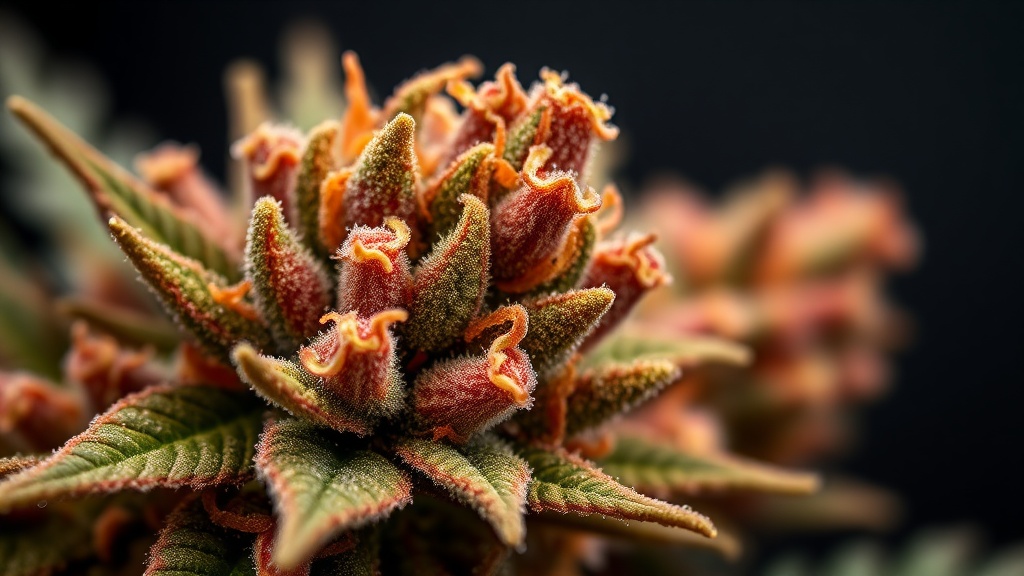
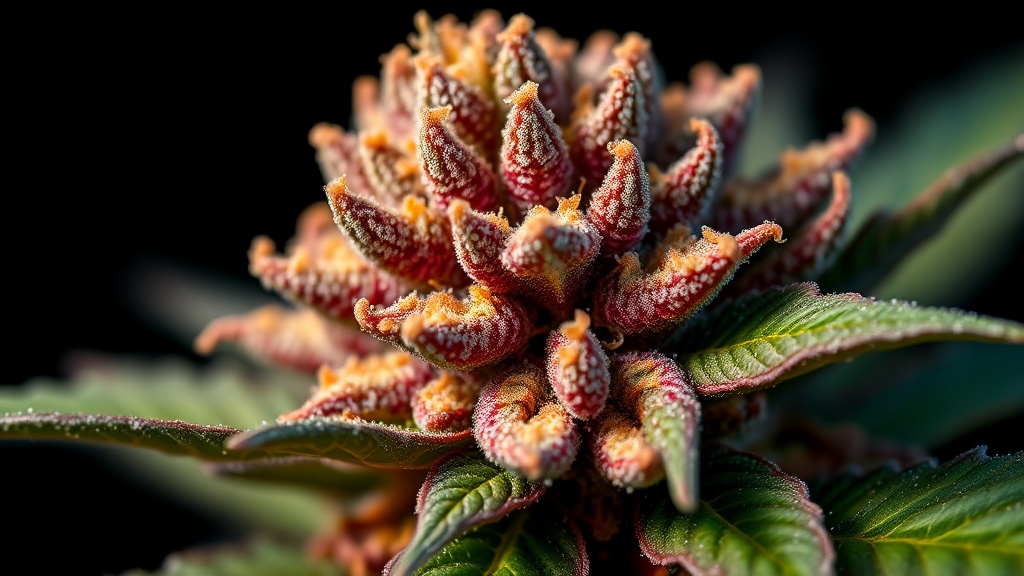
Harvesting too early is the single most common erstie mistake at the end of a grow. Use a 60x jeweller's loupe or a digital microscope (under $30) to inspect trichomes on the sugar leaves and calyxes — not the fan leaves. The optimal window is when 70–80% of trichomes are milky white/cloudy. If you wait until 20–30% are amber, the effect profile shifts toward the more sedative end due to THC-to-CBN conversion.
Count your weeks from flip as a secondary guide: most indica-dominant strains finish at 8–9 weeks of flower, sativa-dominant at 10–12 weeks. Breeders' timings are optimistic — add a week as a buffer for realistic planning.
Erstie Dry and Cure: Don't Rush the Finish Line
Drying and curing are where the most value is destroyed in first-time grows. A rushed dry — three days in a warm room — destroys terpenes and produces harsh, "green" smoke. Do this instead:
- Hang whole branches (or whole plants if space allows) in a dark room at 18–21°C with 50–55% RH
- Maintain 20+ air exchanges per hour — a fan pointed at the wall, not directly at buds
- Dry for 7–10 days minimum. Small stems should snap cleanly, not bend. Larger stems should feel dry on the outside with a slight flex remaining
- Trim after drying (dry trim) to preserve trichomes — wet trimming is easier but degrades quality
- Jar at 75% capacity in airtight glass jars. Target 58–62% RH inside jars (use a Boveda 62 pack)
- "Burp" jars daily for the first week — open for 10–15 minutes to release moisture and CO₂
- Cure for a minimum of 2 weeks; 4–6 weeks significantly improves smoothness and flavor development
Use the Dry & Cure Timer to track your drying and curing windows and get burp reminders. For a complete walkthrough of the grow from seed, the How to Grow One Cannabis Plant Indoors (2026) guide runs through every stage in a single plant context.
Keeping a Grow Journal as an Erstie
The single best habit you can build on your first grow is documenting it. Write down EC, pH, PPFD, temperature, RH, and anything unusual every 2–3 days. When something goes wrong — and something will — your notes let you trace it back rather than guess. Our guide to keeping a cannabis grow diary covers how to structure this efficiently. Tracking via Grow Guide connects your data to your results so you can course-correct on your next run.
Tools That Make an Erstie Grow Easier
You don't need to calculate everything manually. Before you start your first grow, use the Grow Light Calculator to confirm your light is appropriate for your tent footprint, and the Yield Calculator to set realistic expectations for your setup. After harvest, the Cost Per Gram Calculator tells you exactly what your first grow cost and where to optimise next time.
Frequently Asked Questions
What does "erstie" mean in cannabis growing?
Erstie refers to a first-time cannabis grower — someone on their inaugural grow. The term comes from the German word for "first" and is widely used in online growing communities to describe beginner growers who are learning the fundamentals for the first time.
How long does a first indoor cannabis grow take from seed to harvest?
Most photoperiod strains take 16–22 weeks from germination to dried, cured bud. That breaks down as 1–2 weeks seedling, 4–8 weeks vegetative, 7–10 weeks flowering, plus 7–10 days drying and a minimum 2–4 week cure. Autoflowering strains can compress this to 10–14 weeks total.
What is the most common mistake first-time cannabis growers make?
Overwatering is the single most common erstie error, followed closely by harvesting too early. Both are easy to fix once you know the signs: lift the pot to gauge weight before watering, and use a loupe to check trichomes are 70–80% cloudy before cutting.
What pH should I water at for a soil cannabis grow?
Target 6.2–6.8 pH for soil grows. The 6.5 sweet spot keeps all major and minor nutrients available. Going below 6.0 in soil begins to lock out calcium and magnesium; above 7.0 restricts iron and manganese uptake.
How do I know when my cannabis is ready to harvest?
Check trichomes with a 60x loupe or digital microscope. Harvest when 70–80% of trichomes on the calyxes appear milky white/cloudy — this is peak THC. Waiting until 20–30% turn amber increases CBN and shifts the effect toward sedation. Use pistil color (75–80% orange/red) as a secondary indicator only.
References
- Small, E. & Naraine, S.G.U. (2016). "Size Matters: Evolution of Large Drug-Secreting Resin Glands in Cannabis sativa (Cannabaceae)." Economic Botany, 70(1), 1–24. Foundational research on trichome development and cannabinoid accumulation timing relative to harvest windows. link.springer.com
- Chandra, S., Lata, H., & ElSohly, M.A. (2017). "Cannabis sativa L. — Botany and Biotechnology." Springer. Documents optimal temperature, humidity, and light intensity parameters for indoor cannabis cultivation across growth stages. link.springer.com
- National Center for Biotechnology Information / PMC (2022). "Post-Harvest Processing of Cannabis: A Scoping Review." PMC8911901. Reviews evidence on drying temperatures (18–21°C), humidity (50–55% RH), and curing duration on final cannabinoid and terpene profiles. pmc.ncbi.nlm.nih.gov
- Caplan, D., Dixon, M., & Zheng, Y. (2017). "Optimal Rate of Organic Fertilizer during the Vegetative-Stage for Cannabis Grown in Two Coir-Based Substrates." HortScience, 52(12), 1671–1677. Quantifies N-P-K uptake rates and EC targets in substrate-grown cannabis during vegetative development. journals.ashs.org
- MMJ.com (2026). "Drying and Curing Cannabis: A Complete Guide." Practical overview of jar-curing methodology, burping schedules, and moisture targets for preserving terpene and cannabinoid integrity in home-grown cannabis. mmj.com