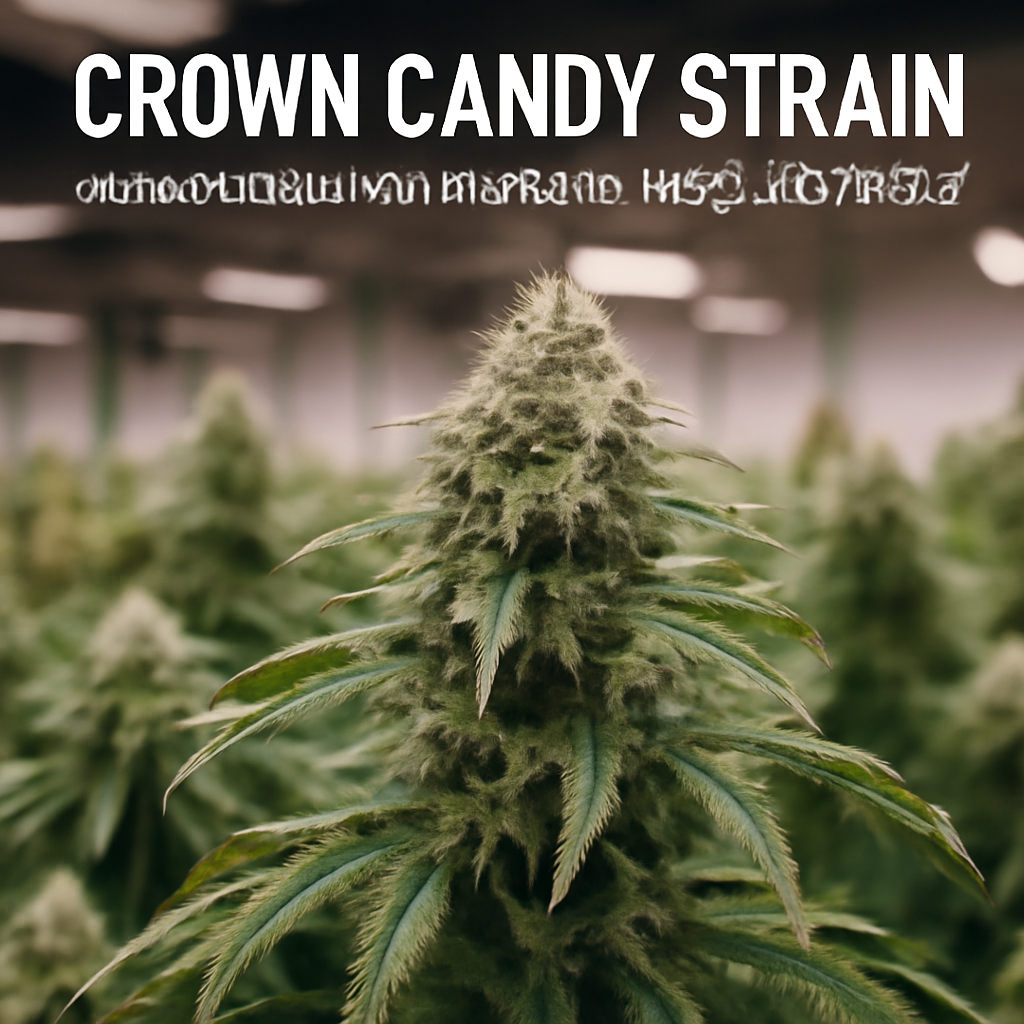
What Is Crown Candy and Why Does It Matter to Growers?
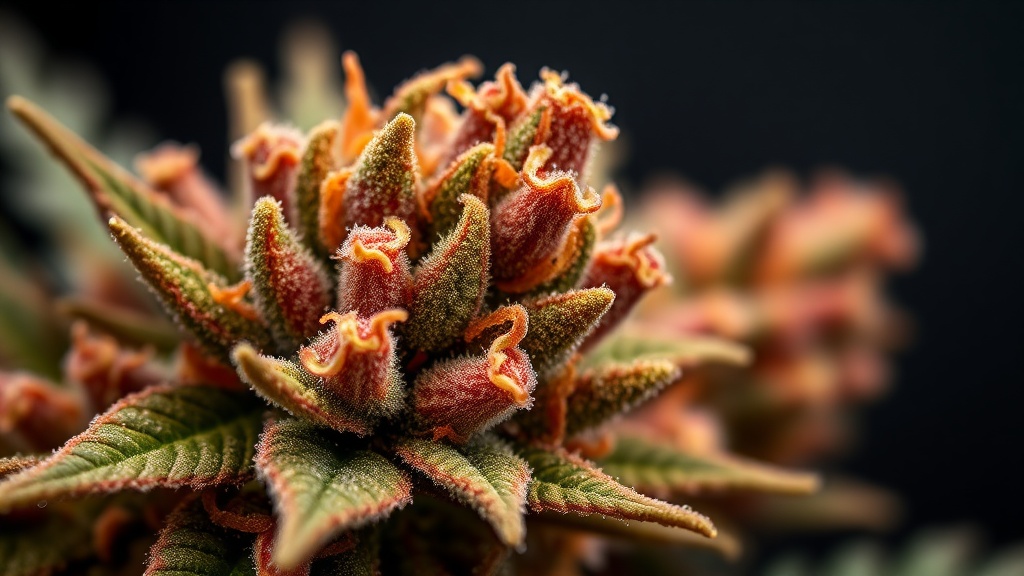
Crown Candy is a hybrid cannabis strain that sits in a sweet spot for cultivators: balanced enough to handle both indoor and outdoor setups, yet specific enough in its preferences that sloppy technique will cost you. The buds are dense and resinous — a trait that's great for potency and terpene expression, but it also means airflow management isn't optional. Get that wrong and you're fighting botrytis by week six of flower. Get it right and you're harvesting thick, sticky colas with a complex sweet terpene profile that justifies the effort. Whether you're running your first journal on Crown Candy or dialing in your third run, this guide covers every phase from seedling to sealed jar.
Crown Candy Growth Structure and What to Expect
Crown Candy grows to a medium height with moderate internodal spacing — not as stretchy as a Haze-dominant plant, but it will put on 30–50% height increase during the first two to three weeks of flowering. Branches are reasonably vigorous and respond well to training. The natural growth pattern leans toward a central dominant cola if left untrained, which limits light penetration and creates humidity traps in the lower canopy. Plan your training strategy before you flip.
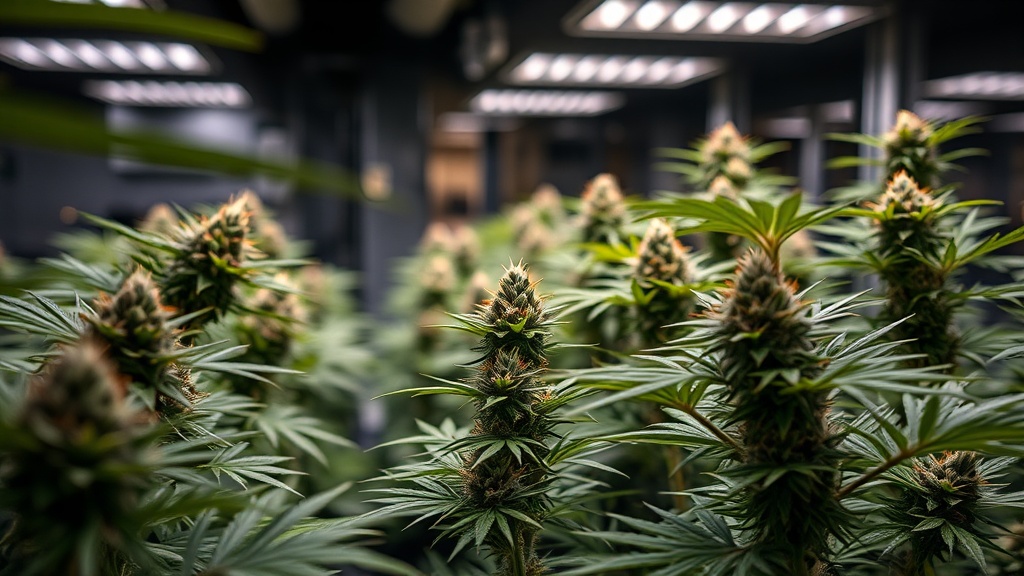
For indoor Crown Candy grows, top the plant at the 4th or 5th node during veg, then use low-stress training (LST) to spread the remaining branches outward and anchor them down. This creates an even canopy that catches light uniformly and — critically — keeps airflow moving through the middle of the plant where dense foliage and future buds will want to trap moisture. For more on topping technique and timing, see our Fimming vs Topping Cannabis guide.
Crown Candy Environment: Temperature, VPD, and Airflow
Crown Candy's dense bud structure makes VPD management critical, especially in weeks 5–8 of flower when buds are swelling and internal moisture has nowhere to go if your environment is off. Target these ranges:
- Seedling / early veg: 24–26°C (75–79°F), VPD 0.4–0.8 kPa, RH 65–70%
- Late veg: 22–25°C (72–77°F), VPD 0.8–1.0 kPa, RH 55–65%
- Early flower (weeks 1–4): 21–24°C (70–75°F), VPD 1.0–1.2 kPa, RH 50–55%
- Late flower (weeks 5–harvest): 20–22°C (68–72°F), VPD 1.2–1.5 kPa, RH 45–50%
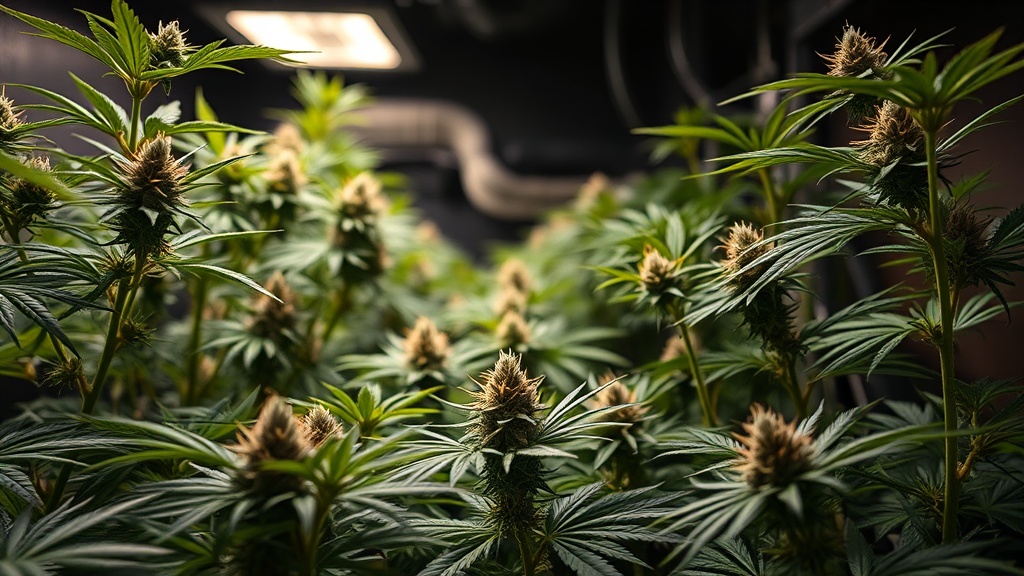
Airflow should be gentle but constant. Point an oscillating fan at canopy level, not directly into the buds. The goal is leaf movement — that slight shimmer indicates enough airflow to disrupt the humid boundary layer around bud sites without stress-drying your flowers. An inline fan rated for your tent's CFM (cubic feet per minute) plus a carbon filter handles extraction; replace air in the space every 1–2 minutes.
For lighting, Crown Candy responds well to 600–900 µmol/m²/s PPFD during peak flower. Push closer to 900 only if you're supplementing CO₂. At ambient CO₂ (~400 ppm), keeping PPFD around 700–750 µmol/m²/s is the sweet spot — enough to drive photosynthesis without bleaching or heat stress. Use our Grow Light Calculator to confirm your fixture is delivering adequate intensity at canopy distance.
Crown Candy Nutrient Management
Crown Candy isn't a heavy feeder compared to some commercial strains, but it responds poorly to abrupt EC swings. Start conservative and ramp methodically:
- Seedling: EC 0.4–0.6 mS/cm, pH 6.0–6.2 (soil) / 5.8–6.0 (coco)
- Veg: EC 1.0–1.6 mS/cm, nitrogen-heavy (3-1-2 NPK ratio)
- Early flower: EC 1.4–1.8 mS/cm, transition to 1-3-2 NPK, introduce cal-mag at 2–3 mL/L if on RO water
- Peak flower: EC 1.6–2.0 mS/cm, phosphorus and potassium forward
- Flush / final 2 weeks: Drop EC to 0.4–0.6 or plain water depending on your medium
Maintain pH between 5.8–6.2 for coco and hydro, 6.0–6.8 for soil. A drift outside this window, especially into the high 7s, will lock out iron and manganese fast — symptoms show as interveinal chlorosis on new growth. If you're seeing yellowing you can't explain, run the symptoms through our Nutrient Deficiency Identifier before adjusting.
According to Grow Guide platform data from over 1,000 tracked grows, 63% of growers use soil as their primary medium. Crown Candy does well in organic soil builds where the buffering capacity smooths out minor pH swings — a forgiving choice for newer growers. Coco coir runs are viable but demand more frequent watering and tighter EC discipline. For seedling nutrition guidance see our Best Nutrients for Cannabis Seedlings 2026 article.
Harvesting Crown Candy: Trichome Timing
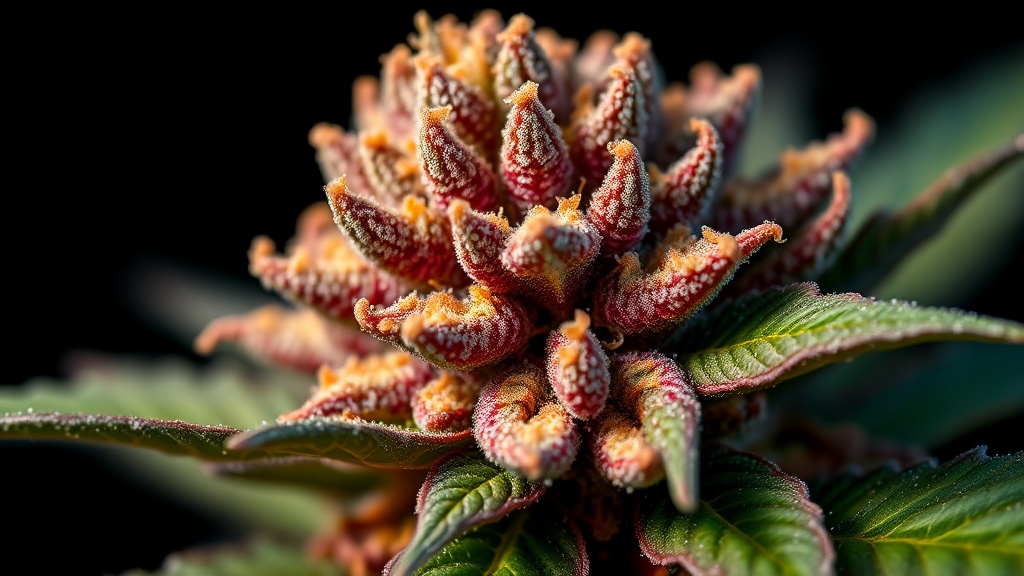
Crown Candy's flowering window runs approximately 8–10 weeks from flip. Don't harvest by calendar alone — trichomes tell the real story. At 30x magnification (a jeweler's loupe or digital scope both work), look for:
- Clear trichomes: Too early, THC not fully developed, yield is lower
- Milky/cloudy trichomes: Peak THC, more cerebral effect profile
- 10–20% amber trichomes: THC beginning to degrade to CBN, heavier body effect, reduced anxiety edge
For Crown Candy, most growers targeting the full terpene expression harvest at 5–15% amber — enough to take the edge off without losing the terpene brightness that defines this strain. Check trichomes on bud tissue, not sugar leaves, which amber faster and give a misleading read.
Two to three days before harvest, stop watering to help the plant drop its final stored water. This slightly stresses the plant and can push a last terpene surge. Some growers also run 48–72 hours of darkness immediately pre-harvest — there's anecdotal support for this tightening up resin production, though it's not universally observed.
Use our Grow Schedule Planner to map out your flip-to-harvest window and reverse-plan your flush timing precisely.
Drying Crown Candy: 7–10 Days Done Right
Given Crown Candy's bud density, a slow dry is non-negotiable. Rushing this phase with high temps or low humidity collapses terpenes and leaves a harsh smoke, regardless of how well you grew the plant.
Target conditions:
- Temperature: 15.5–18°C (60–65°F)
- Relative humidity: 55–60%
- Light: Complete darkness
- Airflow: Gentle indirect circulation, no fans pointing at hanging plants
Hang whole plants or large branches upside-down. The remaining fan leaves act as a slow moisture buffer — removing them pre-hang speeds drying but can overshoot and dry too fast. Check progress at day 7 by bending a small stem: it should crack and snap, not bow and hold. If it bends, give it 24–48 more hours. Use our Dry & Cure Timer to track days and set humidity check reminders.
Curing Crown Candy for Flavor and Potency
The cure is where Crown Candy's terpene profile fully develops. A rushed cure produces functional cannabis. A proper cure produces something worth talking about.
- Trim and place dried buds in wide-mouth airtight glass jars, filling to 70–75% capacity
- Store in a cool (15–21°C / 60–70°F), dark location
- Week 1–2: Burp jars twice daily for 10–15 minutes each session; if you smell ammonia, leave lids off for 30–60 minutes — ammonia indicates anaerobic bacteria from insufficient drying
- Week 3–4: Burp once daily
- Week 5–8: Burp every 2–3 days; flavor and potency continue to improve
Minimum cure is 2 weeks to get something smokeable. Four weeks is where Crown Candy really opens up. Eight weeks is where you start understanding why legacy growers never rush the jar. Boveda 62% humidity packs inside jars during long cures help stabilize moisture levels and prevent over-drying.
Crown Candy Troubleshooting: The Three Problems That Kill Runs
1. Botrytis (Bud Rot) in Dense Colas
Crown Candy's tight bud structure is a botrytis magnet if RH creeps above 55% in late flower. Inspect the interior of large colas weekly from week 5 onward — grey/brown mushy tissue starting from the stem inside the bud is the signature. Remove affected buds immediately with clean scissors, disinfect tools between cuts, and immediately address your humidity. Prevention: keep VPD in the 1.2–1.5 kPa range and avoid any free water on buds from foliar sprays or heavy condensation.
2. Nutrient Burn From Late-Veg Overfeeding
Crown Candy doesn't need heavy feeding in late veg. Growers who push EC above 2.0 mS/cm before flip often see tip burn that doesn't recover before flower, costing them bud sites. Back EC down to 1.4–1.6 mS/cm in the last two weeks of veg and watch for crispy, claw-curled tips as your early warning.
3. Overwatering in Soil
Given that 63% of Grow Guide users grow in soil, this is the most common failure mode. Crown Candy likes to partially dry out between waterings. Lift your pot — when it's noticeably light, water thoroughly to 10–20% runoff. A constantly wet root zone suffocates roots, locks out nutrients, and creates the conditions for pythium root rot.
For a full walkthrough of the indoor grow process from seed to harvest, see our guide on How to Grow One Cannabis Plant Indoors.
Want to estimate your return on this run before you start? Plug your setup into our Yield Calculator and Cost Per Gram Calculator to set realistic targets and track efficiency across grows.
Frequently Asked Questions
How long does Crown Candy take to flower?
Crown Candy flowers in approximately 8–10 weeks from the light flip to 12/12. Always confirm harvest timing with trichome inspection at 30x magnification rather than relying solely on the breeder's stated timeline, which can vary by pheno and environment.
Is Crown Candy better suited to indoor or outdoor growing?
Crown Candy performs well in both environments, but its dense bud structure makes humidity control easier indoors. Outdoor grows in warm, dry climates can produce larger plants and higher total yields, but late-season humidity swings increase botrytis risk significantly in the final weeks before harvest.
What pH should I maintain when growing Crown Candy in soil?
Target a pH of 6.0–6.8 for soil-based Crown Candy grows, with 6.2–6.5 being the sweet spot for consistent macronutrient and micronutrient availability. In coco or hydro, narrow this to 5.8–6.2.
How do I prevent bud rot on Crown Candy's dense colas?
Keep relative humidity below 50% in the final four weeks of flower, maintain VPD between 1.2–1.5 kPa, and ensure indirect airflow moves through — not just around — the canopy. Defoliate strategically at weeks 3 and 6 of flower to open up the interior of dense bud sites and reduce trapped moisture.
How long should I cure Crown Candy for the best flavor?
A minimum of 2 weeks gets you smokeable cannabis, but Crown Candy's terpene profile develops most fully between 4–8 weeks of curing in sealed glass jars at 60–70°F with regular burping. Most experienced growers consider 4 weeks the practical minimum for this strain's flavor to fully express.
References
- STRNG Seeds (2026). "What Is Crown Candy Strain: Effects, THC Level, Terpenes and Growing Guide." Covers cultivation environment, training methods, and growth characteristics specific to Crown Candy. strngseeds.com
- Fresh Bros (2026). "Cannabis Cultivation Basics." Details trichome maturity assessment, harvest timing methodology, and drying/curing protocols including temperature and humidity targets. freshbros.com
- MMJ.com (2026). "Drying and Curing Cannabis: A Complete Guide." Covers hang-drying methodology, optimal drying conditions (60–70°F, 55–60% RH), and curing schedules including jar burping frequency. mmj.com
- The Seed Connect (2026). "Common Cannabis Cultivation Mistakes." Outlines precision equipment requirements for pH (±0.1 accuracy) and EC monitoring (0.0–3.0 mS/cm), and their role in preventing nutrient mismanagement. theseedconnect.com
- Grow Guide Platform Data (2026). Internal analysis of 1,000 tracked cannabis grow journals across indoor (73.7%), outdoor (17%), and greenhouse (3.2%) environments, with medium distribution showing 63.3% soil usage among active growers.