What Is the Bacio Gelato Strain?
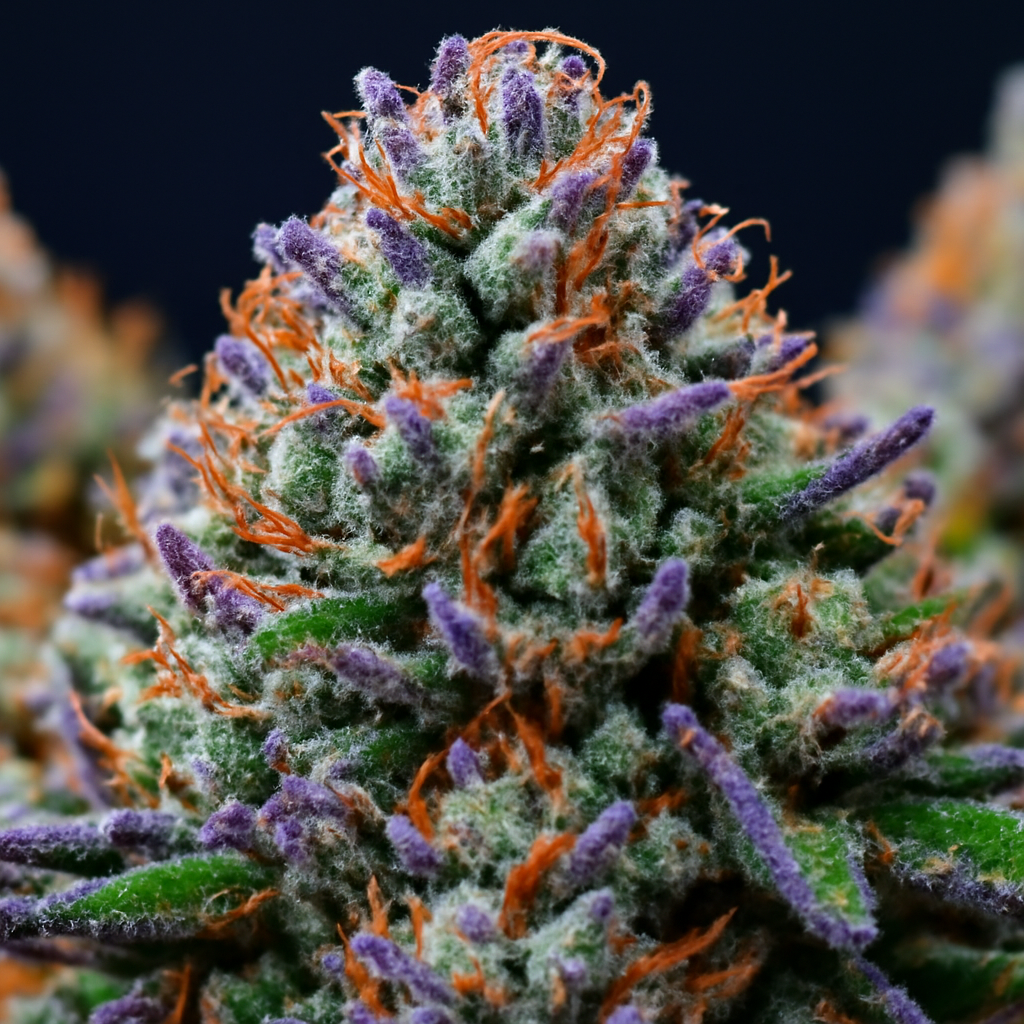
The Bacio Gelato strain — also catalogued as Gelato #41 — is one of the most requested cultivars in legal cannabis right now, and for good reason. It's the product of two elite California lines: Sunset Sherbet and Thin Mint GSC. The result is an indica-dominant hybrid that stacks a dessert-forward terpene profile — think sweet cream, citrus, mint, and a whisper of vanilla and light tobacco on the exhale — onto genuinely high THC numbers that regularly test between 24% and 29%. CBD sits around 0.7%, so there's minimal counterbalance to the potency.
From a cultivation standpoint, Bacio Gelato sits in the "moderate" difficulty bracket. It's not the plant you want as your very first grow, but any grower who has navigated a full cycle before will find its demands logical and manageable. The main challenges are its bushy, dense lateral structure — which creates airflow problems if you don't train and defoliate — and its calcium hunger under high-intensity lighting. Get those two things right and you're rewarded with dense, resinous colas and a terpene expression that genuinely stands out at harvest. You can track every detail of your run in a Grow Schedule Planner to keep humidity, feeding, and training milestones on point.
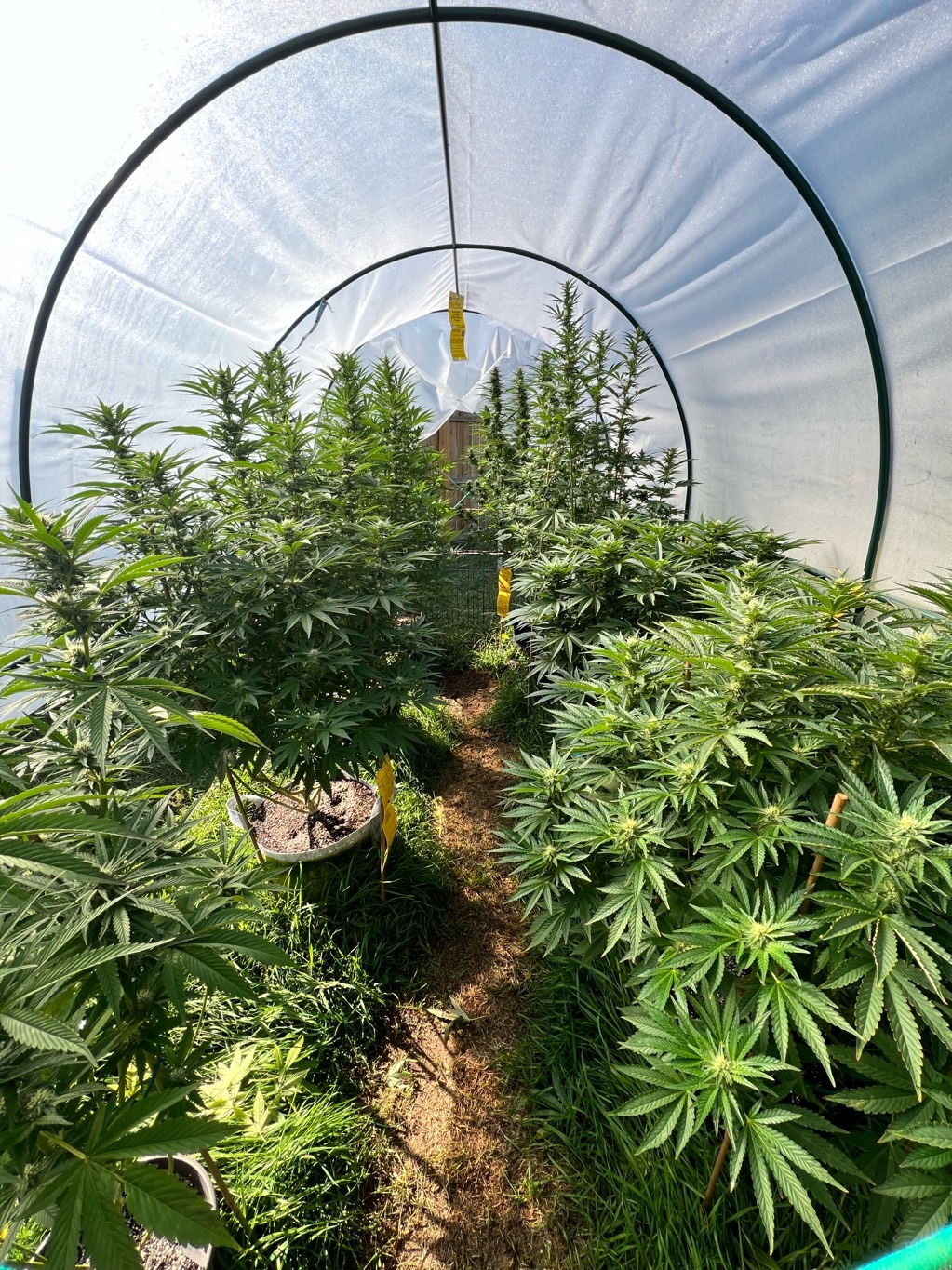
On the Grow Guide platform, 73% of all tracked grows run indoors — and Bacio Gelato is purpose-built for a controlled indoor environment where you can dial in the environmental parameters this strain rewards. Let's go through every stage.
Bacio Gelato Strain: Genetics and Structure
Understanding the plant architecture matters before you build your training plan. Bacio Gelato inherits a medium-height, bushy lateral growth pattern from its GSC side. It throws a lot of side branching early in veg, which is a gift if you're running SCROG and a liability if you let it go unmanaged. Internodal spacing is moderate — tight enough to stack dense colas but loose enough to work with during training.
Topping is the first high-leverage intervention: do it at nodes 4–5 during veg. This splits the apical dominance and pushes the plant to develop multiple equivalent colas rather than one dominant central spike. If you want to compare topping versus FIM for this structure, our Fimming vs Topping guide breaks down when each approach makes sense. For Bacio Gelato, standard topping at node 4–5 is the cleaner choice — FIM can create uneven branching that's harder to manage under a SCROG net.
After topping, run Low-Stress Training (LST) to pull branches outward and build a wide, even canopy. Introduce your SCROG net once the canopy is roughly 6–8 inches below the net. Tuck aggressively for the first 2–3 weeks of flower until branches lock in. Then stop moving them — you don't want to stress the plant during bud development.
Environmental Parameters for Bacio Gelato
This strain has clearly defined environmental windows and it responds noticeably when you drift outside them.
- Vegetative temps: 74–82°F (23–28°C), RH 60–70%
- Early flower (weeks 1–6): 72–78°F (22–26°C), RH 50–60%
- Late flower (weeks 7–9): Same temp range, RH dropped to 40–45%
The humidity drop in late flower is non-negotiable with Bacio Gelato. Its dense bud structure creates microclimates inside the colas where moisture can sit — conditions that invite botrytis even when your room ambient reads fine. A calibrated hygrometer at canopy level is essential, not optional. Use our Grow Light Calculator to confirm your PPFD targets are calibrated per stage:
- Veg: 400–600 PPFD
- Early flower: 600–900 PPFD
- Mid–late flower: 900–1,000 PPFD (up to 1,200 with CO₂ supplementation)
VPD-wise, aim for 0.8–1.0 kPa during veg and 1.0–1.5 kPa during flowering. Staying in these ranges keeps transpiration efficient and reduces the risk of tip burn under high PPFD.
Nutrient Strategy for Growing Bacio Gelato
Bacio Gelato is a moderate-to-heavy feeder, but it has a specific nutritional character you need to understand before you push EC hard.
During veg, keep EC conservative at 0.4–0.8 (coco/hydro) and let the plant build structure rather than chasing lush growth. Target a pH of 5.8–6.2 in coco or hydro, 6.0–6.8 in soil. The majority of Grow Guide users — 63% — run soil, so if that's you, stay toward the higher end of that pH range to keep phosphorus available.
From week 3 of flower onward, start ramping phosphorus and potassium to support bud development. This is where most growers see the plant really respond — internodal stacking tightens and resin production accelerates. EC can climb to 1.2–1.8 by peak flower, but watch your leaf tips: any claw or burn means you've pushed too fast. Back off 0.2 EC and hold for a few days.
Calcium is the one deficiency Bacio Gelato is genuinely predisposed to, especially under LED at high PPFD. The elevated transpiration rate at 900+ PPFD increases calcium demand, and if you're running RO water without a Cal-Mag supplement, you'll see interveinal chlorosis on mid-canopy leaves by week 4–5 of flower. Add 150–200ppm calcium from a dedicated Cal-Mag product from day one of the feed program, not as a corrective measure. If you're already seeing symptoms, use the Nutrient Deficiency Identifier to confirm it's calcium before adjusting — magnesium deficiency looks nearly identical at early stages.
For seedling feeding specifics, see our Best Nutrients for Cannabis Seedlings guide. For organic feeding options across the full cycle, our Best Organic Nutes for Cannabis article covers compatible programs.
Defoliation Timing for Bacio Gelato
Defoliation is where a lot of growers underdeliver with this cultivar. Bacio Gelato's bushy structure means interior canopy shading is a constant issue. Two targeted defoliation sessions fix this:
- Transition defoliation: At the flip to 12/12 (or within the first 3 days), remove fan leaves that are shading bud sites below the SCROG net. Don't strip the plant — target 20–30% leaf removal at most.
- Day 21 of flower defoliation: Once stretch is complete and you can see exactly where buds are forming, do a second round. Focus on any leaves creating a humidity trap inside dense bud clusters, and any large fans blocking lower bud sites. Again, 20–30% maximum removal.
After day 21, leave the plant alone unless you're removing obviously dead or dying material. Late defoliation past week 5 of flower stresses the plant during its heaviest resin production phase.
Bacio Gelato Strain: Harvest Windows and Trichome Reading
Bacio Gelato flowers in 8–9 weeks and the harvest window meaningfully changes the effect profile. This matters to your customers or personal stash, so use a 30–60x loupe or a digital microscope rather than guessing by pistil color alone:
- Week 8 harvest (all/mostly cloudy trichomes): More cerebral, energetic effect. Terpene expression at its brightest — citrus and mint forward.
- Week 9 harvest (cloudy + 10–20% amber): Balanced body and cerebral effect. Slightly heavier, the vanilla and earthy tobacco notes come forward. Most growers targeting maximum THC potency with body depth harvest here.
Check multiple bud sites — tops mature faster than lower sites, so always base your harvest call on mid-canopy buds, not the main colas.
Drying and Curing Bacio Gelato Correctly
Getting the dry and cure right with this strain matters more than it does with some cultivars because the terpene profile is the main selling point. Rush the cure and you lose the cream-and-citrus complexity that defines it.
Drying: Hang whole branches (or use a drying rack for smaller grows) at 60–70°F with 50–60% RH for 7–10 days. Don't push airflow directly across buds — indirect circulation to keep air moving without accelerating moisture loss. The target: small stems snap cleanly but don't crumble, and larger stems bend slightly before snapping. If your stems are bending without snapping after 10 days, drop RH slightly or add a small fan aimed at the wall.
Curing: Jar your buds at 58–62% moisture (use Boveda 62 packs for passive control). Burp jars twice daily for the first two weeks, then once daily for weeks 3–4, then seal and check weekly. The 30-day minimum cure is non-negotiable for Bacio Gelato — the terpene complexity doesn't fully develop until chlorophyll has broken down. At 60 days you'll notice a marked difference in the cream and vanilla notes versus the 30-day jar. Use the Dry & Cure Timer to track your burp schedule and target moisture milestones precisely.
Common Problems and Fixes
Botrytis (grey mold) inside dense colas: The dense bud architecture is the main risk factor. Prevention is the only effective strategy — once botrytis is inside a cola you need to remove the affected section entirely. Keep late-flower RH at or below 45%, ensure there's no dead air pockets inside the canopy, and keep night temperatures from dropping more than 10°F below day temps (which raises RH).
Calcium deficiency: As noted above, supplement from the start with RO water. If you're seeing mid-canopy interveinal chlorosis, add a foliar application of dilute Cal-Mag (100ppm, pH 6.0) directly to affected leaves as a corrective — this gets calcium to the leaf faster than root feeding when the deficiency is already visible.
Stretching too tall during early flower: Bacio Gelato has moderate stretch — roughly 50–75% height gain from flip. If you're bumping your light limits, drop canopy temperature slightly (toward 72°F) and increase PPFD earlier in the stretch phase. Supercropping the tallest branches in week 1–2 of flower is a fast mechanical correction.
Logging your daily observations makes it dramatically easier to catch these issues early. See our guide on keeping a complete cannabis grow diary for a system that works with this strain's specific milestones.
Want to estimate what your setup should produce before harvest? Run your canopy size and light wattage through the Yield Calculator. And if you're curious about Bacio Gelato's specific terpene makeup — myrcene, limonene, caryophyllene — the Terpene Explorer lets you dig into the flavor chemistry before you commit to a cut.
Frequently Asked Questions
How long does Bacio Gelato take to flower?
Bacio Gelato has a flowering time of 8–9 weeks (56–63 days) from the flip to 12/12. Most growers harvest at week 9 for the full trichome development and balanced body effect, though a week 8 harvest is viable if you want a more cerebral result.
What is the THC percentage of Bacio Gelato?
Bacio Gelato typically tests between 24% and 29% THC, making it one of the higher-potency cultivars available. CBD content is approximately 0.7%, so it's not a balanced CBD strain — it's primarily a high-THC indica-dominant hybrid.
Is Bacio Gelato hard to grow?
It's rated moderate difficulty. The main challenges are managing its dense bud structure to prevent botrytis in late flower (requires humidity control below 45% RH in weeks 7–9) and supplementing calcium proactively under high-intensity lighting. It's not suitable for absolute beginners but is manageable for anyone who has completed at least one full grow cycle.
What terpenes are in Bacio Gelato?
Bacio Gelato's dominant terpenes are typically myrcene, limonene, and caryophyllene, which together produce its signature dessert aroma: sweet cream, citrus, and mint with notes of vanilla and light tobacco on the exhale. The Terpene Explorer lets you dig into each terpene's role in more detail.
What EC should I run for Bacio Gelato in coco?
Start at 0.4–0.8 EC during veg, then ramp to 1.0–1.4 in early flower and peak at 1.2–1.8 EC during weeks 3–6 of flower when phosphorus and potassium demand is highest. Always watch for leaf tip burn as a signal to hold or back off EC.
References
- Leafly (2024). Bacio Gelato Strain Information. Comprehensive strain data including terpene profiles, reported effects, and user-reported growing characteristics. leafly.com/strains/bacio-gelato
- Bugbee, B. (2022). Photosynthesis, Respiration, and Carbon Use Efficiency in Cannabis. Utah State University. Research documenting optimal PPFD ranges and CO₂ interactions for cannabis yield and quality. usu.edu
- Rodriguez-Morrison, V., Llewellyn, D., & Zheng, Y. (2021). Cannabis Yield, Potency, and Leaf Photosynthesis Respond Differently to Increasing Light Levels in an Indoor Environment. Frontiers in Plant Science. Covers PPFD thresholds and diminishing returns above 1,000 μmol without CO₂. doi.org/10.3389/fpls.2021.646020
- McPartland, J. M., & Russo, E. B. (2001). Cannabis and Cannabis Extracts: Greater Than the Sum of Their Parts? Journal of Cannabis Therapeutics. Foundational research on the entourage effect of terpenes including myrcene, limonene, and caryophyllene on cannabis effect profiles.
- Grow Guide Platform Data (2026). Internal grow journal analytics across 1,000 tracked grows. Environment distribution: 73% indoor, 17% outdoor. Medium distribution: 63% soil, 15% coco coir. Feed type distribution: 55% manual feeding.