What's Actually Happening in Week 4 Flowering
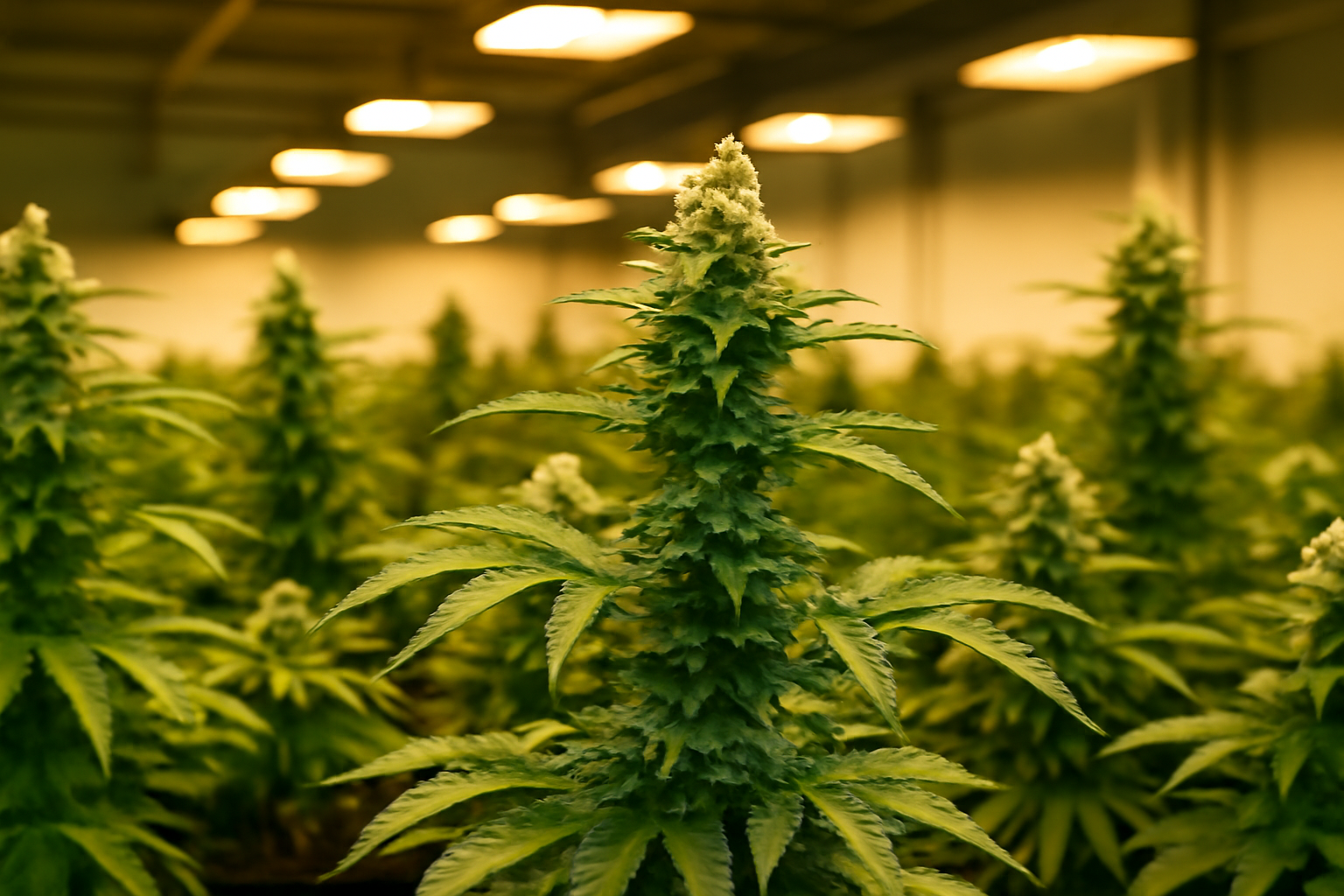
Week 4 of flowering is where things get serious. By day 22–28 of the flowering stage, the vertical stretch is mostly done and your plant is redirecting every available calorie into bud production. Calyxes are stacking, white pistils are pushing out in dense clusters, and if you look closely, you'll see the first serious trichome coverage forming on sugar leaves and bud sites. This is the last real window to tighten up your environment before bud density becomes a liability rather than an asset.
At Grow Guide, we track over 1,000 active grow journals — 737 of them indoor grows. The patterns are consistent: growers who nail their environment and nutrient transition in week 4 flowering consistently report denser, more resinous harvests. The ones who don't are usually dealing with bud rot or a nutrient crash by week 6.
Week 4 Flowering Environment: The Numbers That Matter
By week 4, your VPD (Vapor Pressure Deficit) target should sit between 1.0–1.5 kPa — this is the sweet spot that drives transpiration without stressing the plant. To hit that range, keep daytime temps at 70–80°F (21–27°C) and relative humidity between 40–50%. Don't let nighttime temps drop more than 10°F below your daytime target, or you risk slowing resin development and creating conditions for early mold.
Airflow is non-negotiable. Run oscillating fans both above and below the canopy. Stagnant air pockets inside dense bud sites are where Botrytis cinerea (bud rot) takes hold first. Check and clean your intake and exhaust filters every 7 days — blocked airflow is the silent killer in week 4 and beyond.
Lighting in Week 4 Flowering
Your plants want intense, red-dominant light right now. The 620–780 nm spectrum directly drives flower formation and bud density. If you're running an LED, aim for 600–900 PPFD at the canopy. Keep your fixture 12–18 inches from the top of the canopy depending on your light type — use a PAR meter to verify actual canopy PPFD rather than guessing. If you haven't already dialed in your light coverage and intensity, the Grow Light Calculator can help you map your footprint accurately.
Photoperiod plants should be locked onto a strict 12/12 schedule. Any light leaks — even brief ones — can trigger stress responses and nanners (male flowers) in sensitive strains. Tape off any LED indicators or timer displays inside your tent.
Week 4 Flowering Nutrients: Shift Hard to Bloom
This is the week many growers get their nutrient program wrong. The plant has almost no use for nitrogen at this stage — high nitrogen during week 4 flowering actively suppresses flower production and can produce airy, leafy buds. You want a bloom formula with an N-P-K somewhere around 1-3-2 or, for more aggressive feeding, a dedicated PK booster approaching 0-10-10.
Here's a practical feeding framework for week 4 of flower:
- Nitrogen: Drop to minimum — think 1–2 ml/L of a low-N bloom base
- Phosphorus: Increase significantly — supports energy transfer and bud formation
- Potassium: Increase — drives water uptake, terpene synthesis, and overall bud density
- Cal-Mag: Maintain at 2–3 ml/L — calcium demand stays elevated as cell walls develop
- PK Booster: Most experienced growers add a dedicated PK supplement (e.g., 9-18 or 5-15 ratio) weeks 4–6
EC and pH by medium:
| Medium | Target EC | pH Range |
|---|---|---|
| Soil | 1.6–2.0 mS/cm | 6.2–6.8 |
| Coco Coir | 1.8–2.4 mS/cm | 5.8–6.2 |
| Hydro / DWC | 1.6–2.2 mS/cm | 5.5–6.1 |
Of the 1,000+ grows tracked on Grow Guide, 632 are soil grows and 149 are coco — these are the two mediums where nutrient lockout at this stage shows up most frequently in grower notes. If you're seeing leaf tip browning or clawing, your first move is to check your runoff EC before adjusting anything. A reading above 3.0 mS/cm means salt buildup — flush with pH-balanced water at 1.0 EC before resuming feeding. For diagnosing exactly what you're looking at, the Nutrient Deficiency Identifier can save you a lot of guesswork.
If you're running an organic feed program — which roughly 547 of our tracked growers do via manual feeding — week 4 is a good time to top-dress with a high-P amendment like bat guano or bone meal, and water in a bloom-specific compost tea.
Week 4 Flowering Troubleshooting: Common Problems Right Now
Bud Rot (Botrytis cinerea)
Week 4 is when dense bud sites become large enough to trap moisture and heat. Botrytis starts from the inside out — by the time you see gray fuzz on the outside, the interior of the bud is already compromised. Do a manual inspection every 2 days: gently squeeze your largest colas and look for any browning, softness, or discoloration at the base. If you find it, cut at least 2 inches below the affected tissue with sterilized scissors and immediately bag it. Humidity management is your primary defense — if you can't get below 50% RH, add a dehumidifier rather than hoping for the best.
Nutrient Burn
Leaf tip browning that starts on the outer edges of fan leaves is classic N-toxicity or general salt buildup. In week 4, drop your nitrogen first. If the browning is moving inward or affecting multiple leaf layers, check your EC, then pH. A pH that's drifted above 7.0 in soil or above 6.5 in coco will lock out phosphorus — which shows as dark green leaves alongside purple stems and no visible bud development acceleration.
Hermaphroditing / Nanners
Light stress, heat stress above 85°F, or a genetic predisposition can all trigger pollen sac development in week 4. Check bud sites daily. A single banana-shaped stamen tucked inside a calyx can pollinate your entire crop. Remove it with tweezers, don't panic, and address whatever stress is causing it.
Slow Bud Development
If your buds look like they're stalling — calyxes present but not stacking — the most common causes are: insufficient PPFD (under 500 µmol), low potassium, or temperatures that are consistently above 82°F. Check your canopy light levels with a PAR meter and verify EC. You can also cross-reference your expected harvest window with our Grow Schedule Planner to see if you're actually on track.
What to Track in Your Grow Journal This Week
Week 4 is a high-information week. Log every day if you can: temperature high and low, RH high and low, any feed and the exact EC and pH of what went in and what came out as runoff. Photograph bud sites from the same angle each time so you can compare size and density progression. If you're not already keeping a structured journal, our guide on how to keep a cannabis grow diary covers the exact format that makes this data useful at harvest.
At this stage, also start tracking trichome development under a loupe or digital microscope. Week 4 trichomes should be fully formed but clear — you're not harvesting yet, but establishing your baseline now means you'll catch the transition to cloudy/amber right when it happens. Target harvest when 50–70% of trichomes are cloudy and 70% of pistils have darkened to orange-red.
Looking Ahead: Weeks 5–8
After week 4 of flowering, your main priorities shift to maintaining what you've built. Weeks 5–6 bring peak density, weeks 7–8 bring ripening and the flush decision. If you want to project your final yield based on canopy size, light intensity, and strain type, run your numbers through the Yield Calculator now — it gives you a realistic target to manage expectations and identify if something in your environment needs correcting before it's too late.
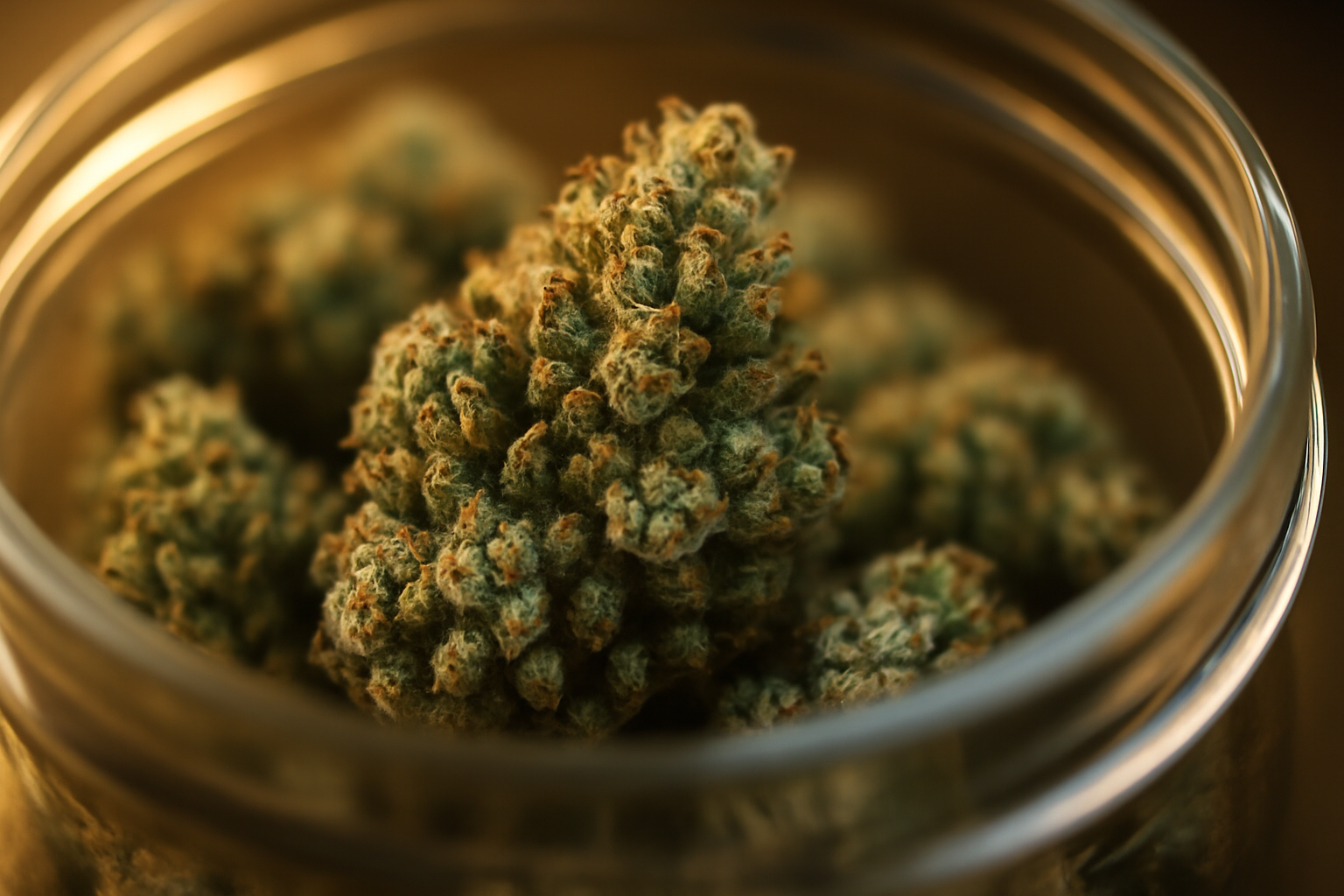
When you do get to harvest, plan your dry and cure carefully. Aim for 60–70°F and 55–60% RH in your drying space for 7–10 days until stems snap rather than bend. Then into glass jars for a minimum 2-week cure, burping daily for the first 7 days. Our Dry & Cure Timer tracks this automatically so you don't lose count.
Frequently Asked Questions
What should cannabis buds look like in week 4 of flowering?
By week 4, buds should have moved past the single wispy pistil stage and into visible calyx stacking. You'll see dense clusters of white pistils, early trichome coverage on sugar leaves, and noticeable weight starting to develop at primary bud sites. If they still look sparse and spindly, check your PPFD and potassium levels first.
Should I still be using grow nutrients in week 4 of flower?
No — switch fully to a bloom formula by week 3 at the latest. In week 4 flowering, your target N-P-K ratio should be around 1-3-2 or lower in nitrogen. Continuing with high-nitrogen grow nutrients at this stage suppresses bud formation and leads to airy, leafy flowers.
How often should I water in week 4 of flowering?
In soil, water when the top 1–2 inches dry out and the pot feels noticeably lighter — typically every 2–3 days depending on pot size and canopy. In coco, daily or twice-daily fertigation at 1.8–2.4 EC is standard. Always check runoff EC to catch salt buildup early.
Is it too late to defoliate in week 4 of flowering?
Light defoliation is still acceptable in early week 4 — removing large fan leaves blocking bud sites improves light penetration and airflow. However, heavy defoliation after day 25 of flower stresses the plant at a critical development window and can reduce final yield. Trim selectively, not aggressively.
How do I know if my plant has bud rot in week 4?
Early bud rot presents as browning or wilting of individual sugar leaves inside a dense cola, often before any visible mold appears on the surface. Gently part bud sites and look for mushy brown tissue or a whitish-gray fuzz at the core. Act immediately — remove affected material with sterilized scissors and reduce humidity below 50% RH.