Why a Cannabis Feeding Schedule Actually Matters
A well-executed cannabis feeding schedule is the single biggest lever you have over plant health and final yield — more than genetics, more than lights, more than training. Get it wrong and you'll fight deficiencies, toxicities, and nutrient lockout from week 3 onwards. Get it right and your plants tell you: deep green leaves, explosive node stacking in veg, dense bud sites loading up in flower. This guide gives you specific numbers for every stage, across soil, coco, and hydro, so you can stop guessing and start dialing.
Across 1,000 tracked grows on Grow Guide, 632 growers are running soil, 149 are on coco coir, and 547 are feeding manually — meaning most of you are hand-watering and mixing nutrients by hand. That's exactly who this guide is written for. If you want to map your whole grow from day one, use our Grow Schedule Planner to build a week-by-week plan around your strain and setup.
Cannabis Feeding Schedule by Stage
Stage 1: Seedling (Weeks 1–2)
Keep it simple here. A freshly germinated seedling has enough energy stored in its cotyledons to survive its first 10–14 days. Feeding nutrients too early causes more problems than it solves — tip burn, root damage, stunted growth. Use plain, pH-balanced water at 6.0–6.5 and nothing else. If you're starting in a pre-amended soil like a quality coco/perlite mix, you're fine. Air temperature: 70–75°F (21–24°C). Humidity: 65–70% RH. Keep PPFD low — 150–250 µmol/m²/s is plenty.
The first sign you can start thinking about nutrients is when the seedling has developed its second set of true leaves and the root system is visibly active (roots circling the plug, or the medium drying out in 24 hours). For strain-specific seedling timing data, check out our guide on Best Nutrients for Cannabis Seedlings.
Stage 2: Vegetative Cannabis Feeding Schedule (Weeks 3–6)
This is where your cannabis feeding schedule kicks into gear. The plant is building its structural framework — stems, branches, nodes — and it needs nitrogen above everything else. A standard N-P-K ratio of around 3-1-2 works well. Think grow-specific formulas like a 20-10-20 or similar NPK on the label.
- Week 3: EC 1.3 mS/cm (≈600 ppm on a 0.5 conversion scale). First feed should be light — half-strength to avoid shock.
- Week 4: EC 1.6–1.8 mS/cm (800–900 ppm). Introduce CalMag if you're on coco or RO water (2–5 mL/L is typical).
- Week 5–6: EC 2.0–2.2 mS/cm (1000–1100 ppm). Full veg strength. Watch the leaf colour — pale green means push harder, clawing/dark green means back off on nitrogen.
Water every other day for most soil setups, 2L per plant as a starting point. Coco growers should be watering to 10–20% runoff at every feed to prevent salt buildup. Check runoff EC — if it's climbing more than 0.5 above your input EC, flush with plain water before the next feed. Veg environment: 70–80°F (21–27°C), 50–60% RH, VPD target 0.8–1.2 kPa.
Stage 3: Flowering Cannabis Feeding Schedule (Weeks 7–12)
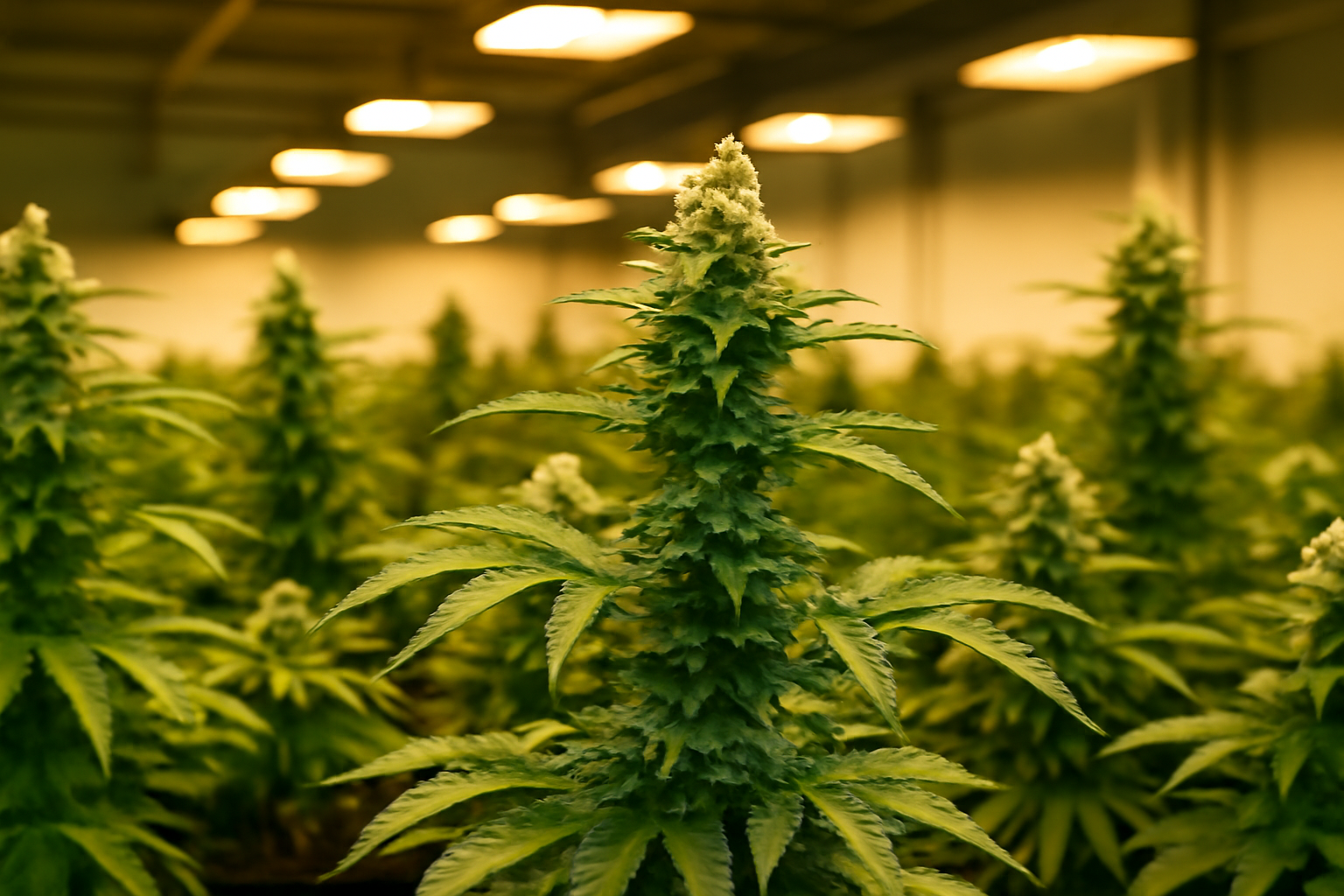
At flip (12/12 for photoperiods, or the first signs of pistils on autos), you shift the entire nutritional strategy. Nitrogen drops, phosphorus and potassium go up. You're now feeding the bud sites, not the canopy. A bloom-specific formula like 5-10-10 or similar works. Add a PK booster (PK 13/14 or similar) around weeks 3–5 of flower.
- Early flower (Wk 1–2 of 12/12): EC 2.1 mS/cm (1050 ppm). Keep some N in the mix — the stretch is still happening.
- Mid flower (Wk 3–6): EC 2.3–2.4 mS/cm (1150–1200 ppm). This is peak demand. Add PK booster mid-period. Introduce a bloom stimulant or amino acid product if you're using one.
- Late flower (Wk 7–8): EC 1.8–2.0 mS/cm (900–1000 ppm). Start pulling back. Drop the PK booster. Keep potassium and phosphorus but ease nitrogen out almost entirely.
Flowering environment: 65–75°F (18–24°C), RH 40–50%, VPD target 1.0–1.5 kPa. PPFD 600–900 µmol/m²/s. Use our Grow Light Calculator to make sure your light is hitting those numbers across the canopy. To estimate what this run could yield, plug your numbers into the Yield Calculator.
Stage 4: Flush and Pre-Harvest (Weeks 13–14)
Two weeks before you expect harvest, start winding down. For the first week of this period, drop to EC 1.2 mS/cm (600 ppm) — a light bloom feed or plain water with just CalMag. In the final 7 days, switch to plain pH-balanced water only. This flushes residual salts from the root zone and medium, which affects final smoke quality.
Lower temps slightly to 60–70°F (16–21°C) and drop humidity to 35–45% RH. The temperature differential between day and night (10°F+ swing) helps push anthocyanin expression on purple strains and enhances resin production across the board. Watch trichomes under a 60x loupe — cloudy with 10–20% amber is the typical harvest window for most indica-dominant cultivars.
pH Targets by Growing Medium
pH is not optional — it's the gatekeeper for every nutrient in your feed solution. Even a perfect EC reading means nothing if pH is off, because the plant simply cannot uptake certain elements outside their absorption window. Phosphorus locks out above pH 7.0. Iron, manganese, and zinc lock out above 6.5 in hydro. Calcium goes offline below 5.8. Check and adjust every single feed. If you're seeing yellowing or mottled leaves and your EC is correct, use the Nutrient Deficiency Identifier to pinpoint what's actually happening.
Adapting Your Cannabis Feeding Schedule by Medium
Soil
Pre-amended soils (like quality organic blends) give you a head start — some growers run weeks 1–4 on plain water before adding any liquid nutrients. After that, follow the EC ramp above but check your runoff pH every 2–3 feeds. Soil is more forgiving on pH swings but slower to correct when you go wrong. Water to 15–20% runoff on feed days; let the pot dry to 50–60% of its saturated weight before the next feed.
Coco Coir
Coco is essentially inert — it buffers very little and relies entirely on you for nutrition. Feed every day (or every other day minimum), always to runoff. Never let coco fully dry out or you'll trigger salt concentration spikes and tip burn. Many coco growers find that adding CalMag at 5 mL/L from week 1 through week 10 prevents the calcium and magnesium issues that coco is notorious for. Check our data: 149 out of 1,000 tracked grows on Grow Guide are running coco, and it's consistently associated with faster veg growth when dialled in correctly. See our related guide on Best Organic Nutes for Cannabis if you want to run organic inputs in coco.
Hydroponics (DWC / NFT)
Hydro is the most sensitive but the most responsive system. EC and pH can swing fast — check your reservoir at least once daily. Target pH 5.5–6.1 and let it drift naturally up and down within that window rather than chasing a single number. This pH "swing" ensures all micronutrients get absorbed across their respective uptake windows. Keep reservoir temps at 65–68°F (18–20°C) to prevent root rot and maintain dissolved oxygen.
Reading Your Plants: Signs to Adjust Your Feed
Numbers are a starting point — your plants are the final authority. Here's what to act on:
- Pale yellow-green new growth: Nitrogen deficiency. Bump EC by 0.2 or add a nitrogen top-dress if in soil.
- Burnt, crispy tips: Nutrient excess or pH-induced lockout. Check runoff EC first. If it's high (>3.0), flush and drop feed strength.
- Purple stems with no genetic cause: Phosphorus deficiency or cold root zone. Check pH and root temp before adding more P.
- Brown edges curling down (clawing): Nitrogen toxicity or overwatering. Back off feed and let the medium dry more between waterings.
- Interveinal chlorosis on older leaves: Classic magnesium deficiency, common in coco and with soft water. Add Epsom salt at 1–2 g/L or increase CalMag.
Drying and Curing After a Dialled-In Feed
Everything you did during the feeding schedule shows up in the jar. A properly flushed plant dries cleaner, burns smoother, and develops terpene complexity faster during cure. Hang trimmed branches in a dark space at 60–70°F with 50–60% RH for 7–14 days. Don't rush it — drying too fast locks chlorophyll in and you end up with harsh, grassy-tasting cannabis. When the thinner stems snap (rather than bend), you're ready to jar. Use our Dry & Cure Timer to track burp schedules and monitor your cure progress automatically.
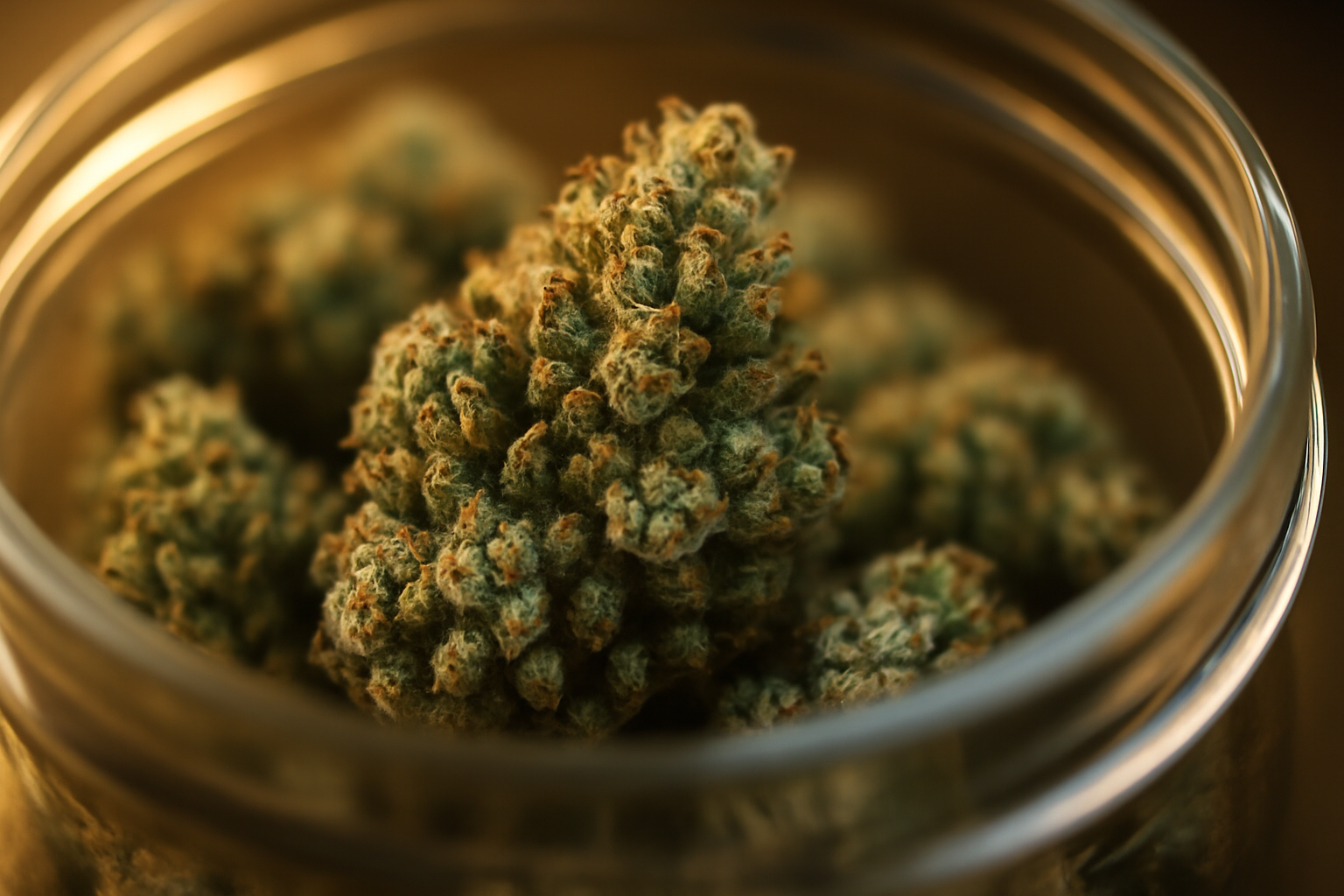
Cure in airtight glass jars at ¾ capacity. Burp lids for 15–30 minutes daily for the first week to release moisture, then drop to every 2–3 days through week four. A Boveda or Integra pack at 58–62% RH in the jar takes the guesswork out of humidity management. Four weeks minimum for good results; eight weeks or more for premium-level flavour and smoothness.
Keeping Track: Log Every Feed
The growers who consistently pull great harvests are the ones who log every watering — EC in, pH in, runoff EC, runoff pH, any observations. You don't need to be obsessive, but a five-second note after every feed builds the dataset that lets you troubleshoot confidently. Our Cannabis Grow Diary guide walks you through exactly how to structure that, and our Grow Schedule Planner can anchor your feeding calendar to your actual flip date so nothing slips through the cracks. Once harvest is done, the Cost Per Gram Calculator helps you work out whether your nutrient spend is actually paying off.
Frequently Asked Questions
When should I start feeding cannabis seedlings?
Wait until the seedling has developed its second set of true leaves, typically around days 10–14. Before that, seeds have enough stored energy and early nutrients can burn the delicate root system. Start at half-strength (EC 0.6–0.8) and build from there.
What EC should I be feeding cannabis in flower?
Ramp up from EC 2.1 at the start of flower to a peak of EC 2.3–2.4 during weeks 3–6 of the flowering stage, then taper back to EC 1.8 in late flower and EC 1.2 in the final pre-harvest week. Use a calibrated EC meter on every feed — guessing doesn't work.
Do I need to flush cannabis before harvest?
Yes, for most growing mediums. Flush with plain pH-balanced water for the final 7–14 days. This removes residual nutrient salts from the root zone and medium, which directly improves the taste and burn quality of the final product. Organic soil grows with heavily amended mediums may need less flushing time.
What's the difference between a cannabis feeding schedule for soil vs. coco?
Coco is inert and requires nutrients at every watering, starting from seedling stage, and should always be fed to runoff. Soil — especially pre-amended — can sustain a plant on plain water for the first few weeks, and feeds less frequently with longer dry cycles between waterings. pH targets also differ: 6.0–6.8 for soil, 5.8–6.2 for coco.
Why are my cannabis leaves yellowing even though I'm following a feeding schedule?
The most common cause is pH being out of range, which causes nutrient lockout even when the right nutrients are present. Check your runoff pH before adjusting your feed strength. If pH is correct, check runoff EC — a rising runoff EC indicates salt accumulation that needs a flush. Use the Nutrient Deficiency Identifier to narrow down the specific deficiency by symptom pattern.